 Aura: Looksmaxxing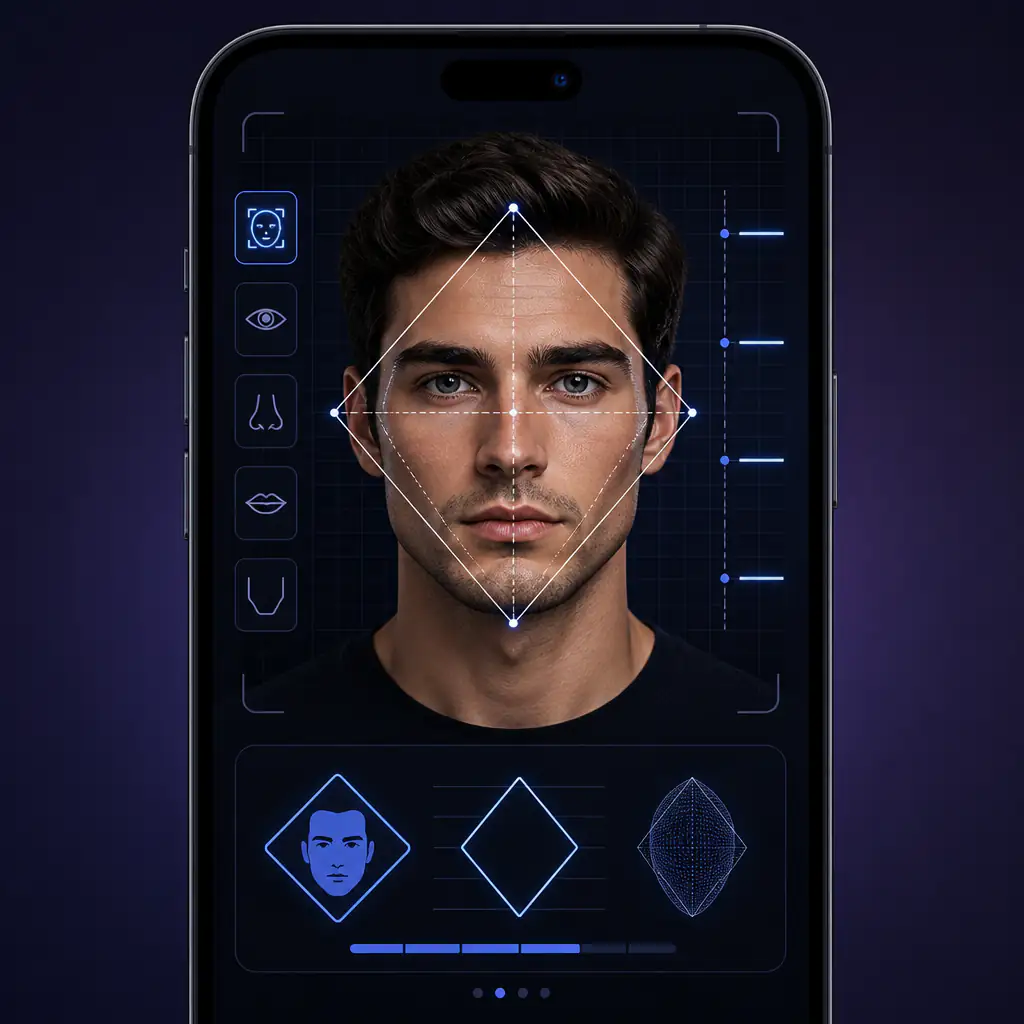
What Is a Masculine Face Shape?
Face shape describes the overall geometric outline of the skull as seen from the front. It is primarily determined by bone structure, specifically the relative widths of the forehead, cheekbones, and jaw, combined with the overall length of the face. Because bone structure is largely fixed after early adulthood, understanding your face shape gives you a stable foundation for making decisions about grooming, hairstyle, training, and in some cases, targeted habits like mewing or chewing harder foods.
For men, certain shapes tend to score higher in attractiveness research because they signal strong bone density and balanced proportions. A wider jaw relative to the forehead, prominent cheekbones, and a face length-to-width ratio close to 1:1.6 are all features associated with perceived masculinity. This is why terms like “diamond face shape” and “square face shape” come up frequently when discussing male attractiveness.
Oval vs Diamond Face Shape: What Is the Difference?
These two shapes are the most commonly confused, and the distinction matters for styling and analysis.
An oval face is longer than it is wide, with a forehead that is slightly broader than the jaw and gently rounded edges. It is considered the most “balanced” male shape because few features stand out as dominant. Most hairstyles and beard styles work well on an oval face.
A diamond face has a narrower forehead and chin with noticeably wide, prominent cheekbones as the widest point. It is one of the rarest shapes and is often considered highly attractive in men because the wide cheekbones signal facial bone density. Men with diamond faces typically benefit from adding visual width at the forehead, either through hairstyle or a slightly fuller beard at the chin.
The key measurement to distinguish them is cheekbone-to-forehead ratio. If your cheekbones are the widest point and both your forehead and jaw taper significantly, you have a diamond shape. If the widths are more graduated and your face is longer than wide, you likely have an oval.
The Most Attractive Face Shape for Men
Research into facial attractiveness consistently identifies a few structural traits that score well across studies. These include:
- A wide, angular jaw: A strong jawline signals bone density and is positively correlated with perceived dominance and health in multiple studies.
- Prominent cheekbones: High cheekbones increase mid-face width and create facial contrast, both of which are associated with masculine attractiveness.
- A shorter lower third: A compact lower face with a well-defined chin tends to score higher than a long, narrow lower third.
Based on these criteria, the square and diamond shapes tend to perform best in male attractiveness ratings. The square face has a jaw that is roughly as wide as the forehead, creating a strong, geometric look. The diamond shape combines wide cheekbones with facial angularity. That said, no single shape guarantees high ratings. Structure, skin quality, eye area, and overall harmony all contribute to how a face is perceived.
Can You Change Your Face Shape?
Direct bone remodeling in adulthood is limited without surgical intervention. However, several non-surgical factors can meaningfully influence how your face shape reads to others.
Mewing and chewing habits: Some users report that consistent tongue posture and chewing harder foods over time may help improve jaw definition. Research on adult bone adaptation is still preliminary, so results vary. Before and after photos shared by people practicing mewing show changes that appear to improve jaw width and cheekbone projection in some cases, though individual variation is high.
Body fat percentage: Facial fat sits on top of your bone structure. Reducing overall body fat, particularly in the 10 to 14 percent range for men, tends to reveal existing bone structure more clearly. This is often the single fastest way to make your natural face shape more visible.
Hairstyle and beard: Both are powerful tools for optically reshaping how your face reads. A square face benefits from some volume at the top to add length. A narrow oval benefits from width at the sides. A beard can add jaw width to faces that naturally taper at the chin.
How Aura Detects Your Face Shape
Aura uses a facial landmark detection model that plots key points across your face, including the corners of the jaw, the widest points of the cheekbones, and the edges of the forehead. From these points it calculates the ratios that define each shape category. The result is then compared against masculine attractiveness benchmarks derived from proportion research, giving you a score for how well your shape aligns with high-rated male facial geometry.
Beyond the shape label, Aura provides a full PSL-style breakdown that includes jawline sharpness, hunter-eye angle, facial thirds balance, and an overall rating. This makes it useful not just for identifying your shape but for understanding which specific features to prioritize improving.
Tips for Getting an Accurate Result
- Use a photo taken at eye level, not from below or above.
- Neutral expression with your mouth closed and jaw relaxed.
- Pull hair completely away from the face and ears.
- Use natural or soft diffused lighting. Avoid strong shadows across one side of the face.
- A photo taken 3 to 4 feet away tends to be more accurate than a close-up selfie, which introduces lens distortion.