 Aura: Looksmaxxing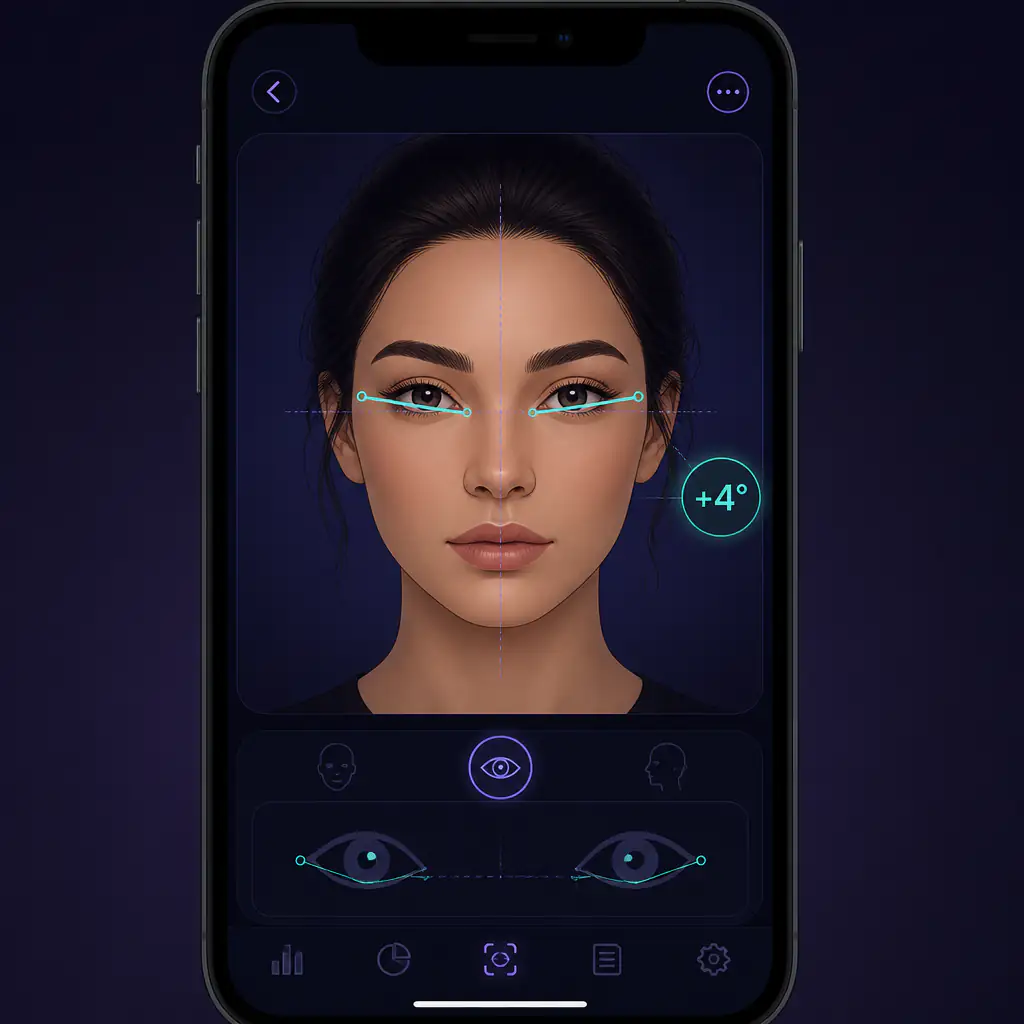
What Is Canthal Tilt?
Canthal tilt refers to the angle formed between the inner corner of the eye (medial canthus) and the outer corner (lateral canthus) relative to a horizontal line. When the outer corner sits higher than the inner corner, the result is a positive canthal tilt, often described as an upswept or almond-shaped eye appearance. When the outer corner sits lower, it is called a negative canthal tilt, producing a droopier or more downward-slanting look. A perfectly horizontal line between the two corners is considered neutral.
The concept became widely discussed in facial attractiveness research and in communities focused on facial structure analysis. Studies on facial symmetry and perception suggest that a slight positive canthal tilt is generally associated with a more alert, defined eye appearance, though attractiveness is always multifactorial and highly subjective.
Positive vs. Negative Canthal Tilt
A positive canthal tilt typically means the lateral canthus (outer corner) is elevated by roughly 3 to 5 degrees above the medial canthus. Many people considered to have strong, defined eye areas tend to fall in this range. It is often associated with what researchers describe as a “hunter eye” appearance, where the upper eyelid has a slight downward slope over the iris while the overall eye axis still tilts upward.
A negative canthal tilt means the outer corner drops below the inner corner. This can make the eyes appear tired, soft, or rounded. It is worth noting that a negative tilt is entirely normal and extremely common. Many people with neutral or slightly negative tilts are considered highly attractive by conventional standards, as overall facial harmony involves dozens of interacting features.
How Much Does It Actually Matter?
Canthal tilt is one data point among many. Orbital volume, under-eye support (sometimes called positive orbital vector), eyelid shape, brow position, and midface structure all interact with canthal tilt to produce the overall impression of the eye area. Treating a single measurement as a definitive verdict on attractiveness misses the bigger picture.
What Influences Your Canthal Tilt?
Canthal tilt is primarily determined by bone structure, specifically the shape and projection of the lateral orbital rim and the zygomatic bone. Soft tissue, including the position of the lateral canthal tendon, also plays a role. Because bone is the primary driver, canthal tilt is largely set by genetics and does not change meaningfully with most lifestyle interventions.
However, the appearance of canthal tilt can be influenced by several factors:
- Body fat percentage: Very low or very high body fat can subtly affect the soft tissue around the eye socket, altering how the tilt reads in photos.
- Grooming and styling: Tail-of-eyebrow shaping can visually reinforce or counteract the perceived angle of the eye area.
- Makeup and cosmetics: Eyeliner techniques applied at the outer corner can create the visual impression of a more positive or neutral tilt.
- Photo angle and lighting: Slight head tilt or camera angle changes can shift how your canthal tilt appears, which is why controlled photo conditions matter for accurate measurement.
Can You Change Your Canthal Tilt?
For people who want a structural change, there are medical procedures that may address canthal tilt. Canthoplasty and canthopexy are surgical procedures that reposition the lateral canthal tendon, potentially altering the angle of the outer eye corner. Some practitioners also use soft tissue fillers in the lateral orbital area to provide a subtle lifting effect. Research on these approaches is ongoing, results vary significantly between individuals, and complications are possible.
If you are considering any medical or surgical option to change your canthal tilt, consult a board-certified oculoplastic surgeon or maxillofacial surgeon before making any decisions. This content is informational only and does not constitute medical advice.
How Aura Measures Canthal Tilt
Aura uses a facial landmark detection model trained on a large dataset of annotated facial images. When you upload a photo, the model identifies the medial and lateral canthal points for each eye, draws a vector between them, and calculates the angle of that vector relative to a true horizontal baseline derived from your interpupillary line. The result is displayed in degrees alongside a classification and a percentile comparison.
Because lighting, head tilt, and image resolution all affect accuracy, Aura also flags low-confidence readings and prompts you to resubmit with a better photo when needed. The tool is designed to give you a useful, grounded data point, not a definitive judgment.
Tips for Getting an Accurate Reading
- Look straight ahead: Keep your gaze at the lens, not up or down.
- Use natural light: Harsh shadows under the eyes can distort landmark placement.
- Keep your expression neutral: Raised brows or squinting will shift the apparent canthal angle.
- Shoot at eye level: Camera angles above or below eye level introduce perspective distortion.
- Avoid heavy makeup on the lash line: Heavy liner near the canthus corners can cause the AI to detect the makeup edge rather than the true anatomical point.
Once you have a clean result, Aura combines your canthal tilt data with other facial metrics including your PSL score, jawline rating, and eye area assessment to give you a full picture of where your face currently stands and where targeted effort may have the most impact.