 Aura: Looksmaxxing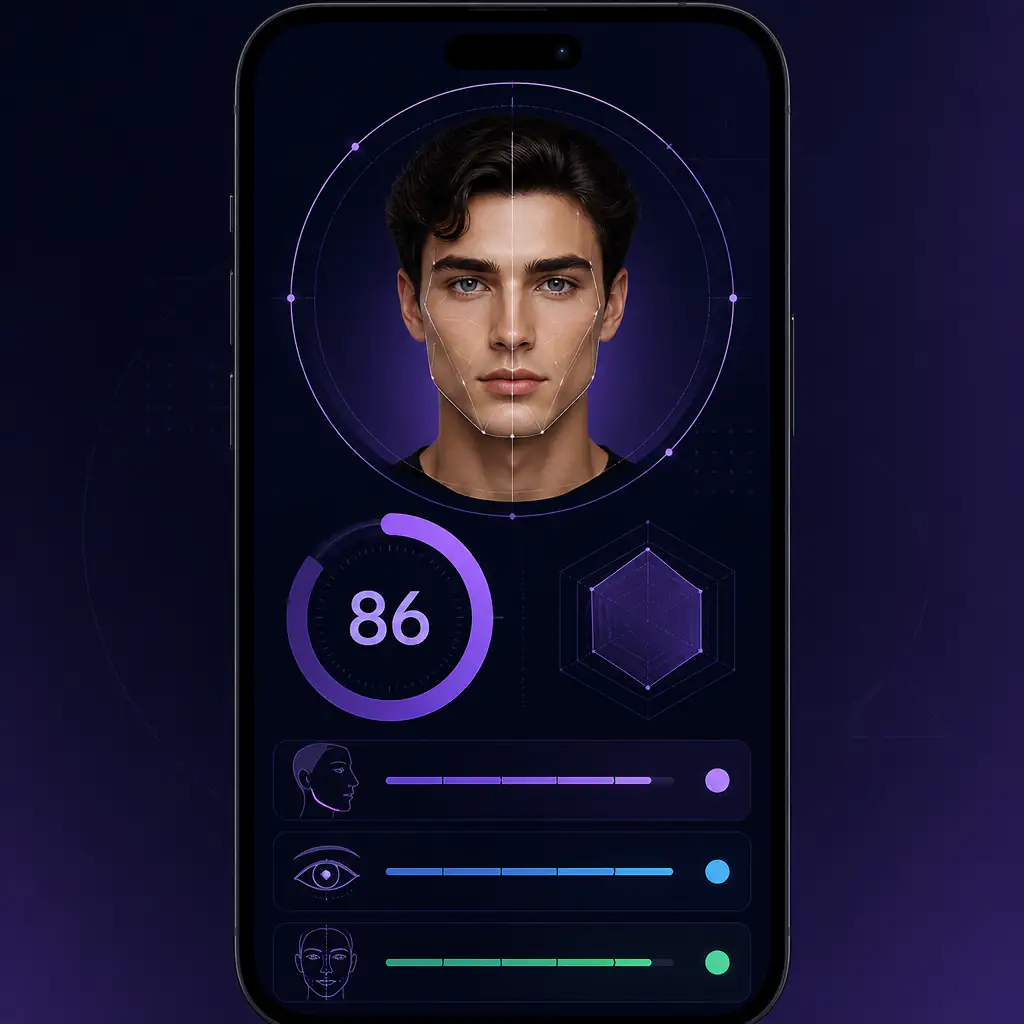
What Is the PSL Scale?
The PSL scale is a numerical system used in looksmaxxing communities to rate male facial attractiveness, typically on a 1 to 10 scale. PSL stands for the initials of three figures historically associated with online discussions of male attractiveness research. In practice, the scale attempts to quantify how facial features, structure, symmetry, and sexual dimorphism combine to produce an overall impression of attractiveness.
While the PSL scale originated in niche internet communities, the underlying concepts it references, such as facial symmetry, golden ratio proportions, and feature harmony, are studied in peer-reviewed research on human attraction. The scale is a practical shorthand that organizes these factors into a single number, making it easier to benchmark where you are and track progress over time.
How the PSL Rating Scale Works
Most PSL rating systems evaluate several distinct traits rather than producing a single holistic impression. Common categories include jawline definition and angle, cheekbone prominence, eye area (including canthal tilt and orbital bone support), nose shape, skin quality, and overall facial harmony. Each category is weighted, and the final PSL score reflects their combined contribution.
A PSL score of 5 is generally considered average for a Western male population. Scores of 6 to 7 indicate above-average attractiveness with noticeable strong features. Scores of 8 and above are considered high-tier and typically require exceptional bone structure, strong sexual dimorphism, and good skin. Scores below 4 usually reflect multiple traits that fall outside conventionally attractive ranges, and these are often the most addressable through targeted looksmaxxing.
PSL Chart Reference Points
- 1 to 3: Below average, often involving multiple structural or grooming issues
- 4 to 5: Average range, functional attractiveness with clear room for improvement
- 6 to 7: Above average, one or two standout features with few weaknesses
- 8 to 9: High-tier, strong bone structure and feature harmony
- 10: Theoretical maximum, essentially flawless facial structure by conventional standards
It is worth noting that self-rating on the PSL scale is notoriously unreliable. Most people either over- or under-estimate their score because they evaluate their face based on familiarity rather than objective geometry. This is one reason an AI-based tool like Aura can be more useful than community ratings or self-assessment.
What Aura Measures for Your PSL Score
Aura’s PSL score calculator uses facial landmark detection and proportional analysis to evaluate the same categories a knowledgeable human rater would consider, but faster and without bias toward mood, personal taste, or the specific person being rated.
Key measurements include jaw angle and width relative to the upper face, the vertical position and tilt of the outer eye corners (canthal tilt), cheekbone to facial width ratio, and the overall length-to-width ratio of the face. The tool also flags asymmetries that may be reducing your score and identifies which features have the highest potential for improvement through realistic means such as grooming, posture correction, body fat reduction, or more involved approaches.
How to Get an Accurate PSL Rating
The quality of your input photo has a significant impact on the accuracy of any PSL score calculator. A few practical guidelines:
- Lighting: Use soft, even lighting directed at your face. Harsh shadows from below or to one side will distort measurements.
- Angle: Use a true front-facing angle. Even a few degrees of tilt changes the apparent width of your jaw and the shape of your eye area.
- Expression: Keep a neutral or slight relaxed expression. Smiling raises the cheeks and changes several key measurements.
- Distance: Frame your face so it fills most of the photo without cutting off your chin or forehead.
- Glasses and hair: Remove glasses and push hair away from your face if possible. Both can obscure the landmarks the AI uses to rate facial structure.
Some users find it helpful to take multiple photos under consistent conditions and average the resulting PSL scores to reduce variability.
Using Your PSL Score for Looksmaxxing
A PSL score is most useful not as a fixed verdict but as a starting point for directed improvement. Once Aura identifies which categories are lowering your score, you can focus on the highest-leverage changes first. For many users, improvements in grooming, body fat percentage, and posture can meaningfully shift a PSL rating without any invasive procedures. Research suggests that skin quality, body composition, and hairstyle choices can each account for roughly half a point or more on a 10-point scale.
For structural features, some users explore more involved options such as orthodontic work, facial hair shaping, or mewing for jawline development. If you are considering any medical or surgical procedures based on your PSL analysis, talk to a qualified professional before proceeding. Aura’s recommendations are informational and not a substitute for medical advice.
Tracking your PSL score over time as you implement changes is one of the more objective ways to measure looksmaxxing progress, and it is one of the core use cases Aura is built for.