 Aura: Looksmaxxing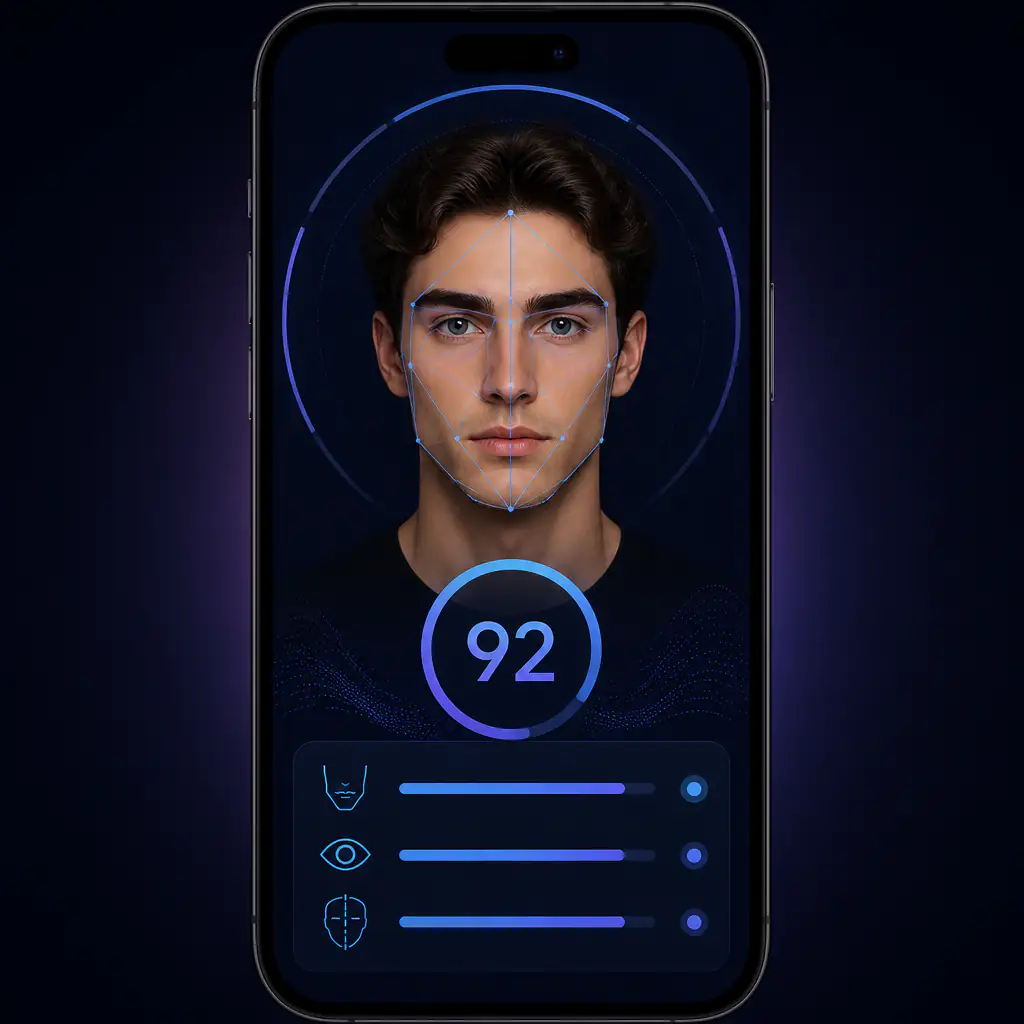
What Is a Face Rating?
A face rating is a structured assessment of facial attractiveness based on measurable features: symmetry, proportions, bone structure, and the relationship between different facial zones. While attractiveness has a subjective dimension, research in evolutionary psychology consistently identifies certain features, such as facial symmetry, strong jaw definition, and forward-grown midfaces, as broadly preferred across cultures.
Traditionally, face ratings were informal and highly variable depending on who was doing the rating. AI changes that by applying a consistent analytical framework every time, removing the mood and bias that come with human judgment.
How the Attractiveness Scale Works
The attractiveness scale most commonly used in online looksmaxxing communities runs from 1 to 10, but the PSL framework used in Aura adds more granularity. Rather than collapsing everything into a single number, it scores individual features separately before producing an aggregate. This matters because a face might score high on symmetry but lower on jaw definition, and knowing that distinction is what makes the feedback useful.
Features typically assessed include:
- Jawline and chin projection: One of the strongest indicators of perceived masculinity or feminine definition.
- Eye area: Includes canthal tilt, eye spacing, and orbital bone support (hunter eyes vs. prey eyes).
- Facial thirds: Whether the forehead, mid-face, and lower face are balanced in proportion.
- Skin quality and texture: Often overlooked but a significant variable in overall attractiveness ratings.
- Nose geometry: Bridge width, tip projection, and the naso-labial angle.
What Makes an Attractiveness Test AI-Accurate?
Not all attractiveness test tools are equal. The accuracy of an AI face rating depends on the quality of the underlying model and the facial landmarks it tracks. Aura’s approach uses computer vision to map dozens of facial landmarks, then compares your geometry to established proportion benchmarks, such as the golden ratio relationships that appear repeatedly in faces rated highly in controlled studies.
That said, no AI gives a perfect or final verdict. Factors like photo angle, lighting, and expression affect output. For the most reliable results, use a neutral-expression, front-facing photo taken in natural light. Avoid heavy shadows, filters, or extreme angles.
The Difference Between a Score and a Plan
A raw attractiveness score can be interesting, but it’s more useful as a baseline than a conclusion. What most people actually want to know is what they can realistically improve and in what order. This is where Aura’s looksmax report goes further than a simple attractiveness test.
After generating your score, Aura identifies which features are dragging your rating down the most and flags which of those are addressable through non-surgical means, such as grooming, body composition changes, skincare, or styling. Features that may require more significant intervention are noted separately, and Aura always recommends speaking with a qualified professional before considering any medical or surgical options.
Some users report that acting on their looksmax report, starting with the highest-leverage, lowest-effort changes, produces visible results within a few weeks. Others use it to set a longer-term roadmap.
Tips for Getting an Accurate Face Rating
To get the most useful output from an AI face rating tool, a few practical guidelines apply:
- Use natural lighting. Overhead fluorescent or harsh side-lighting distorts shadows and can misrepresent feature depth.
- Keep a neutral expression. Smiling or squinting changes landmark positions and can skew symmetry and eye-area scores.
- Shoot straight-on. A front-facing photo with your head level gives the cleanest symmetry and proportion data.
- Avoid heavy filters. Skin-smoothing filters can suppress texture data the model uses to assess skin quality.
- Take multiple photos. Running two or three slightly different shots lets you see how consistent your scores are, which itself is informative.
Who Uses Face Rating Tools?
AI face rating tools attract a wide range of users. Some are curious and trying it once. Others are systematic about self-improvement and use the score as a measurable checkpoint, similar to how someone might track body composition metrics. A growing number of users are teenagers and young adults who want honest, structured feedback rather than empty reassurance or social media comments.
Aura is designed for anyone who wants to understand their facial strengths and weaknesses clearly, and who is motivated to act on that information in a practical, grounded way.