 Aura: Looksmaxxing
 Y Taper vs V Taper: Which Body Shape Is Better?
Y taper vs v taper explained: what each body shape looks like, how they differ, and how to train toward your goal physique.
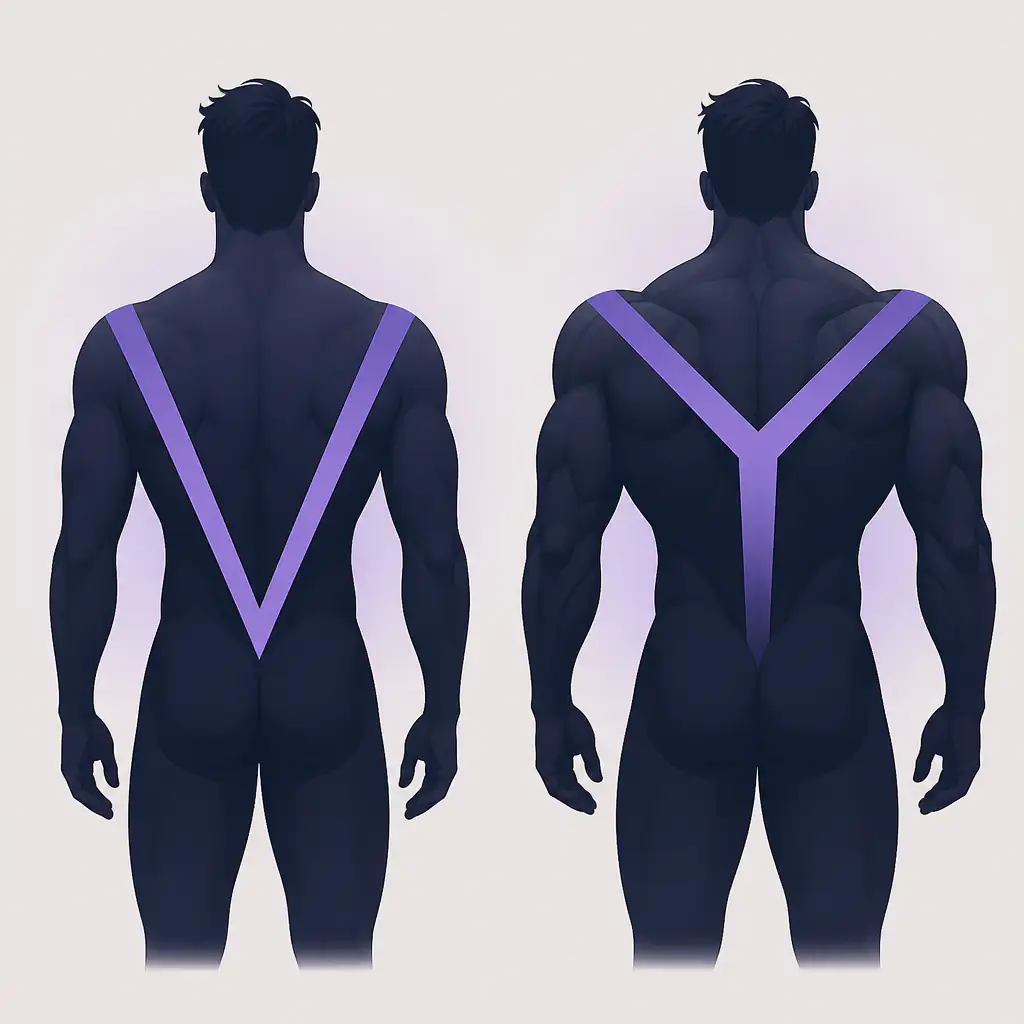
If you’ve spent any time in aesthetic fitness circles, you’ve heard both terms thrown around. The y taper and the v taper describe two distinct silhouettes, and while they share some overlap, the differences between them matter when you’re actually programming your training.
This guide breaks down exactly what each shape is, how they differ anatomically, which one is considered more aesthetic by most standards, and how to train toward either goal.
What Is a V Taper?
The v taper is the classic physique silhouette: broad shoulders and a wide upper back that narrow down to a small waist. Viewed from the front or back, the body forms a shape that resembles the letter V.
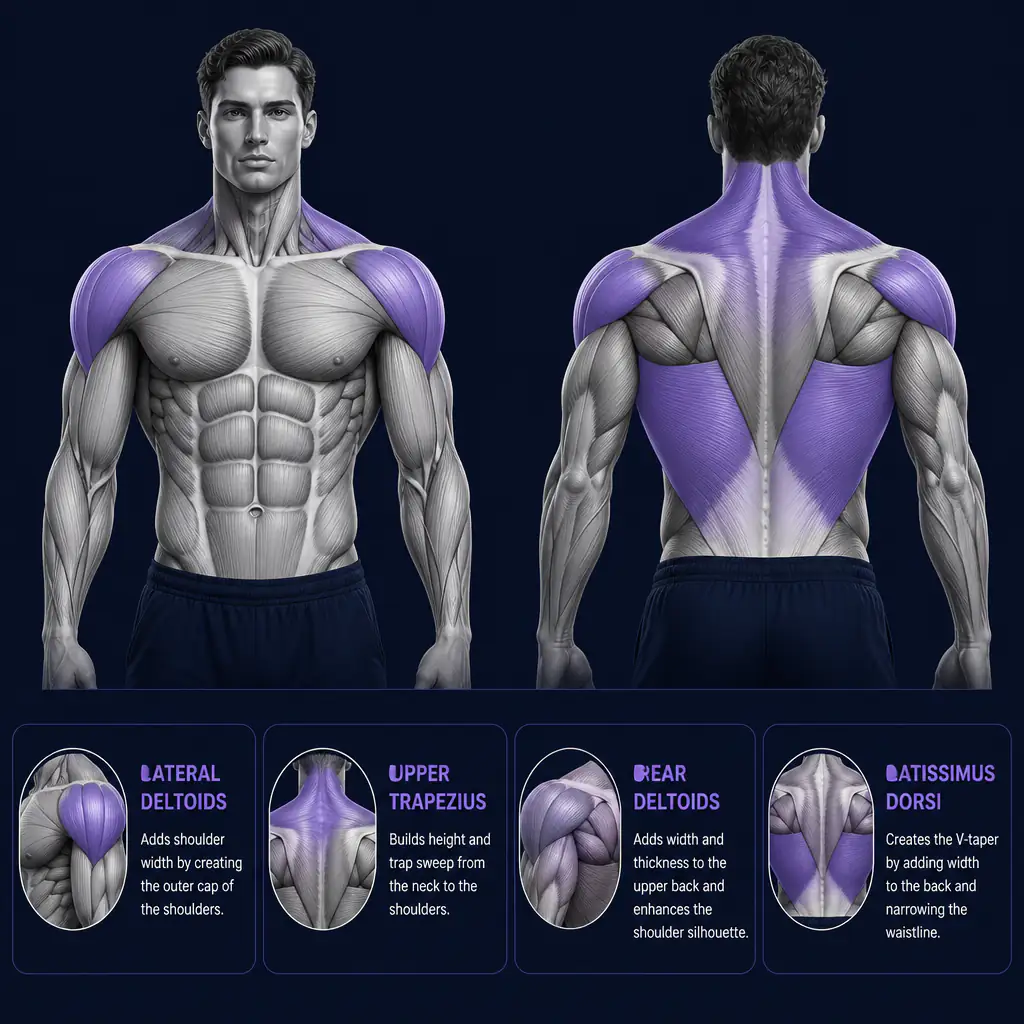
The key structural contributors to a v taper are:
- Lateral deltoids (side shoulders): the wider these are, the more dramatic the taper
- Latissimus dorsi (the lats): the large fan-shaped back muscles that create the sweep from armpit to waist
- Serratus anterior: the muscles along the ribcage that add width at the upper torso
- A low waist-to-shoulder ratio: ideally a shoulder circumference at least 1.6x the waist circumference
The v taper has been the gold standard in bodybuilding since the classic era. It reads as powerful and athletic even under clothing. Wide lats pushing against a fitted shirt, narrow hips, a defined waist — these are the structural cues that create this look.
What Is a Y Taper?
The y taper takes the v taper concept and pushes it further in one specific direction: arm and trap development. Instead of just a V shape from shoulders to waist, the y taper adds visible neck-to-trap sweep and arm mass that extends the top of the silhouette, creating a three-pronged look resembling the letter Y.
Visualize it this way: the two upper arms of the Y are formed by the deltoid-to-trap line, while the single downward line of the Y is the torso narrowing to the waist and hips.
The structural contributors unique to a y taper (on top of what a v taper already requires) are:
- Upper trapezius: the muscle running from the base of the skull to the outer shoulder
- Posterior deltoids: rear delt mass adds thickness and width when viewed from front or at angle
- Arm mass: visible bicep and tricep development that contributes to the outer silhouette
- Neck development: a thick, developed neck ties the trap-shoulder line together
The y taper is more associated with modern aesthetics, combat sports athletes, and the “Greek statue” look. It suggests functional strength alongside visual width.
Y Taper vs V Taper: Side-by-Side Comparison
| Feature | V Taper | Y Taper |
|---|---|---|
| Primary visual cue | Shoulder-to-waist ratio | Trap-shoulder-arm line |
| Key muscle groups | Lats, lateral delts, waist control | Adds upper traps, rear delts, arms, neck |
| Silhouette shape | Triangle from shoulders down | Forked shape from neck/traps outward |
| Training emphasis | Back width, shoulder width, core | All of v taper + trap and arm hypertrophy |
| Era association | Classic bodybuilding (60s–90s) | Modern aesthetics, combat sports |
| Clothing appearance | Broad shoulders visible under shirt | Trap-to-neck bulge visible in collar, sleeves filled |
| Difficulty to achieve | Moderate | Higher, requires more overall mass |
The key insight is that a y taper includes a v taper. You cannot have a y taper without first having the lat width and shoulder breadth of a v taper. The y taper is an extension, not a replacement.
Which Is More Aesthetic?
This depends on what framework you use, but a few points are worth understanding.
Facial and Upper-Body Harmony
The v taper works at almost any body weight. Even a leaner individual with developed lats and capped delts can display a clean v taper. It frames the face well in photos and creates a strong visual impression without requiring significant mass.
The y taper requires more overall development. The trap and neck contribution to the y shape only becomes visible at a higher level of muscular development. Before that threshold, it just looks like someone with a thick neck, which is less defined visually.
The PSL Perspective
In aesthetic rating systems, both body shapes contribute positively to overall appearance scores, but in different ways. A v taper improves the shoulder-to-waist ratio, which is a well-documented attractiveness cue in cross-cultural research. The y taper adds what some refer to as the “alpha frame,” where the neck and trap line signals physical dominance and health.
If you’re using Aura to track your overall aesthetic development, you can get an objective read on your current frame proportions and identify which specific areas are limiting your visual impression, not just your face.
Practical Verdict
For most people at an intermediate training level, prioritizing the v taper first is the right move. Once lat spread, shoulder width, and waist control are established, layering in trap, rear delt, and arm work to build toward a y taper makes sense as a next phase.
How to Train for a V Taper
The training priorities for building a v taper are straightforward:
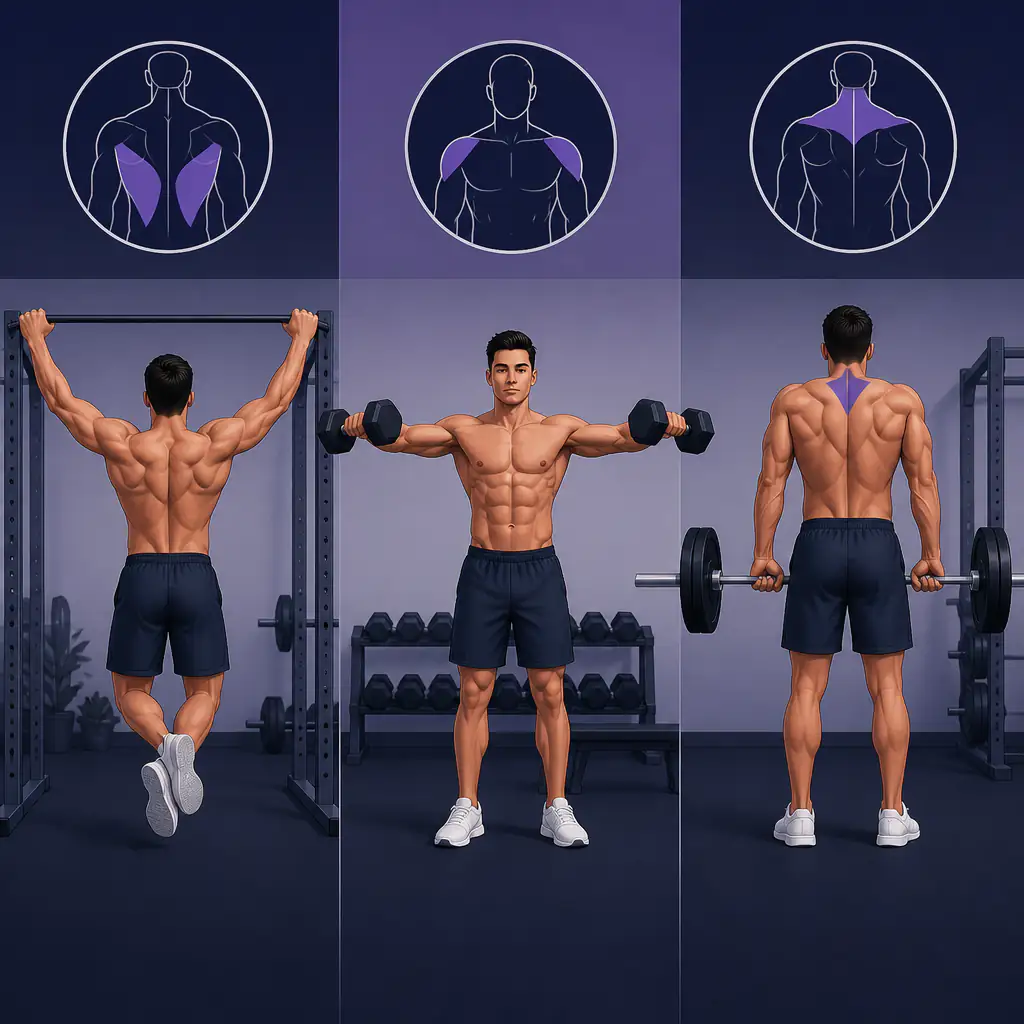
- Lat width: Wide-grip pull-ups, straight-arm pulldowns, single-arm dumbbell rows. Focus on lat stretch and full range of motion.
- Lateral deltoid development: Lateral raises performed with strict form and progressive overload. Cable lateral raises allow constant tension through the full range.
- Waist management: Core training (especially obliques and transverse abdominis) combined with avoiding excessive direct oblique hypertrophy that could widen the waist.
- Serratus work: Cable pullovers and reach-through crunches develop the serratus, adding visible ribcage width at the upper torso.
Programming note: Prioritize pull volume. A commonly recommended ratio is 2:1 pull-to-push for those specifically chasing lat development. If your push volume is high (chest, front delts), your proportions will shift forward rather than wide.
How to Train for a Y Taper
Building on the v taper foundation, add these:
- Upper trap development: Barbell and dumbbell shrugs, farmer carries, face pulls with external rotation. The trap-to-shoulder line defines the top of the Y.
- Rear deltoid mass: Reverse pec deck, bent-over lateral raises, face pulls. Rear delts add the third-dimension thickness that makes the silhouette read as wide from multiple angles.
- Arm hypertrophy: Bicep and tricep mass fills out sleeves and adds to the outer silhouette. Close-grip bench, overhead tricep extensions, incline curls.
- Neck training: Neck curls, neck extensions, and wrestler bridges. Even modest neck development (an inch of circumference) significantly changes how the trap-shoulder line reads.
- Posture work: A y taper is heavily posture-dependent. Rounded shoulders collapse the silhouette. Face pulls, band pull-aparts, and thoracic extension work are non-negotiable.
Practical Tips for Both Goals
Track Measurements, Not Just Weight
Scale weight tells you almost nothing about taper progress. The metrics that matter are:
- Shoulder circumference (measured at the widest point across the deltoids)
- Waist circumference (at the navel)
- Shoulder-to-waist ratio (target: 1.6 or above for a visible v taper)
- Neck circumference (for y taper tracking)
Photography Matters
Taper is a visual phenomenon. Regular photos from consistent angles (front relaxed, back double-bicep, side) are the best feedback tool you have. Changes that happen over months are invisible day-to-day but obvious in comparison photos.
Leanness Amplifies Everything
Both tapers are dramatically more visible at lower body fat. The same shoulder width looks far more impressive at 12% body fat than at 18%. This doesn’t mean you need to be extremely lean, but reducing body fat generally does more for visual taper than adding another inch to your shoulders.
Realistic Timelines
A noticeable v taper improvement for a beginner typically takes 12 to 18 months of consistent training. The y taper, requiring more total mass and development, is generally a 2 to 4 year project for most people starting from scratch. Neither is a quick fix, but both are achievable with consistent, well-directed effort.
Get an Objective Baseline
Before committing to a specific training direction, it helps to know where your current aesthetics actually stand. Tools like Aura can assess your facial and upper-body proportions, giving you a clearer picture of whether your overall aesthetic is being limited more by frame development or other factors.
Common Mistakes That Kill Taper Progress
- Too much direct oblique work: Side bends and heavy oblique crunches can widen the waist, which directly reduces the shoulder-to-waist ratio.
- Neglecting rear delts: Most people overtrain front delts (through pressing) and undertrain rear delts. This creates rounded-shoulder posture and kills the y taper silhouette.
- Ignoring progressive overload on lats: Lat training is often done with too light a weight and too much arm involvement. The lats need to be overloaded progressively, just like any other muscle.
- Skipping neck work entirely: The neck is one of the most visible muscles on a clothed person and one of the most neglected. Even two sets of neck work per session adds up quickly.
- Bulking too aggressively: Excessive caloric surplus adds waist size faster than it adds shoulder width, temporarily worsening the taper. A moderate surplus (200 to 300 calories above maintenance) keeps the waist tighter during a building phase.
Frequently asked questions
Is a y taper better than a v taper? +
Not strictly better, but more developed. A y taper requires all the same qualities as a v taper and adds trap, arm, and neck development on top. For most training goals, building the v taper first is the right sequence before pursuing the fuller y taper silhouette.
Can you have a y taper without being very muscular? +
It's difficult. The y shape relies on visible trap-to-shoulder sweep and arm mass, which require a meaningful level of muscular development to appear. At lower muscle mass, the structural difference between a y and v taper is minimal, so the v taper is the more achievable and visible goal for most intermediate lifters.
How important is waist size to achieving a v or y taper? +
Very important. Taper is a ratio, not an absolute measurement. A smaller waist makes the same shoulder width look dramatically wider. Avoiding exercises that hypertrophy the obliques excessively, combined with reducing overall body fat, is often as effective as adding shoulder width.
Does neck training make a big difference for the y taper? +
Yes, more than most people expect. The neck connects the trap line to the head and is visible in almost every clothing context. Even modest neck development of an extra inch in circumference noticeably changes how the upper body reads from the front, back, and side. It's one of the most underrated tools for building the y taper silhouette.