 Aura: Looksmaxxing
 High vs Low Cheekbones: What's the Difference?
Learn the real differences between high vs low cheekbones, how to identify your type, and what each means for your facial appearance and structure.
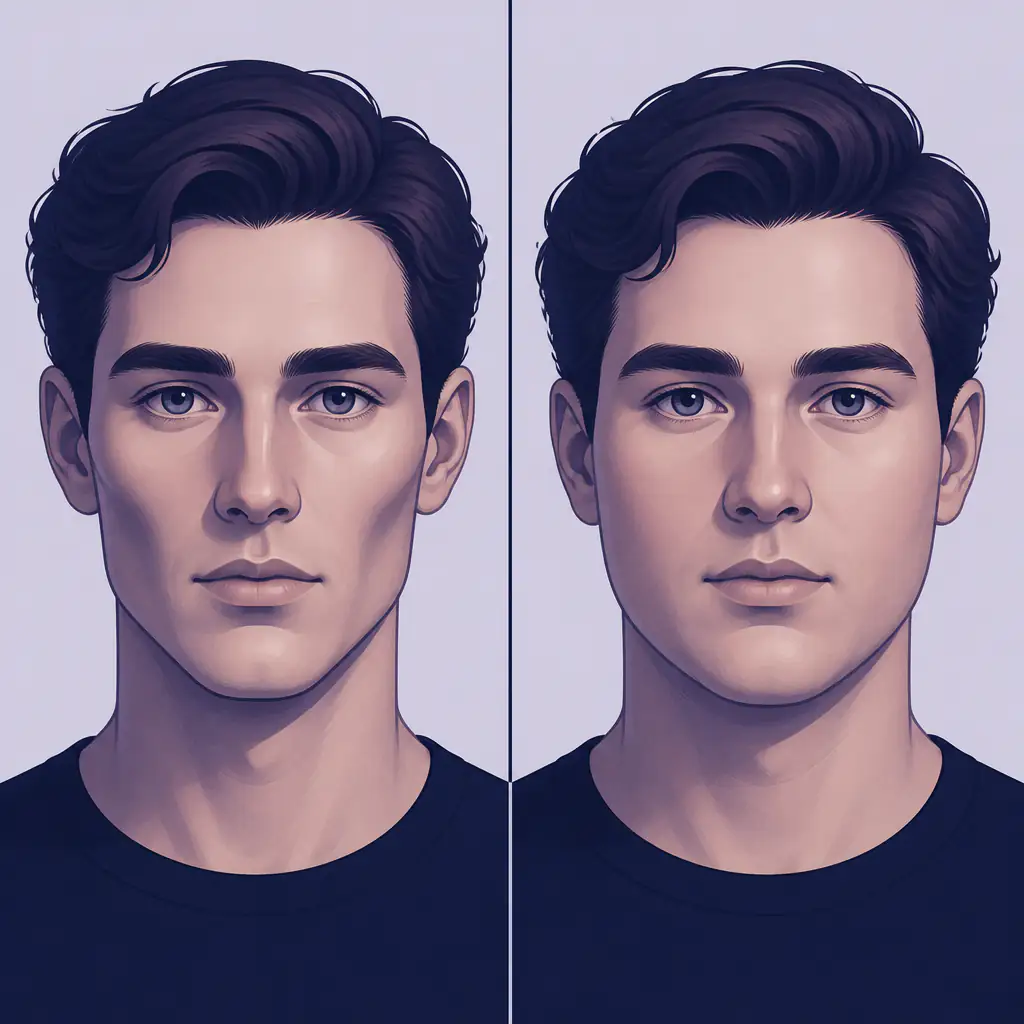
Cheekbones are one of the most discussed features in facial aesthetics, yet most people have never actually identified where their own sit. The difference between high and low cheekbones goes beyond a simple beauty standard. It shapes how light falls on your face, how wide or narrow your midface appears, and how other features like your eyes and jawline read to observers.
This guide breaks down the anatomy, the visual differences, how to identify your own cheekbone position, and what, if anything, you can do about it.
What Are Cheekbones, Anatomically?
The cheekbones are formed by the zygomatic bones (also called the zygomatics or malar bones). Each zygomatic bone sits on the lateral midface and connects to the temporal bone at the side of the skull and to the maxilla (upper jaw) below the eye socket.
When people talk about cheekbone position, they are usually referring to two things:
- Vertical position: where the most prominent point of the cheekbone sits relative to the eye and nose.
- Lateral projection: how far the cheekbone extends outward from the face.
Both dimensions matter. A bone can sit high but project minimally, or sit lower but flare wide. Most discussions focus on vertical position, which is where the “high vs low” distinction comes from.
Defining High Cheekbones
High cheekbones sit closer to the lower eyelid and outer eye socket. When you look at a face with high cheekbones straight on, the fullest, most prominent part of the cheek is near the eye level. In profile, the peak of the cheekbone is visible under the lateral orbital rim (the outer edge of the eye socket).
What High Cheekbones Look Like
- A noticeable shadow or hollow below the cheekbone, especially in side lighting
- The widest point of the face appears in the upper third or upper midface
- A subtle separation between the cheek and the under-eye area
- Cheeks that can look angular or sculpted even at a healthy body weight
- The zygomatic arch (the ridge running toward the ear) is often more defined
High cheekbones are frequently associated with a triangular or heart-shaped face, and they tend to create what photographers describe as “natural catch light” because they reflect light cleanly.
Defining Low Cheekbones
Low cheekbones have their peak prominence closer to the lower nose and upper lip level. The widest, fullest part of the cheek sits in the lower midface rather than near the eyes.
What Low Cheekbones Look Like
- Fuller, rounder appearance in the lower cheek area
- Less visible shadow or hollow beneath the cheekbone
- The face can appear wider at the midface or lower face
- In profile, the lateral cheek projection is more diffuse and gradual
- The transition from cheek to jaw is less sharply defined
Low cheekbones do not mean an unattractive face. Many attractive faces have lower cheekbone placement. The face’s overall harmony, skin quality, jawline, and eye area all interact with cheekbone position to produce the final impression.
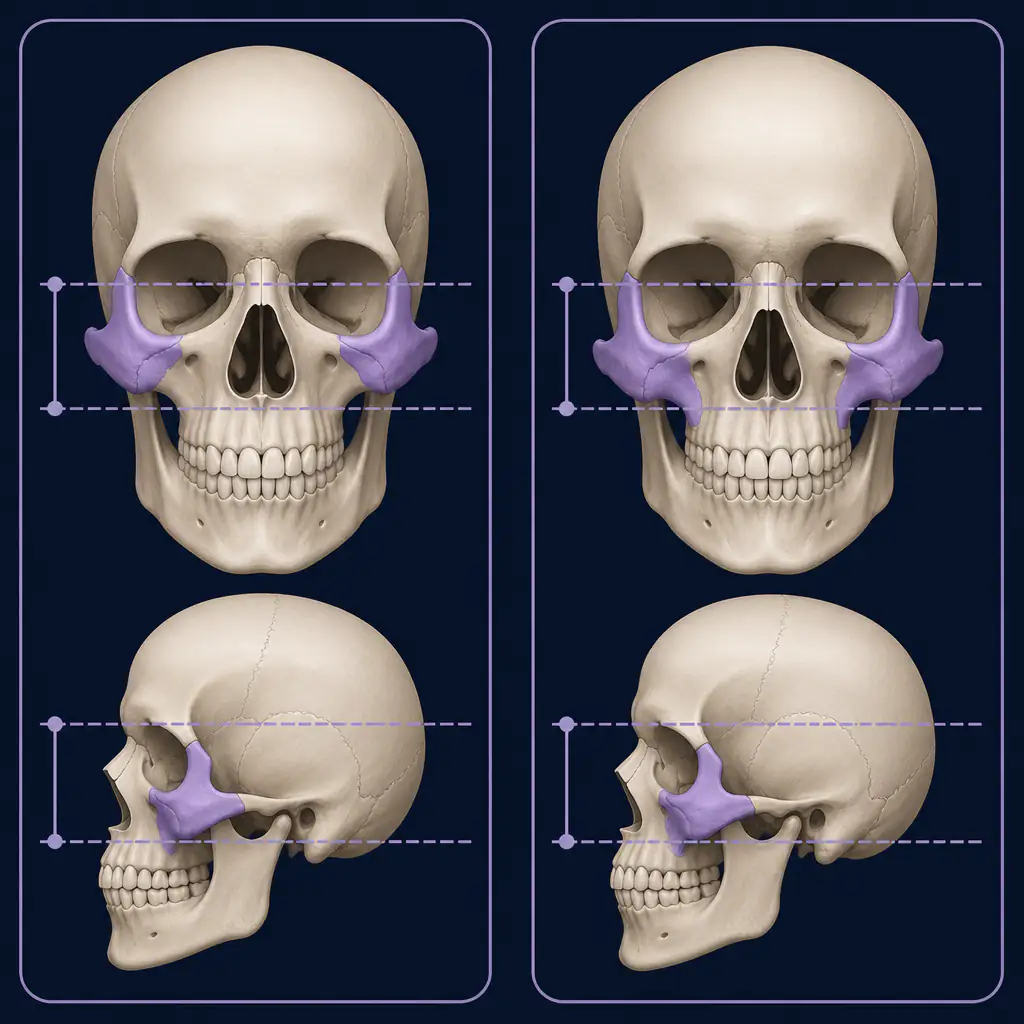
High vs Low Cheekbones: A Side-by-Side Comparison
| Feature | High Cheekbones | Low Cheekbones |
|---|---|---|
| Peak prominence location | Near lower eyelid / outer eye | Near upper lip / lower nose |
| Shadow pattern | Visible hollow below cheekbone | Little to no hollow |
| Face width distribution | Widest in upper midface | Widest in lower midface |
| Typical face shapes | Triangle, heart, oval | Round, square, oblong |
| Lighting effect | Catches and reflects light near eyes | Diffuses light more evenly |
| Profile appearance | Sharp lateral ridge toward ear | Gradual, rounder contour |
| Association with aging | Hollows become more prominent with age | Fullness may descend with age |
One thing worth noting: cheekbone position is skeletal and fixed. Fat distribution, skin laxity, and muscle tone change over time, which can alter how prominent cheekbones appear, but the underlying bone structure does not move.
How to Identify Your Own Cheekbone Position
Most people have never consciously checked where their cheekbones sit. Here is a straightforward method:
- Stand in front of a mirror in neutral, even lighting. Avoid harsh overhead or under-lighting, which distorts perception.
- Place your index fingers lightly on the widest, most prominent part of each cheek. Press gently until you feel the hardest point beneath the skin.
- Note the vertical position. Is that hardest point level with the bottom of your eye socket? That is high placement. Is it closer to the base of your nose? That is lower placement. Midway between the two is, predictably, mid placement.
- Check the profile. Turn sideways. Look at where the lateral cheek protrudes most. A peak visible near the outer eye is high; a peak that sits below the nose level is low.
- Use a photo. A straight-on photo taken at eye level, in natural light, makes the assessment easier because you can draw horizontal reference lines across the image.
For a more structured analysis, Aura uses AI-based facial scanning to measure cheekbone prominence and midface proportions as part of a full facial assessment. It gives you a concrete baseline rather than guesswork in a mirror.
Does Cheekbone Position Actually Matter?
The honest answer is: it matters in context, and less than most people assume in isolation.
Cheekbone prominence interacts with several other features:
- Eye area: High cheekbones can make eyes appear more deep-set or almond-shaped from the front. They also support the under-eye area structurally.
- Jawline: A strong jaw combined with high cheekbones creates a more defined facial silhouette. High cheekbones with a weak jaw can create an imbalanced inverted triangle shape.
- Body fat percentage: Fat sits on top of bone. Even high cheekbones can become invisible under excess facial fat. Conversely, very lean faces can make any cheekbone placement look more dramatic.
- Nose shape and size: Cheekbone projection is perceived relative to how much the nose and brow project. A smaller nose makes cheekbones read as more prominent.
Research in facial attractiveness consistently points to harmony and proportion rather than any single feature. High cheekbones are frequently cited as attractive, but they are not a prerequisite for a well-proportioned face.
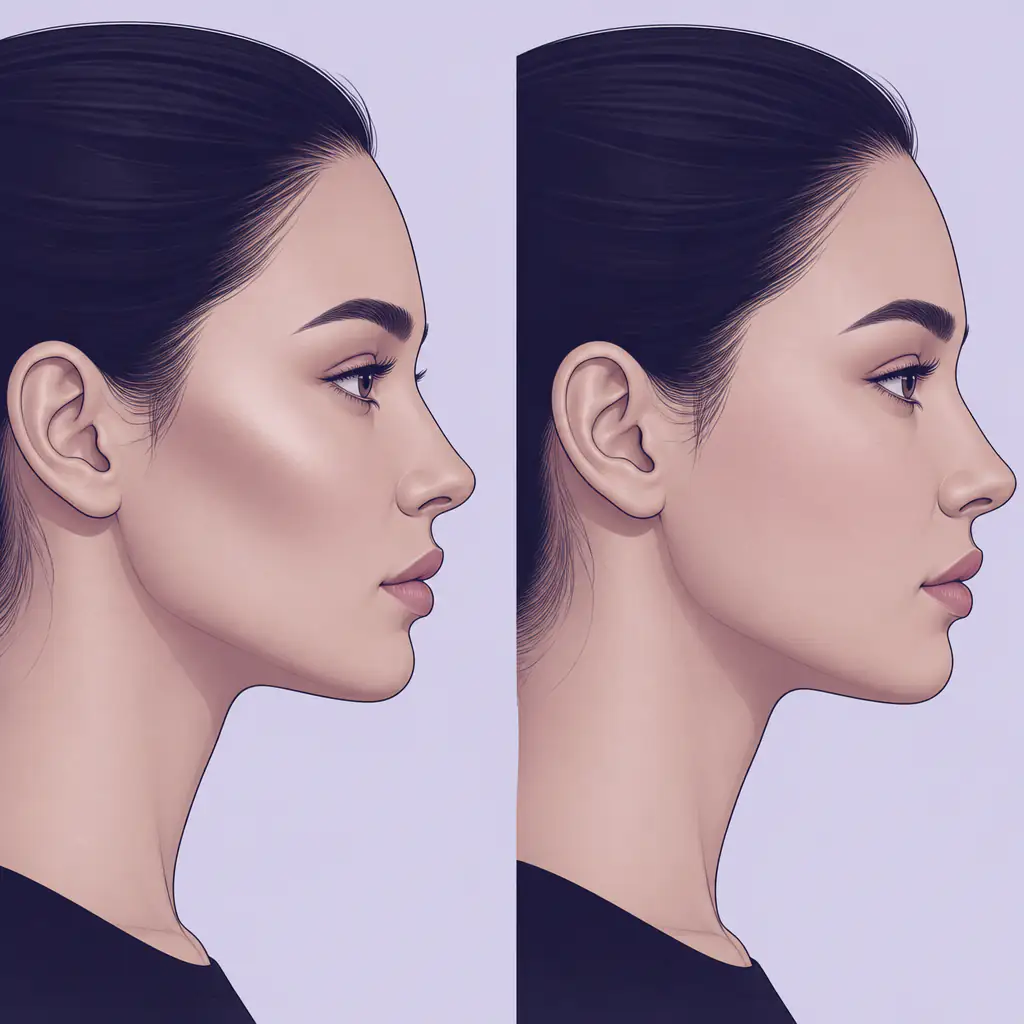
Can You Change Your Cheekbone Appearance?
You cannot change the underlying bone without a surgical procedure. However, several approaches can alter how prominent or positioned your cheekbones appear:
Non-Surgical Options
Facial fat reduction: Lowering body fat percentage reduces the fat pad sitting over and below the cheekbone, making existing bone structure more visible. This is one of the most significant non-surgical changes available. Even a modest reduction in overall body fat can reveal cheekbones that were already well-placed but obscured.
Contouring makeup: Placing a matte contour product in the hollow below the cheekbone and a highlight above it creates a visual impression of higher, more prominent bones. The technique works by mimicking the shadow pattern that naturally occurs with high cheekbone placement.
Facial exercises: Some research suggests that zygomaticus and masseter muscle training may help improve the definition of the cheek area, though evidence is limited and results vary significantly.
Hairstyling: Side-swept volume and styles that add width at the temples can complement or visually balance lower cheekbone placement.
Surgical and Minimally Invasive Options
Dermal fillers (malar augmentation): Hyaluronic acid fillers injected at the zygomatic region can add projection and vertical height to the apparent cheekbone. Results are temporary, typically lasting several months to over a year depending on the product and individual metabolism.
Cheekbone implants: Solid silicone or porous polyethylene implants placed over the zygomatic bone can permanently increase projection and apparent height. This is a surgical procedure with recovery time and real risks.
Bichectomy (buccal fat removal): Removing the buccal fat pad from the lower cheek area can create a more defined hollow beneath the cheekbone, giving the visual effect of higher cheekbone placement without touching the bone itself.
If you are considering any surgical or injectable procedure, talk to a qualified medical professional before moving forward. Individual anatomy varies significantly, and procedures that suit one face may not suit another.
Practical Steps to Work With Your Cheekbone Structure
Regardless of where your cheekbones sit, there are concrete steps that tend to improve overall facial appearance:
- Optimize body composition. Reducing facial fat is often the single most accessible change with the most visible payoff for bone structure visibility.
- Improve skin quality. Clear, firm skin makes bone structure read more sharply. Consistent sun protection, hydration, and a basic skincare routine all contribute.
- Learn your lighting. Natural light from the side at roughly eye level is the most flattering for angular features. Straight-on flash flattens cheekbone shadows.
- Get an objective assessment. Most people are not accurate judges of their own facial proportions. Tools like Aura can give you a more precise read on your midface structure and what areas are actually worth focusing on.
- Consider your full facial balance. Before targeting any single feature, assess how your cheekbones relate to your jawline, brow ridge, and overall face shape. Isolated changes without considering the whole can create imbalance.
The Bigger Picture
High and low cheekbones are genuinely different in structure and effect, but neither is categorically superior. High cheekbones create a specific shadow pattern and face shape that many find attractive. Low cheekbones produce a different but not inherently worse set of proportions.
What matters more is how your cheekbone structure integrates with the rest of your face, your current body composition, and how you choose to frame and present your features. Understanding your baseline is the first step, and it requires an honest, systematic look rather than vague self-assessment in bad lighting.
Frequently asked questions
How do I know if I have high or low cheekbones? +
Press your finger along the widest, hardest part of your cheek and note its vertical position. If the peak sits near your lower eyelid, your cheekbones are high. If it sits closer to your upper lip or base of your nose, they are lower. A straight-on photo in natural light makes this easier to judge accurately.
Are high cheekbones always more attractive than low cheekbones? +
Not necessarily. Facial attractiveness research consistently points to overall proportion and harmony rather than any single feature. High cheekbones create a specific shadow and structure that many find appealing, but low cheekbones can still produce a balanced, attractive face depending on surrounding features.
Can losing weight make my cheekbones more visible? +
Yes, reducing overall body fat percentage can make existing cheekbone structure significantly more visible. The fat pads overlying the zygomatic bone diminish as body fat decreases, allowing the underlying bone to create more visible contour and shadow.
Can fillers make low cheekbones appear higher? +
Hyaluronic acid fillers injected at the malar (cheekbone) region can add projection and create the visual impression of higher cheekbone placement. Results are temporary and vary by individual anatomy. Always consult a qualified medical professional before pursuing any injectable treatment.