 Aura: Looksmaxxing
 Narrow vs Wide Clavicles: What the Difference Means
Narrow vs wide clavicles explained: how clavicle width affects shoulder appearance, perceived attractiveness, and what you can actually do about it.
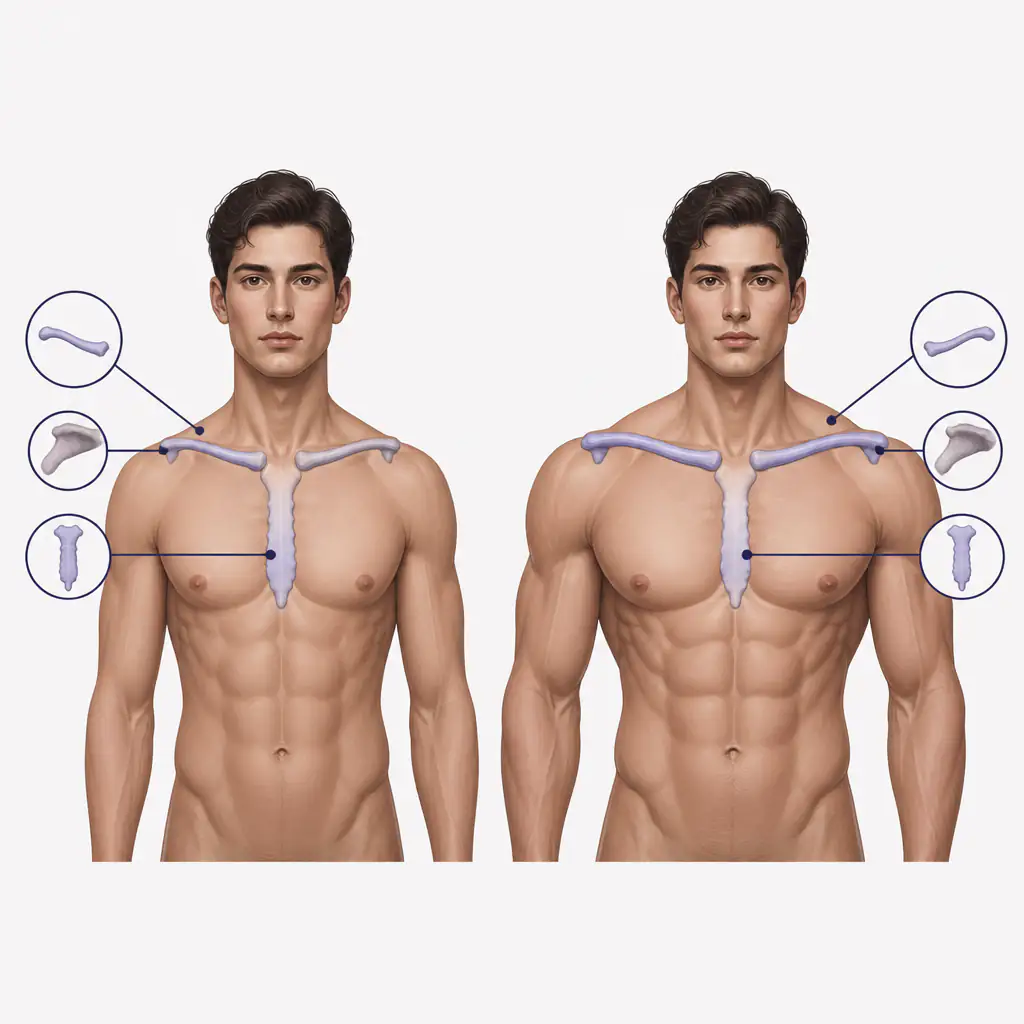
Your clavicles are two relatively small bones, but they have an outsized influence on how your entire upper body looks. Whether you have narrow or wide clavicles shapes your shoulder-to-waist ratio, your perceived frame size, and even how clothes sit on your body. This post breaks down the difference, what the research says about attractiveness and frame, and what options actually exist for working with the clavicles you have.
What the Clavicle Actually Does
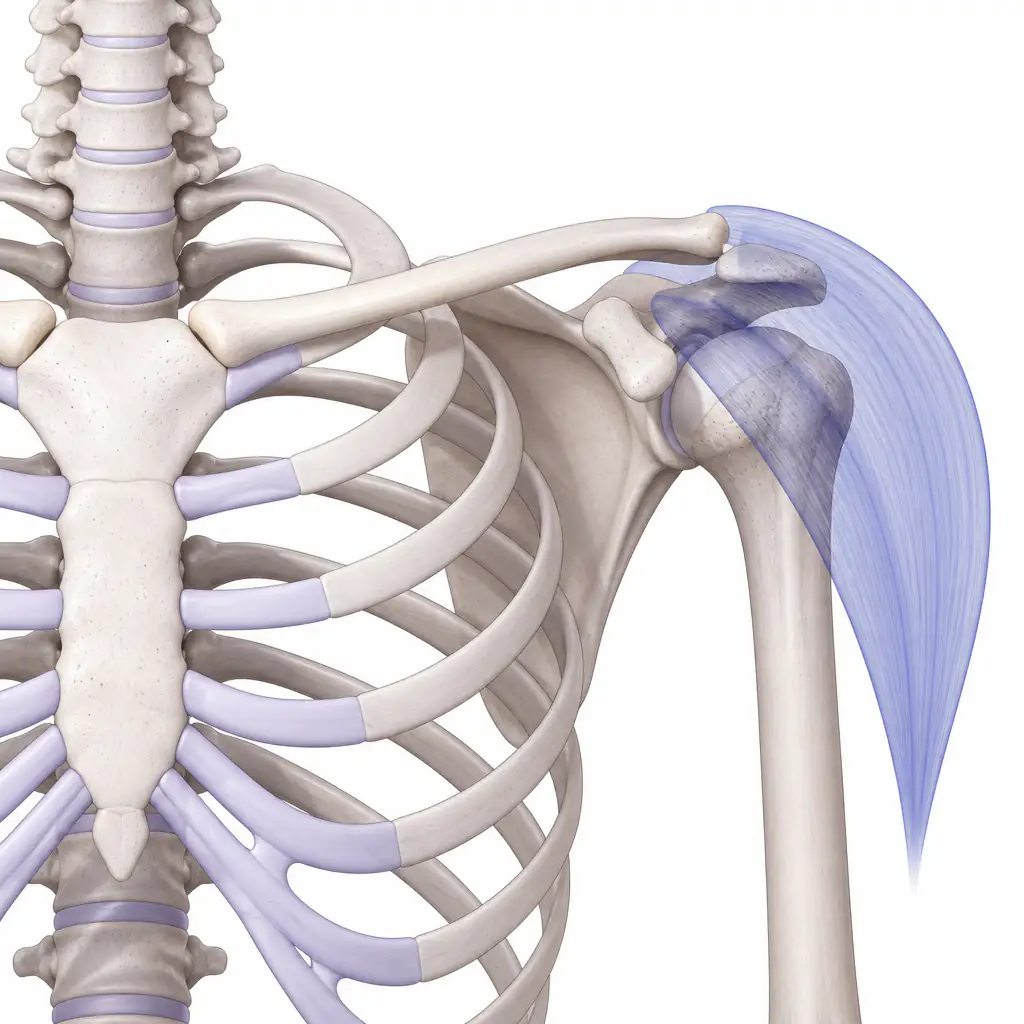
The clavicle, or collarbone, runs horizontally from the sternum (breastbone) to the acromion process of the scapula. It acts as a strut, holding the shoulder joint away from the thorax. In practical terms, the longer your clavicles, the further your shoulder joints sit from the centerline of your body, and the wider your shoulders appear.
Clavicle length is largely determined by genetics and is set by the time you finish puberty. The average adult male clavicle is roughly 15 to 17 cm long; female clavicles average slightly shorter. Individual variation outside that range is common and clinically normal.
Beyond raw length, clavicle angle also matters. A clavicle that sits more horizontally (lower slope) tends to create a squared-off shoulder appearance. One with a steeper upward angle can make the shoulder look narrower even if the clavicle itself is reasonably long.
Narrow vs Wide Clavicles: A Direct Comparison
Here is a straightforward breakdown of the key differences:
| Feature | Narrow Clavicles | Wide Clavicles |
|---|---|---|
| Shoulder-to-waist ratio | Lower (harder to achieve) | Higher (easier to achieve) |
| Frame perception | Slimmer, sometimes more lean | Broader, more imposing |
| Clothing fit | Shirts may look baggy at shoulders | Fills out structured jackets naturally |
| Muscle visibility | Deltoids appear smaller at rest | Deltoids spread further, look larger |
| Athletic aesthetic | Easier for endurance body types | Favors strength and physique sports |
| Modifiability | Limited without surgery | Maintained with training |
None of these differences are moral judgments. Both clavicle widths have genuine aesthetic advantages depending on context, style, and body composition.
Why Wide Clavicles Are Considered Attractive in Men
The appeal of wide clavicles in men comes down to the shoulder-to-waist ratio, sometimes called the V-taper. Research in evolutionary psychology suggests that a higher shoulder-to-waist ratio is consistently rated as more attractive in male subjects, likely because it signals physical capacity and health.
A wider clavicle increases this ratio structurally, independent of muscle mass. This means a lean man with wide clavicles can look broad even without significant deltoid or trapezius development. It is one of the reasons some physiques look naturally imposing while others require far more muscle mass to achieve the same visual effect.
For women, the relationship is different. Narrower clavicles relative to hip width contribute to an hourglass silhouette, which is separately associated with attractiveness in female subjects across a range of studies. Neither is a universal rule, and personal style preferences vary enormously.
Can You Change Your Clavicle Width?
This is where honesty matters. Your clavicle bone itself cannot be widened through exercise, diet, or posture correction. It is cortical bone. Once skeletal maturity is reached, typically between ages 18 and 25, the clavicle does not grow wider in response to training stimuli the way muscle tissue does.
That said, several factors can meaningfully change how wide your shoulders appear:
1. Lateral Deltoid Development
The lateral (side) head of the deltoid sits directly over the shoulder joint. When developed, it adds visible width at the point where the arm meets the torso. This is the single most effective training-based way to create the appearance of wider shoulders.
Effective exercises for the lateral deltoid include:
- Lateral raises (dumbbell or cable, performed through a full range of motion)
- Upright rows (with a wide grip to bias the lateral head)
- Seated dumbbell press (slightly less shoulder internal rotation than a barbell press)
2. Posture and Scapular Position
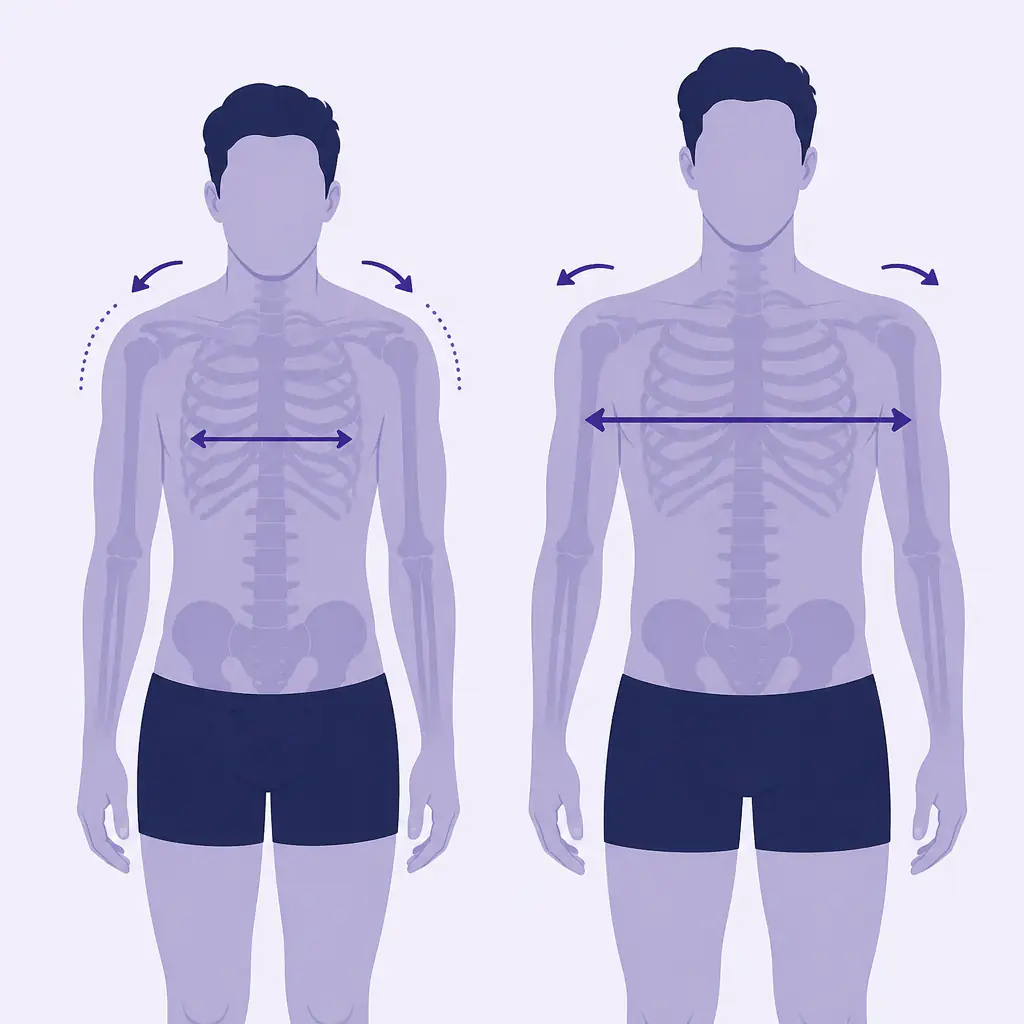
Rounded shoulders, a common postural pattern from prolonged sitting, pull the scapulae forward and cause the shoulder joints to internally rotate. This narrows the visible shoulder width and makes even wide clavicles look smaller.
Correcting forward head posture and scapular protraction through face pulls, band pull-aparts, and thoracic extension work can restore several centimeters of apparent shoulder width. Some people are surprised at how significant this change looks.
3. Waist Reduction
You cannot widen your clavicles, but you can narrow your waist. Reducing body fat around the midsection improves the shoulder-to-waist ratio from the other direction. A lower body fat percentage emphasizes whatever clavicle width you have.
4. Clothing Choices
Structured jackets with shoulder padding, raglan sleeves, and horizontal chest stripes all visually broaden the shoulder line. Narrow lapels and tapered fits at the waist further enhance the V-taper silhouette.
What About Surgical Options?
Clavicle widening surgery exists as a cosmetic procedure. It typically involves either cutting the clavicle and inserting a spacer to increase length or using implants near the shoulder. This is a niche procedure, performed by very few surgeons, and carries real risks including nerve damage, hardware failure, asymmetry, and a lengthy recovery period.
If you are seriously considering any surgical intervention for bone structure, talk to a qualified medical professional before making any decisions. A board-certified orthopedic surgeon or plastic surgeon with experience in this area can walk you through realistic outcomes, risks, and whether you are a suitable candidate.
The procedure is not widely performed and the long-term data on outcomes is limited. It is worth exhausting non-surgical approaches first.
How to Assess Your Own Clavicle Width
Most people do not know exactly where they fall on the narrow-to-wide spectrum. A useful rough measurement is the biacromial breadth, the distance between the two acromion processes (the bony tip of each shoulder). You can have someone measure this with a flexible tape measure while you stand in a relaxed, upright posture.
For context:
- Average adult male biacromial breadth: roughly 38 to 42 cm
- Above 43 cm is generally considered wide
- Below 37 cm is generally considered narrow
Female averages run about 2 to 4 cm lower across the same distribution.
Keep in mind this measurement captures shoulder width including soft tissue, not clavicle length alone. X-ray or DEXA scan gives a true skeletal measurement, but these are rarely necessary unless you are working with a sports scientist or medical team.
If you want a more complete picture of how your facial and upper body proportions interact, Aura provides an AI-based structural analysis that can help you understand your baseline before deciding which areas to prioritize.
Practical Training Plan for Narrow Clavicles
If you have narrower clavicles and want to maximize your shoulder appearance through training, here is a practical framework:
Priority 1: Lateral deltoid volume Aim for 15 to 20 direct sets per week for the lateral head. Cable lateral raises, performed with a slight forward lean and a controlled eccentric, provide constant tension and are highly effective.
Priority 2: Posture correction Add face pulls (3 sets of 15 to 20 reps) and band pull-aparts (2 to 3 sets of 20 reps) to every upper body session. Within 8 to 12 weeks, many people notice visible improvement in how their shoulders sit at rest.
Priority 3: Trapezius and rear deltoid balance A developed upper and mid-trapezius, combined with rear deltoids, creates the appearance of a thick, wide back when viewed from the front. Rows, face pulls, and rear delt flyes address this.
Priority 4: Waist management If your body fat is above 18 to 20 percent, reducing it will improve your shoulder-to-waist ratio meaningfully. A conservative caloric deficit of 300 to 500 calories per day, combined with the training above, accomplishes both goals simultaneously.
Results from this approach are realistic but require consistency. Expect 3 to 6 months before the visual change is clearly noticeable in photos.
Wide Clavicles: Advantages and Considerations
If you have wide clavicles, you have a structural advantage for creating an imposing upper body. However, there are a few things to manage:
- Proportional arm development matters more. Wide clavicles with underdeveloped arms can look disproportionate. Prioritize bicep, tricep, and forearm development alongside shoulder work.
- Clothing fit can be a challenge. Off-the-rack shirts often fit well in the shoulders but poorly in the torso. Slim-fit or tailored options help.
- Injury awareness. Wider shoulder girdles can sometimes be more prone to AC joint issues under heavy load. Pay attention to technique on pressing movements and avoid excessive shrugging patterns under load.
Using a tool like Aura to get a scored breakdown of your facial and structural proportions can clarify whether your clavicle width is actually a limiting factor in your overall appearance or whether other areas deserve attention first.
The Bottom Line
Narrow vs wide clavicles is a real structural difference with genuine effects on physique aesthetics and how clothes fit. Wide clavicles make achieving a high shoulder-to-waist ratio easier. Narrow clavicles require more deliberate training and styling choices to compensate.
Bone structure is not something you can change significantly through effort alone. What you can change is muscle development, posture, body composition, and how you dress. For most people, those four levers are more than enough to create a meaningful improvement in how their frame reads visually.
Focus on what is trainable. Work with your structure, not against it.
Frequently asked questions
Can you widen your clavicles naturally through exercise? +
No. The clavicle is a bone and does not grow wider in response to training once skeletal maturity is reached. Exercise can develop the lateral deltoid and improve posture, which makes shoulders appear wider, but the bone itself does not change.
How do I know if I have narrow or wide clavicles? +
A practical method is to measure your biacromial breadth, the distance between the tips of your shoulder bones, with a flexible tape measure. For adult men, above 43 cm is generally considered wide and below 37 cm is generally considered narrow. A sports scientist or physician can provide a more precise skeletal measurement if needed.
Do wide clavicles make you look more attractive? +
Research suggests that a higher shoulder-to-waist ratio is consistently rated as attractive in men, and wide clavicles contribute structurally to that ratio. However, attractiveness is influenced by many factors beyond clavicle width, including muscle development, posture, body composition, and facial features.
Is clavicle widening surgery safe? +
Clavicle widening procedures are rare, niche surgeries with real risks including nerve damage, hardware complications, and asymmetry. Long-term outcome data is limited. Always consult a qualified, board-certified surgeon before considering any bone structure procedure, and exhaust non-surgical options first.