 Aura: Looksmaxxing
 How to Tell If You Have Narrow Clavicles
Learn how to tell if you have narrow clavicles using simple measurements and visual checks. Understand what narrow clavicles mean for your frame and aesthetics.
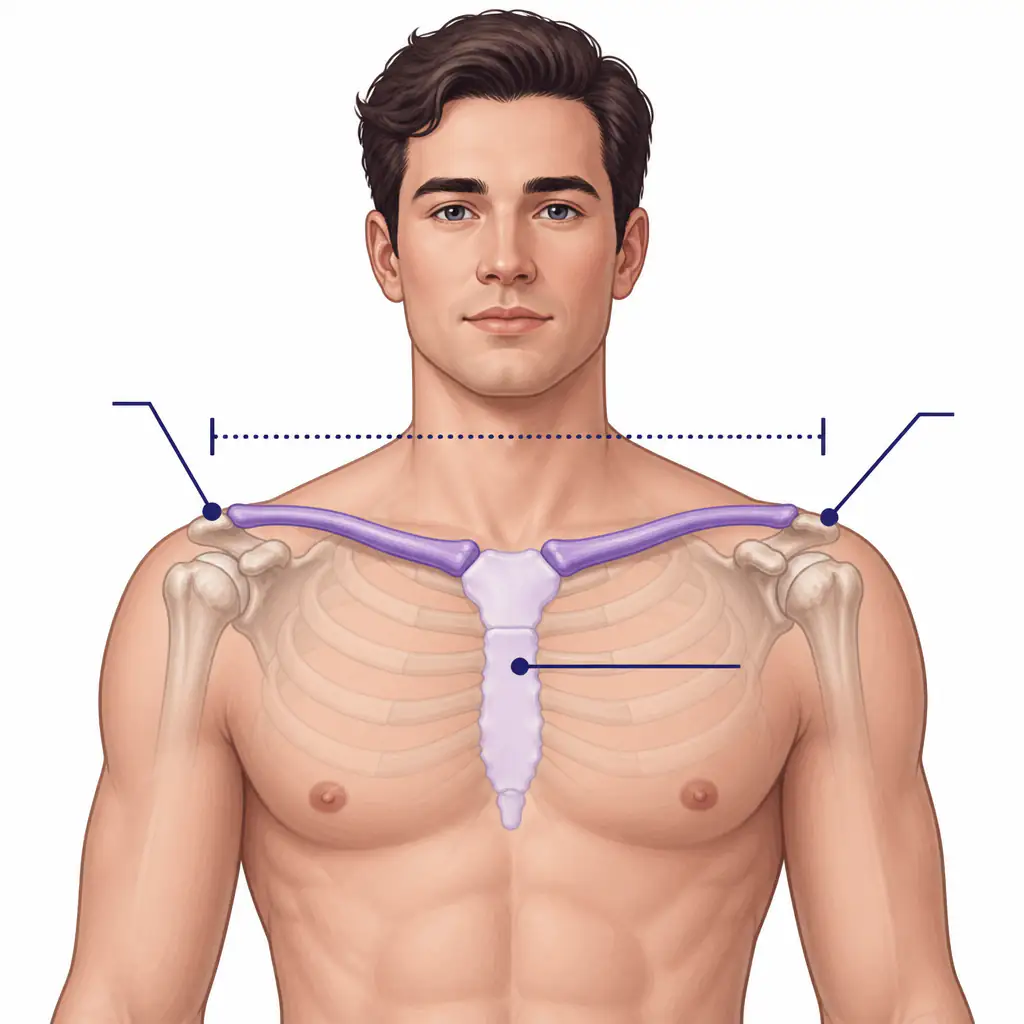
Your shoulder width is one of the most immediately visible aspects of your physical frame. Whether you are trying to understand your body proportions, assess your aesthetic starting point, or figure out what to improve, knowing how to tell if you have narrow clavicles is a practical first step.
This guide walks you through anatomy, measurement methods, visual checks, and what the findings actually mean for you.
What Are the Clavicles and Why Do They Matter?
The clavicle (collarbone) is the S-shaped bone that runs horizontally from the sternum (breastbone) to the acromion process of the scapula (shoulder blade). You have one on each side. Together, they set the physical width of your shoulder girdle.
Why do they matter aesthetically? The clavicles are the skeletal anchor for your shoulder width. Unlike muscle mass, which can be built up over time, clavicle length is determined by genetics and bone development that largely concludes in your late teens. This means that your clavicular width forms a kind of ceiling on how broad your shoulders can appear in a natural resting posture.
In male aesthetics especially, broader clavicles contribute to the tapered, triangular torso shape often considered visually balanced. In female aesthetics, moderate shoulder width relative to hips creates the hourglass proportions many find appealing. Neither extreme is universally better, but understanding where you fall on the spectrum gives you accurate information to work with.
The Anatomy Behind Shoulder Width
Before you measure, it helps to understand exactly what you are measuring.
- Biacromial width: the distance between the outermost points of both acromion processes. This is the standard anatomical measurement for shoulder width and reflects clavicle length plus the width of the scapula.
- Clavicle length: measured from the sternal notch to the acromioclavicular (AC) joint. Average adult clavicle length is roughly 14 to 16 centimeters, though this varies significantly by height and sex.
- Shoulder-to-waist ratio: the ratio of biacromial width to waist width, often expressed as a simple decimal. Research suggests ratios above 1.4 (shoulders being 40% wider than waist) are perceived as notably athletic in men.
Knowing these terms matters because “narrow clavicles” is not a medical diagnosis. It is a relative assessment based on how your shoulder width compares to your height, waist, and overall frame.
How to Measure Your Clavicle Width at Home
You do not need medical equipment for a useful estimate. Here is a straightforward method.
What You Need
- A flexible measuring tape (soft fabric, not metal)
- A mirror or a second person to help
- A wall to stand against
Step-by-Step Instructions
- Stand upright with relaxed shoulders. Do not pull your shoulders back or let them roll forward. Natural posture gives you the most accurate reading.
- Locate your acromion processes. These are the bony points at the very top-outer corner of each shoulder, just above where your arm meets your torso. Press gently along the top of your shoulder until you feel a slight bony prominence.
- Measure biacromial width. Have a helper place the start of the tape at one acromion process and pull it straight across to the other. Record this number in centimeters.
- Measure your height. Stand barefoot against a wall and mark your height.
- Calculate your biacromial-to-height ratio. Divide your biacromial width by your height. A ratio below 0.235 is generally considered narrow, 0.235 to 0.260 is average, and above 0.260 is broad.
For example, a person who is 180 cm tall with a biacromial width of 40 cm has a ratio of 0.222, which falls into the narrow range.
A Note on Accuracy
Home measurements have margin for error, especially if you are measuring alone. Take three separate readings and average them. Measuring over a thin shirt is fine; thick or padded clothing will skew results.
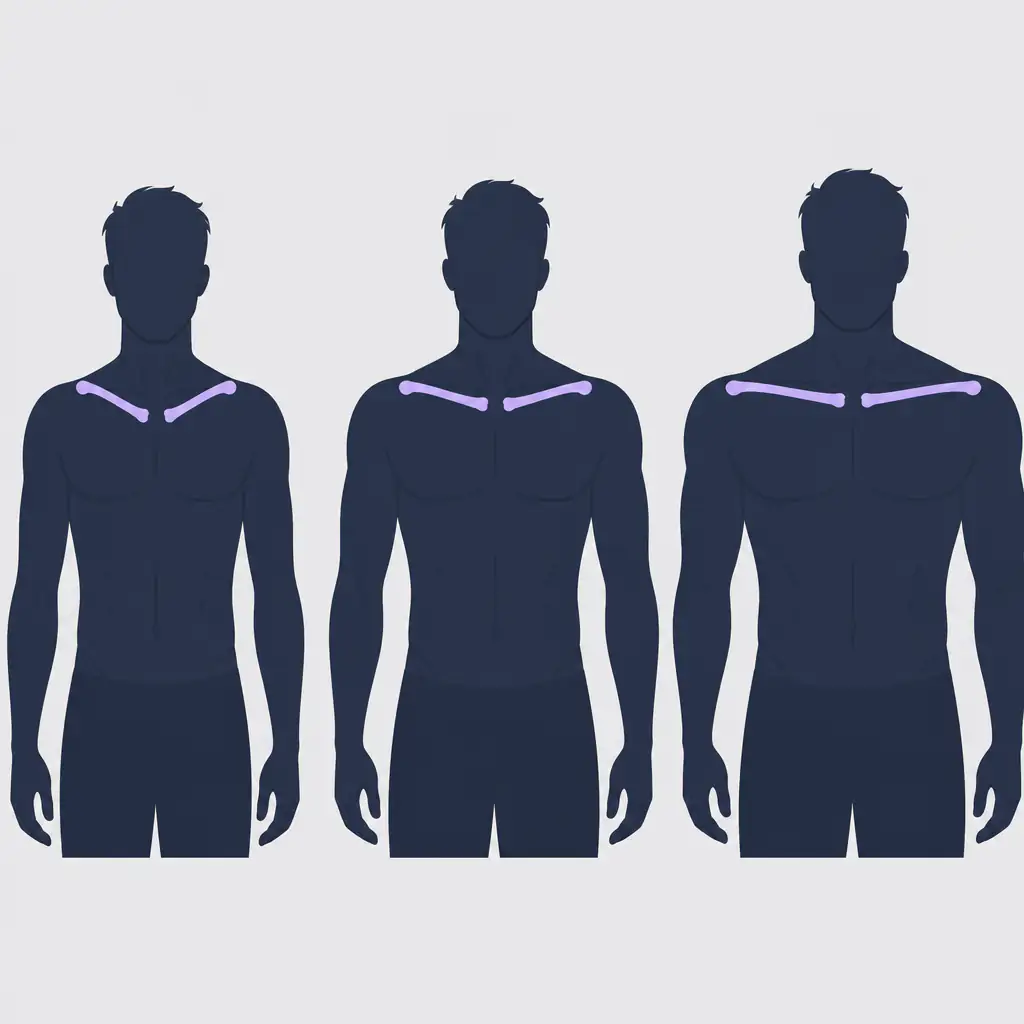
Visual Signs That Your Clavicles May Be Narrow
Numbers are useful, but visual indicators can also give you a quick directional read before you reach for a tape measure.
Your Shoulders Appear to Slope Steeply
Narrow clavicles often contribute to a sloped or drooping shoulder appearance, because there is less horizontal bone structure holding the shoulder joint out and upward. This is distinct from rounded shoulders caused by posture, though both can occur together.
Shirts and Jackets Look Oversized at the Shoulder
If structured garments like blazers or button-downs consistently gap or bunch at the shoulder seam even when the chest and torso fit well, your shoulder width may be narrower than standard sizing assumes.
Your Neck Looks Longer or More Prominent
When the shoulders are narrow relative to the head and neck, the neck can appear elongated. This is a matter of ratio rather than actual neck length.
Your Torso Lacks a Pronounced Taper
The classic V-taper appearance (broad shoulders narrowing to a smaller waist) depends heavily on clavicle width. If your shoulders and waist appear close to the same width even when you are lean, shorter or narrower clavicles may be a factor.
The “Arm Hang” Test
Stand relaxed in front of a mirror and let your arms hang naturally. Look at the angle your upper arm makes with your torso. If your arms fall very close to the sides of your body with little gap between your elbow and hip, your shoulder width is likely on the narrower side.
Narrow vs. Average vs. Wide Clavicles: A Quick Comparison
| Category | Biacromial-to-Height Ratio | Visual Impression |
|---|---|---|
| Narrow | Below 0.235 | Sloped shoulders, minimal taper, neck looks prominent |
| Average | 0.235 to 0.260 | Balanced proportions, some taper visible |
| Wide | Above 0.260 | Pronounced shoulder width, strong V-taper potential |
Keep in mind these thresholds are reference points drawn from population studies, not fixed cutoffs. Body proportions interact with each other. A person with narrow clavicles but a very narrow waist may still display an aesthetic taper. A person with technically wide clavicles but high body fat at the waist may not.
How Muscle Development Affects the Picture
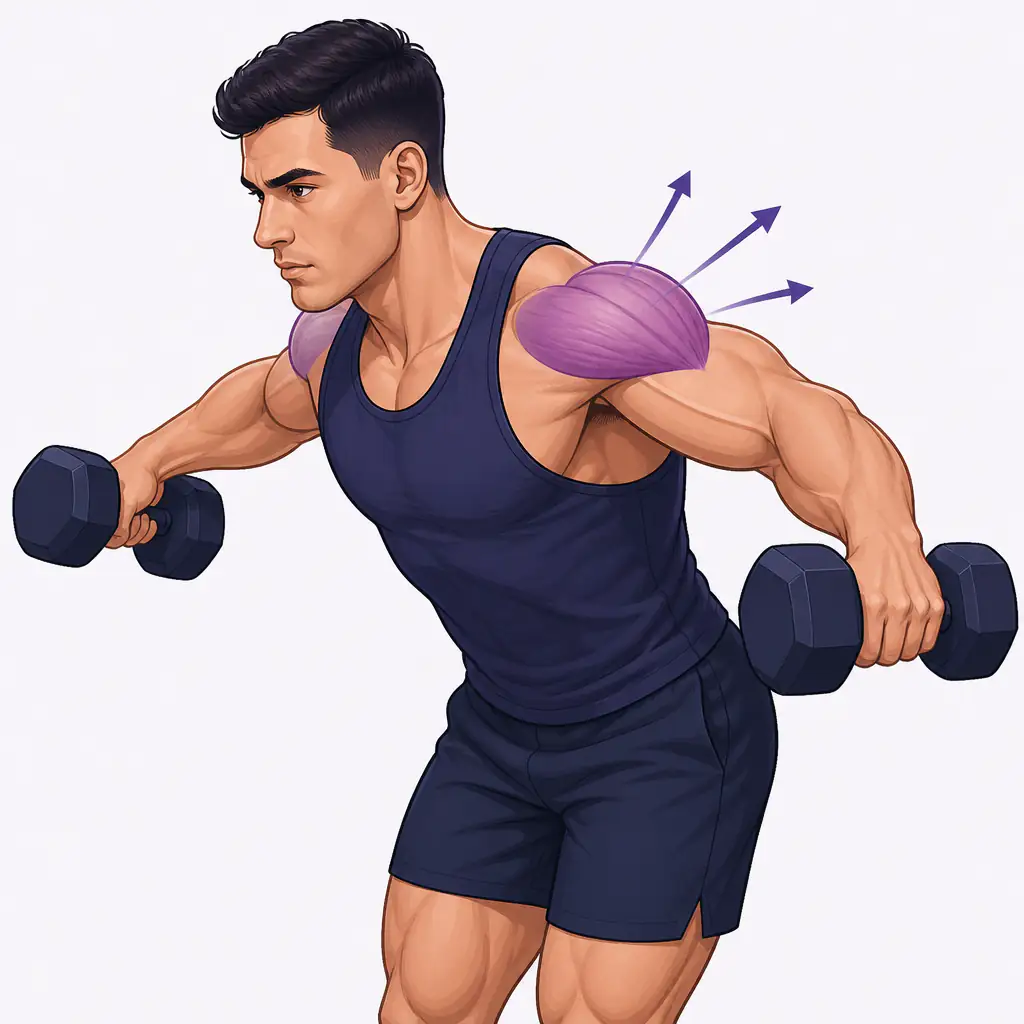
Clavicle width is fixed, but the deltoid muscles (the three-headed muscles capping each shoulder) sit on top of and around the shoulder joint. Developed deltoids add visible width and roundness to the shoulder silhouette, partially compensating for narrower clavicle structure.
This is practically useful. If your biacromial ratio places you in the narrow range, you are not without options:
- Lateral raises target the medial (side) deltoid head most directly and add the most visible width.
- Overhead pressing builds overall deltoid mass.
- Upright rows engage the upper traps and rear delts, thickening the upper back and improving the shoulder profile from the rear.
Research suggests that consistent resistance training can meaningfully change perceived shoulder width even when bone structure remains unchanged. The key word is perceived, which matters for aesthetics.
Getting an Objective Baseline for Your Proportions
Measurements and mirror checks are useful starting points, but they leave room for self-perception bias. People often misjudge their own proportions, particularly when focused on a specific feature.
If you want an objective read on how your frame and facial features come across together, tools like Aura can provide a structured assessment. Aura uses AI to analyze facial structure and deliver scores across multiple aesthetic dimensions, which can serve as a useful baseline when you are mapping out what aspects of your appearance to focus on. Understanding which features are working for you and which are limiting your overall aesthetic helps you prioritize effort effectively.
Can You Change Clavicle Width?
This is the question most people arrive at after assessing their frame. The honest answer: not without surgery.
Clavicle width is determined by bone length, which is set during skeletal development. No exercise, supplement, or posture protocol changes the length of your clavicle bones. What you can change:
- Muscle mass on the deltoids and upper back, which alters perceived width
- Posture, since rounded or elevated shoulders can make clavicles look narrower than they are
- Clothing choices, such as structured shoulder seams, horizontal stripes at shoulder level, or layering that adds visual mass at the shoulder
- Body fat levels, since a leaner midsection improves the shoulder-to-waist ratio even without wider shoulders
For those who have researched surgical options such as clavicle-lengthening procedures: these exist but are rare, carry significant risk, and require a long recovery. Talk to a qualified orthopedic or plastic surgeon before considering any surgical intervention on bone structure. This is not a decision to make based on aesthetic goals alone.
Practical Tips for Working With Your Frame
Regardless of where your measurements land, here are specific, actionable adjustments that can improve how your proportions read to others.
- Prioritize lateral deltoid work in the gym. Three to four sets of lateral raises two to three times per week, using controlled form with a slight forward lean, produces the most targeted width adaptation.
- Avoid very tight-fitting tops that follow the exact contour of a narrow shoulder line. A slight fit with a clean shoulder seam tends to look more proportionate.
- Correct forward head posture. When the head juts forward, it visually narrows and drops the apparent shoulder line. Face pulls, chin tucks, and thoracic extension work can help.
- Check your biacromial ratio against your waist, not just your height. A 38 cm biacromial width looks different on someone with a 75 cm waist versus a 90 cm waist.
- Use structured outerwear. Blazers, bomber jackets, and overshirts with firm shoulder construction add visual width without any physical change.
Understanding your proportions is the first step. Knowing what to do with that information is where real progress begins. If you are building a comprehensive picture of your aesthetic baseline, including facial harmony alongside frame structure, Aura provides scoring across multiple dimensions in one place, which may help you identify where effort is best directed.
FAQ
How do I know if my shoulders are narrow without measuring?
Visual checks are a reasonable starting point. Look at whether shirts consistently gap at the shoulder, whether your torso has a noticeable taper, and whether your arms hang very close to your sides. That said, a tape measure and the biacromial-to-height ratio calculation gives you a much more reliable answer than visual assessment alone.
What is a normal clavicle length for adults?
Average adult clavicle length is approximately 14 to 16 centimeters for women and 15 to 17 centimeters for men, though this varies with overall body size. Clavicle length alone does not determine aesthetic shoulder width; the biacromial measurement (the full distance between both shoulder points) is more relevant.
Can posture make clavicles look narrower than they are?
Yes. Rounded shoulders caused by tight pectorals and weak upper back muscles pull the shoulder girdle forward and inward, reducing apparent width. Correcting posture through targeted stretching and strengthening may help improve how your shoulder width reads visually, even without any change to bone structure.
Is narrow clavicle width a disadvantage for fitness or sports?
From a pure performance standpoint, clavicle width has limited impact on most athletic activities. It influences shoulder mechanics in overhead sports and swimming to some degree, but it is not a meaningful limiting factor for general fitness. Aesthetically, it affects how muscular development displays, but many athletes with narrower frames build impressive physiques through targeted training.
Frequently asked questions
How do I know if my shoulders are narrow without measuring? +
Visual checks are a reasonable starting point. Look at whether shirts consistently gap at the shoulder, whether your torso has a noticeable taper, and whether your arms hang very close to your sides. That said, a tape measure and the biacromial-to-height ratio calculation gives you a much more reliable answer than visual assessment alone.
What is a normal clavicle length for adults? +
Average adult clavicle length is approximately 14 to 16 centimeters for women and 15 to 17 centimeters for men, though this varies with overall body size. Clavicle length alone does not determine aesthetic shoulder width; the biacromial measurement across both shoulder points is more relevant for assessing frame width.
Can posture make clavicles look narrower than they are? +
Yes. Rounded shoulders caused by tight pectorals and weak upper back muscles pull the shoulder girdle forward and inward, reducing apparent width. Correcting posture through targeted stretching and strengthening may help improve how your shoulder width reads visually, even without any change to bone structure.
Is narrow clavicle width a disadvantage for fitness or sports? +
From a pure performance standpoint, clavicle width has limited impact on most athletic activities. It influences shoulder mechanics in overhead sports and swimming to some degree, but it is not a meaningful limiting factor for general fitness. Aesthetically, it affects how muscular development displays on the frame, but targeted deltoid training can significantly improve proportions regardless of clavicle length.