 Aura: Looksmaxxing
Trimax Surgery: Procedure, Risks and Recovery
Upper jaw, lower jaw and chin in one operation: how it works, the risks that can be permanent, and why we don't recommend it for looks alone.
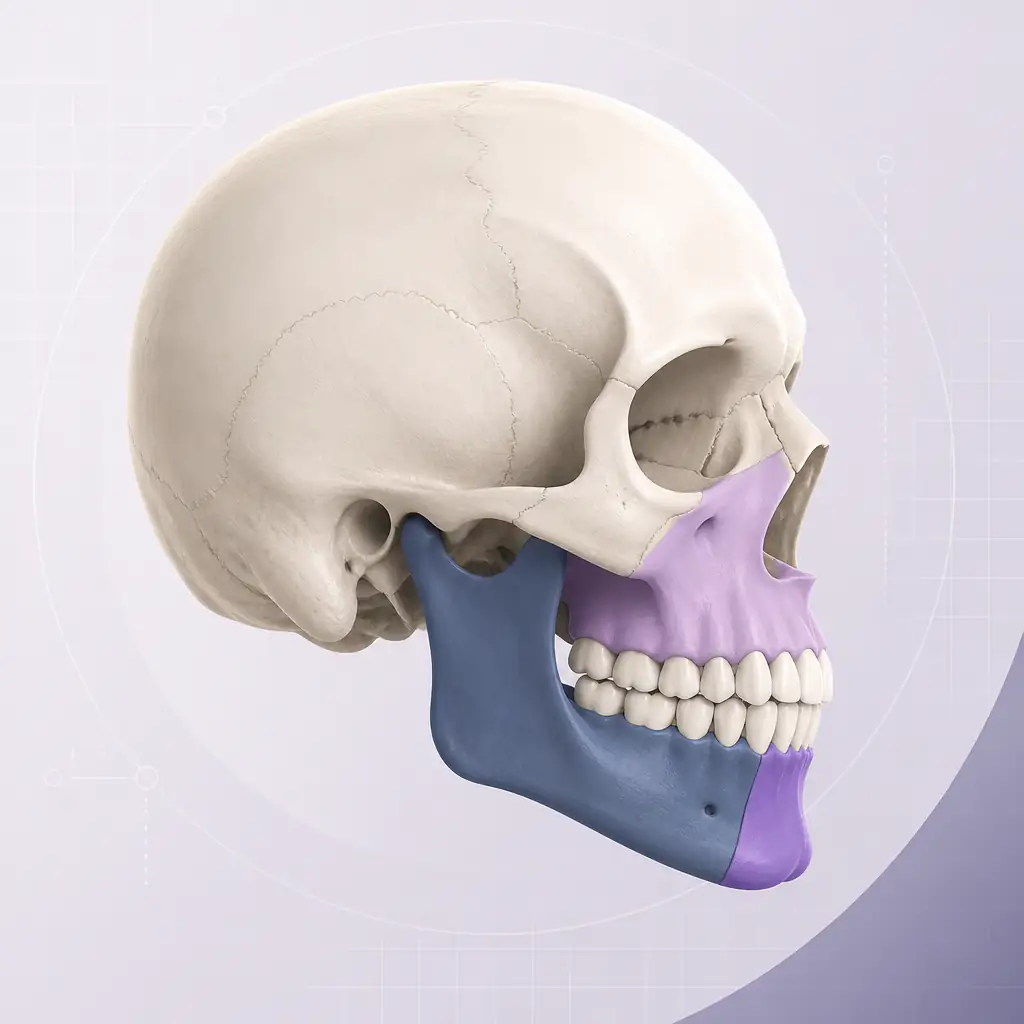
If you’ve spent any time around looksmaxxing discussions, you’ve seen trimax surgery described as the heavy hitter of facial procedures, the answer to “forward growth” and a stronger jawline. That framing leaves out what it is: three separate bone cuts in one operation, a timeline of years, and risks that can stay with you for life.
This guide explains what trimax involves, what can go wrong, who it is actually designed for, and what to try first if your goal is how you look.
What Trimax Surgery Actually Is
“Trimax” is an informal term. You won’t find it in surgical textbooks. Surgeons usually call the same operation bimaxillary orthognathic surgery with genioplasty, or double jaw surgery with a chin osteotomy. Orthognathic comes from Greek roots meaning “straight jaws,” and an osteotomy is a controlled surgical cut in bone.
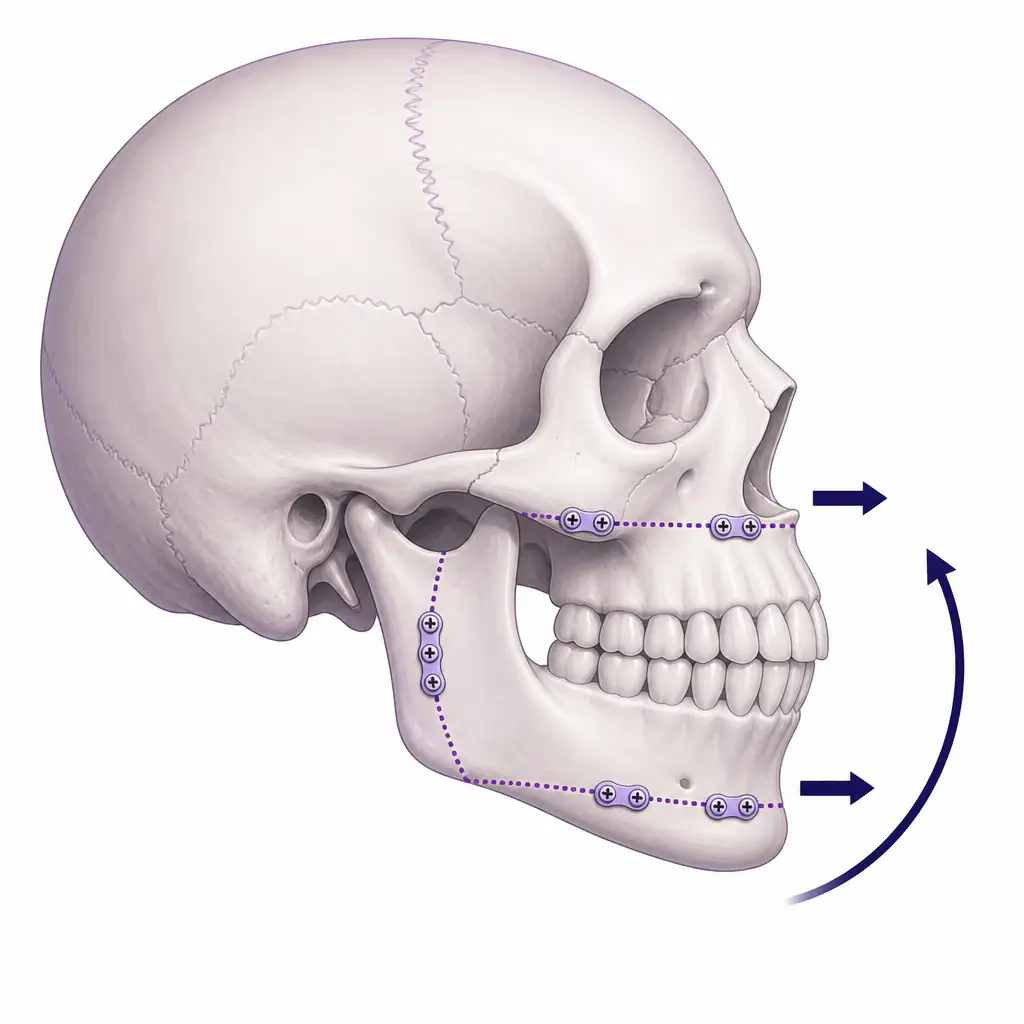
Trimax combines three osteotomies in a single operation:
- Le Fort I osteotomy. The upper jaw (maxilla) is cut horizontally above the tooth roots, freed, and repositioned.
- Bilateral sagittal split osteotomy (BSSO). The lower jaw (mandible) is split on both sides behind the molars so the tooth-bearing part can be moved.
- Osseous genioplasty. The chin bone is cut and moved independently.
The repositioned segments are held in place with small titanium plates and screws while the bone heals.
How trimax differs from bimax
Bimax refers to the first two cuts only: upper and lower jaw. The chin cut gets added because moving the jaws to fix the bite doesn’t always put the chin where it functions or looks best. It also adds a third site where a nerve can be injured.
Where the term gets confusing
Online, some people use “trimax” loosely to mean bimax plus other work, like cheekbone procedures or implants. If you raise the term with a surgeon, describe exactly what you mean.
The Risks, Including the Permanent Ones
Trimax has a solid track record in experienced hands for the problems it is designed to treat. It is still major surgery, and the risks belong before anything else.
- Nerve injury and lasting numbness. The inferior alveolar nerve runs through the lower jaw and supplies feeling to the lower lip and chin. The BSSO cut places it at risk, and the genioplasty adds risk to its branch, the mental nerve. Moving the upper jaw can also affect sensation in the cheeks and upper lip. Altered sensation is common right after surgery. Most patients improve, but a minority are left with numbness or changed sensation that does not go away.
- Relapse. Bones can drift partway back toward their original position, especially with large movements.
- Bite problems. More orthodontic work is common afterwards, and some people need further surgery.
- Jaw joint (TMJ) symptoms. Some patients see improvement, others develop new clicking, pain or stiffness.
- Nasal changes. Moving the maxilla can widen the base of the nose or tilt the tip upward. These changes are not always fully controllable.
- Hardware, infection and bleeding. Plates sometimes need removal in a later operation. Infection and significant bleeding are uncommon but possible.
- The recovery itself. Weeks on a liquid diet, months of swelling, and one to three years of orthodontic treatment around the surgery.
- Psychological adjustment. Seeing a noticeably different face in the mirror can be harder than people expect, even when the result is technically good. If you find yourself fixating on small flaws, talk to a mental health professional before talking to a surgeon.
Who Trimax Is Designed For
Orthognathic surgery was developed to solve functional problems, and that is still how most surgeons approach it. Common indications include:
- Skeletal malocclusion. A bite problem caused by jaw position rather than tooth position alone. Class II means the lower jaw sits too far back relative to the upper. Class III means the lower jaw sits too far forward or the upper jaw is underdeveloped.
- Obstructive sleep apnea (OSA). Advancing both jaws, a procedure called maxillomandibular advancement (MMA), can enlarge the airway behind the tongue and soft palate. Research suggests MMA is one of the more effective surgical options for moderate to severe OSA in selected patients.
- Facial asymmetry. When one side of the jaw grew differently from the other.
- Open bite or long lower face. Often linked to excess vertical growth of the maxilla.
- Retruded midface or chin that also affects function.
Why it comes up in looksmaxxing
Much of the interest in trimax online is about appearance: more forward projection, a sharper jaw angle, a stronger chin. A concept that comes up often is counterclockwise rotation, where the whole jaw complex is rotated so the chin moves up and forward. Surgeons do use it, but as part of correcting a skeletal problem.
Functional vs. aesthetic
If you have a documented bite problem or sleep apnea, surgeons will see a clear medical rationale and insurance may cover part of the treatment. If your bite is normal and your goals are purely cosmetic, you would be taking on permanent risks to change a jaw that works. We don’t think that trade is worth it, and many surgeons will not perform full trimax in that situation.
If Your Goal Is Appearance: Start Without Surgery
No non-surgical method moves bone, and claims that tongue posture techniques can reshape an adult skeleton have little scientific support. But a lot of how defined a jaw and chin look comes from things that carry no surgical risk:
- Body fat. Fat under the chin and along the jaw hides the bone that is already there. A few percent less often changes the jawline more than people expect.
- Posture. A head-forward posture softens the line between jaw and neck.
- Facial hair and hairstyle. A well-shaped beard can add visual width and definition. A haircut that suits your face shape changes the overall balance.
- Sleep and general health. Puffiness from poor sleep and high salt intake changes how defined the face looks day to day.
These changes are slower and less dramatic than surgery. They are also cheap, reversible and free of permanent risk, which is why they come first.
Smaller Procedures Are Still Procedures
If you are being told trimax is the only answer, it helps to know it is the most extensive option, not the only one. Every row below is still a medical procedure with its own risks, which we cover in separate articles.
| Option | What it changes | Invasiveness |
|---|---|---|
| Orthodontics alone | Tooth position, some lip support | Low |
| Sliding genioplasty alone | Chin projection and height | Moderate, nerve risk |
| Custom jaw or chin implants | Jawline width and contour | Moderate, infection and revision risk |
| Bimax without genioplasty | Bite, midface and jaw position | High |
| Dermal fillers | Temporary contour at jaw and chin | Low, but with vascular risks |
How the Process Works, Phase by Phase
For people with a functional indication, trimax is not a single appointment. It is a treatment journey that often spans one to three years.
Phase 1: Consultation and records
Expect detailed imaging and measurements: a cone beam CT (CBCT) scan for 3D bone anatomy, standardized facial photos, dental impressions or intraoral scans, and cephalometric analysis, which measures where your jaws sit relative to the skull base.
Phase 2: Pre-surgical orthodontics
Most patients wear braces or aligners for roughly 12 to 18 months before surgery. The goal is decompensation: moving teeth back to their natural positions over the bone. Your bite may look or feel worse during this phase. Some practices offer a surgery-first approach that shortens this phase, but it isn’t right for everyone.
Phase 3: Virtual surgical planning
Many surgeons use virtual surgical planning (VSP). Your CT data is loaded into 3D software, bone movements are simulated to the millimeter, and custom splints or cutting guides are made. Soft tissue predictions are approximations, not guarantees.
Phase 4: Surgery day
The operation is done under general anesthesia, typically through incisions inside the mouth. Combined three-segment surgery commonly takes several hours. Most patients stay in the hospital for one to three nights.
Phase 5: Post-surgical orthodontics
After healing, braces stay on for several more months, commonly six to twelve, to settle the final bite.
Recovery Timeline
Every patient heals differently, but a typical trajectory looks like this:
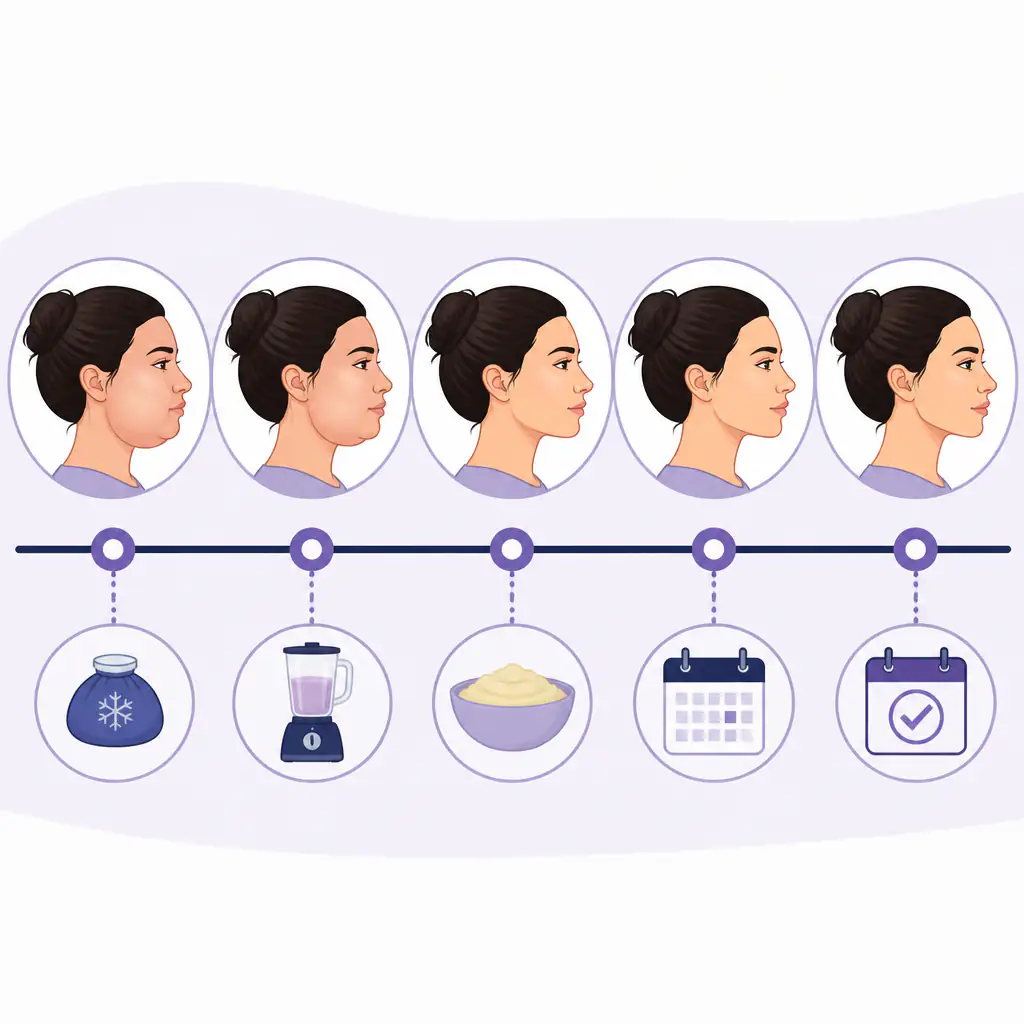
- Days 1 to 3: Swelling peaks. Ice, head elevation and prescribed medications are the focus. Nasal congestion is common after Le Fort I surgery.
- Weeks 1 to 2: Liquid or blended diet. Bruising may spread down the neck. Many people feel exhausted and lose weight.
- Weeks 2 to 6: Gradual shift to a soft, no-chew diet. Many desk workers return to work in two to four weeks.
- Weeks 6 to 12: Initial bone healing allows a slow return to chewing, guided by your surgeon.
- Months 3 to 6: Most visible swelling resolves.
- Around 12 months: Residual swelling fades and the final result becomes clear.
Numbness in the lower lip, chin, and sometimes the upper lip and cheeks is very common early on. Sensation often returns gradually over months, though for some people it does not return fully.
Cost and Insurance
Costs vary widely by country, city, surgeon, and whether orthodontics, hospital fees, anesthesia and imaging are bundled. In the United States, total out-of-pocket figures commonly reported for double jaw surgery plus orthodontics run from the tens of thousands of dollars upward.
Insurance may cover orthognathic surgery when there is documented medical necessity, such as a significant malocclusion or sleep apnea. Genioplasty is more often classified as cosmetic and excluded, even when the jaw surgery itself is covered. If you’re looking at surgery abroad, factor in what happens if a complication arises after you return home.
If a Doctor Has Recommended It for a Functional Reason
- Make sure the functional diagnosis is clear. Ask what problem the surgery solves and what happens if you don’t have it.
- Ask whether the chin cut is necessary. It adds nerve risk. If the bite can be corrected without it, that is worth knowing.
- Choose the right specialist. A board-certified oral and maxillofacial surgeon who performs orthognathic surgery regularly. Ask how many double jaw cases they do each year.
- Rule out sleep apnea. If you snore, wake up tired, or have been told you stop breathing at night, get a sleep study. It can change both the plan and insurance coverage.
- Get at least two opinions. Different surgeons may recommend different movements, or a smaller procedure entirely.
- Ask for the surgeon’s own rates. Nerve injury, relapse, and how often hardware has to come out.
- Plan the logistics. Two to four weeks off work, a support person for the first week, and a financial buffer for extra appointments.
The Bottom Line
Trimax surgery repositions the upper jaw, lower jaw and chin in one operation. For people with a genuine skeletal problem, bite dysfunction or sleep apnea, it can meaningfully improve function, and the face changes with it. It also comes with a long orthodontic timeline, a demanding recovery, and risks like lasting numbness and relapse. For people whose jaw works fine and who want a different look, we don’t think those risks are worth taking.
Frequently asked questions
Is trimax surgery worth it for aesthetics alone? +
We don't think so. Trimax makes three separate bone cuts, two of them near nerves that supply feeling to the lower lip and chin, and some of its risks are permanent. It was developed for functional problems such as a severe bite problem or sleep apnea. If your jaw works fine, start with non-surgical changes.
What is the difference between bimax and trimax surgery? +
Bimax moves the upper and lower jaw to correct bite and jaw position. Trimax adds a genioplasty, which cuts and moves the chin bone separately so its projection and height can be adjusted independently of the bite. That third cut adds its own nerve risk.
How long does trimax surgery recovery take? +
Most people return to desk work in two to four weeks and start chewing gradually around six to twelve weeks. Visible swelling usually settles over three to six months, and the final result is typically clear around one year after surgery.
Is trimax surgery covered by insurance? +
Insurance may cover the jaw surgery portion when there is documented medical necessity, such as a significant bite problem or obstructive sleep apnea. The genioplasty component is often classified as cosmetic, so confirm coverage in writing before scheduling.
Are the results of trimax surgery permanent? +
The bone changes are intended to be long-lasting, but some degree of relapse, where bones drift partly back toward their original position, can occur, especially with large movements. Some side effects can be permanent too, most importantly lasting numbness of the lower lip or chin.
Will trimax surgery leave visible scars? +
The cuts are usually made through incisions inside the mouth, so most patients have no visible facial scars. In some cases small skin punctures are used to place screws, and these typically heal to be barely noticeable.