 Aura: Looksmaxxing
 How to Grow a Beard with Minoxidil: Full Guide
Learn how to grow a beard with minoxidil safely and effectively. Covers dosage, application, timelines, and realistic expectations for fuller facial hair.
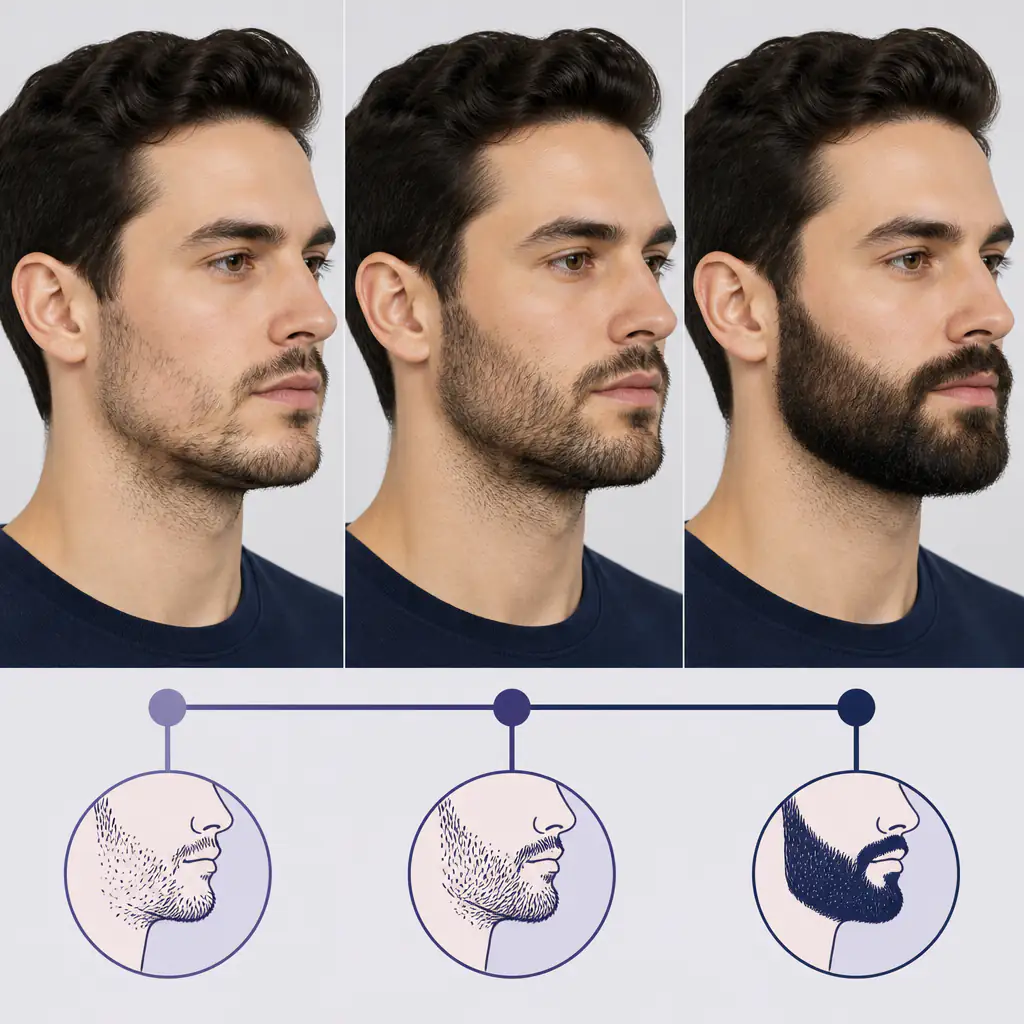
If you have patchy coverage, a disconnected beard mustache, or almost no facial hair at all, you have probably heard minoxidil mentioned as a fix. It is not a myth. Minoxidil for facial hair growth has a growing body of evidence behind it, and thousands of men have used it to fill in gaps that genetics left behind. But it also requires patience, consistency, and realistic expectations. This guide covers exactly how to use it, what to expect, and how to think about the broader picture of your beard and overall appearance.
What Minoxidil Actually Does to Facial Hair
Minoxidil was originally developed as a blood pressure medication. Researchers noticed that patients using it orally grew unexpected body and facial hair, which led to its use as a topical hair loss treatment. Applied to the scalp, it is well-established. Applied to the face, the mechanism is the same but the research base is smaller.
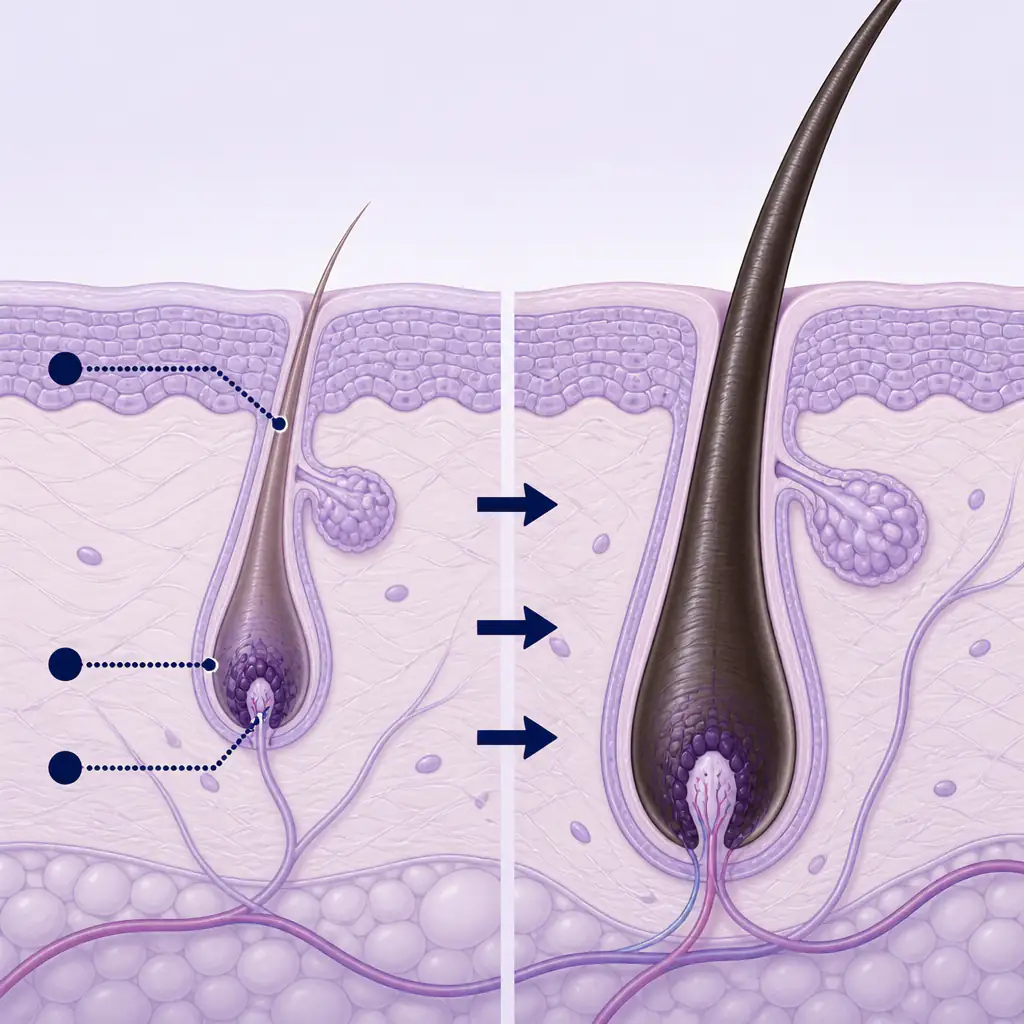
The drug works primarily by prolonging the anagen phase (the active growth phase) of hair follicles and by widening blood vessels, which may improve nutrient delivery to follicle cells. On the face, this can cause vellus hairs (the fine, nearly invisible hairs most men have) to gradually convert into terminal hairs (thicker, pigmented, visible hairs).
This conversion is the core of what minoxidil does for beards. It does not create new follicles. It works with what you already have.
Important disclaimer: Minoxidil is a drug. Talk to a qualified medical professional before starting any minoxidil regimen, especially if you have cardiovascular conditions, skin sensitivities, or are taking other medications.
Who Is a Good Candidate
Not everyone will respond the same way. Men who tend to see the best results typically:
- Already have visible vellus hair in the target areas (cheeks, chin, upper lip)
- Are patient enough to commit to 6 to 12 months of consistent application
- Have patchy or thin coverage rather than completely bare skin
- Are in their 20s or 30s, when follicles are still relatively responsive
If you are older or your beard coverage is extremely sparse, results may be more modest. Some users report significant improvement; others see modest gains. Genetics still set the ceiling.
Before committing, it helps to get an honest baseline assessment of your facial structure and hair distribution. Tools like Aura can give you an objective analysis of your facial features, including jawline definition and overall facial harmony, so you know which beard style would actually suit your face before you invest months into growing one.
Topical vs Oral Minoxidil for Facial Hair
There are two main delivery methods worth understanding.
Topical Minoxidil
This is the most common starting point. It comes in liquid (solution) and foam formulations, typically at 2% or 5% concentration. For beard use, most protocols use the 5% liquid or foam applied directly to the face.
- Pros: Localized application, lower systemic absorption, widely available
- Cons: Can feel greasy, may irritate skin, requires strict daily application
Oral Minoxidil
Low-dose oral minoxidil (typically 1.25 mg to 5 mg per day) has become increasingly discussed for hair growth, including facial hair. Some dermatologists prescribe it off-label for this purpose. Systemic absorption is higher, which means faster and sometimes more uniform results, but also a higher risk of side effects like fluid retention, heart palpitations, and blood pressure changes.
Oral minoxidil requires a prescription and medical supervision. Do not source it without consulting a doctor.
For most beginners, starting with topical is the sensible approach.
How to Apply Topical Minoxidil to Your Beard Area
Consistency in application matters as much as the product itself. Here is a practical step-by-step process:
- Wash your face with a gentle cleanser and pat dry. Clean skin improves absorption.
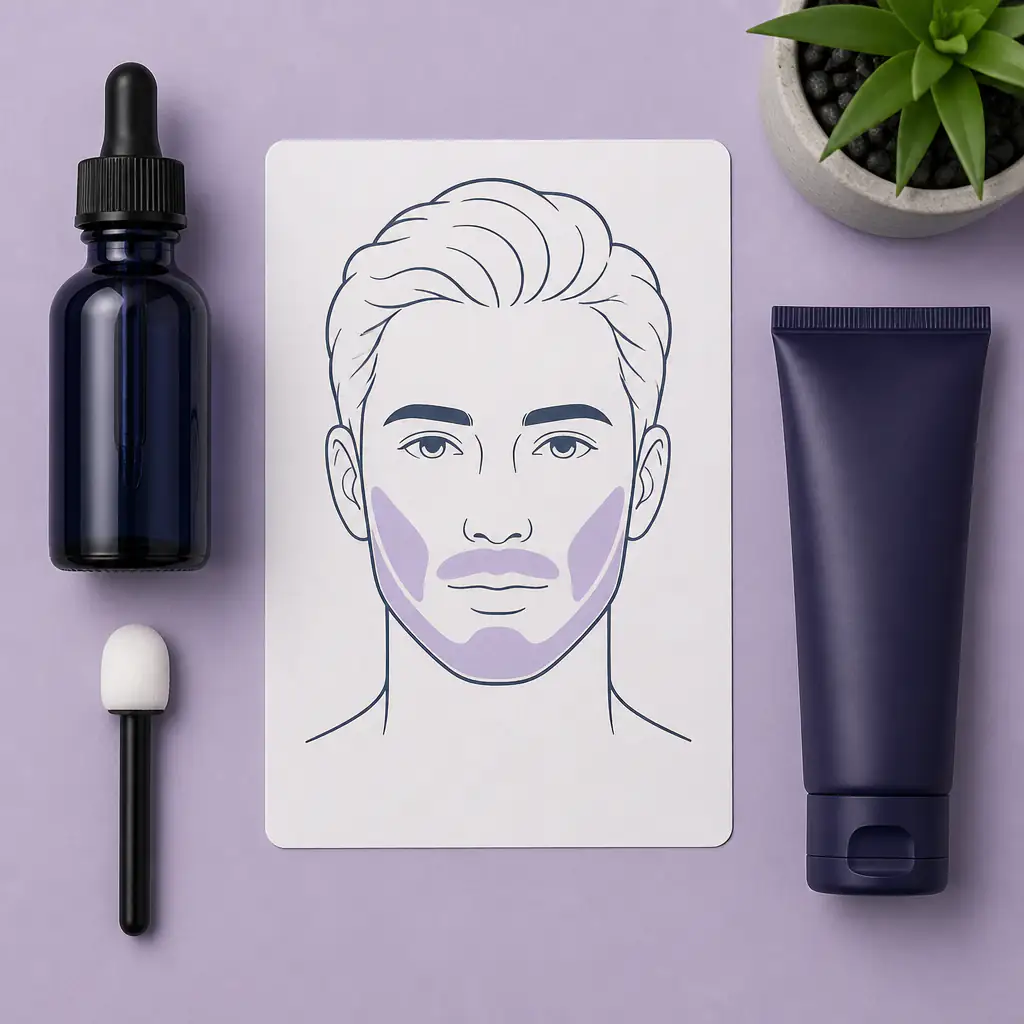
- Apply 1 ml of 5% minoxidil (roughly 20 drops or half a capful of foam) to the target areas. Common zones include the cheeks, jawline, chin, and upper lip.
- Spread evenly using fingertips or a dropper. Do not saturate the skin. A thin, even layer is the goal.
- Let it dry completely before touching your face or going to bed. This takes 15 to 30 minutes depending on the formulation.
- Wash your hands thoroughly after application. Minoxidil absorbed through the hands can have unintended effects.
- Apply once or twice daily, depending on your tolerance and the protocol you discuss with your doctor. Twice daily is common but increases skin irritation risk.
Apply at the same times each day. Missing doses does not ruin progress, but inconsistency slows it significantly.
Realistic Timeline: What to Expect Month by Month
This is where most guides either hype the results or fail to prepare you. Here is an honest breakdown based on commonly reported experiences:
- Weeks 1 to 4: Little to no visible change. The drug is working at the follicle level but nothing is visible yet. Some users experience mild skin redness or flaking.
- Months 2 to 3: Fine vellus hairs may begin to appear or darken slightly in treated areas. Do not shave these off thinking they are irrelevant. They may eventually thicken.
- Months 4 to 6: Noticeable thickening of existing hairs in some areas. Coverage may begin to look more uniform. This is when many users start to see meaningful change.
- Months 6 to 12: The most significant changes tend to occur here. Terminal hair conversion becomes more apparent. Gaps in a previously disconnected beard mustache may start to fill.
- 12 months and beyond: Results plateau. Most of the conversion that will happen has happened.
Research suggests that at least six months of consistent use is necessary before evaluating whether minoxidil is working for you. Stopping earlier gives an incomplete picture.
What Happens When You Stop Using Minoxidil
This is a critical point that many guides gloss over. Minoxidil does not permanently reprogram your follicles. If you stop using it, hairs that converted from vellus to terminal during treatment may gradually revert. This typically takes several months to a year after stopping.
Some long-term users report that after two or more years of continuous use, a portion of the gains become permanent. The evidence for this is mostly anecdotal. The safe assumption is that stopping minoxidil means losing some or all of the beard growth it produced.
This is not a reason to avoid it, but it is a reason to understand the commitment you are making.
Styling Your Beard During and After the Process
While you are growing your beard with minoxidil, how you manage it matters for both appearance and motivation.
Clean Shaven vs Stubble During the Growth Phase
The clean shaven vs stubble debate comes up a lot during minoxidil journeys. Many men default to shaving everything off while they wait, but this is not necessary. Keeping stubble (even uneven stubble) allows you to track progress and helps the beard look intentional rather than patchy.
Stubble vs clean shave comes down to your face shape and current coverage. If patchiness is extreme and uneven, a close shave may actually look cleaner in the short term. If coverage is moderately even but thin, stubble often looks more deliberate.
For reference, some men with naturally strong facial structure, like actors such as Michele Morrone (who is often searched in the context of no beard looks), demonstrate that a clean shave can be a strong aesthetic choice when bone structure supports it. But most men benefit from at least some facial hair to add definition.
Beard Dye and Color Management
As your beard fills in, you may notice color inconsistencies, especially if new terminal hairs are lighter or darker than the rest. Beard dye can help create a more uniform appearance.
One common question that comes up in grooming searches: can you use beard dye on eyelashes or eyebrows? Specifically, people ask about beard dye on eyelashes and how long beard dye lasts on eyebrows.
The short answer: beard dye is generally formulated for coarse facial hair, not for the delicate skin and fine hairs around the eyes. Using beard dye on eyelashes carries a real risk of irritation or chemical injury to the eyes. For eyebrows, some users do apply beard dye carefully, and it may last one to two weeks, but this is not what the product is designed for. If you are considering dyeing eyebrows or lashes, use products specifically formulated for those areas.
Common Side Effects and How to Manage Them
Topical minoxidil on the face is not always comfortable, especially at the start.
- Skin dryness and flaking: Use a gentle, fragrance-free moisturizer after the minoxidil has fully dried.
- Redness or irritation: This may be a reaction to the propylene glycol in some liquid formulations. Switching to a foam version (which often contains less propylene glycol) can help.
- Unwanted hair growth: If minoxidil spreads beyond the intended area (cheekbones, nose, under the eyes), wipe the area clean immediately after noticing it.
- Systemic absorption: Headaches or heart palpitations after applying topical minoxidil should be reported to a doctor immediately.
Start with once-daily application to assess tolerance before increasing frequency.
Combining Minoxidil with Other Beard Strategies
Minoxidil works better when it is part of a broader approach rather than a standalone fix.
- Derma rolling: Some users combine a 0.5 mm to 0.75 mm dermaroller on the face with minoxidil application. Research on scalp hair suggests derma rolling may enhance absorption. Evidence for facial use is more limited, and skin on the face is more sensitive. Proceed cautiously.
- Nutrition: Adequate protein, biotin, zinc, and iron support hair growth generally. Deficiencies in these can slow or limit results.
- Sleep and stress management: Chronic stress elevates cortisol, which can disrupt the hair growth cycle. This is not a minor factor.
- Patience as a strategy: The biggest mistake is quitting at month three. Progress is slow and non-linear.
Understanding how your beard fits your overall facial structure is also worth considering. Using Aura to assess your jawline, face shape, and facial harmony can help you decide which beard style to aim for once coverage improves, rather than growing blindly and trimming by trial and error.
FAQ
How long does it take to grow a beard with minoxidil?
Most users see meaningful results between four and eight months of consistent use. A full evaluation of results typically requires at least 12 months. Progress is gradual and varies significantly between individuals.
Can minoxidil fix a disconnected beard mustache gap?
It may help. The gap between the mustache and the beard (often called the disconnected beard mustache area) is one of the more common target zones. Results depend on whether there are existing vellus hairs in that area that can convert to terminal hairs.
Is it safe to use minoxidil on your face long-term?
Long-term topical use appears to be well-tolerated by most users, but formal long-term safety data for facial application specifically is limited. Talk to a dermatologist about your individual health profile before committing to extended use.
Will your beard stay if you stop using minoxidil?
Generally, stopping minoxidil leads to gradual loss of the beard gains over several months to a year. Some users who use it for two or more years report partial permanent retention, but this is not guaranteed. Plan for ongoing use if you want to maintain results.
Frequently asked questions
How long does it take to grow a beard with minoxidil? +
Most users see meaningful results between four and eight months of consistent use. A full evaluation of results typically requires at least 12 months. Progress is gradual and varies significantly between individuals based on genetics and baseline follicle density.
Can minoxidil fix a disconnected beard mustache gap? +
It may help, depending on whether vellus hairs are present in the gap area. Minoxidil works by converting fine vellus hairs into thicker terminal hairs, so areas with some existing follicular activity tend to respond better than completely bare patches.
Is it safe to use minoxidil on your face long-term? +
Topical minoxidil appears to be well-tolerated by most users over extended periods, but long-term facial-specific safety data is limited. Consult a dermatologist before committing to prolonged use, especially if you have sensitive skin or any cardiovascular history.
Will your beard stay if you stop using minoxidil? +
In most cases, stopping minoxidil leads to gradual loss of beard gains over several months to a year. Some long-term users report partial permanent retention after two or more years of use, but this is not reliably documented. Ongoing use is generally required to maintain results.