 Aura: Looksmaxxing
 Hunter Eyes: What They Are and How to Get Them
Learn what hunter eyes are, why they're considered attractive, and what you can realistically do to achieve a more intense, hooded eye look.
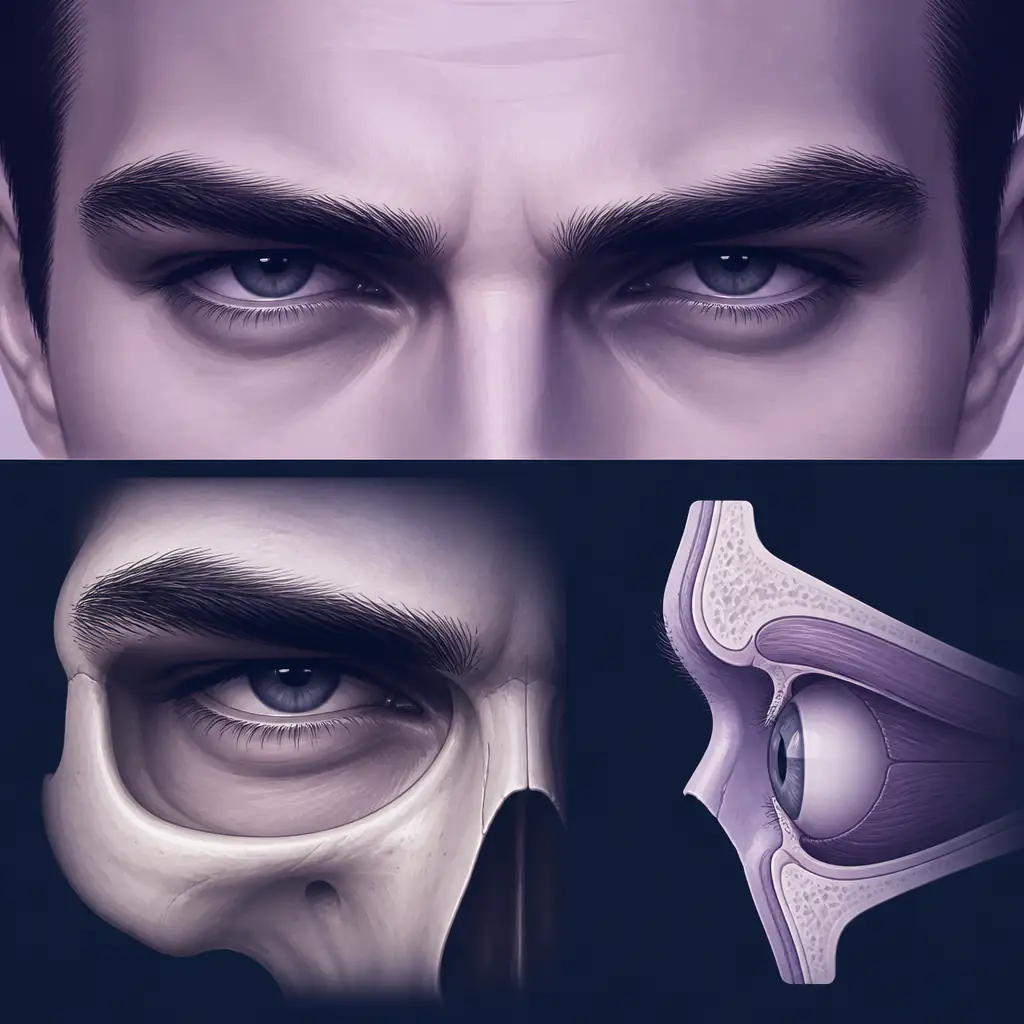
What Are Hunter Eyes?
The term “hunter eyes” describes a specific eye shape characterized by a low, slightly hooded brow, deep orbital setting, a flat or downward-angled upper eyelid, and minimal visible upper eyelid exposure. The overall effect is an intense, focused look, as though the eyes are partially shielded by the brow ridge and surrounding bone structure.
The contrast concept often discussed alongside this is prey eyes, which describes the opposite aesthetic: large, wide, round eyes with high upper eyelid exposure, a visible upper white (sclera), and a more open, surprised appearance. Neither is objectively better in every context, but in the framework of masculine facial aesthetics, hunter eyes are widely associated with dominance, confidence, and strong bone structure.
To be precise, the term is more accurately a description of orbital anatomy than eye color or size alone. The key structural features include:
- Deep-set orbits: The eyeball sits further back in the skull, creating natural shadowing.
- Strong supraorbital ridge: The brow bone protrudes slightly, casting a shadow over the eye.
- Negative canthal tilt or neutral tilt: The outer corner of the eye is at the same level as or slightly below the inner corner.
- Low upper eyelid exposure: Little to no visible upper eyelid between the iris and the upper lid crease.
- Hooding or negative hooding: The upper eyelid skin folds slightly over the lash line without obstructing vision.
Hunter Eyes vs. Almond Eyes: What’s the Difference?
These two terms are sometimes used interchangeably, but they describe slightly different things.
Almond eyes refer to the horizontal shape of the eye opening itself: slightly elongated, with a visible taper at both the inner and outer corners, resembling an almond. This shape is considered universally attractive across many cultures and is independent of orbital depth.
Hunter eyes refer more to the vertical and depth dimension of the eye: how deep-set the orbit is, how much the brow bone protrudes, and how little upper eyelid is exposed. You can have almond-shaped eyes without having hunter eyes, and vice versa.
The most sought-after combination in male facial aesthetics is often almond-shaped eyes with hunter eye characteristics: an elongated horizontal opening, deep orbital setting, and low upper eyelid exposure. This produces an eye that reads as intense without appearing narrow or squinting.
Hunter Eyes vs. Prey Eyes: A Direct Comparison
| Feature | Hunter Eyes | Prey Eyes |
|---|---|---|
| Upper eyelid exposure | Low or none | High |
| Orbital depth | Deep-set | Shallow or forward-set |
| Brow ridge | Prominent | Flat or recessed |
| Canthal tilt | Neutral to negative | Positive or neutral |
| Perceived expression | Intense, focused | Open, approachable |
| Sclera visibility above iris | Rare | Common |
Neither appearance is a flaw. Context matters: a very intense hunter eye look may read as intimidating in some social situations. The goal for most people pursuing this aesthetic is moderation, not extremity.
Are Deep-Set Eyes Attractive? What the Research Suggests
The question of whether deep-set eyes are attractive has some grounding in evolutionary and perceptual psychology, though research in this specific area is limited and culturally variable.
Deep-set eyes in men are often associated with facial masculinity, which research does suggest is broadly perceived as attractive in short-term contexts and as signaling health and genetic fitness. The prominent supraorbital ridge that creates the deep-set appearance is a secondary sex characteristic influenced by androgens during development. This is part of why the look is coded as masculine.
A study published in Perception found that facial features signaling high testosterone, including stronger brow ridges and more angular facial structure, were rated as more dominant and physically attractive by many raters, though the relationship with long-term attractiveness is more complex.
It is worth noting that deep-set eyes meaning changes by gender and cultural context. In women, deep-set eyes can read as mysterious or striking, but the same extreme orbital depth that reads as masculine and dominant in men may be perceived differently on a female face. The aesthetics here are genuinely gender-specific.
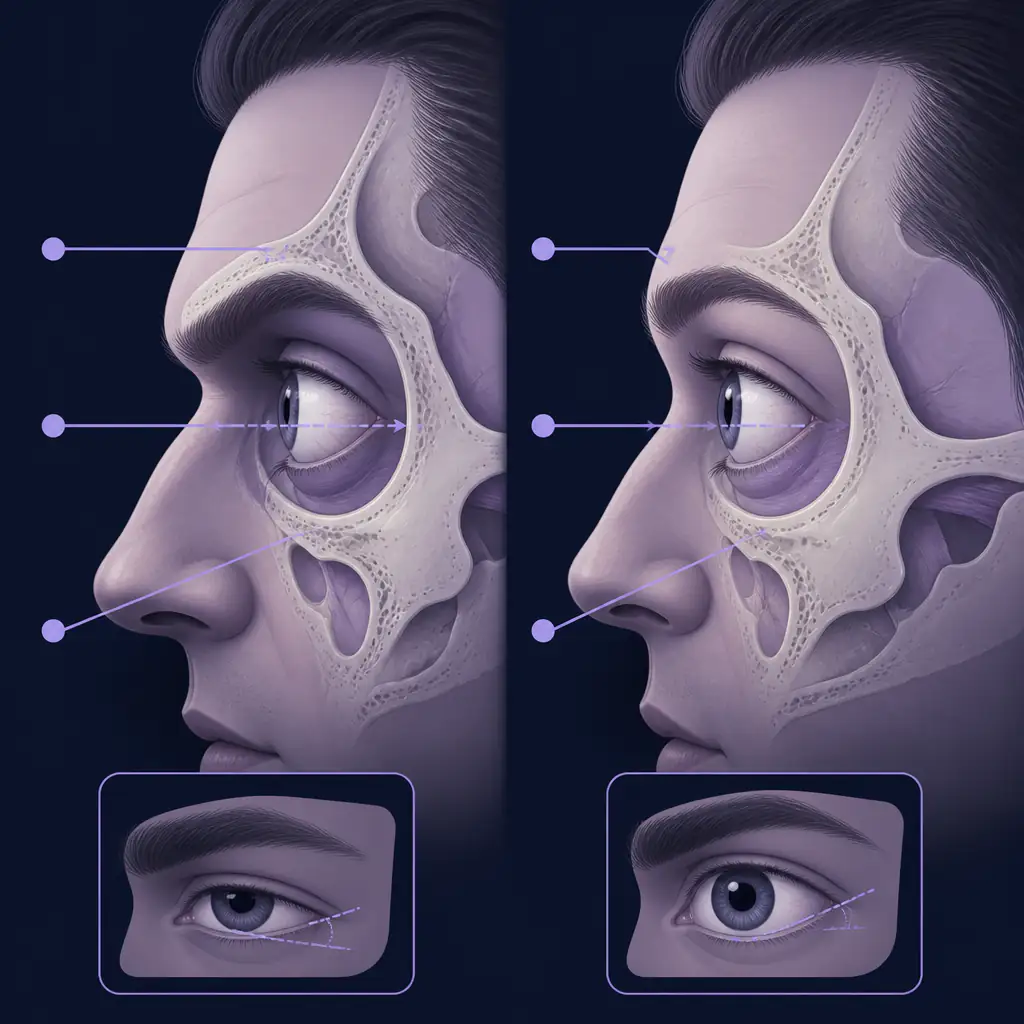
The Anatomy Behind Hunter Eyes
Understanding why hunter eyes look the way they do requires a basic grasp of orbital anatomy.
The orbit is the bony socket in the skull that houses the eye. How far back the eyeball sits within this socket, and how pronounced the surrounding bony margins are, determines much of the eye’s aesthetic character.
Supraorbital Ridge
The supraorbital ridge (brow bone) is the horizontal ridge of bone above the orbit. A more pronounced ridge creates more shadow over the eye, contributing directly to the hunter eye appearance. This structure is largely genetic and skeletal, which is why it is difficult to significantly change without surgical intervention.
Orbicularis Oculi
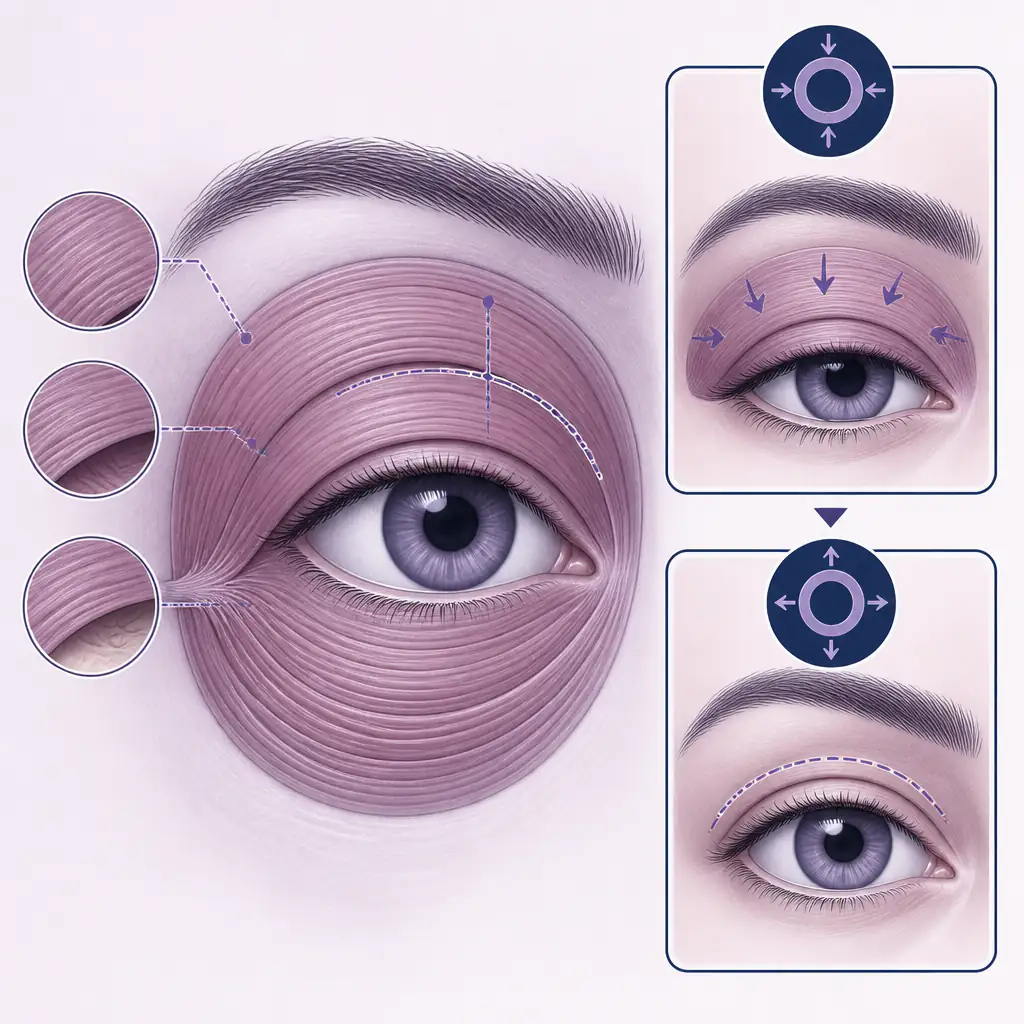
The orbicularis oculi is the ring-shaped muscle surrounding the eye that controls blinking and squinting. Some practitioners and online communities discuss orbicularis oculi training: deliberate muscle exercises intended to create a mild squinting or narrowing effect that mimics hunter eyes. The evidence for this producing lasting structural change is limited, but controlled squinting can alter the perceived eye shape in photos and in person.
Canthal Tilt
The canthal tilt refers to the angle formed between the inner corner (medial canthus) and outer corner (lateral canthus) of the eye. A negative canthal tilt means the outer corner sits lower than the inner, creating a downward-slanting appearance. A positive tilt means the outer corner is higher. Hunter eyes often feature a neutral to slightly negative tilt, which contributes to the heavy-lidded, intense appearance.
Upper Eyelid Exposure and Hooding
High upper eyelid exposure means a large strip of eyelid skin is visible between the upper lash line and the eyebrow. No upper eyelid exposure or negative hooding describes when the upper eyelid skin folds over the lash line, concealing most of the lid platform. This hooded appearance is a central feature of the hunter eye look and is influenced by both fat distribution around the orbit and the height of the brow.
Asian Hunter Eyes: A Note on Ethnic Variation
The concept of hunter eyes intersects with ethnic facial variation in ways worth addressing directly.
Many people of East and Southeast Asian descent have a epicanthal fold, a fold of skin covering the inner corner of the eye, and often lower upper eyelid exposure due to differences in orbital fat distribution and lid anatomy. These features can naturally produce what is described as the hunter eye look without deep-set orbits in the classical sense.
Asian hunter eyes are sometimes discussed as a distinct subtype, where the hooded or monolid appearance creates a similar intense aesthetic through a different anatomical mechanism than the brow-ridge-dominant look more common in populations of Northern European or Middle Eastern descent.
This matters practically: the path to achieving or enhancing a hunter eye appearance will differ by baseline anatomy. Someone with a monolid has different options and starting points than someone with a double eyelid and a flat brow ridge. Recognizing your specific starting anatomy is the first step.
What Can You Actually Change?
This is where the conversation has to be grounded. Much of the hunter eye anatomy is skeletal and genetic, meaning it cannot be meaningfully altered without surgical procedures. But there are legitimate non-surgical and surgical options worth understanding.
Non-Surgical Approaches
1. Brow position and grooming A lower, flatter brow position enhances the hooded appearance. Brow grooming that reduces arch height and keeps the tail of the brow lower can shift the look meaningfully. This is one of the few entirely accessible changes.
2. Body fat reduction Excess periorbital fat (fat around the eye socket) can push the eye forward and reduce the deep-set appearance. Reducing overall body fat may reveal more bone structure around the orbit. This effect is real but modest for most people.
3. Orbicularis oculi training Some practitioners suggest specific exercises involving controlled, partial squinting to strengthen and slightly hypertrophy the orbicularis oculi muscle. Some users report that consistent practice creates a more naturally relaxed squint. Scientific evidence for lasting morphological change is thin, but anecdotally, the habit of maintaining a relaxed, slightly narrowed eye position can change how the eyes read in social interaction.
4. Skincare and sleep Puffiness from poor sleep, allergies, or dehydration raises the lower eyelid and reduces orbital shadow. Consistently good sleep hygiene and managing allergies can preserve the orbital definition you already have.
5. Lighting and photography Directional overhead lighting creates orbital shadow and enhances the deep-set appearance in photos. If your goal is aesthetic improvement in images, learning to work with light is a high-leverage, zero-cost change.
Before making any decisions about changes to your face, it helps to get a clear, objective read on where you’re starting. Aura uses AI to assess facial features including orbital depth, canthal tilt, and upper eyelid exposure, and can give you a structured baseline to work from rather than guessing.
Surgical Options
For those considering more significant changes, several procedures are discussed in this context. These are listed for informational purposes only.
Brow bone augmentation or reduction: Implants or bone contouring can alter the supraorbital ridge profile. This is a significant craniofacial procedure.
Upper blepharoplasty: Removes excess upper eyelid skin, which can reduce hooding. Paradoxically, for someone seeking more hunter eye appearance, this is generally the wrong direction. Surgeons can also create or deepen the eyelid crease, which affects lid exposure.
Hunter eye surgery (canthoplasty or canthopexy): These procedures alter the canthal angle. A lateral canthoplasty can lower the outer corner of the eye to create a neutral or negative canthal tilt. This is the procedure most directly associated with achieving the hunter eye look surgically.
Fat grafting or filler around the orbit: Can be used to change the shadow and depth perception around the eye, though results vary considerably.
Talk to a qualified, board-certified plastic surgeon or oculoplastic specialist before considering any of these procedures. Results depend heavily on your baseline anatomy, the surgeon’s skill, and realistic expectations. No procedure guarantees a specific aesthetic outcome.
Practical Steps to Assess and Improve Your Eye Appearance
- Get an objective baseline. Use a tool like Aura to get a structured assessment of your current eye shape, canthal tilt, and orbital depth before making any changes.
- Photograph yourself in neutral lighting. Understand what your eyes actually look like, not just in your best or worst photos.
- Experiment with brow grooming. Lower, less-arched brows are a reversible, free change that can meaningfully shift the perceived eye appearance.
- Reduce body fat if applicable. If you are carrying excess weight, fat loss will reveal more facial bone structure including around the orbits.
- Improve sleep and manage inflammation. Consistent sleep reduces periorbital puffiness.
- Practice deliberate eye relaxation. A habitually wide-open eye expression reads as prey-eye. Practicing a relaxed, slightly lowered upper lid position in the mirror can help retrain your default expression.
- If considering surgery, consult multiple specialists. Get at least two consultations from board-certified surgeons with demonstrated experience in periorbital work specifically.
Frequently asked questions
What are hunter eyes exactly? +
Hunter eyes describe an eye shape with deep-set orbits, a prominent brow ridge, minimal upper eyelid exposure, and a neutral to slightly negative canthal tilt. The combined effect is an intense, focused appearance often associated with masculine facial structure.
Can you get hunter eyes without surgery? +
Fully replicating the look without surgery is not possible if the underlying bone structure isn't there, since the deep-set appearance is primarily skeletal. However, brow grooming, reducing body fat, improving sleep, and practicing a more relaxed eyelid position can all shift the appearance in a meaningful direction without any procedures.
What is hunter eye surgery? +
Hunter eye surgery most commonly refers to a lateral canthoplasty or canthopexy, procedures that alter the angle of the outer eye corner to create a neutral or negative canthal tilt. Some people also pursue brow bone augmentation to enhance the supraorbital ridge. Always consult a qualified, board-certified oculoplastic or plastic surgeon before considering these options.
Are deep-set eyes attractive on men? +
Research suggests that deep-set eyes in men are broadly associated with facial masculinity, which is generally rated as attractive, particularly as a signal of dominance and physical fitness. However, attractiveness is multifactorial and culturally variable, so deep-set eyes are one contributing feature among many rather than a standalone determinant of facial appeal.