 Aura: Looksmaxxing
 Mewing: The Complete Guide to Tongue Posture
Learn what mewing is, how to do it correctly, and what the research says. A practical guide to tongue posture, jaw development, and facial structure.
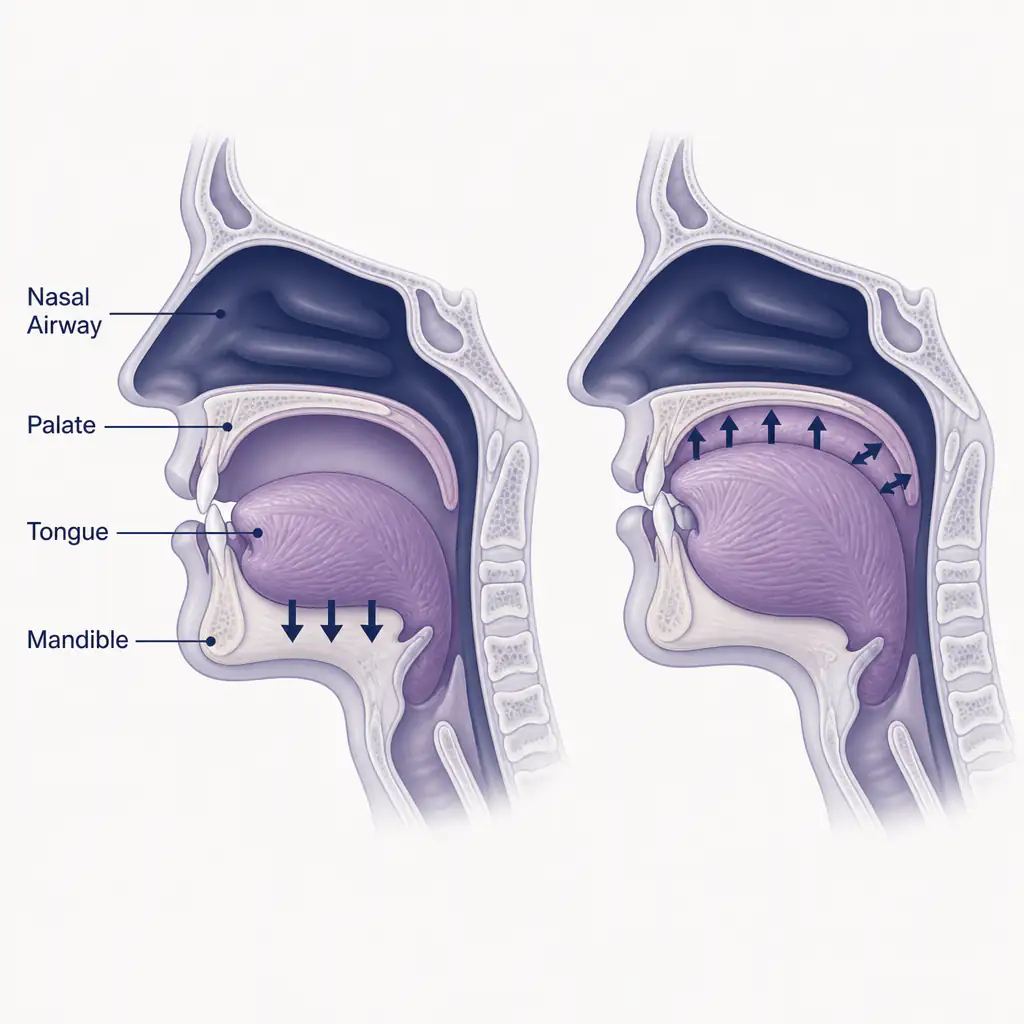
If you have spent any time on fitness or self-improvement content online, you have almost certainly come across the word mewing. It started as a niche concept, became a mewing meme format, and has since turned into a serious topic of conversation among people interested in facial structure and oral health. This guide cuts through the noise and gives you the practical, grounded information you need.
What Is Mewing? Definition and Origin
The mewing definition starts with a British orthodontist named Dr. John Mew, who developed a practice called orthotropics. The core idea is that the position of your tongue at rest directly influences how your jaw and midface develop over time. His son, Dr. Mike Mew, brought the concept to a wider audience through online videos, and the term “mewing” was coined by the communities that followed his work.
In plain terms, mewing meaning comes down to this: instead of letting your tongue rest on the floor of your mouth, you press it flat against the roof of your mouth (the palate). Proponents argue that doing this consistently creates gentle upward and forward pressure on the maxilla (upper jaw), which may influence bone remodeling over years.
It is worth being clear about what the science currently says. Peer-reviewed research on adult bone changes from tongue posture alone is limited. Most documented evidence relates to children and adolescents, whose facial bones are still actively developing. Adults may see smaller, slower changes, and some researchers are skeptical entirely. That said, the practice overlaps with well-established myofunctional therapy, which speech-language pathologists and some orthodontists do recommend for issues like mouth breathing and swallowing patterns.
The Mewing Face: What People Are Trying to Achieve
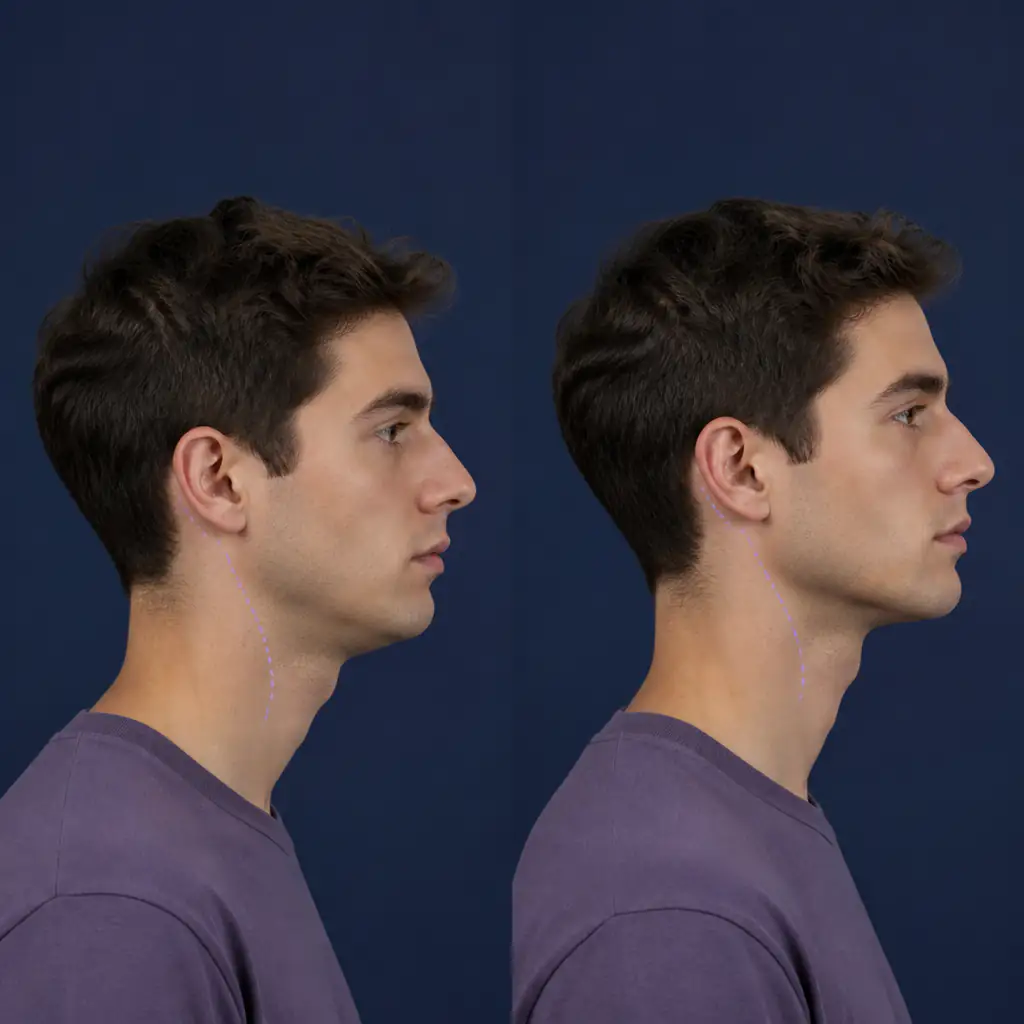
When people search for a mewing face result, they are usually looking at before-and-after comparisons. The changes people report or aim for include:
- A more defined jawline
- Reduced or eliminated double chin appearance
- Improved cheekbone prominence
- A flatter, less recessed midface
- Better lip seal at rest
These goals connect to broader concepts in facial aesthetics: forward growth of the midface and mandible (lower jaw), strong masseter muscles, and proper occlusion (how upper and lower teeth meet). Whether mewing alone produces these results in adults is debated. Genetics, body fat percentage, sleep quality, and nasal breathing habits all play significant roles.
If you want an objective starting point before making any changes, Aura provides AI-based jawline analysis, hunter-eye detection, and a personalized breakdown of your current facial structure. Having a clear baseline helps you track whether anything is actually shifting over time.
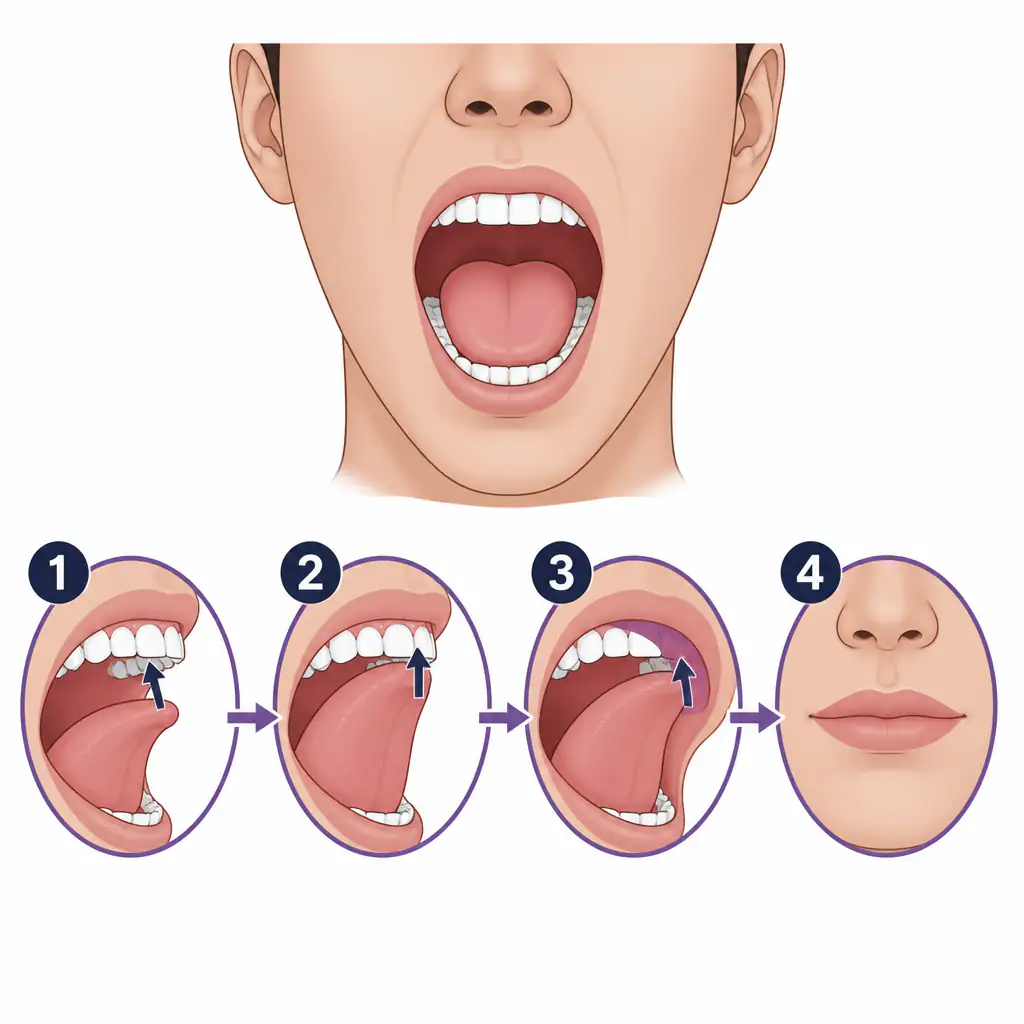
How to Mew Correctly: A Step-by-Step Tutorial
This is the part most guides get wrong by oversimplifying it. Here is a precise mewing tutorial.
Step 1: Find Neutral Jaw Position
Close your mouth gently so that your back molars are lightly touching or nearly touching. Do not clench. Your lips should be closed without strain.
Step 2: Position the Tongue
This is where most beginners make a mistake. The goal is to have the entire tongue surface, including the back third, pressed against the palate. Most people only place the tongue tip behind their front teeth, which is not full mewing posture and can actually create unwanted pressure on the front teeth.
- Place the tip of your tongue just behind your upper front teeth, not touching them directly
- Roll the middle of your tongue up to contact the mid-palate
- Press the back of the tongue up to contact the soft palate
- The suction hold should feel like a gentle vacuum across the whole tongue
Step 3: Breathe Through Your Nose
Proper mewing posture is only possible if you breathe nasally. Mouth breathing forces the tongue down. If you struggle with nasal breathing due to congestion or a deviated septum, address that first. A medical professional can help identify structural issues.
Step 4: Maintain the Posture Passively
The goal is for this to become your resting tongue posture, not something you consciously do for a few minutes a day. It requires retraining a habit. Most people find it takes several weeks before it starts to feel natural.
Step 5: Check Your Swallowing Pattern
A proper swallow (called a molar swallow) involves biting down on your molars and squeezing the tongue up against the palate rather than pushing the tongue forward against the teeth. Incorrect swallowing can undo tongue posture progress.
Mewing Exercises to Support Your Progress
Tongue posture alone may not be enough for some people. The following mewing exercises are commonly recommended alongside the basic practice.
Chewing exercises: Chewing harder foods like raw carrots, tough meats, or mastic gum works the masseter and temporalis muscles. Stronger chewing muscles contribute to a more defined mewing jaw appearance. Do not overdo it; excessive jaw loading can cause TMJ (temporomandibular joint) soreness.
Tongue chewing: A drill where you press the tongue to the palate repeatedly while opening and closing the mouth. This builds awareness of the correct tongue position.
Nasal breathing drills: Practicing slow nasal inhales and exhales throughout the day reinforces the habit of keeping the mouth closed at rest.
Neck and posture work: Forward head posture, where your head juts in front of your shoulders, pulls the jaw back and makes proper tongue posture harder to maintain. Chin tucks, shoulder blade retractions, and thoracic extension exercises all support better head position.
The Mewing Meme and Why It Matters
The mewing face meme format, where someone dramatically transforms by simply changing their tongue position, has brought millions of people to this topic. Some of those memes are exaggerated for humor. But the attention they generated has a real upside: more people are now aware that mouth breathing, poor posture, and soft diets may be affecting their facial development.
The meme culture around mewing has also produced a lot of misinformation. Claims that you can completely restructure your face in a few months are not supported by evidence. Facial bones do not move that quickly in adults, and dramatic before-and-after photos often reflect changes in lighting, weight loss, camera angle, or simply better posture in the second photo.
Approach mewing as a long-term oral posture correction, not a shortcut.
Mewing Devices: Do You Need One?
A mewing device typically refers to palate expanders, oral trainers, or myofunctional appliances. These are real orthodontic tools, and some of them do have clinical evidence behind them, particularly for children.
For adults:
- Palate expanders are sometimes used by orthodontists for adults with narrow arches, but these require professional fitting and monitoring
- Oral trainers (soft silicone devices worn for short periods) may help some people learn correct tongue position
- DIY tools sold online vary widely in quality and safety
If you are considering any orthodontic device, talk to a qualified dental or orthodontic professional before using it. Improperly used appliances can damage teeth, gums, and jaw joints.
Mewing Before and After: What Realistic Progress Looks Like
Genuine mewing before and after results, when they occur, tend to be subtle and slow. Here is what people realistically report over different timeframes:
| Timeframe | What May Change |
|---|---|
| 1 to 4 weeks | Increased awareness of tongue and jaw position, less jaw tension for some |
| 2 to 6 months | Possible improvement in chin profile from posture correction, some users report reduced double chin |
| 1 to 3 years | Structural changes are theoretically possible in younger adults; results vary significantly |
| Children and teens | Most evidence for bone adaptation exists here; earlier intervention shows more consistent outcomes |
Age matters a great deal. Bone remodeling in response to mechanical force (called Wolff’s Law) is well-documented, but the speed and degree of change decrease significantly after the growth plates close, typically in the late teens to early twenties.
Practical Tips for Getting Started
-
Record a baseline. Take neutral-expression photos from the front and both sides in consistent lighting. If you want a structured analysis, Aura can score your jawline and facial proportions so you have something concrete to compare against later.
-
Fix mouth breathing first. If you wake up with a dry mouth, snore, or notice you breathe through your mouth during the day, those habits will undermine mewing. See a doctor or ENT if nasal obstruction is the cause.
-
Be patient and consistent. Daily consistency over months matters far more than intense focus for a week.
-
Combine with general health habits. Sleep quality, body composition, and hydration all affect how your face looks. Mewing is one tool, not a complete system.
-
Do not force it. Pushing the tongue against the palate with excessive force is not beneficial and may cause soreness or dental issues. The pressure should be light and even.
FAQ
Frequently asked questions
Does mewing actually work? +
Research supports the idea that tongue posture influences facial development in children and adolescents. For adults, the evidence is less clear, and changes are likely to be slower and more subtle. Some users report improvements in jaw definition and posture over months to years, but dramatic transformations in short timeframes are not well-supported by current science.
How long does it take to see results from mewing? +
There is no fixed timeline. Some people notice postural improvements and reduced jaw tension within weeks. Structural changes, if they occur in adults, are thought to take one to several years of consistent practice. Age plays a significant role, with younger individuals showing faster adaptation.
Can mewing fix a recessed jaw or weak chin? +
Mewing may help improve mild jaw positioning issues related to posture and muscle habits, particularly in younger people. A significantly recessed mandible or chin typically has genetic or skeletal causes that tongue posture alone cannot correct. Orthognathic surgery or orthodontic treatment are the evidence-based options for structural jaw issues. Talk to a qualified professional before considering any intervention.
What is the difference between mewing and myofunctional therapy? +
Myofunctional therapy is a clinically practiced discipline performed by trained therapists that addresses tongue posture, swallowing patterns, and breathing habits. Mewing overlaps significantly with myofunctional principles but is a self-directed practice. If you have diagnosed issues like tongue thrust or sleep-disordered breathing, working with a certified myofunctional therapist is likely more effective than self-guided mewing alone.