 Aura: Looksmaxxing
 K Shami Height, Frame & Looksmaxxing Guide
Discover K Shami's height, how it compares to other athletes, and practical tips on height, frame, and clavicle width for men serious about their physique.
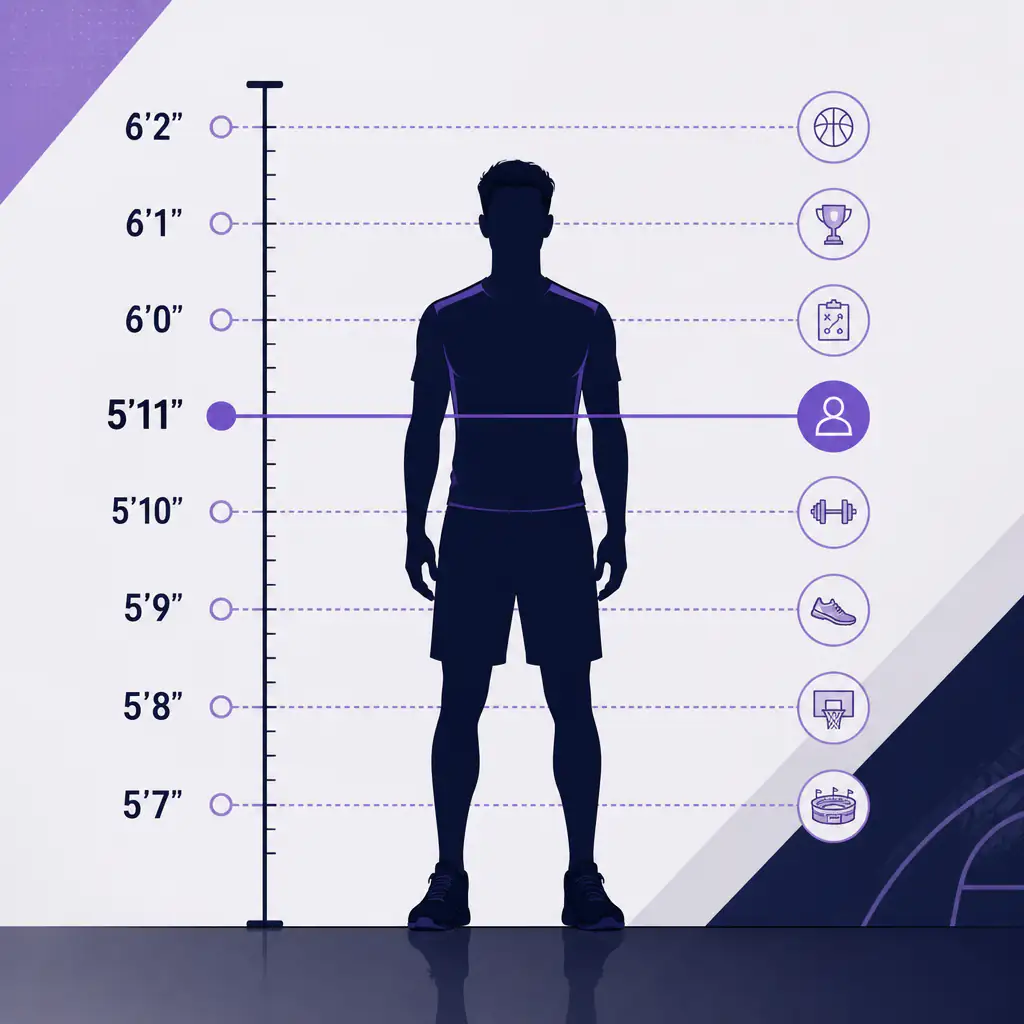
Who Is K Shami and How Tall Is He?
Mohammed Shami, known widely as K Shami, is one of India’s most recognizable fast bowlers. His standing in international cricket is well established, and his physical build is a frequent topic among fans who follow sports physiques closely.
K Shami’s height is approximately 5 feet 11 inches (180 cm). For a fast bowler, this is a solid and functional height. It gives him a high enough release point to generate bounce while keeping his frame athletic and maneuverable on the pitch. He carries a lean, moderately broad frame that suits the demands of pace bowling, where rotational power and shoulder mechanics matter as much as raw size.
For context, compare this to other athletes who come up in similar searches. Jon Erik Hexum, the late American actor and model, stood at around 6 feet 1 inch (185 cm), a height often cited as the upper edge of what is considered “aesthetically ideal” by those in physique communities. Meanwhile, MMA fighter Rustam Akhmetov has seen questions about a height increase circulate online, though his listed height sits around 5 feet 10 inches (178 cm), and no credible evidence supports any significant adult height change.
Shami’s 5’11” places him comfortably above what many in online communities call the manlet definition threshold, a loosely defined term used to describe men perceived as short relative to their social environment. There is no universal cutoff, but in Western contexts, the label is often informally applied below 5’9”. Shami clears this by a meaningful margin.
Height Mogging: What It Is and Why People Care
Height mogging refers to one person’s height visibly dominating another’s in a side-by-side comparison. The term comes from “height mog,” where the taller individual is said to “mog” the shorter one, making them appear smaller by proximity alone.
In sports, height mogging is a constant visual dynamic. Team photos, press conferences, and on-field matchups all create natural comparisons. Shami, at 5’11”, neither height mogs taller players nor gets significantly height mogged by most of his teammates, placing him in a comfortable middle range.
The concept of heightmaxxing has grown from this interest. It refers to any strategy aimed at maximizing a person’s actual or perceived height. Some approaches are behavioral and posture-based. Others involve specific training. A few stretch into more speculative territory, like the question of whether an inversion table can make you taller.
Can an Inversion Table Make You Taller?
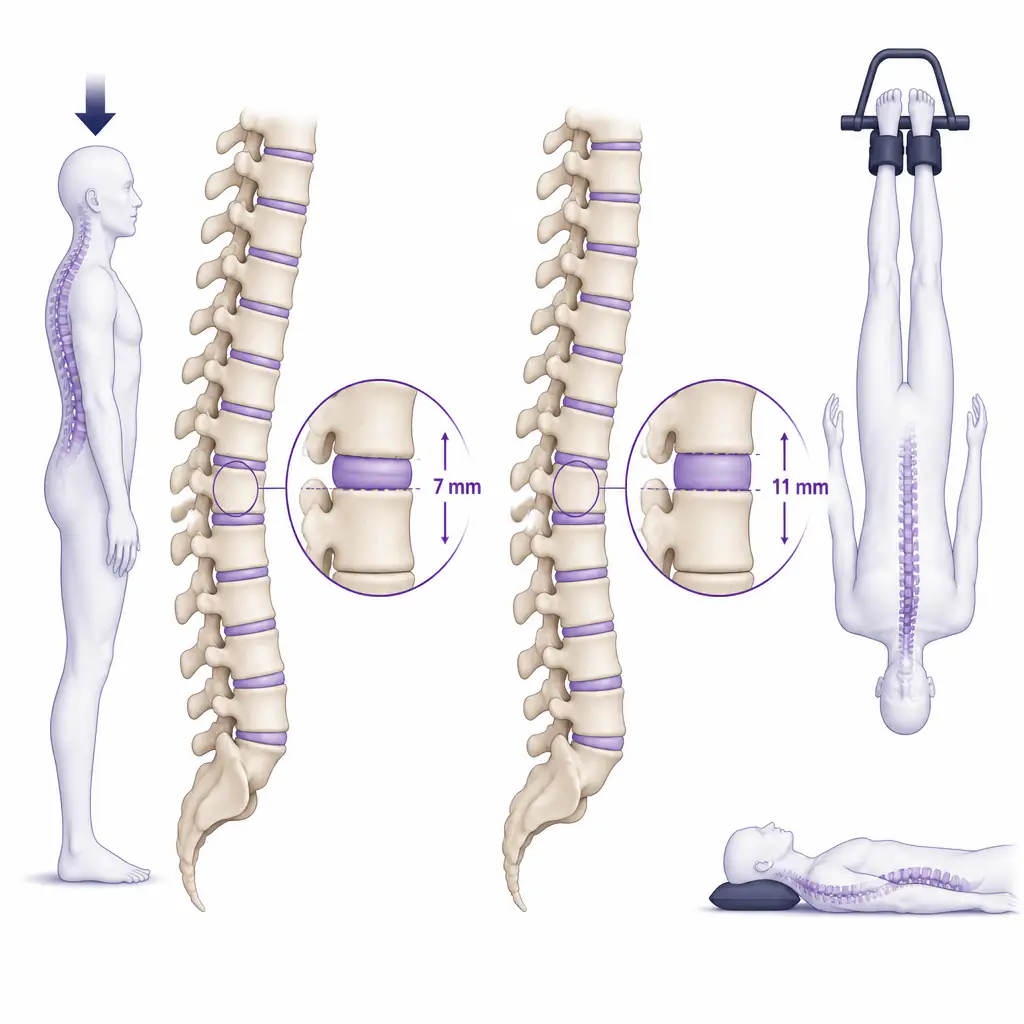
Inversion therapy involves hanging upside down or at a steep angle to decompress the spine. Research suggests that spinal decompression can temporarily increase standing height by a few millimeters, as the intervertebral discs rehydrate and expand when gravitational load is removed. However, this effect is temporary. Within hours of returning to normal upright activity, gravity recompresses the spine and height returns to baseline.
For long-term height gain in adults, inversion tables offer no proven benefit. The cartilaginous growth plates (epiphyseal plates) that determine bone length close in the late teens to early twenties. Once closed, no mechanical stretching changes bone length. That said, inversion therapy may help with posture correction and back pain relief, which indirectly supports appearing taller by reducing habitual slouching.
Talk to a qualified professional before beginning inversion therapy, especially if you have high blood pressure, eye conditions, or spinal issues.
Frame Analysis: Clavicle Width and Shoulder Structure
Height is only one axis of physical presence. Frame, meaning the underlying skeletal structure, often matters as much or more for how a person looks in clothing and in photographs. Two men at the same height can project entirely different physical presences based on clavicle width, rib cage depth, and hip-to-shoulder ratio.
How to Get Wider Clavicles
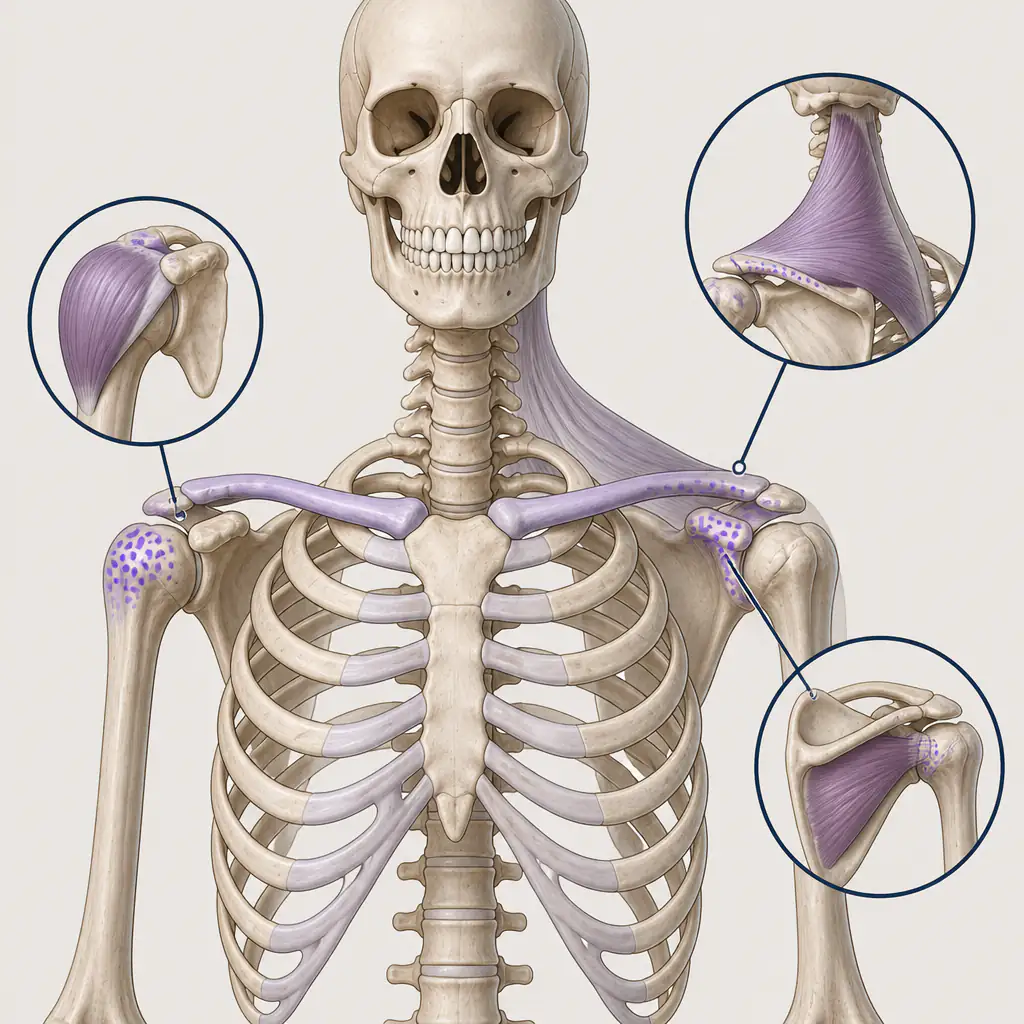
The clavicle, or collarbone, is the horizontal bone connecting the sternum to the shoulder socket. Wider clavicles create a broader shoulder silhouette, which is considered aesthetically significant in most physique frameworks.
A common question is: when do clavicles stop growing? The clavicle is actually one of the last bones to fully ossify. Studies in skeletal anatomy suggest clavicle development can continue into the mid-twenties, later than most long bones. This means younger men may still see some structural widening through their early twenties, though the changes become smaller as they approach full maturity.
For those past the growth window, true skeletal clavicle widening is not achievable through exercise or lifestyle. What can be changed is the muscular volume around the clavicle, particularly:
- Lateral deltoid development, which widens the visual shoulder line
- Trapezius upper fibers, which fill in the area between neck and shoulder
- Infraspinatus and posterior deltoid, which add rear-shoulder depth
Exercises like lateral raises, wide-grip upright rows, and face pulls target these areas specifically. Over months of consistent training, the visual effect can meaningfully approach the look of wider skeletal structure even when the bone itself has not changed.
Average Hand Size by Height
One interesting proxy metric that comes up in physique discussions is average hand size by height. Hand size correlates loosely with overall skeletal frame size. Research on hand anthropometrics suggests:
- Men at 5’7” to 5’9” typically have hand lengths (wrist crease to middle fingertip) of around 18 to 19 cm
- Men at 5’10” to 6’0” average roughly 19 to 20 cm
- Men above 6’1” often measure 20 cm or more
These are population averages with significant individual variance. Hand size does not determine height, but it can serve as a rough signal of overall skeletal scale. Larger hands tend to accompany larger frames, which affects grip aesthetics, wrist thickness, and overall hand-to-body proportion in photographs and videos.
For K Shami, whose height sits at 5’11”, his hands likely fall in the 19 to 20 cm range based on these population averages, consistent with his overall athletic build.
Vito Basso Height and Frame Comparison
Vito Basso, the Italian-American entertainer and media personality, stands at approximately 5 feet 6 inches (168 cm). Compared to Shami’s 5’11”, the difference is meaningful in a direct side-by-side. However, Basso’s physical presence on screen is often perceived as larger due to confident posture, clothing choices, and camera framing.
This is a useful reminder that perceived height and actual height are distinct variables. Camera angle, posture, footwear, and proportion all modulate how tall someone reads visually. A well-structured frame at 5’9” with excellent posture and proportional clothing can read taller than a slouched or poorly dressed 6’1” frame in candid photos.
If you want an objective read on how your own facial structure and proportions come across, Aura provides AI-based analysis including jawline scoring, hunter-eye detection, and personalized looksmaxxing recommendations. Getting a baseline assessment before starting any training or style overhaul gives you clearer data to work from.
Practical Heightmaxxing Tips That Actually Work
Setting aside claims that stretch into pseudoscience, here are the approaches that have real support for maximizing height or the perception of it:
1. Fix Anterior Pelvic Tilt
Anterior pelvic tilt, where the pelvis tilts forward and the lower back arches excessively, can rob you of an inch or more in standing height. Strengthening the glutes and lengthening the hip flexors through targeted stretching brings the pelvis to neutral and immediately improves both posture and apparent height.
2. Strengthen the Deep Cervical Flexors
Forward head posture, common among people who spend long hours at screens, can make a person appear shorter and add unwanted visual bulk at the base of the neck. Chin tucks and deep cervical flexor activation exercises address this directly.
3. Optimize Sleep Position and Duration
The spine decompresses during sleep. Getting seven to nine hours of quality sleep in a neutral spinal position (on your back or side with proper support) allows maximum overnight disc rehydration. This is the most natural way to sustain your full standing height through the day.
4. Resistance Training for Frame Perception
Building the shoulders, lats, and upper back creates a silhouette that reads as tall and broad regardless of actual skeletal dimensions. The V-taper, defined by wide shoulders narrowing to a smaller waist, is one of the strongest visual signals of physical stature in clothing.
5. Clothing Fit and Vertical Lines
Vertical stripes, well-fitted trousers with a slight rise, and monochromatic outfits all elongate the visual line of the body. Overly baggy clothing at average heights tends to visually compress the frame.
6. Footwear
Shoes with a slight heel, even 1 to 2 cm, add real measurable height in daily life. This is not a hack but a widely used practical tool. Chelsea boots, dress shoes, and some athletic silhouettes naturally include this.
For men who want a more structured, personalized starting point for improving their overall appearance beyond just height, Aura offers PSL scoring and facial analysis that can identify your strongest features and where targeted effort will have the most impact.
Height in Athletic and Aesthetic Context
K Shami’s 5’11” height works well in his sport because fast bowling rewards a combination of leverage, shoulder rotation speed, and lower body drive rather than maximum height alone. Some of the fastest bowlers in history have been under 6 feet. This reflects a broader truth: height interacts with other physical variables rather than simply overriding them.
In aesthetic contexts, the same logic applies. Height is one input in a multi-variable system that includes frame width, muscle distribution, posture, facial structure, and grooming. Focusing exclusively on height, or lamenting a lack of it, misses the many levers that are actually within your control.
The most effective approach is to assess your current baseline honestly, identify the variables where you have the most room to improve, and build a consistent practice around those areas. Tracking progress matters too. Subjective self-assessment is unreliable. Objective measurements, photos, and structured feedback tools give you clearer signal on whether your efforts are translating.
Frequently asked questions
What is K Shami's height? +
K Shami stands at approximately 5 feet 11 inches, or 180 cm. This places him well above average male height in most countries and gives him a functional frame for fast bowling in international cricket.
What does 'height mogging' mean? +
Height mogging refers to one person visually dominating another in terms of height when standing side by side. The taller person is said to 'mog' the shorter one. It is a term used in physique and appearance communities to describe height-based physical presence.
Can an inversion table actually make you taller permanently? +
No. Inversion therapy can temporarily decompress the spine and add a few millimeters of height for a short period, but this reverses within hours of normal activity. Adult bone length cannot be increased through inversion or stretching. Talk to a qualified professional before trying inversion therapy, especially if you have any cardiovascular or spinal conditions.
When do clavicles stop growing? +
The clavicle is one of the last bones to fully ossify and may continue developing into the mid-twenties. After that, skeletal clavicle width is fixed, though building lateral deltoid and trapezius muscle mass can significantly widen the visual shoulder silhouette even without skeletal change.