 Aura: Looksmaxxing
 Hairstyle Forum Wisdom: Best Cuts for Your Face Shape
Discover what hairstyle forums get right about matching cuts to face shapes, plus science-backed tips for oval, square, round, and oblong faces.
If you have spent any time on a hairstyle forum, you have probably noticed a pattern. Someone posts a photo, asks for a cut recommendation, and the thread splits into two camps: people who give generic advice and people who actually analyze the face shape first. The second group is almost always more useful.
That gap, between generic style advice and face-shape-specific guidance, is exactly what this guide covers. Whether you are trying to find the right looksmax haircut, dealing with a small forehead, or just tired of cuts that never quite work, the following sections break down how to read your own face and match a haircut to it deliberately.
Why Face Shape Matters More Than Trend
Haircut trends cycle fast. What works on a model in a campaign may do nothing for you, or actively work against your features, because their facial geometry is different from yours. The goal of matching a cut to your face shape is to use hair volume and length to create the impression of a more balanced, proportionate skull structure.
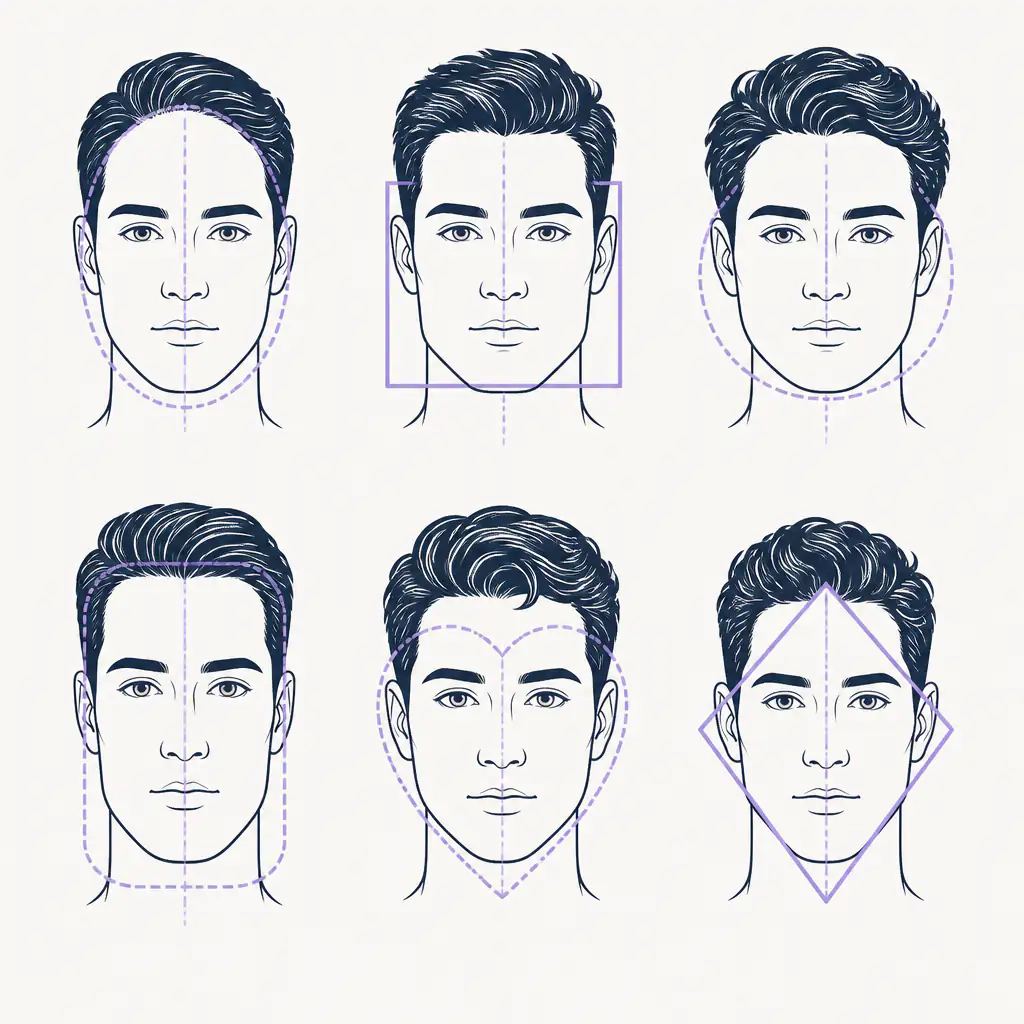
The six face shapes most commonly referenced in styling literature are:
- Oval: Roughly balanced width and length, forehead slightly wider than jaw
- Square: Strong jawline close in width to the forehead, short chin
- Round: Similar width and length, soft jaw angles, fuller cheeks
- Oblong / Rectangle: Noticeably longer than wide, with a straight jawline
- Heart: Wider forehead, narrow chin
- Diamond: Narrow forehead and jaw, wide cheekbones
Each shape benefits from different strategies. The core principle is simple: add visual mass where the face is narrow, reduce it where the face is wide.
How to Actually Identify Your Face Shape
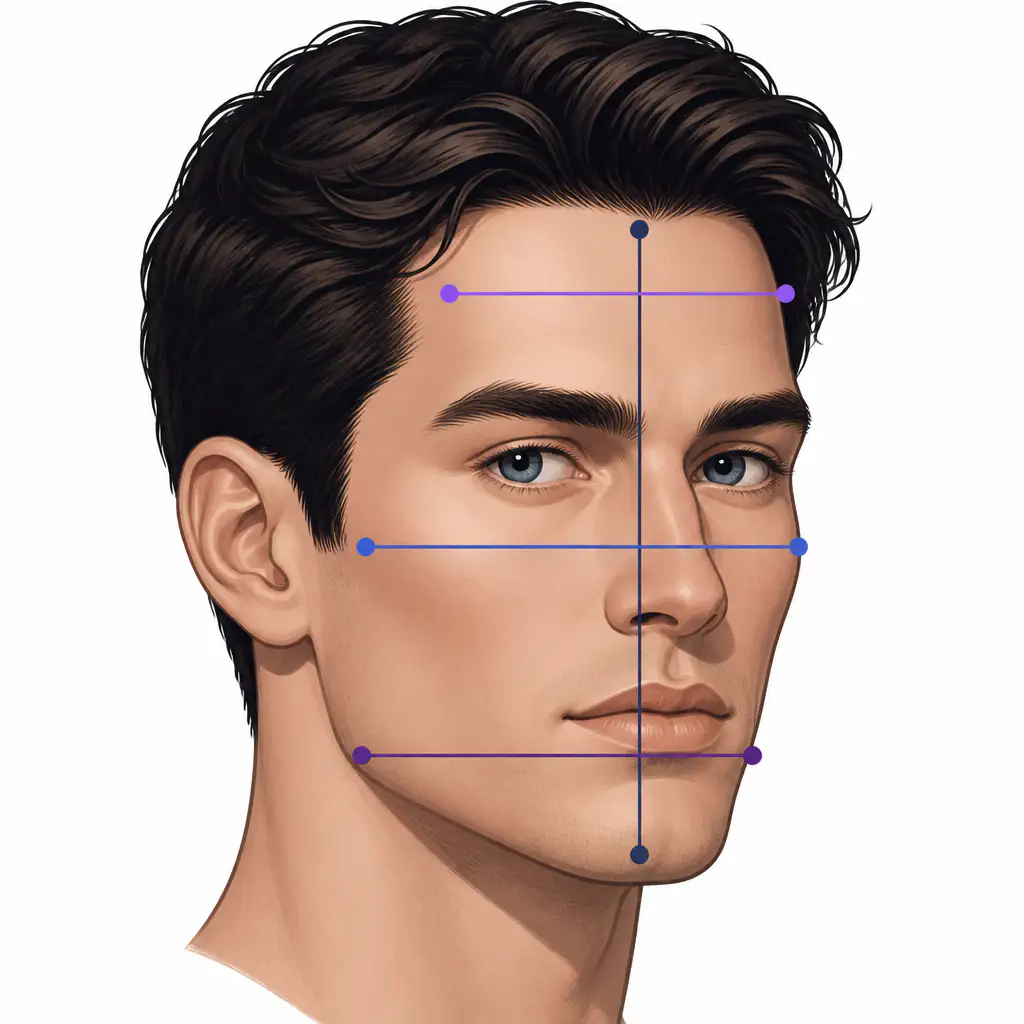
Most people guess their face shape wrong. A mirror check is subjective. A better method is to take a straight-on photo in flat lighting, then measure (or visually estimate) four distances:
- Forehead width: Across the widest part of your forehead, roughly one finger above the eyebrows
- Cheekbone width: Across the face at the outer corners of the eyes
- Jawline width: Across the widest part of your jaw, just below the ears
- Face length: From the center of your hairline to the tip of your chin
Once you have those numbers, or a clear photo, the proportions tell the story. Apps like Aura can analyze facial proportions from a photo and give you a structured read on your face shape, jawline definition, and other structural features, which takes the guesswork out of self-assessment.
Haircuts by Face Shape: Specific Recommendations
Oval Face
Oval is often called the most versatile shape because the proportions are already balanced. That said, “versatile” does not mean every cut looks equally good. Avoid styles that add excessive height at the crown, which can make the face appear longer. Medium-length cuts with light texture, tapered sides, and a natural part tend to work well.
Square Face
The square face has strong horizontal lines at the forehead and jaw. The goal is to soften those angles without hiding them entirely, since angular jaw structure is generally considered attractive. Longer cuts with soft layers, a quiff, or a textured fringe work well. Hard side parts and buzz cuts that expose the full jaw can actually enhance the square structure if the jaw is well-defined.
Round Face
The priority with a round face is creating vertical length. A looksmax haircut approach for round faces almost always involves adding height at the crown and keeping the sides tighter. Fades with a textured top, pompadours, and high-volume quiffs all move the eye upward. Avoid cuts that are wide at the sides, such as full afros or fluffy curtain bangs that push outward.
Oblong or Rectangle Face
Here the face is already long, so height at the crown is the last thing you want to add. The strategy flips: add width at the sides and keep the top relatively flat. Medium-length cuts, curtain bangs, and styles with volume at the temples help create the appearance of a shorter, wider face.
Heart Face
A wide forehead and narrow chin mean the upper face carries most of the visual weight. Side-swept bangs, textured crops, and cuts with volume near the jaw help balance this. Avoid styles that push volume upward and add to an already wide forehead.
Diamond Face
Wide cheekbones with a narrow forehead and jaw can be balanced by adding width at the forehead with a fringe or fuller top, while keeping sides shorter to reduce cheekbone emphasis.
The Zeta Haircut and What It Actually Is
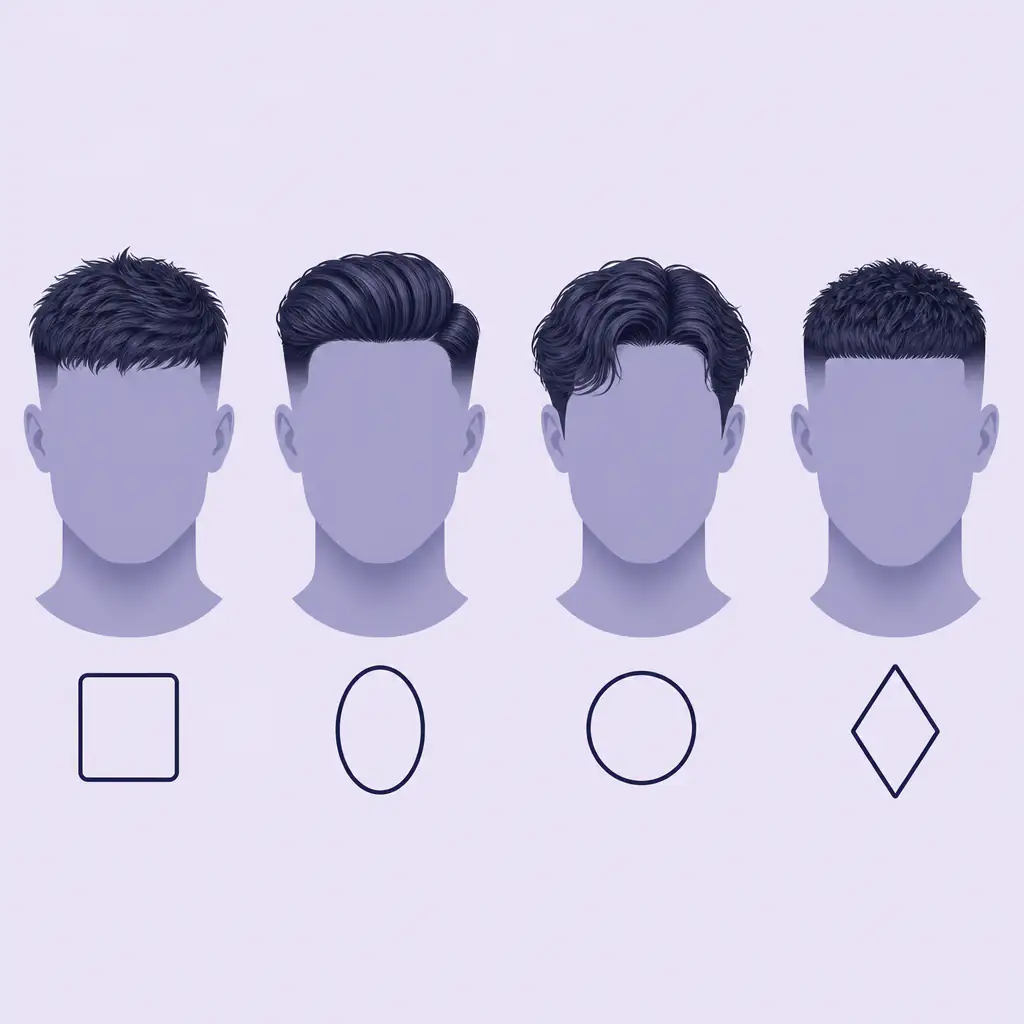
The zeta haircut has picked up attention in male grooming communities, particularly in looksmaxxing spaces. It refers to a specific structured cut characterized by a sharp taper on the sides, moderate length on top with texture, and a defined line-up at the forehead. It draws some influence from military-adjacent cuts but with a cleaner, more deliberate finish.
Why does it get discussed so often in face-shape contexts? Because the structure of the zeta cut, tight sides and controlled top volume, tends to work broadly across face shapes when the proportions are adjusted correctly. For a round face, more height on top and a tighter fade. For an oblong face, less top height and a more even taper. The underlying structure adapts.
The zeta is not a magic solution. On its own it is just a cut. The reason it performs well in hairstyle forum discussions is that it follows sound structural principles that align with face-shape advice.
Hairstyle for Small Forehead Men: What Actually Helps
A small forehead, technically defined as a low hairline relative to the midface, is more common than most men realize. It does not require dramatic intervention, but a few adjustments make a meaningful difference.
What helps:
- Pushing hair back off the forehead to expose more of it
- High fades that extend the visual line of the face upward
- Avoiding fringes or bangs that cover and further shorten the forehead
- Keeping the hair on top longer and swept back or upward
What makes it worse:
- Full fringes or curtain bangs that sit at or near the eyebrows
- Low hairline styles where the hair sits heavy and forward
- Very flat tops with no crown volume
A barber who understands face shape can adjust the hairline and fade placement to add visual height even if the biological hairline is low. This is a conversation worth having explicitly before the cut.
What Hairstyle Forums Get Wrong
For all the useful advice circulating in online grooming and looksmaxxing communities, there are consistent errors worth calling out.
Treating face shape categories as rigid. Real faces are blends. A face can be mostly square with a slightly longer midface that pushes it toward oblong. The categories are tools, not diagnoses.
Ignoring hair texture. A cut that looks great on straight fine hair may behave completely differently on thick coarse hair. Texture changes volume distribution entirely. Any recommendation that does not account for your hair type is incomplete.
Optimizing for a photo rather than real life. Hairstyle forums live and die on photos. But a cut that photographs well under studio lighting may look flat or heavy in daily life. Consider how your hair behaves across an entire day, not just in a single image.
Skipping the consultation. Forum advice is a starting point. A skilled barber who can look at your head from every angle will always outperform text-based recommendations.
Practical Steps to Find Your Best Cut
Here is a straightforward process that translates forum research into a real decision.
- Photograph yourself in flat natural light, straight-on and in profile. Use these photos as your reference throughout.
- Identify your face shape using the four measurements described earlier, or use a structured analysis tool to get an objective read.
- Note your hair texture and density. Fine, medium, coarse, straight, wavy, or curly. This filters which cuts are actually achievable.
- Research cuts that fit your shape, using the guidelines in this article as a filter. Collect three to five reference photos of cuts you want to explore.
- Bring the references to your barber and ask for their read on how each would work with your specific hair and head shape. A good barber will tell you honestly if a cut will not translate.
- Iterate. Hair grows back. One cut rarely solves everything. Treat it as a process rather than a single decision.
If you want a clearer starting point before talking to a barber, running your photo through Aura gives you a detailed breakdown of your facial structure, including proportions and feature analysis, which makes the conversation with your barber far more specific.
Reading Forum Advice With a Critical Eye
Online communities dedicated to male grooming and looksmaxxing produce a large volume of advice. Some of it is excellent. Some is based on one person’s experience with their own face projected onto everyone else. A few filters that help:
- Does the advice address your specific face shape? Generic advice is less useful than shape-specific guidance.
- Does it account for texture and density? If it does not mention hair type at all, treat it as incomplete.
- Is it based on principles or preferences? Advice grounded in proportion principles transfers more reliably than personal taste.
- Is it asking you to do something extreme? Drastic cuts based on forum advice, especially surgical or chemical changes, warrant a professional opinion first. Talk to a qualified professional before considering any procedure intended to alter your appearance permanently.
The best hairstyle forum threads are the ones where someone takes the time to explain the reasoning behind a recommendation. That reasoning is what you can actually apply to your own situation.
Frequently asked questions
How do I know my actual face shape without guessing? +
Take a straight-on photo in flat lighting and measure four distances: forehead width, cheekbone width, jawline width, and face length from hairline to chin. Comparing those four numbers reveals the dominant shape. Tools that analyze facial proportions from a photo, like Aura, can make this more precise.
What is the zeta haircut and who does it suit? +
The zeta haircut features a sharp taper or fade on the sides, moderate textured length on top, and a clean line-up. It suits most face shapes when adjusted in proportion, making the top higher for round faces and flatter for oblong ones. Its popularity in looksmaxxing communities comes from its structural versatility.
What haircut works best for men with a small forehead? +
Styles that push hair back and upward, such as slick-backs, high fades, or textured pompadours, help add visual height above the eyes. Avoid fringes or bangs that sit close to the brows, as they reduce the visible forehead further. A barber can also adjust the fade placement to extend the vertical line of the face.
Can a haircut actually improve how your face looks? +
Yes, within the limits of proportion and framing. A well-matched cut creates the visual impression of a more balanced face by directing attention and adding or reducing volume in specific areas. It does not change bone structure, but it can meaningfully shift how proportions are perceived.