 Aura: Looksmaxxing
 Bigonial Width: What It Is and Why It Matters
Learn what bigonial width is, how it shapes facial aesthetics, and what research says about ideal measurements for men and women.
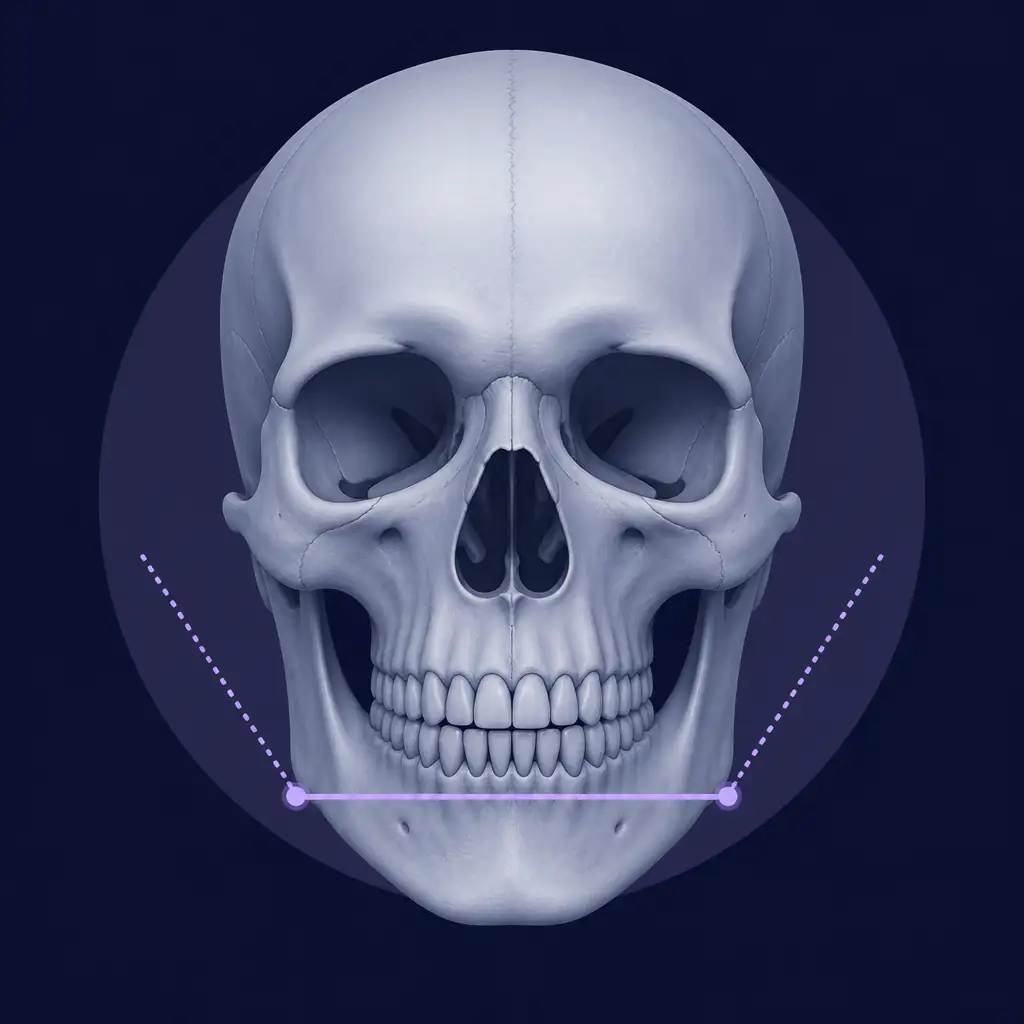
What Is Bigonial Width?
Bigonial width is the horizontal distance between the two gonions, which are the outermost, most posterior points of the mandibular angles. In plain terms, it measures how wide your jaw is from corner to corner, specifically at the back of the lower jaw where the mandible bends upward toward the ear.
This measurement is widely used in orthodontics, maxillofacial surgery, and facial anthropometry to assess jaw proportion and overall facial balance. It is typically taken with a sliding caliper or derived from a posteroanterior (PA) cephalometric X-ray, though clinical 3D scanning is increasingly common for research purposes.
The bigonial width is one of several horizontal facial measurements that clinicians and researchers use to map the lower third of the face. Others include the bigonial-to-bizygomatic ratio, which compares jaw width to cheekbone width, a proportion with notable implications for facial attractiveness.
The Anatomy Behind the Measurement
To understand bigonial width, it helps to know a bit about mandibular anatomy.
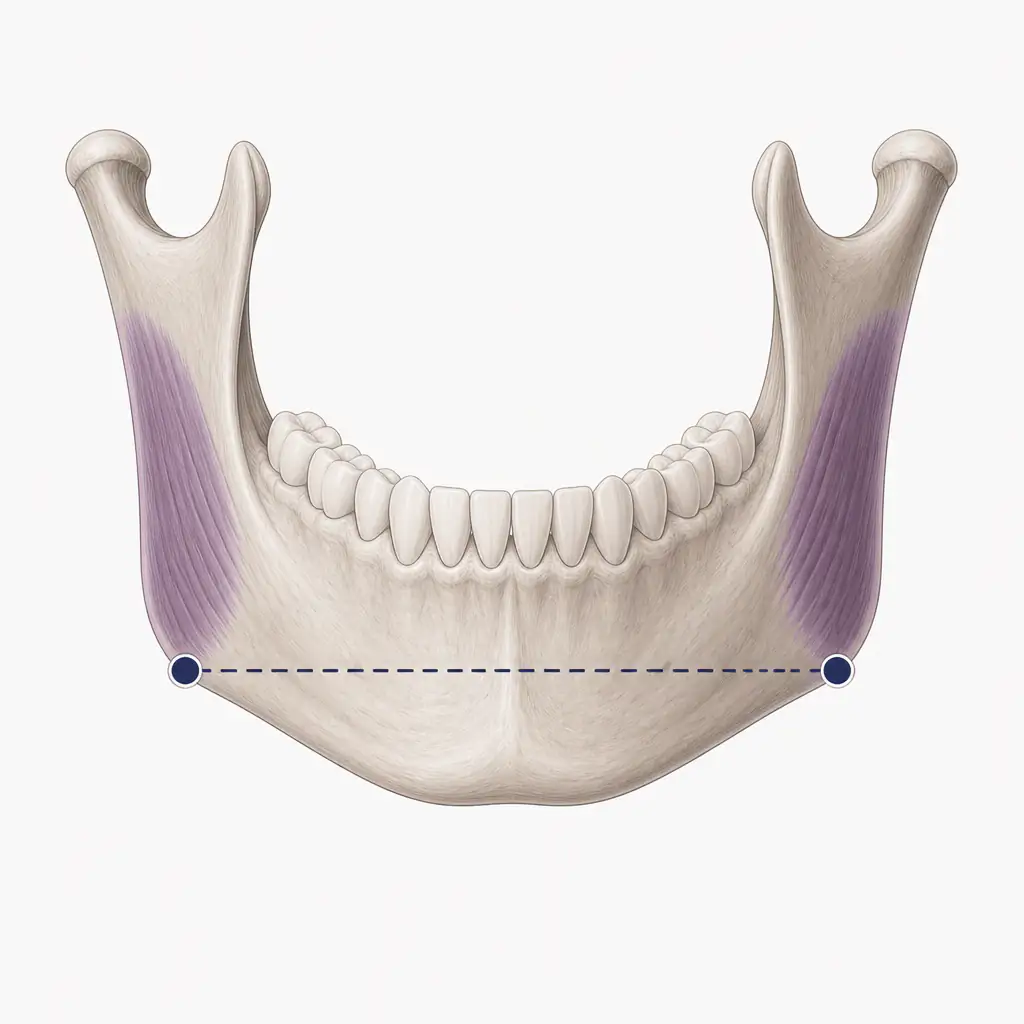
The mandible, or lower jawbone, is shaped roughly like a horseshoe. The horizontal front portion is called the mandibular body, and the two vertical extensions rising toward the skull are the mandibular rami. Where the body meets each ramus, the bone bends at an angle. That bend point is called the gonion (from the Greek word for angle).
Several key structures influence how prominent or wide the gonial region appears:
- Masseter muscle: The large chewing muscle that attaches along the ramus and mandibular angle. High muscle volume increases the perceived width of the jaw.
- Gonial angle: The interior angle formed at the bend. A more acute angle (closer to 90 degrees) tends to project the jaw more laterally and inferiorly, contributing to a wider, more defined appearance.
- Bone cortex thickness: The density and flare of the bone itself at the angle region.
Bigonial width, therefore, reflects a combination of bone structure and soft tissue volume. Both are modifiable to varying degrees, which matters when discussing aesthetic improvement.
Why Bigonial Width Matters for Facial Aesthetics
Facial attractiveness research consistently finds that the lower third of the face plays a significant role in overall impression. The jaw communicates signals related to health, hormonal history, and structural symmetry.
The Bizygomatic-to-Bigonial Ratio
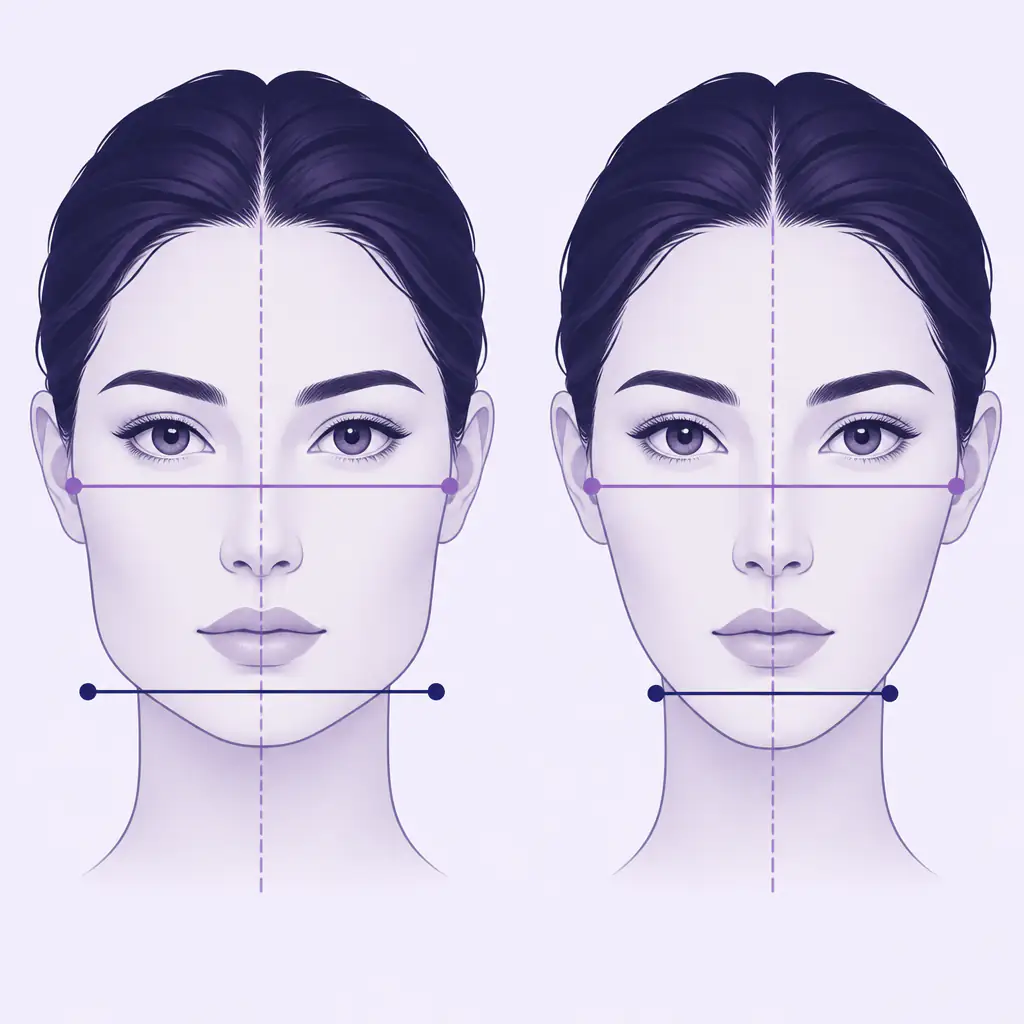
One of the most studied proportions in facial aesthetics is the ratio between bizygomatic width (cheekbone-to-cheekbone distance) and bigonial width. Research suggests that in aesthetically rated faces:
- A bizygomatic width slightly greater than bigonial width is generally preferred, creating a subtle taper from mid-face to jaw.
- For men, a relatively wider bigonial width, closer in proportion to bizygomatic width, tends to be associated with a stronger, more angular look.
- For women, a narrower bigonial width relative to the cheekbones contributes to a more tapered, oval or heart-shaped facial outline.
These are population-level tendencies observed in perception studies, not rigid rules. Individual facial harmony matters far more than hitting any single number.
Sex Differences
Bigonial width is one of the more sexually dimorphic facial measurements. On average, male mandibles are broader, more prominent at the gonial angles, and have a more acute gonial angle than female mandibles. This dimorphism is largely driven by androgens during puberty, which stimulate periosteal bone growth and masseter hypertrophy.
In cephalometric studies on adult populations, average bigonial width in men typically falls in the range of approximately 97 to 105 mm, while in women it tends to range from about 88 to 96 mm, though these figures vary across ethnic groups and study populations.
How Bigonial Width Is Measured
Precise measurement requires the right tools and landmarks. Here is how it is done clinically:
- Identify the gonion: On a live subject, the gonion is palpated at the most posterior-inferior point of the mandibular angle. On an X-ray, it is marked geometrically as the point of maximum curvature at the junction of the ramus and body.
- Use a sliding caliper: The caliper tips are placed at both gonion points simultaneously. The subject sits in a neutral head position, teeth lightly together (centric occlusion).
- Record in millimeters: The straight-line distance between the two points is the bigonial width.
In research settings, this is often cross-validated against 3D photogrammetry or cone-beam CT (CBCT) scans for greater accuracy, since soft tissue can shift with head position or muscle contraction.
For those who want a general self-assessment without clinical equipment, a flexible measuring tape can provide a rough approximation, though it will consistently overestimate true bone-to-bone distance due to soft tissue.
Bigonial Width and the Lower Face Thirds
Facial proportion analysis, whether used by surgeons, orthodontists, or anthropologists, typically divides the face into vertical thirds (hairline to brow, brow to nose base, nose base to chin) and horizontal fifths. Bigonial width sits within the analysis of the lower third and influences how balanced each zone appears relative to the others.
A jaw that is disproportionately wide relative to the mid-face can create a bottom-heavy appearance. Conversely, a very narrow bigonial width in relation to a wide bizygomatic measurement may make the lower face appear pinched or recessed.
For this reason, clinicians rarely assess bigonial width in isolation. It is always evaluated alongside:
- Bizygomatic width (cheekbone width)
- Bigonial-to-chin height ratio (vertical lower face proportion)
- Chin projection (how far forward the chin sits relative to the lower lip)
- Facial symmetry between left and right gonial points
Using an app like Aura can help you get an objective read on how your jaw width compares proportionally to the rest of your face before you start any modification protocol. It analyzes jawline geometry alongside other facial landmarks, giving you a structured baseline rather than guesswork.
Can Bigonial Width Be Changed?
This is the practical question most readers care about. The answer is: yes, to varying degrees, depending on the method.
Non-Surgical Options
Masseter hypertrophy (mewing, chewing, jaw exercises) The masseter muscle contributes meaningfully to the visible width at the jaw angle. Resistance training for the masseter, such as chewing hard foods, using jaw trainers, or following mewing protocols, may increase muscle volume and enhance the apparent bigonial width. Some users report visible changes after consistent effort over months. Research on mewing specifically is limited, but masseter hypertrophy from jaw exercise is well documented in the literature.
Body fat reduction Subcutaneous fat over the masseter and mandibular angle can obscure jaw definition. Reducing overall body fat may improve the visual sharpness of the gonial region without changing the underlying bone width.
Skincare and facial posture While these do not alter bigonial width itself, improving skin quality and maintaining proper resting facial posture (lips together, teeth lightly touching, tongue on palate) can improve how the jaw reads visually.
Surgical Options
Jaw angle implants: Custom or standard silicone implants placed over the mandibular angle can increase both the lateral flare and vertical height of the gonial region, directly widening the apparent bigonial width.
Masseter Botox: Counterintuitively, Botox injections into the masseter reduce muscle bulk, which narrows the apparent bigonial width. This is used therapeutically for teeth grinding and aesthetically for those seeking a slimmer lower face.
Orthognathic surgery: In cases of skeletal malocclusion, surgical repositioning of the jaws can alter bigonial width as a secondary effect, though this is not typically performed for cosmetic reasons alone.
Talk to a qualified maxillofacial surgeon or board-certified plastic surgeon before considering any surgical option. Individual anatomy, bone structure, and soft tissue characteristics vary significantly and must be assessed in person.
Practical Tips for Assessing and Optimizing Your Jaw Width
If you want to work with your bigonial width intentionally, here is a grounded approach:
- Get a baseline measurement. Use a flexible tape or ask a clinician to measure your jaw width. Note the number and track it over time.
- Photograph consistently. Take frontal and 3/4-view photos in the same lighting and head position each month. Visual progress is easier to track than numbers alone.
- Assess your proportions, not just the number. A bigonial width of 100 mm means little without knowing your bizygomatic width. Aim to understand your full facial geometry. Aura provides a structured proportional analysis that covers jawline alongside other key measurements.
- Focus on controllable variables first. Body fat, masseter volume, and skin quality are all modifiable without medical intervention. Start there before considering invasive options.
- Be realistic about bone. Post-puberty, bone remodeling is slow and limited through natural means. Meaningful skeletal change typically requires surgical intervention.
- Consult before acting on surgical interest. If you are considering implants or other procedures, see at least two board-certified surgeons for independent opinions.
Frequently asked questions
What is a normal bigonial width for men and women? +
Average bigonial width in adult men typically falls between approximately 97 and 105 mm, while in adult women it tends to range from about 88 to 96 mm. These values vary across ethnic populations and individual body size, so they are reference ranges rather than fixed targets.
How does bigonial width affect facial attractiveness? +
Bigonial width influences lower face proportion and how the jaw reads relative to the cheekbones and chin. Research suggests a bizygomatic width slightly greater than bigonial width is commonly associated with attractive facial structure, though the relationship varies by sex and individual facial context.
Can jaw exercises actually increase bigonial width? +
Jaw exercises may increase masseter muscle volume, which can add to the visible width at the jaw angle. However, they do not change the underlying bone width. Visible changes, if they occur, are typically modest and develop over several months of consistent effort.
What is the difference between bigonial width and bizygomatic width? +
Bigonial width measures the distance between the two gonion points at the back corners of the lower jaw. Bizygomatic width measures the distance between the two zygomatic arches at the widest point of the cheekbones. Together, these two measurements describe the horizontal tapering of the face from mid-face to jaw.