 Aura: Looksmaxxing
 Chin to Philtrum Ratio: The Complete Facial Harmony Guide
Learn how the chin to philtrum ratio affects facial harmony, what ideal measurements look like, and how to assess and improve your own proportions.
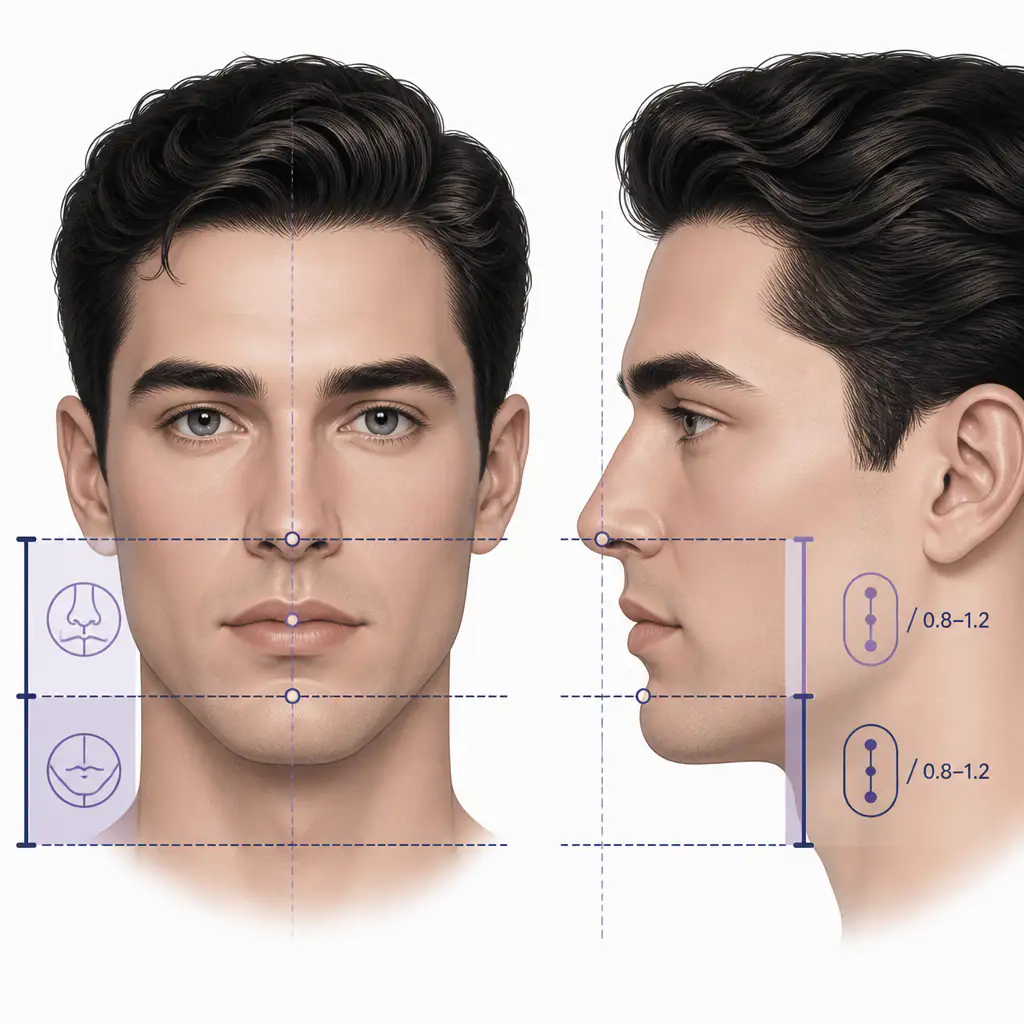
Facial attractiveness is not random. Beneath the surface of what we instinctively find appealing lies a set of measurable proportions, and the chin to philtrum ratio is one of the most telling among them. If you have ever looked at a photo of yourself and felt something was slightly off, without being able to pinpoint it, this ratio is often the culprit.
This guide breaks down exactly what that ratio means, how it fits into broader facial harmony principles, and what you can realistically do with the information.
What Is the Chin to Philtrum Ratio?
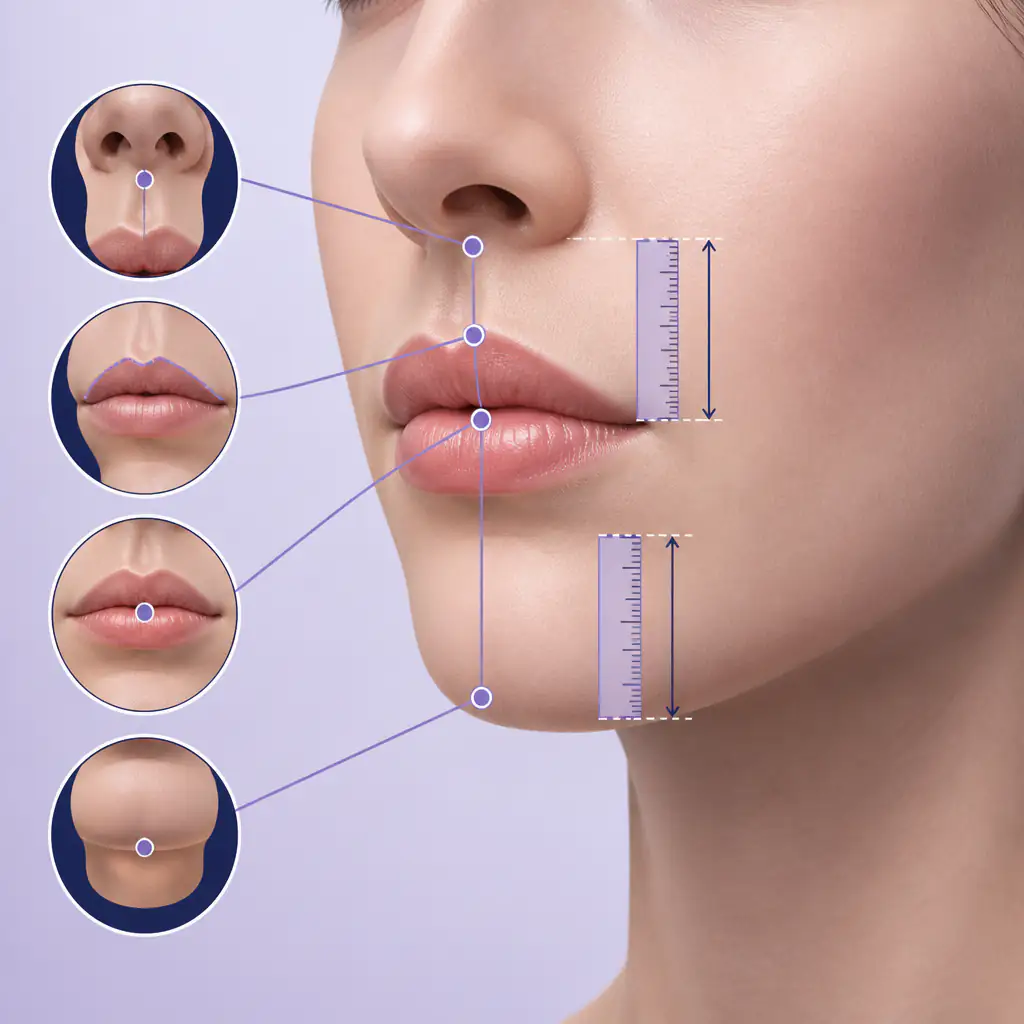
The philtrum is the vertical groove running from the base of your nose to the top of your upper lip. The chin refers to the vertical distance from the lower lip to the lowest point of the mentum (chin tip).
In classical facial analysis, the lower third of the face is divided into two segments:
- Upper lower third: base of nose to the vermillion border of the lower lip (which includes the philtrum and the lips)
- Lower lower third: base of the lower lip to the chin tip
The ideal philtrum length in most aesthetic literature sits between 11 and 13 mm in women and 13 and 15 mm in men. The chin segment below the lips is ideally slightly longer, producing a ratio where the chin height is roughly 1.0 to 1.3 times the philtrum length. When the philtrum runs long relative to the chin, the midface can appear heavy and the chin recessed. When the chin dominates excessively, the face may look bottom-heavy.
This balance is not purely theoretical. Orthodontists, maxillofacial surgeons, and aesthetic practitioners use these measurements when planning treatments for facial asymmetry, occlusion correction, and cosmetic procedures.
Why This Ratio Matters for Overall Facial Harmony
No single measurement exists in isolation. The chin to philtrum ratio interacts with several other proportions that together determine whether a face reads as harmonious.
Facial Thirds and the Lower Face
The classical division of the face into equal horizontal thirds (hairline to brow, brow to nasal base, nasal base to chin) is a starting point, but the lower third has its own internal hierarchy. A long philtrum compresses the perceived chin projection even if the actual bone structure is adequate. This is why some people benefit significantly from upper lip or philtrum reduction procedures, while others benefit more from chin augmentation.
The Ideal Nose and Its Relationship to the Philtrum
The ideal nose in profile forms a specific angle with the upper lip, called the nasolabial angle. In women, this angle typically ranges from 95 to 110 degrees; in men, 90 to 95 degrees. A nose that rotates upward or projects excessively will visually distort how long the philtrum appears, even if the philtrum itself is anatomically normal. When evaluating the chin to philtrum ratio, the nasal tip position must be factored in.
Facial Convexity Angle
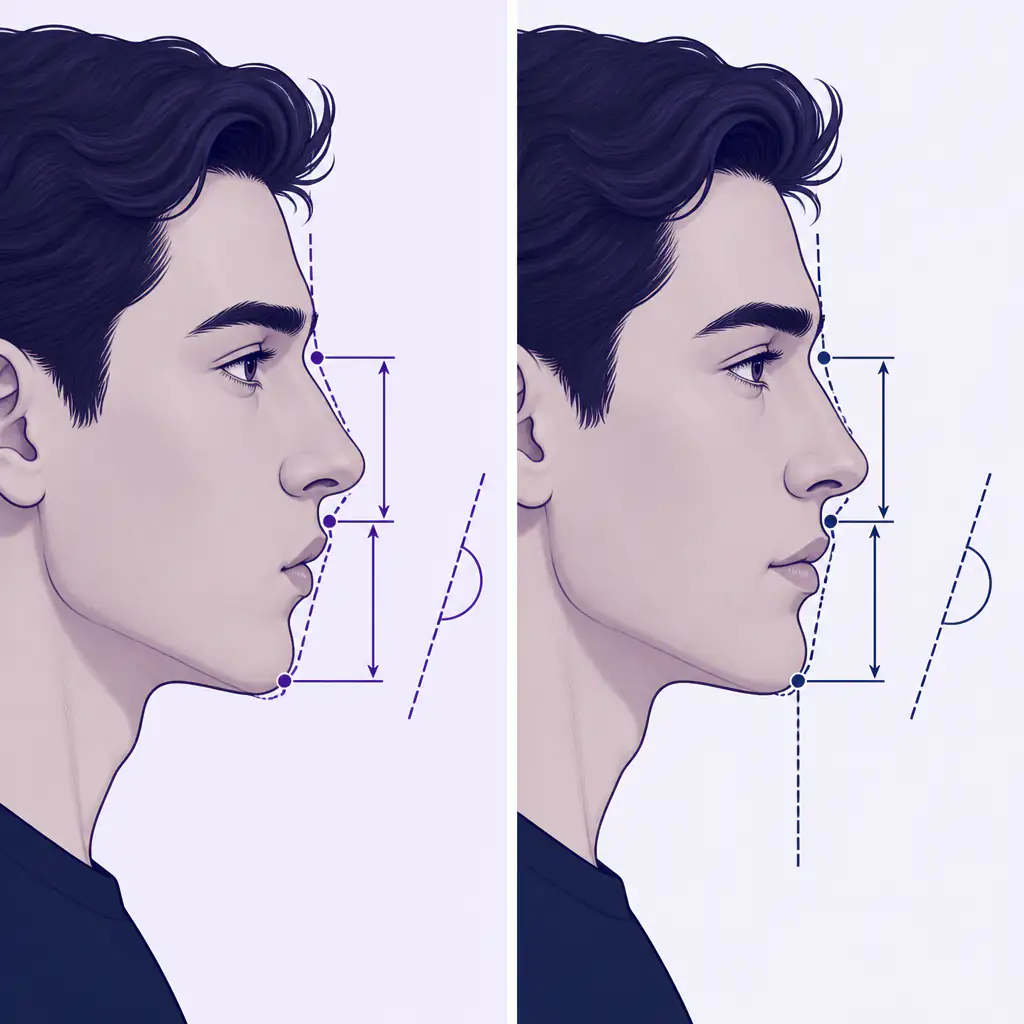
The facial convexity angle is measured in profile by drawing lines from the forehead (glabella) through the nasal tip and from the nasal tip through the chin (pogonion). An ideal convexity angle falls between 0 and 12 degrees of convexity. A chin that sits behind this line creates a convex profile, a common issue in Class II skeletal patterns where the philtrum-to-chin imbalance is especially pronounced. This is part of what makes the perfect side profile ratio so sought after in facial aesthetics.
What a Strong Side Profile Actually Looks Like
Side profile analysis has become increasingly popular as people study reference faces for aesthetic benchmarks. Names like Jon Erik Hexum side profile, Leonardo DiCaprio side profile, and Penn Badgley side profile come up frequently in discussions of the ideal male side profile, often referred to in aesthetic communities as the chad side profile.
What these profiles tend to share:
- Adequate chin projection. The chin tip sits at or slightly behind the lower lip vertical when viewed in profile, but not recessed behind the nasal base vertical.
- Short to moderate philtrum. The upper lip does not appear elongated or drooping.
- Defined mandibular angle. The jaw meets the neck at a relatively sharp angle rather than blending into a soft curve.
- Moderate facial convexity. The profile is neither excessively concave nor convex.
- Forward maxillary position. The midface does not appear sunken, which would make even a normal-length philtrum look long by comparison.
A long philtrum with a weak chin is one of the most common deviations from this profile. Addressing either or both components typically produces the most visible improvement.
Eye Spacing, IPD, and Harmony Above the Midface
While the chin to philtrum ratio focuses on the lower face, facial harmony is evaluated from hairline to chin. Two measurements that matter above the midface are eye spacing and interpupillary distance.
The ideal interpupillary distance (IPD) or ideal ipd is typically cited as approximately one-fifth of the total facial width, and the distance between each eye and the lateral orbital rim should equal roughly one eye-width on each side. When eye spacing is either too wide (hypertelorism) or too narrow (hypotelorism), even a well-proportioned lower face can feel discordant.
The ideal interpupillary distance for most adults falls between 58 and 72 mm, with the midpoint around 63 to 65 mm being most common in aesthetic reference imagery. Eyes set too far apart can make the nose appear broad; eyes set too close can make the face appear compressed horizontally.
Understanding where you fall on these measurements gives you a clearer picture of which features to prioritize if you are working on your appearance systematically.
If you want an objective starting point across all these metrics, Aura analyzes your facial proportions using AI, including jawline scoring and eye spacing assessment, and returns a structured breakdown rather than a vague impression.
How to Measure Your Own Chin to Philtrum Ratio
You do not need a caliper or a clinical setting to get a useful approximation. Here is a practical method:
- Take a neutral-expression photo in good, even lighting. Face the camera straight on. Avoid tilting your chin up or down, as this distorts vertical measurements.
- Identify the landmarks. Mark (mentally or with a photo editing tool) the base of your nose (subnasale), the top of your upper lip (the vermillion border), and the lowest point of your chin (menton).
- Measure in pixels or millimeters. The philtrum runs from subnasale to the top of the upper lip. The chin segment runs from the bottom of the lower lip to the menton.
- Calculate the ratio. Divide the chin measurement by the philtrum measurement. A result between 1.0 and 1.3 is generally considered balanced.
If your ratio falls below 1.0, your philtrum is longer than your chin height, which often reads as a weak or recessed chin. If it exceeds 1.6 or more, the chin may be overly dominant relative to the midface.
What If Your Ratio Is Off?
There are several approaches, ranging from non-invasive to surgical:
- Chin filler or implant can increase chin height and projection, improving the ratio without altering the philtrum.
- Lip lift surgery (subnasal bullhorn) shortens the philtrum directly and is considered one of the more impactful lower-face procedures per unit of change.
- Orthodontic treatment or jaw surgery addresses skeletal imbalances at the root level, particularly for Class II or Class III malocclusion patterns.
- Mewing and posture correction may help younger individuals support forward facial growth, though evidence for adult structural change remains limited.
Talk to a qualified professional, such as a maxillofacial surgeon, orthodontist, or board-certified plastic surgeon, before considering any of these options. Self-diagnosis from photos has limits, and clinical evaluation includes factors photographs cannot capture.
Practical Steps to Improve Facial Harmony Without Surgery
Not every adjustment requires a procedure. Several non-invasive habits genuinely influence how your proportions read:
Body Fat Percentage
Lower facial fat reduces soft tissue that obscures the mandibular border and chin definition. Even modest reductions in overall body fat can sharpen the jaw and make the chin appear more projected relative to surrounding tissue.
Grooming and Contouring
Strategic beard styling can visually extend the chin or reduce apparent philtrum length. A well-shaped beard that adds fullness to the chin area shifts the perceived lower-face ratio without any permanent change.
Hairstyle and Facial Framing
Haircuts that add height on top elongate the face vertically, which can balance a lower third that feels heavy. Conversely, side-swept styles that reduce perceived facial height draw more attention to midface proportions.
Posture and Neck Position
Forward head posture compresses the cervicomental angle (the angle between the neck and chin), making the chin appear weaker from the side. Correcting head posture so the ears align over the shoulders can meaningfully improve profile appearance.
For a more personalized assessment that accounts for your specific proportions rather than generic advice, Aura generates a custom improvement plan based on your facial scans, including specific weak points and actionable recommendations.
Putting It All Together
The chin to philtrum ratio is one metric within a broader system. It interacts with the facial convexity angle, nasolabial angle, IPD, and the overall facial thirds division. No single number determines how attractive a face appears, but understanding these proportions gives you something specific to work with rather than a vague sense that something could be better.
The most useful approach is to assess your proportions accurately, identify the one or two metrics that deviate most from the balanced range, and pursue targeted changes in order of impact and practicality. That might mean improving posture and adjusting your beard before ever considering a procedure, or it might mean having a consultation with a surgeon if a skeletal issue is genuinely limiting your results.
Either way, starting with an accurate measurement is more productive than working from a general impression.
Frequently asked questions
What is the ideal chin to philtrum ratio? +
Most aesthetic guidelines suggest the chin height (lower lip to chin tip) should be approximately 1.0 to 1.3 times the philtrum length (nasal base to upper lip border). This creates a balanced lower facial third. Ratios below 1.0 often indicate a visually long philtrum or weak chin, while ratios above 1.6 may suggest chin dominance.
How long should the philtrum be? +
The ideal philtrum length is generally cited as 11 to 13 mm in women and 13 to 15 mm in men. Lengths above these ranges are associated with an aged or heavy midface appearance and can make the chin look relatively weak even when bone structure is adequate.
Can the chin to philtrum ratio be improved without surgery? +
Yes, to a degree. Reducing facial fat, adjusting beard shape, and correcting forward head posture can all improve how the lower face reads in photos and in person. These changes do not alter bone structure but influence the perception of proportion meaningfully. Injectable chin filler is a minimally invasive option that sits between lifestyle changes and surgery.
How does the facial convexity angle relate to chin projection? +
The facial convexity angle measures how forward or backward the chin sits relative to the forehead and nose in profile. A recessed chin increases facial convexity beyond the ideal 0 to 12 degree range, which makes the philtrum appear longer and the profile weaker. Improving chin projection, whether through posture, filler, or surgery, directly reduces excess facial convexity.