 Aura: Looksmaxxing
 Hyperpigmentation Outer Corner of Eye: Causes & Fixes
Dark spots at the outer corner of your eye are common but treatable. Learn causes, proven ingredients, and how to build a routine that actually works.
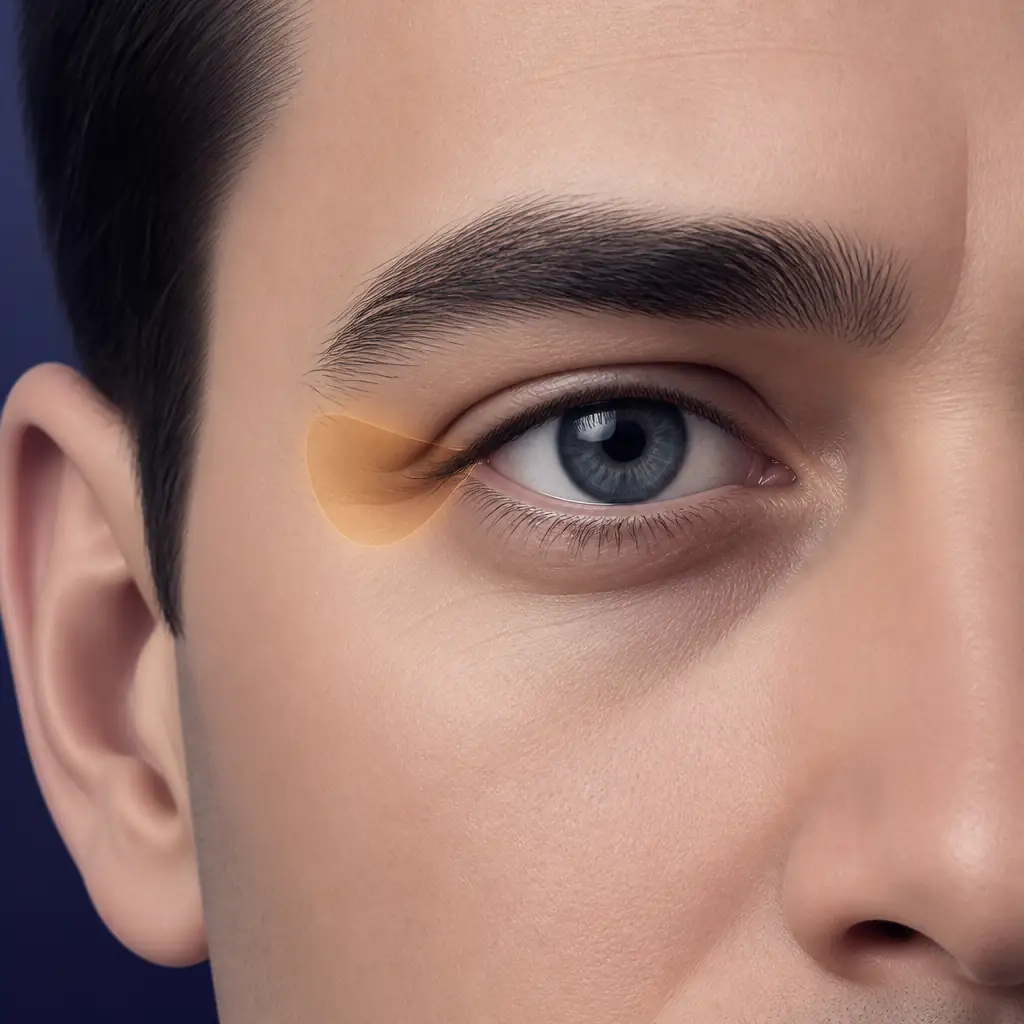
Dark discoloration sitting right at the outer corner of your eye is one of those things that looks subtle in the mirror but photographs surprisingly harshly. It tends to deepen shadows, make the eye area look tired, and can visually compress the lateral canthus (the outer junction where your upper and lower eyelids meet). If you have noticed this specific pattern of darkening, you are not imagining it, and you are not alone.
This guide covers why that corner gets darker than the rest of your periorbital area, which ingredients research supports for addressing it, how it interacts with structural features like nasolabial grooves and the mentolabial fold, and how to build a practical routine around it.
Why the Outer Corner of the Eye Gets Darker
The periorbital region is one of the thinnest-skinned areas on the face. Skin here can be as thin as 0.5mm compared to 2mm on the cheeks. That thinness means two distinct mechanisms can create what looks like the same problem.
Vascular vs. Melanin-Based Darkness
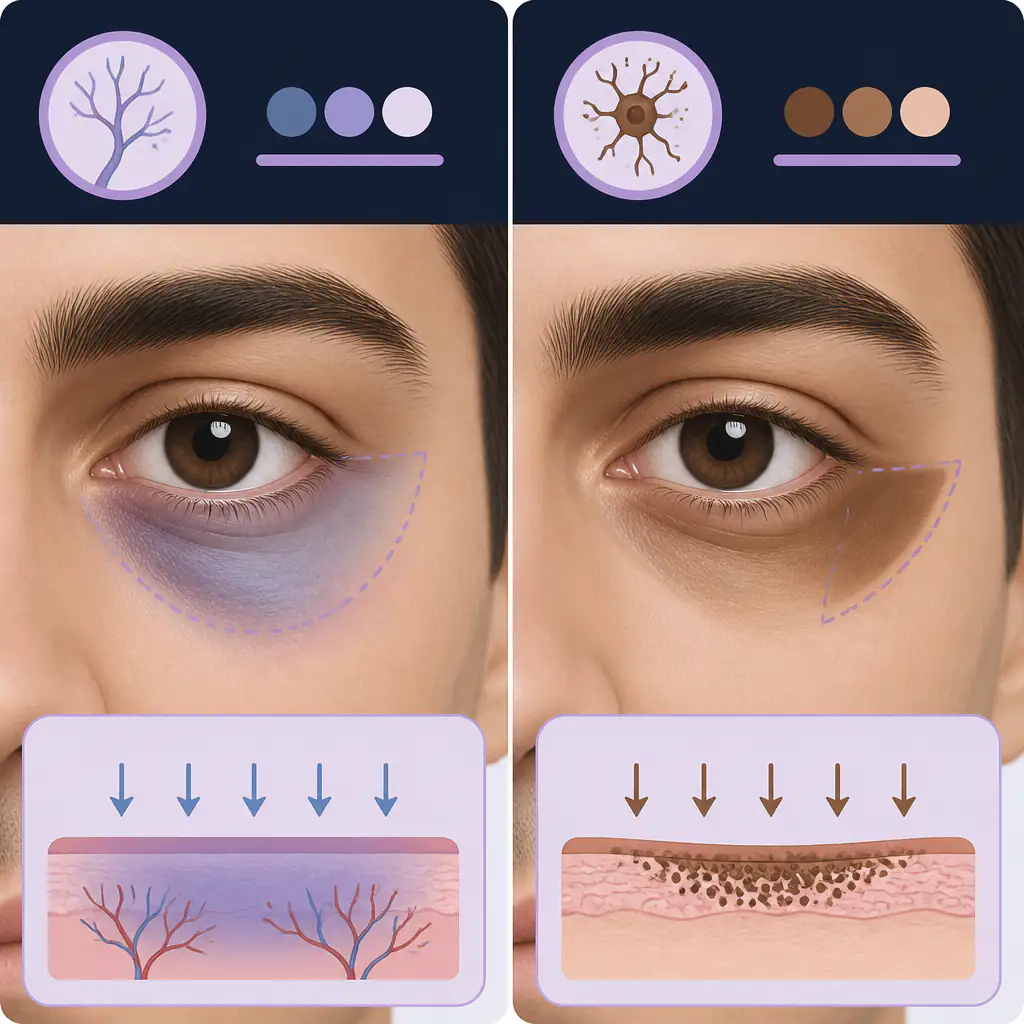
Vascular hyperpigmentation happens when blood vessels near the surface show through the skin. You see a bluish or purplish tint, and it tends to worsen when you are tired, dehydrated, or have been rubbing the area. This is more common under the inner corner of the eye but can extend outward.
Melanin-based hyperpigmentation at the outer corner of the eye is a true pigment excess. The skin there produces more melanin than the surrounding tissue. This looks brownish rather than bluish, does not change much with sleep, and tends to have a relatively defined border. Sun exposure, post-inflammatory pigmentation from friction or contact dermatitis, and hormonal shifts are common triggers.
Knowing which type you have matters because the treatment approaches differ. Brightening actives like kojic acid or niacinamide target melanin production. Retinoids improve cell turnover and thin, crepey texture. Neither does much for purely vascular darkness, where caffeine-based products or physical compression (like cold compresses) are more relevant.
Why This Spot Specifically
The outer corner accumulates pigment for a few mechanical reasons:
- UV exposure: The lateral orbital rim protrudes slightly less than the central brow ridge, leaving that corner with less natural shade from your brow bone.
- Friction and rubbing: Most people rub their eyes starting from the outer corner when fatigued. Chronic low-grade friction is a reliable driver of post-inflammatory hyperpigmentation.
- Lash-line shadows and folds: If you have a prominent nasolabial groove or deep-set eyes, shadow accumulation in photos can make existing pigment look darker than it is under neutral lighting.
- Thin skin with high movement: The orbicularis oculi muscle contracts hundreds of times per day. High movement areas thin skin over time and can promote pigment irregularity.
The Connection to Itachi Lines and Under-Eye Shadows
If you follow any looksmaxxing content, you have likely come across the term itachi lines, referring to the subtle dark lines or creases that run below the lower lash line, sometimes extending toward the outer corner. These are not the same as hyperpigmentation in the strictest sense, though they are related.
Itachi lines under eyes are primarily a combination of thin skin, mild fat pad displacement, and vascular show-through. They can be darkened by true melanin hyperpigmentation sitting on top of an already shadowed area. Addressing the pigment component with topical brighteners may reduce their apparent depth, but the structural element (the groove itself) responds better to hydration, peptides, and in more pronounced cases, professional undereye support treatments like filler or laser resurfacing.
If you want an objective read on how much these features actually affect your overall facial balance, tools like Aura can score your periorbital area alongside hunter-eye detection and jaw analysis, giving you a baseline before you start any routine changes.
Ingredients That Research Supports for Periorbital Hyperpigmentation
Not every brightening ingredient is safe or practical for the outer corner of the eye. The skin there is delicate, and some actives that work well on the cheeks can cause irritation, stinging, or paradoxical post-inflammatory darkening if misused.
Kojic Acid
Kojic acid is a byproduct of fungal fermentation that inhibits tyrosinase, the enzyme responsible for melanin synthesis. Kojic before and after photos consistently show a gradual lightening of surface pigment over 8 to 12 weeks of consistent use. It is generally well-tolerated at concentrations of 1 to 2 percent. Research suggests it compares favorably to hydroquinone for mild to moderate pigmentation with a lower irritation profile.
For the outer eye corner, use a kojic acid product formulated specifically for the eye area (lower pH, gentler base). Avoid pure kojic acid serums designed for the body, as these are often too concentrated.
Niacinamide
Niacinamide (vitamin B3) at 4 to 5 percent works by interrupting the transfer of melanosomes from melanocytes to keratinocytes rather than blocking melanin production itself. This makes it complementary to kojic acid rather than redundant. It also strengthens the skin barrier, which matters in a high-movement area prone to water loss. It is one of the most broadly safe actives for periorbital use.
Vitamin C (L-Ascorbic Acid or Stable Derivatives)
Vitamin C is an antioxidant that both inhibits melanin synthesis and neutralizes oxidative damage from UV exposure. The challenge near the eye is that L-ascorbic acid at effective concentrations (10 to 20 percent) can sting and is unstable. Stable derivatives like ascorbyl glucoside or sodium ascorbyl phosphate are better tolerated around the eyes and still deliver measurable brightening over time, though more slowly.
Retinoids
Retinoids (retinol, retinaldehyde, prescription tretinoin) accelerate cell turnover, which helps surface pigment shed faster. They also stimulate collagen, which can thicken the dermis slightly and reduce vascular show-through. However, retinoids near the eye require caution. Start with a low-concentration retinol (0.025 to 0.05 percent) applied to the orbital bone area, not the lid itself. Dryness and irritation are common at first and may temporarily worsen the appearance of lines.
Hyperpigmentation After Accutane
One specific context worth addressing: hyperpigmentation accutane (isotretinoin) users experience can be paradoxical. Accutane significantly increases photosensitivity, and any UV exposure during or shortly after a course can cause post-inflammatory hyperpigmentation in areas like the outer eye corner. If you notice new periorbital darkening during or after an accutane course, aggressive sun protection and a gentle brightening routine (niacinamide, low-dose vitamin C) are appropriate first steps. Talk to a qualified dermatologist before adding retinoids if you are still in or recently finished an accutane course.
Structural Features That Interact With Periorbital Pigmentation
Skin pigmentation does not exist in isolation from facial structure. Several anatomical features determine how dark the outer eye corner appears in real life and in photos.
Nasolabial Folds and Grooves
The nasolabial groove (the crease running from the sides of the nose to the corners of the mouth) and its deeper variant, the nasolabial fold, are relevant here because they are part of the same midface aging pattern. As midface volume decreases, shadows deepen throughout the periorbital and cheek region. This can make existing outer-eye pigmentation look more severe because the whole lateral face is reading darker.
Searches around nasolabial folds looksmax often reflect this overlap. Addressing one area without considering the overall lighting and shadow pattern of the face gives incomplete results.
Mentolabial Fold
The mentolabial fold is the horizontal crease between the lower lip and the chin. While this seems unrelated to the eye area, it matters in the context of overall facial harmony. People obsessing over one pigmented area often overlook that volume loss and shadow patterns across the face are interconnected. A cohesive skincare and looksmaxxing approach considers the whole picture.
Building a Practical Routine for the Outer Eye Corner
Here is a straightforward daily and weekly framework.
Morning
- Gentle cleanser (no fragrance, no sulfates near the eye area)
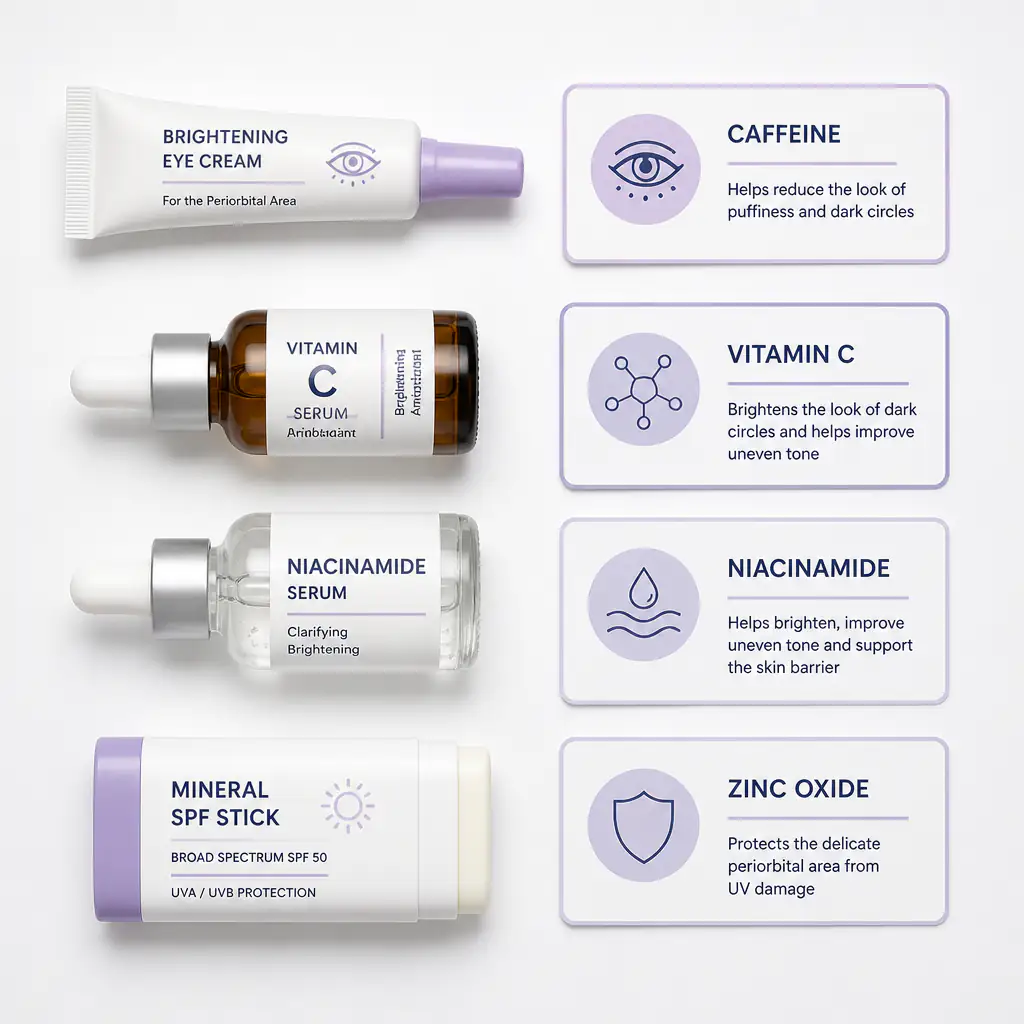
- Niacinamide serum (4 to 5 percent) applied to the periorbital bone area, avoiding the lid margin
- Stable vitamin C (ascorbyl glucoside) if tolerated
- Broad-spectrum SPF 30 to 50 formulated for the face. Mineral sunscreens (zinc oxide) are less irritating near the eyes. This step is non-negotiable for any pigmentation goal.
Evening
- Gentle cleanser
- Kojic acid eye-area product or niacinamide (alternate with retinol if using both to avoid stacking irritants)
- Low-concentration retinol (0.025 to 0.05 percent) 2 to 3 nights per week, applied to the orbital bone, not directly on the thin undereye skin
- Fragrance-free eye cream with peptides and hyaluronic acid to maintain hydration and barrier function
Habits That Accelerate Progress
- Stop rubbing your eyes. Friction is an underrated driver of lateral canthus hyperpigmentation.
- Sleep on your back or use a silk pillowcase. Side sleeping presses the outer eye corner against fabric repeatedly.
- Wear sunglasses with UV400 protection. This reduces both UV load and squinting, which stresses the lateral eye area mechanically.
- Stay hydrated. Even mild dehydration makes periorbital vascular show-through more visible.
Monitoring Progress and Setting Realistic Expectations
Surface melanin-based hyperpigmentation responds to topical treatment on a timeline of 8 to 16 weeks of consistent daily use. Vascular components respond more slowly and may require professional intervention (pulsed dye laser, IPL) for significant improvement. Post-accutane pigmentation may resolve faster once sun protection is in place, as it is often surface-level rather than deep dermal.
Taking standardized photos under consistent lighting every 4 weeks is the most reliable way to track change, since day-to-day perception is unreliable. For a more structured baseline, especially if you are tracking multiple facial features simultaneously, Aura provides an AI-based facial assessment that includes periorbital analysis alongside other scoring metrics, which can be useful for keeping a structured record of change.
If you see no improvement after 12 weeks of consistent topical treatment, or if the pigmentation is spreading, consult a board-certified dermatologist. Some causes (contact dermatitis, periorbital lentiginosis, systemic conditions) require diagnosis before treatment.
Talk to a qualified professional before considering any prescription treatments, laser procedures, or injectable options for periorbital hyperpigmentation.
Frequently asked questions
What causes hyperpigmentation specifically at the outer corner of the eye rather than the whole undereye? +
The outer corner receives more direct UV exposure because the brow bone offers less shade there, and it is also a common friction point from rubbing. Repeated mechanical stress triggers post-inflammatory melanin production in that localized area. Vascular show-through from thin skin can also concentrate at the lateral canthus due to the orbicularis oculi muscle's structure.
Can kojic acid be used safely near the eyes? +
Kojic acid can be used near the eyes when formulated specifically for that area at concentrations of 1 to 2 percent in a gentle, low-irritant base. Kojic before and after results for periorbital use are generally positive over 8 to 12 weeks. Avoid transferring high-concentration body or face formulations directly onto the thin eye-corner skin, as these may cause irritation.
How are itachi lines under eyes different from hyperpigmentation at the outer corner? +
Itachi lines are primarily structural, caused by a groove or shadow beneath the lower lash line from thin skin and mild fat pad changes. True hyperpigmentation at the outer corner is a melanin excess sitting in the skin itself. They can co-exist, and brightening the pigment component may reduce how prominent itachi lines appear, but the underlying groove shape is a structural issue that topical actives alone will not fully resolve.
Why did hyperpigmentation get worse after or during accutane? +
Isotretinoin significantly increases skin photosensitivity, meaning UV exposure during or after a course can cause post-inflammatory hyperpigmentation more easily than usual. The outer eye corner is especially vulnerable given its UV exposure. Rigorous daily sunscreen use, including on the periorbital area, is essential during and after accutane. Consult your dermatologist before adding any actives while on isotretinoin.