 Aura: Looksmaxxing
 Does Bonesmashing Work? The Honest Truth
Does bonesmashing work? We break down the science, real risks, and what users actually report. Get the honest answer before trying anything.
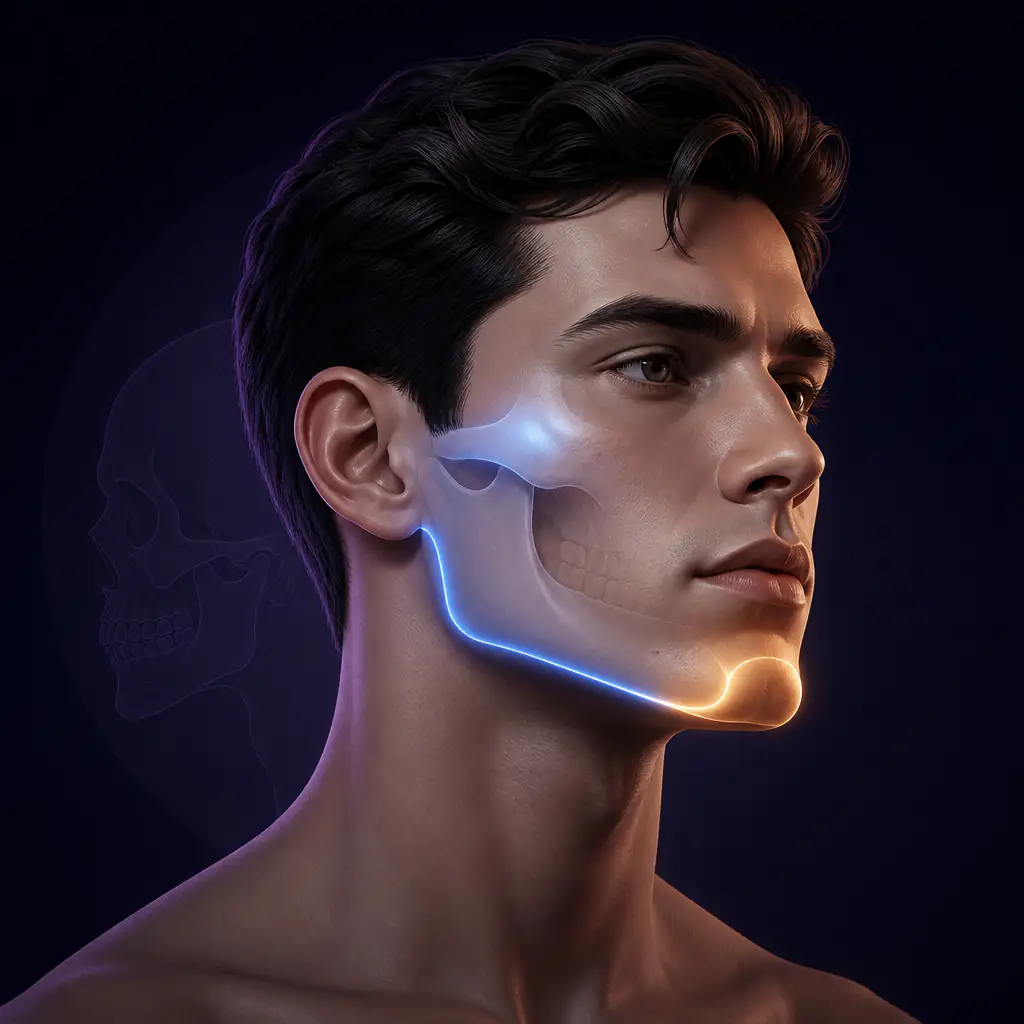
Bonesmashing sits in an interesting place in the looksmaxxing world. It sounds extreme, it has a dramatic name, and it generates a lot of strong opinions. Some people swear it reshaped their jaw. Others call it pure pseudoscience with a side of self-harm. The truth, as usual, is more nuanced than either camp admits.
This article breaks down what bonesmashing actually is, what biology says about it, what the realistic risks look like, and how to think about it as part of a broader approach to facial development. No hype in either direction.
What Is Bonesmashing, Exactly?
Bonesmashing is the practice of applying repeated blunt force to facial bones, most commonly the jawline, cheekbones, and chin, with the intention of stimulating bone remodeling and, over time, producing a more defined or prominent facial structure.
The tool is usually something firm but not sharp, like a closed fist, a palm heel, or a dense rubber object. Practitioners typically apply rhythmic, moderate-impact strikes to target areas for a few minutes at a time, repeated over weeks or months.
The core idea draws from a real biological principle called Wolff’s Law, which states that bone adapts to the mechanical loads placed upon it. Bones under repeated stress tend to become denser and, over time, may remodel their shape. This principle is well-documented in orthopedic research and is why athletes in load-bearing sports tend to develop denser bones in their limbs over time.
The question is whether this principle, which is well-established for limb bones under sustained, controlled loading, actually translates to blunt trauma applied to the delicate bones of the face.
The Biological Case For (and Against) It
What Wolff’s Law Actually Says
Wolff’s Law was described in the context of gradual, sustained mechanical loading, not acute impact. When a bone experiences repeated stress, osteoblasts (cells that build bone) and osteoclasts (cells that break it down) coordinate to remodel the bone in response. This process is slow, measured in months to years, and is most responsive to consistent, directional load.
The loading that stimulates meaningful bone adaptation in research contexts is typically compressive and sustained, like the load placed on leg bones during running, or on the jaw during heavy chewing. It is not the same as repeated blunt strikes.
Where the Logic Gets Shaky
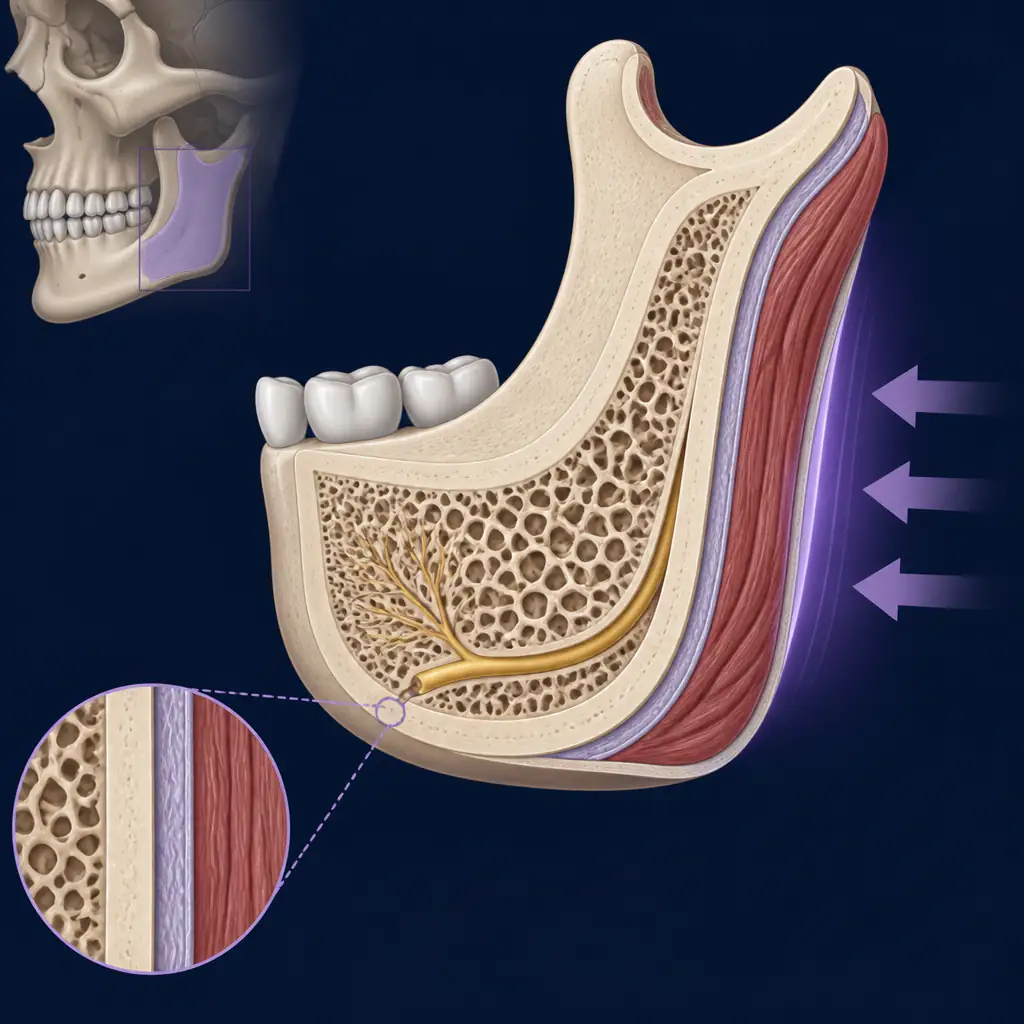
Facial bones are thin, complex, and structurally different from long bones in the limbs. The mandible (jawbone) has cortical bone on the outside and trabecular bone inside, but it is not engineered for the kind of lateral impact that bonesmashing involves. The forces from chewing, for example, are transmitted through the teeth and temporomandibular joint (TMJ) in a controlled, cushioned way.
Applying random blunt force to facial bones does not replicate that controlled loading environment. Instead, it introduces unpredictable stress vectors that may not stimulate productive remodeling at all. More importantly, it introduces real injury risk.
Research on facial trauma consistently shows that repeated sub-fracture impacts to facial bones can cause microfractures, periosteal (bone membrane) damage, and nerve irritation, none of which are desirable outcomes.
What About Mewing and Chewing?
For context, mewing (correct tongue posture) and hard mewing (sustained tongue pressure against the palate) are also based on Wolff’s Law logic. The difference is that tongue pressure against the palate is a low-force, sustained, directional load, which more closely matches the type of stimulus that actually drives bone adaptation. That is a meaningfully different mechanism from blunt impact.
Hard chewing and mastic gum use operate on a similar principle, applying load through the masseteric and pterygoid muscles in a way that is anatomically appropriate. These approaches have more biological plausibility than bonesmashing, even if the evidence for dramatic results remains limited.
What Do Bonesmashing Results Actually Look Like?
Anecdotal reports vary widely. Some users describe noticing improved jawline definition after months of consistent practice. Others report no visible change. A smaller number report swelling, bruising, persistent soreness, or TMJ discomfort.
The honest problem with evaluating these reports is that most people who attempt a bonesmashing guide simultaneously adopt other looksmaxxing habits: better nutrition, lower body fat, consistent mewing, improved sleep, and better lighting and posture in photos. Isolating the contribution of bonesmashing is essentially impossible in these cases.
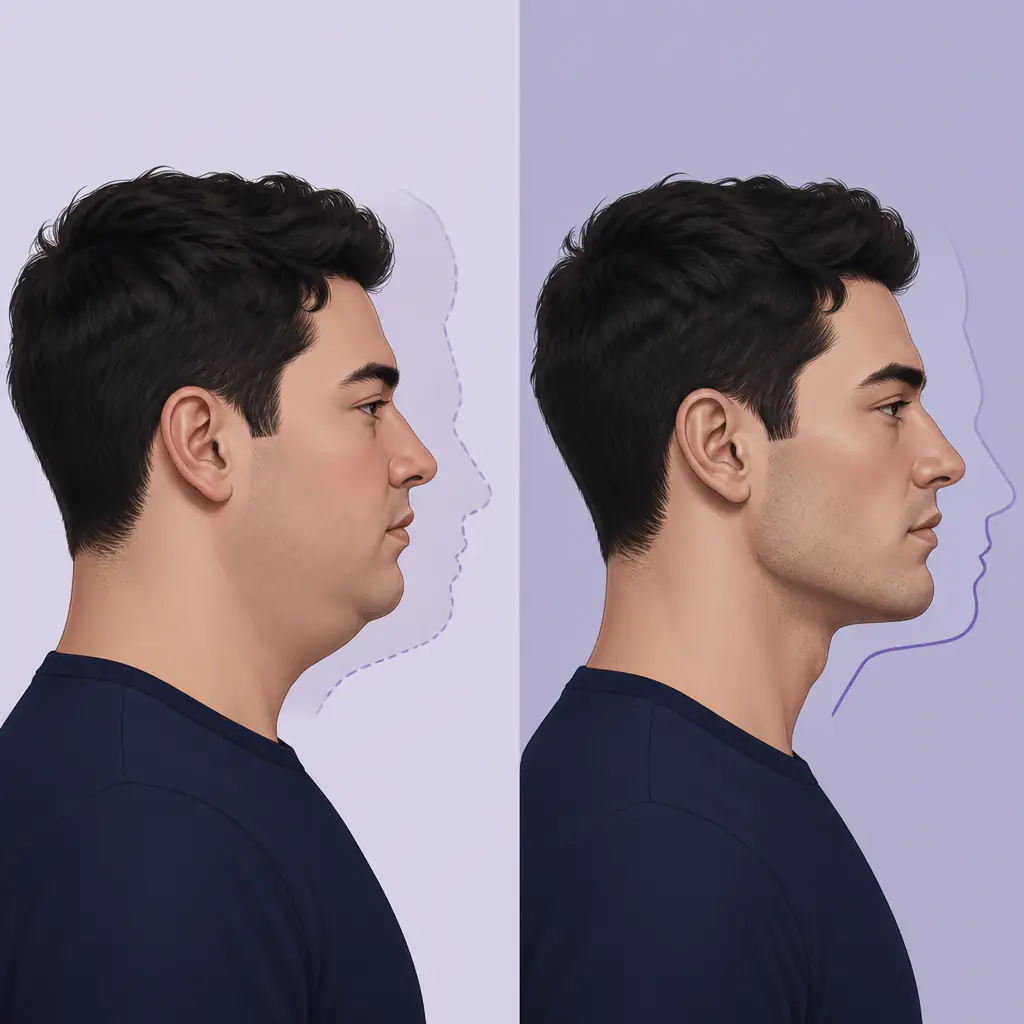
Reduced body fat percentage has an enormous effect on facial definition. Many people who “see results” from bonesmashing timelines are also losing facial fat, which creates more visible bone structure underneath. Attributing that change to bone remodeling alone is a significant logical leap.
There are no peer-reviewed studies specifically examining bonesmashing as practiced in looksmaxxing communities. The absence of research does not prove it works or that it does not, but it means any claims about results are based entirely on self-reported anecdotes with no controls.
The Real Risks You Should Understand
This section matters. If you are considering bonesmashing, these are not hypothetical concerns.
Nerve damage: The infraorbital nerve, mental nerve, and facial nerve branches run close to the surface of facial bones. Repeated blunt trauma to cheekbones, chin, or jaw can irritate or damage these nerves, causing numbness, tingling, or persistent pain.
Microfractures: Below the threshold of a clean fracture, bones can sustain microfractures that heal improperly, potentially creating asymmetry rather than improving it.
TMJ dysfunction: The temporomandibular joint is a precision structure. Lateral force applied to the jaw can alter bite mechanics and contribute to TMJ disorders, which can cause chronic jaw pain, clicking, and headaches.
Soft tissue damage: The parotid gland, masseter muscle, and subcutaneous tissue all sit along common bonesmashing target zones. Bruising and soft tissue damage in these areas can cause inflammation and swelling that temporarily distort facial appearance.
Asymmetry: Perhaps the most ironic outcome. If one side is struck with more force or more frequency than the other, uneven remodeling or soft tissue response may make the face more asymmetric, not less.
Talk to a qualified medical professional before attempting any practice that involves applying force to your face or skull. This includes a maxillofacial surgeon or craniofacial specialist who can assess your bone density, facial anatomy, and any pre-existing conditions.
How to Think About Bonesmashing Within a Broader Looksmaxxing Framework
If your goal is improved facial definition and structure, bonesmashing is not the most evidence-supported path available. Before reaching for anything high-risk, the following interventions have clearer support.
Reduce Body Fat Strategically
Facial fat distribution is largely genetic, but overall body fat percentage has a significant effect on facial leanness. Getting to a lower, sustainable body fat level will reveal bone structure that was always there. This is the single highest-leverage change most people can make.
Correct Tongue Posture
Mewing, practiced consistently and correctly, applies sustained upward and forward pressure on the palate through the tongue. In growing individuals, this may genuinely influence maxillary development. In adults, the effects are more limited but some users report postural improvements in chin projection and neck alignment.
Train the Masseters
The masseter muscles sit along the sides of the jaw and contribute significantly to jawline width and definition. Hard chewing, mastic gum, and jaw exercises can hypertrophy these muscles, creating a more defined lower face appearance without touching bone at all. This approach is lower risk and has clearer anatomical logic.
Get an Objective Baseline
One underrated step before starting any facial improvement practice is getting an honest assessment of where you actually are. Aura provides AI-based facial analysis including jawline scoring, hunter-eye detection, and a personalized breakdown of your facial features. Having a clear baseline makes it easier to evaluate whether any practice is actually producing results, rather than relying on motivated perception.
Sleep and Posture
Chronic forward head posture and poor sleep both affect facial appearance in measurable ways. Correcting neck alignment and prioritizing sleep quality improves skin, reduces puffiness, and can improve the resting appearance of the lower face and jaw.
A Practical Take on Bonesmashing Guides
Most bonesmashing guides circulating online recommend light to moderate pressure, not hard strikes, and emphasize consistency over intensity. In that form, the practice is arguably closer to facial massage than to actual bone trauma. At low force levels, the risk profile drops significantly, but so does any plausible mechanism for bone remodeling.
If you are going to experiment with this at all, the most defensible version is:
- Use only light to moderate pressure, nothing that causes pain or visible bruising.
- Keep sessions short, under three minutes per area.
- Do not target areas near the eyes, temples, or directly over nerve exit points (infraorbital foramen beneath the eye socket, mental foramen near the chin).
- Stop immediately if you experience numbness, persistent soreness, or any asymmetry in sensation.
- Treat it as one minor variable among many, not a primary strategy.
And again, consult a qualified professional before starting, particularly if you have any history of facial injury, TMJ issues, or bone density concerns.
The Bottom Line on Whether Bonesmashing Works
The honest answer to whether bonesmashing works is: probably not in the way most proponents claim, and possibly not at all.
The biological mechanism is theoretically plausible but practically misapplied. Wolff’s Law is real, but the conditions required for meaningful bone remodeling are not replicated by blunt facial impact. The anecdotal results reported online are largely uncontrolled and confounded by other variables, particularly fat loss.
The risks are real and asymmetric. The downside of nerve damage, TMJ dysfunction, or facial asymmetry is significant. The upside, even in the most optimistic interpretation, is modest structural change over a very long time.
If you want to improve your facial structure and definition, there are better-supported, lower-risk strategies available. Use Aura to get an objective read on your current facial profile, then build a plan around the interventions that make sense for your specific features. That is a more useful starting point than blunt force.
Frequently asked questions
Does bonesmashing actually work for jawline definition? +
The evidence is limited to anecdotal reports with no controlled studies. While the theoretical basis in Wolff's Law is real, the specific conditions required for bone remodeling are not reliably replicated by blunt facial impact. Most visible improvements reported by users are likely attributable to fat loss and muscle development rather than structural bone change.
Is bonesmashing dangerous? +
Yes, there are real risks. These include nerve irritation or damage, TMJ dysfunction, microfractures, soft tissue injury, and potential facial asymmetry. The risk-to-benefit ratio is unfavorable compared to lower-risk alternatives like mewing, masseter training, and body fat reduction. Always consult a qualified medical professional before attempting it.
How long does bonesmashing take to show results? +
Proponents typically claim results over several months to a year of consistent practice. However, because most people combine this with other lifestyle changes, it is very difficult to attribute any specific change to bonesmashing alone. There is no established timeline based on controlled evidence.
What are safer alternatives to bonesmashing for improving jawline appearance? +
Reducing overall body fat percentage, consistent correct tongue posture (mewing), masseter muscle training through hard chewing or mastic gum, and correcting forward head posture are all lower-risk approaches with clearer anatomical rationale. Getting a facial analysis baseline through a tool like Aura can help identify which specific features are worth focusing on.