 Aura: Looksmaxxing
 Short vs Long Ramus: What It Means for Your Face
Understand how short vs long ramus height shapes your jaw, face ratio, and overall aesthetics. Learn what each means and what you can do about it.
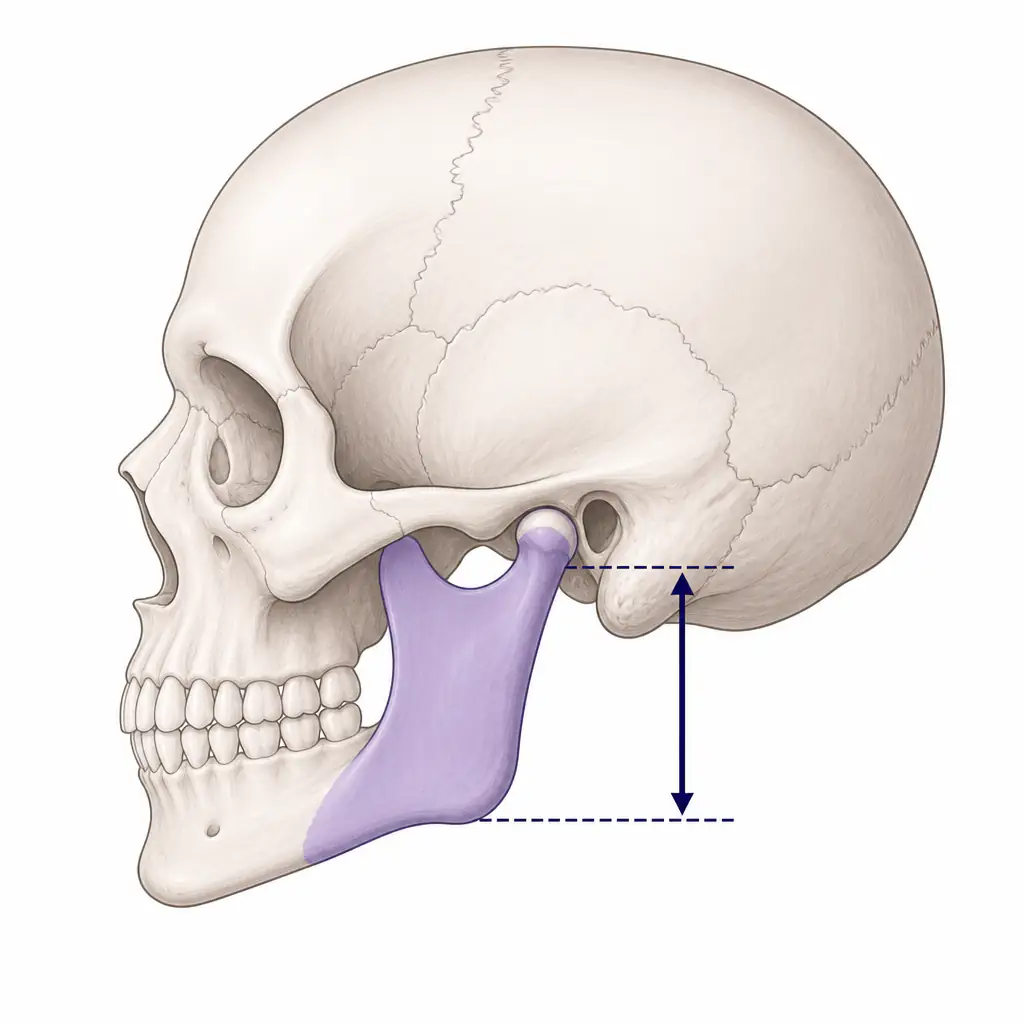
The ramus is one of the most overlooked measurements in facial aesthetics, yet it quietly determines how your entire lower face looks. Whether your jaw appears strong or weak, your face long or balanced, your neck prominent or recessed, much of that comes down to a single vertical segment of bone that most people have never thought about.
This guide breaks down what the ramus actually is, how short and long ramus height each affect your appearance, and what your options are if you want to change the result.
What Is the Ramus?
The mandible (lower jaw) has two main parts. The body runs horizontally and holds your lower teeth. The ramus (plural: rami) is the vertical portion on each side that angles upward from the back of the jaw body to connect with your skull at the temporomandibular joint, or TMJ.
Ramus height is measured from the angle of the jaw (the gonial angle region) up to the condyle, which is the rounded top of the ramus that fits into the joint socket. This measurement directly controls several things:
- How high or low your jaw angle sits relative to your cheekbones
- How much vertical space exists in your lower face
- The overall lower face to midface ratio
- How prominent your jawline looks from the side
Ramus width also matters, but ramus height is the more influential dimension when it comes to facial proportions.
Short Ramus: Characteristics and Aesthetic Effects
A short ramus means the vertical segment of the jaw is relatively compact. This creates a cluster of downstream effects on how the face looks.
What a Short Ramus Tends to Produce
- Lower facial third compression. The lower third of the face (chin to nose) appears shorter or more compact. In some faces this reads as balanced; in others it makes the face look bottom-heavy or disproportionate depending on chin projection.
- Elevated jaw angle. Because the ramus is shorter, the gonial angle (the corner of the jaw) sits higher. This can make the jaw look wider at the back when viewed from the front, sometimes giving a more square or broad jaw appearance.
- Reduced face height. Total face height is smaller. Some people find this creates a more compact, harmonious look, particularly in males where a shorter lower third can emphasize jaw width.
- Less vertical space for the masseter. The masseter muscle attaches along the ramus. A shorter ramus gives this muscle less vertical length to develop, which can limit the hypertrophied masseter look some people pursue through jaw clenching exercises.
A short ramus is not inherently a flaw. In certain facial types, particularly in East Asian facial norms, a shorter vertical ramus paired with a wider bigonial width is considered attractive. Context, ethnicity, and overall facial harmony matter enormously.
Long Ramus: Characteristics and Aesthetic Effects
A long ramus pushes the jaw angle lower and extends the vertical height of the lower face. This has its own set of consequences.
What a Long Ramus Tends to Produce
- Greater lower face height. The distance from chin to nose increases. When proportionate, this elongates the face elegantly. When excessive, it can make the face look long and narrow, sometimes called a “long face syndrome” presentation in orthodontic literature.
- Lower jaw angle position. The gonial angle sits closer to the level of the lower border of the mandibular body, creating a sharper, more angular jaw silhouette from the side. This is generally considered a high-aesthetic trait in male faces.
- More ramus surface for masseter attachment. A taller ramus gives the masseter more vertical surface area. Combined with adequate jaw width, this can support a more defined, muscular jaw appearance.
- Better chin-to-neck definition. A longer ramus often correlates with a more downward-and-forward mandibular plane, which in the right geometry creates cleaner separation between the chin and the neck.
The ideal long ramus is one where total face height remains proportionate, the gonial angle is neither too steep nor too flat, and the chin does not become excessively long in the process.
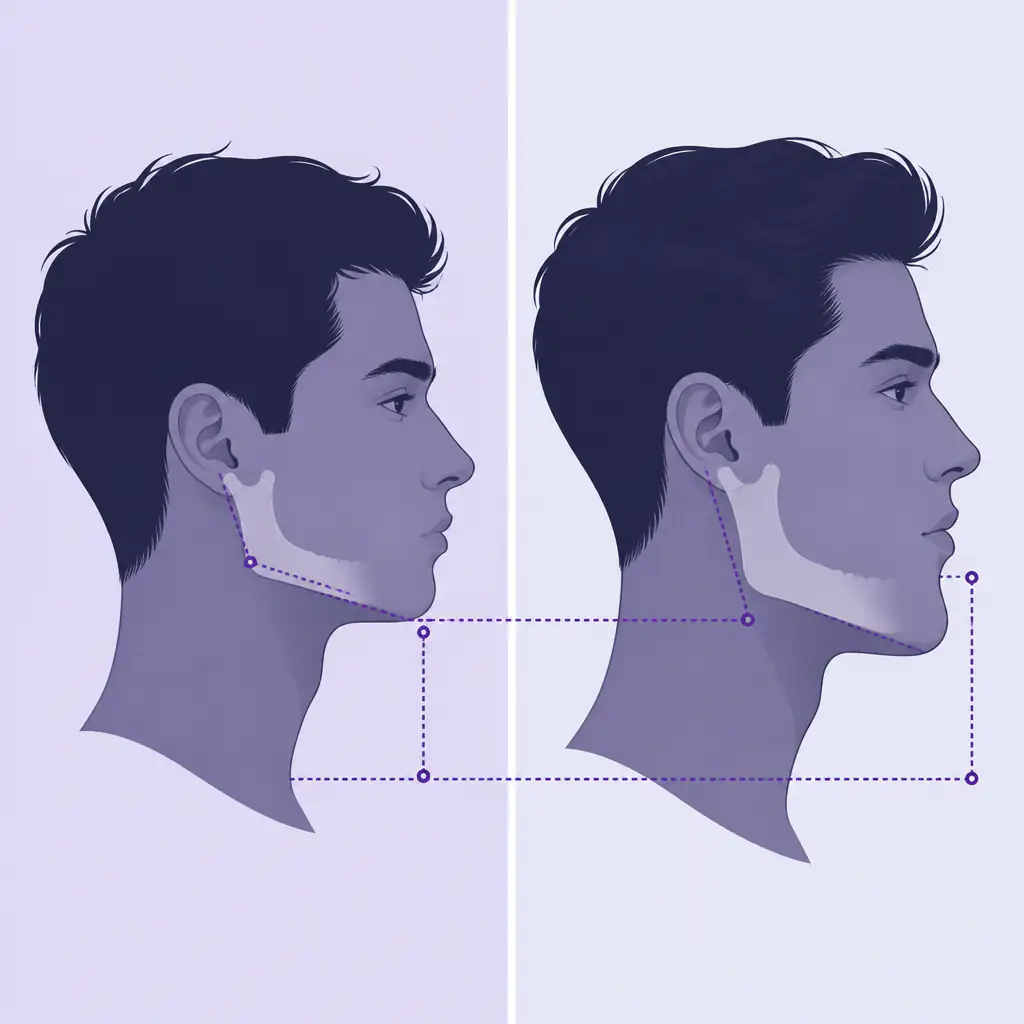
Short vs Long Ramus: Side-by-Side Comparison
| Feature | Short Ramus | Long Ramus |
|---|---|---|
| Lower face height | Compressed, shorter | Extended, taller |
| Jaw angle position | Higher on the face | Lower, more sharply defined |
| Bigonial width perception | Often appears wider | Often appears narrower |
| Masseter attachment area | Less vertical length | More vertical length |
| Face shape tendency | Square, compact | Oval, elongated |
| Common concern | Face looks short or stubby | Face looks too long or narrow |
| Ideal aesthetic context | Feminine or East Asian norms; compact harmony | Strong male jaw; model-like elongation |
Neither is universally better. The question is always whether your ramus height is proportionate to the rest of your facial skeleton, particularly your midface height and your chin projection.
How Ramus Height Interacts with Other Structures
Ramus height does not work in isolation. Its aesthetic effect is modulated by several other factors.
Gonial Angle
The gonial angle is the angle formed at the corner of the jaw where the ramus meets the mandibular body. A typical gonial angle is roughly 120 to 130 degrees. A more acute angle (say, 110 degrees) with a long ramus creates a sharp, highly defined jaw corner. A more obtuse angle with a short ramus can make the jaw look rounded or absent from the side profile.
Chin Projection
A short ramus with good chin projection can still look very strong. A long ramus with a recessed chin can look disjointed. These two variables interact constantly, which is why orthodontists and oral surgeons rarely assess the ramus in isolation.
Midface Height
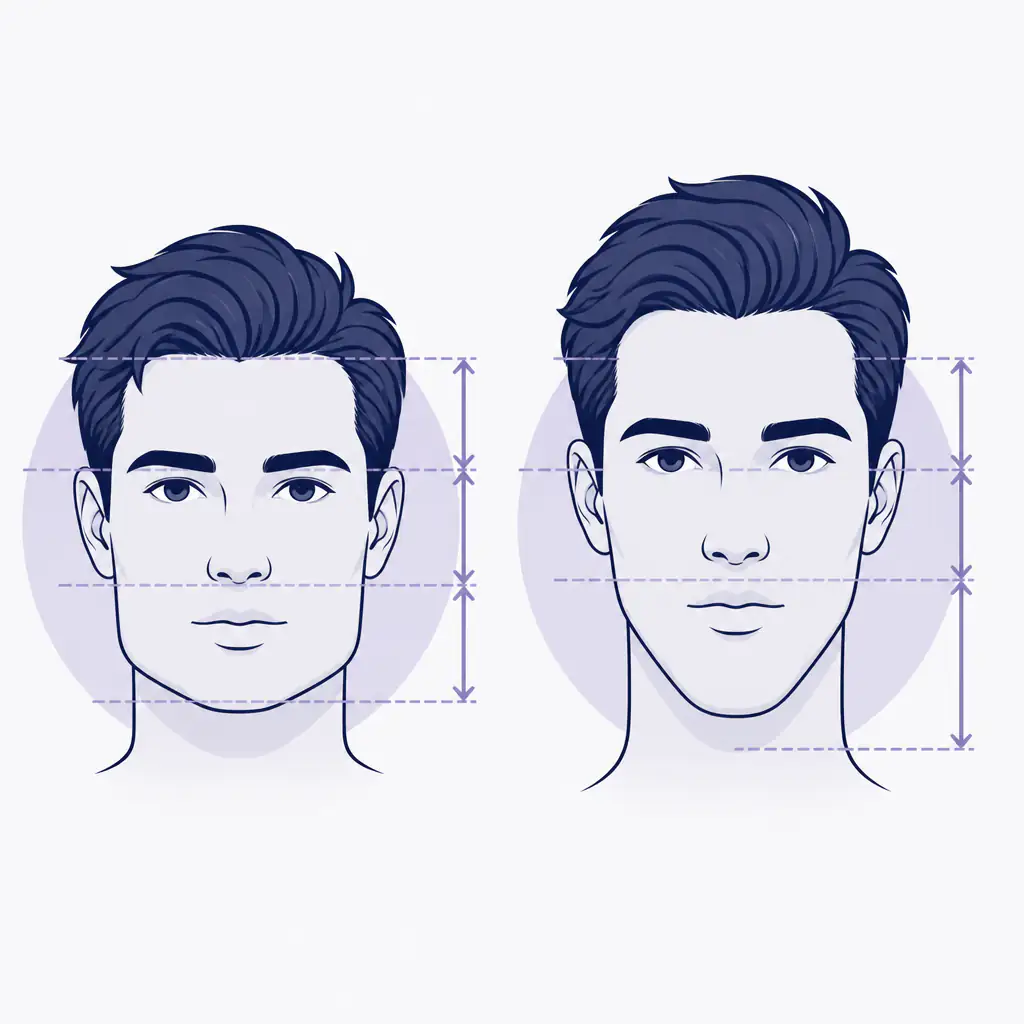
If your midface (the distance from the bottom of the eye socket to the base of the nose) is long and your ramus is short, your face proportions will look off. The ideal face tends toward equal thirds: forehead, midface, and lower face roughly matching in height.
Mandibular Plane Angle
This is the angle of the lower jaw relative to a horizontal reference. A high mandibular plane angle (steep jaw) often accompanies a long ramus and can produce a long, narrow face. A low mandibular plane angle (flat jaw) often accompanies a shorter ramus and a wider, more compact face. Orthodontists use this measurement extensively.
How to Assess Your Own Ramus
You cannot measure your ramus precisely without a lateral cephalometric X-ray, which is a side-view skull radiograph used by orthodontists and oral surgeons. That said, you can get a reasonable read on your ramus characteristics through careful self-observation.
From the side profile:
- Locate the corner of your jaw (gonial angle). Is it roughly level with your earlobe, below it, or well above it?
- A gonial angle sitting noticeably above the earlobe suggests a shorter ramus.
- A gonial angle near or slightly below the earlobe suggests a longer ramus.
From the front:
- Does your lower face look short relative to your midface? This often suggests short ramus height.
- Does your lower face look tall and narrow? This can indicate a long ramus, often with a steeper mandibular plane.
For a more structured baseline, Aura provides AI-based jawline and facial proportion analysis from photos, which can help you identify where your lower face stands relative to established aesthetic ratios before you make any decisions.
What Can Be Done About Ramus Height
This section covers options ranging from non-surgical to surgical. Always talk to a qualified medical or dental professional before considering any of these.
Non-Surgical Options
Masseter hypertrophy through jaw training. Chewing harder foods, mewing, or targeted jaw exercises may develop the masseter muscle, which adds visible width and some definition to the jaw area. This does not change bone height, but can change how the jaw reads aesthetically.
Hairstyles and facial hair. A short ramus creating a high jaw angle can be visually offset by beard styles that add length to the lower face. A long ramus creating excess face height may benefit from styles that add width.
Body fat reduction. Losing facial fat can reveal jaw structure that was obscured. This works for people who already have adequate bone structure underneath.
Surgical Options
These are serious interventions. They are not casual upgrades.
- Orthognathic surgery. This is jaw repositioning surgery, often combined with orthodontic treatment. It can change the vertical and horizontal position of the mandible. Some patients with genuine skeletal discrepancies are candidates. Recovery is significant.
- Ramus sagittal split osteotomy (SSRO). A specific surgical technique that allows surgeons to adjust the vertical and horizontal position of the lower jaw by splitting the ramus. Used for both functional and aesthetic correction.
- Jaw angle implants. These do not change ramus height directly but can add definition to the gonial angle area, making the jaw corner appear more prominent.
- Genioplasty. A chin repositioning surgery that adjusts chin height and projection. Because the chin interacts so directly with the ramus in facial proportions, genioplasty is sometimes used to compensate for ramus height discrepancies without touching the ramus itself.
These procedures carry real risks including nerve damage, asymmetry, and extended recovery. Consult with a board-certified oral and maxillofacial surgeon or craniofacial surgeon to understand whether you are a candidate and what realistic outcomes look like.
Practical Tips for Working With Your Ramus Height
If you are not considering surgery, there are still practical steps worth taking.
- Get a proper assessment first. Know what you are working with before trying to fix it. A lateral photo with consistent lighting, or a consultation with an orthodontist, gives you real data.
- Focus on overall facial harmony, not just one metric. Ramus height only matters in the context of your full facial structure. A short ramus in a face with great chin projection and midface proportions may need no intervention.
- Improve what you can control. Body fat percentage, masseter development, skin quality, and posture all affect how your jaw reads. These are fully in your control.
- Use objective tools. It is easy to fixate on perceived flaws from bad angles or lighting. Using Aura to run a structured facial analysis gives you a more accurate picture of your actual proportions rather than relying on distorted bathroom mirror selfies.
- Consider the functional side. Ramus height abnormalities are sometimes connected to bite problems, TMJ issues, or breathing patterns. If you have jaw pain, clicking, or sleep apnea symptoms, see a professional for functional reasons regardless of aesthetics.
Frequently asked questions
What is considered a short vs long ramus? +
Ramus height is typically measured on a lateral cephalometric X-ray. Average ramus height in adults ranges roughly from 50 to 65 mm depending on sex and population norms. Below this range is generally considered a short ramus; above it is considered long. Exact thresholds vary by study and reference population.
Does ramus height affect bite? +
Yes. Ramus height is closely tied to the vertical relationship between the upper and lower jaws. A very short ramus can contribute to an open bite, while certain ramus and mandibular plane configurations are associated with deep bite or crossbite. Orthodontists routinely assess ramus height as part of treatment planning.
Can you increase ramus height without surgery? +
Bone height cannot be meaningfully increased without surgical intervention in an adult. During adolescence, growth modification appliances used in orthodontics may influence jaw development to a degree. In adults, non-surgical approaches work on soft tissue and muscle, not on ramus bone height itself.
Is a long ramus more attractive than a short one? +
There is no universal answer. A long ramus with a well-defined gonial angle and proportionate lower face height is often considered aesthetically favorable in male faces, particularly in Western beauty norms. However, an excessively long ramus that creates a narrow, elongated face is not. Short ramus height can be attractive when paired with good jaw width and chin projection. Proportion and context always matter more than any single measurement.