 Aura: Looksmaxxing
 How to Grow Masseter Muscle: A Complete Guide
Learn how to grow masseter muscle with proven training methods, chewing techniques, and exercises. Build a stronger, more defined jawline naturally.
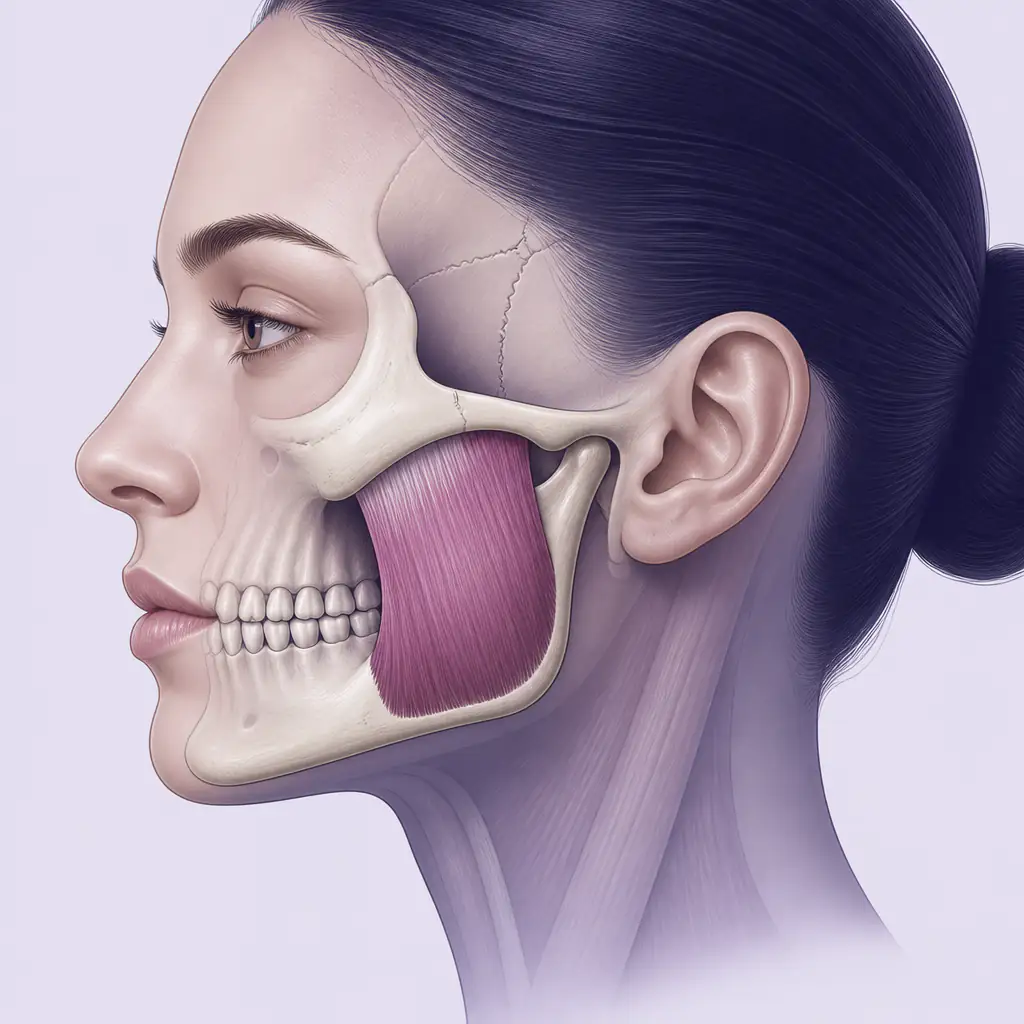
Your masseter is one of the most powerful muscles in the human body relative to its size. It sits at the back corner of your jaw, connects your cheekbone (zygomatic arch) to your lower jaw (mandible), and is responsible for the chewing force that lets you bite through food. It is also one of the primary contributors to a strong, angular jawline.
If you want to know how to grow masseter muscle, the answer is the same as growing any other skeletal muscle: progressive resistance, sufficient volume, and recovery. The main difference is that the masseter responds to tools and techniques most people have never thought about systematically.
This guide covers the anatomy, the training methods, realistic expectations, and the common mistakes that stall progress.
Understanding the Masseter: Anatomy First
The masseter has two heads:
- Superficial head: The larger, more visible portion. It runs diagonally from the zygomatic arch down to the outer surface of the mandible. This is the part that creates the visible angular flare at the sides of the lower face.
- Deep head: Sits underneath and runs more vertically. It contributes to jaw stability and force generation but does not add as much visible width.
Both heads contract during jaw elevation (closing the mouth). The superficial head is more active during forceful clenching, which is why jaw exercises that involve resistance at maximum closure tend to target it most directly.
The masseter is a type II muscle fiber dominant muscle in many individuals, meaning it responds reasonably well to resistance-based hypertrophy training, though the ratio varies between people. This is relevant because it means heavier, lower-rep equivalents (more force per chew) may be more effective than endless light chewing for some individuals.
What Actually Drives Masseter Growth
Masseter muscle training follows the same principles as training any other muscle:
- Mechanical tension: The muscle must work against resistance. Light chewing of soft foods provides minimal stimulus.
- Metabolic stress: Sustained contractions create fatigue and the byproduct accumulation that signals adaptation.
- Progressive overload: You need to gradually increase the demand over time, either through harder materials, more volume, or longer sessions.
- Recovery: The masseter, like any muscle, needs time to repair and grow between training sessions.
The practical implication is that simply chewing more of your regular food does very little. You need deliberate, structured loading.
Methods for Masseter Muscle Training
Mastic Gum
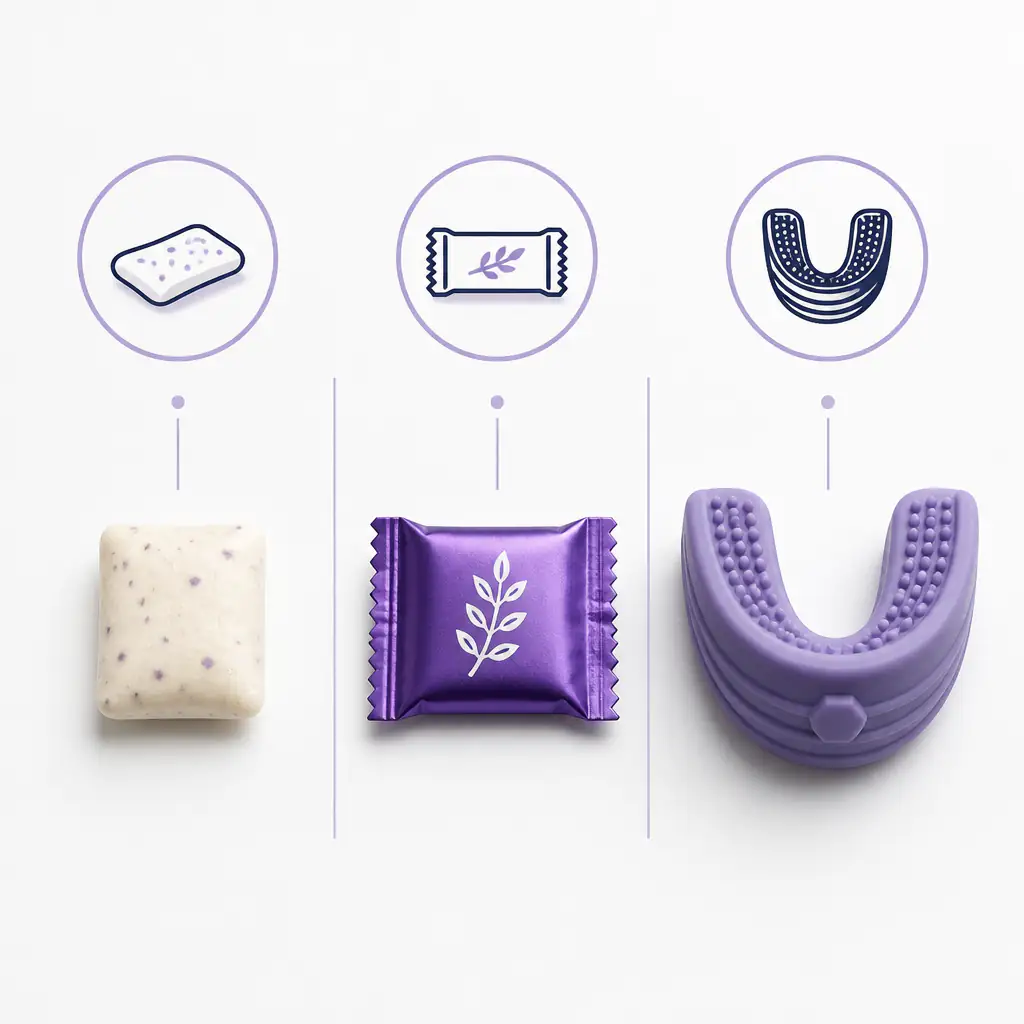
Mastic gum (harvested from Pistacia lentiscus trees) is significantly harder than standard chewing gum. It requires substantially more force to chew and provides a more consistent resistance stimulus across each chew cycle. Many people who take masseter training seriously use mastic gum as their primary tool.
How to use it effectively:
- Start with one piece (approximately 1 gram) for 10 to 15 minutes per session.
- Work up gradually. Jumping to 30 to 40 minutes daily from the start often causes jaw soreness or TMJD flare-ups.
- Chew on both sides equally. Uneven chewing can cause asymmetry over time.
- Allow at least one full rest day between heavy sessions in the first several weeks.
Falim Gum
Falim is a Turkish chewing gum that is harder than standard gum but softer than mastic. It is a good starting point for people who find mastic too intense initially, or as a lighter volume day option.
Incisor Chewing vs. Molar Chewing
Most people chew with their molars by default. Incisor chewing, where you use your front teeth to bite and tear, shifts some of the load and recruits the masseter at a slightly different angle. Some practitioners alternate between molar-dominant and incisor chewing to ensure fuller stimulation of the muscle.
Incisor chewing also engages the mentalis and some of the anterior digastric muscles, so it trains a broader set of facial muscles. If your goal is overall jaw definition rather than just lateral masseter width, incorporating incisor chewing into your routine is worth considering.
Jaw Trainers and Resistance Devices
Silicone jaw exerciser balls or bite trainers provide a different stimulus than gum because they allow you to apply near-maximum force without the material breaking down. This is closer to the “heavy set” equivalent for the masseter.
- Use these for shorter, higher-intensity sessions (5 to 10 minutes).
- Focus on slow, controlled biting rather than rapid reps.
- Do not grind or apply lateral force, which stresses the temporomandibular joint (TMJ) rather than training the muscle.
Building a Practical Masseter Training Routine
Here is a structured weekly framework for someone starting masseter training:
Days 1, 3, 5 (Training days):
- 5 to 10 minutes with a jaw trainer or Falim gum (warm-up, moderate resistance)
- 15 to 20 minutes of mastic gum, alternating sides every few minutes
- Include 2 to 3 minutes of incisor chewing
Days 2, 4 (Light or rest days):
- Optional: 10 minutes of Falim gum at easy pace
- No jaw trainers or mastic
Days 6, 7 (Full rest):
- No structured jaw training
After four to six weeks, you can increase training day volume by adding 5 to 10 minutes of mastic gum or a second jaw trainer session.
Tracking Your Baseline
Before starting a masseter training program, it helps to have an objective record of your current jaw structure. Some people use Aura to get a baseline jawline analysis and facial structure assessment before beginning, so they can compare results over time with a consistent scoring framework rather than relying on subjective mirror checks.
Masseter Training Before and After: Realistic Expectations
This is where most guides mislead people. Here is what the evidence and practical experience actually suggest:
What may improve:
- Visible masseter bulk and width at the jaw angle (most consistent reported outcome)
- Jaw definition and angularity, especially in people who started with underdeveloped masseters
- Chewing strength and endurance
What will not change:
- Bone structure (the mandible angle, jaw width at the bone level)
- Dental alignment
- Skin quality or fat distribution around the jaw
Timeline: Most people who are consistent report noticing visible changes somewhere between 8 and 16 weeks of regular training. Some people see earlier changes, some take longer. Genetics, starting muscle size, body fat percentage, and training consistency all affect this.
Masseter training before and after comparisons shared online vary widely. Some show meaningful changes; others show minimal visual difference despite consistent effort. Setting a realistic expectation upfront prevents you from abandoning a program that is actually working slowly.
Body fat matters. If you have significant facial fat covering the masseter region, muscle growth will not be visible until overall body composition improves. Masseter training and body fat reduction work together, not separately.

Common Mistakes to Avoid
Training Through Pain
Soreness in the jaw muscles after a hard session is normal, similar to DOMS (delayed onset muscle soreness) in other muscles. Sharp pain, clicking, locking, or pain in the TMJ joint itself is not normal and is a signal to stop and rest. Overtraining the masseter can contribute to temporomandibular joint disorder (TMJD), which is painful and slow to resolve.
If you experience joint symptoms rather than muscle soreness, reduce volume significantly and consult a dentist or oral and maxillofacial specialist before continuing.
Only Training One Side
Many people have a dominant chewing side and unconsciously favor it. Over time, this creates visible asymmetry. During training, actively count reps or time on each side and match them.
Expecting Linear Progress
The masseter is small relative to major body muscles and takes time to respond. Weeks 1 to 4 often feel like nothing is happening. This is normal. The adaptations are occurring at a tissue level before they become visible.
Ignoring Overall Facial Structure Context
The masseter is one component of overall jaw aesthetics. Facial fat, neck posture, and bone structure all interact with how the jaw looks. Treating masseter training as a standalone solution without considering the full picture tends to produce less satisfying results.
Using a tool like Aura can help you understand which specific aspects of your facial structure are already strong and where targeted work may provide the most return, so you are training with a clear picture rather than guessing.
Nutrition and Recovery for Jaw Muscle Growth
The masseter follows the same recovery demands as skeletal muscle:
- Protein intake: Adequate dietary protein supports muscle repair. General recommendations of 1.6 to 2.2 grams per kilogram of bodyweight per day apply here as they do for other muscle groups.
- Sleep: Most muscle protein synthesis occurs during sleep. Poor sleep reduces recovery across all muscles, including the masseter.
- Hydration: Jaw muscles that fatigue quickly during training sessions are sometimes simply under-hydrated. Dehydration reduces muscle endurance.
- Avoid unnecessary clenching: Stress-related jaw clenching (bruxism) throughout the day adds unplanned volume with poor mechanics. If you clench at night, consider a night guard to protect the TMJ while you are in a training program.
How Long to Stay Consistent
Masseter training is not a short-term project. The changes, when they occur, are gradual and require sustained effort over months. A reasonable minimum commitment to assess whether the approach is working for you is 12 weeks of consistent training at the volume described above.
After that point, you will have enough data from photos and objective measurements to decide whether to continue, increase intensity, or adjust your approach. Many people who stick with it for 16 to 24 weeks report meaningful changes in jaw definition and facial angularity. Consistency is the main variable.
If you decide to explore other interventions beyond training (such as masseter Botox for asymmetry correction or other procedures), always consult a qualified medical professional before proceeding. Training-based approaches carry low risk when done with reasonable volume and rest, but clinical procedures carry different considerations entirely.
Frequently asked questions
How long does it take to see results from masseter training? +
Most consistent practitioners report noticing visible changes somewhere between 8 and 16 weeks of regular training. Results depend on genetics, starting muscle size, body fat level, and how consistently you train. Tracking photos every 4 weeks gives a more reliable view of progress than daily mirror checks.
Is it safe to train the masseter every day? +
Daily high-intensity masseter training is generally not recommended, especially early on. Like any muscle, the masseter needs recovery time between sessions. Starting with 3 training days per week with rest days in between reduces the risk of TMJ irritation and allows the muscle to adapt properly.
Does chewing gum actually grow the masseter muscle? +
Standard chewing gum provides minimal resistance and is unlikely to drive meaningful hypertrophy. Harder materials like mastic gum offer significantly more mechanical tension and are more commonly used by people focused on masseter muscle training. The key factor is resistance level, not chewing motion alone.
Can masseter training cause TMJ problems? +
Overtraining or using improper technique can irritate the temporomandibular joint. Sharp pain, clicking, or locking in the jaw are warning signs to stop and rest. Sticking to recommended volumes, taking rest days, and avoiding grinding or lateral force during exercises reduces this risk considerably.