 Aura: Looksmaxxing
 Ramus Length: What It Means for Your Jaw
Learn what ramus length is, how it shapes your jawline and facial balance, and what you can realistically do to assess and improve it.
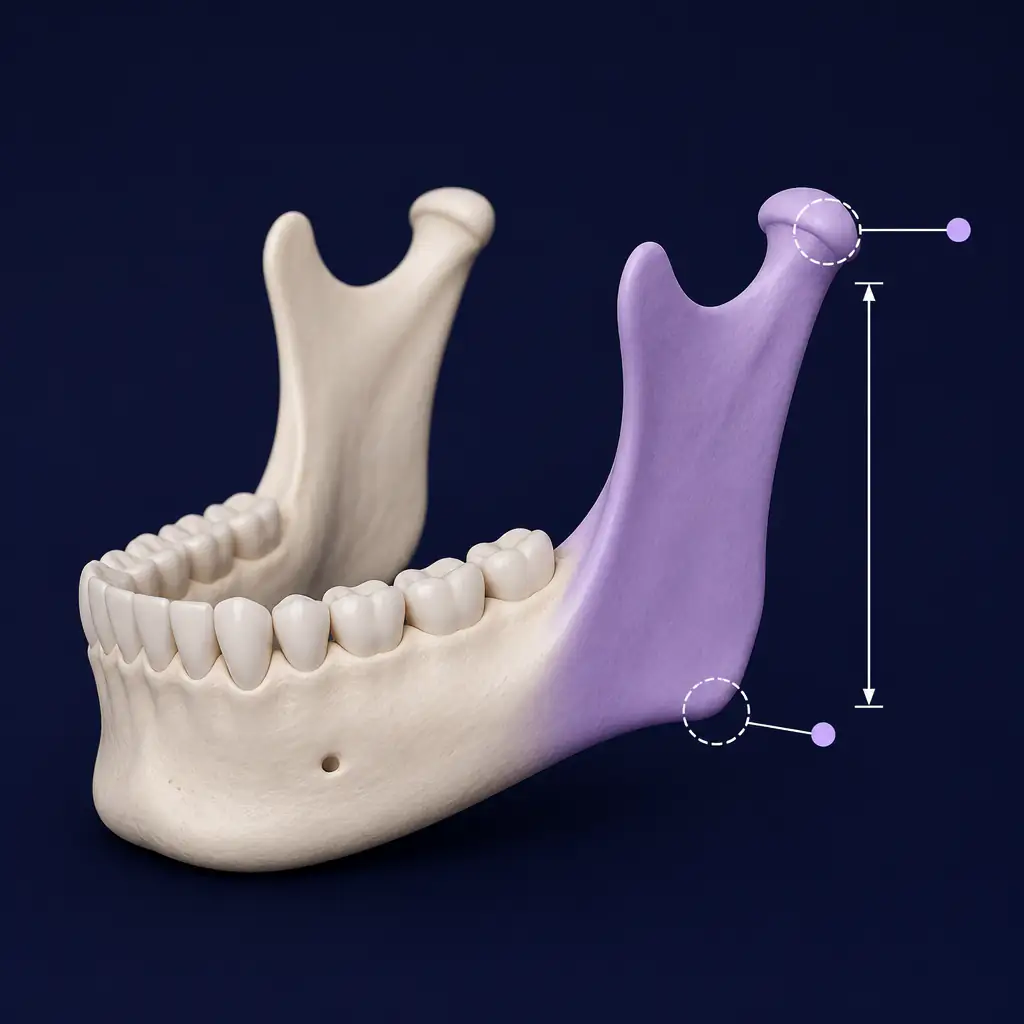
Your jawline does not exist in isolation. Its visual impact depends on a network of bone dimensions, and one of the most overlooked of these is ramus length. Most people fixate on jaw width or chin projection, but the vertical portion of the lower jaw, the ramus, quietly determines whether your face looks balanced, masculine or feminine, and proportionate from every angle.
This guide breaks down what ramus length actually is, how it affects your appearance, how it is measured, and what, if anything, you can do about it.
What Is the Ramus of the Mandible?
The mandible, your lower jawbone, has two main regions:
- The body: the horizontal, tooth-bearing portion that forms the chin and lower jaw you see from the front.
- The ramus (plural: rami): the vertical plate of bone that rises from each rear corner of the jaw body upward toward the skull. The word comes from Latin for “branch.”
At the top of each ramus sit two processes: the condylar process, which forms the temporomandibular joint (TMJ) with the skull, and the coronoid process, which serves as an attachment point for the temporalis muscle.
Ramus length is the vertical measurement of this upward-projecting plate, typically measured from the gonion (the angle of the jaw at the rear corner) to the condylion (the topmost point of the condylar head). In most clinical contexts it is measured on a lateral cephalogram, a standardized side-view X-ray used by orthodontists and oral surgeons.
Average ramus length in adults typically falls somewhere in the range of 50 to 70 mm, though it varies significantly by sex, ancestry, and individual genetics. Males generally have longer rami than females, which contributes to the taller, more angular jaw appearance associated with masculine faces.
How Ramus Length Affects Facial Appearance
Ramus length interacts with nearly every other facial dimension. Here is how:
Vertical Face Height
The ramus is a primary contributor to the lower third of facial height. A longer ramus pushes the mandible downward and forward relative to the skull, increasing lower face height. A shorter ramus compresses the lower face, which can make features appear crowded or give a “short face” look.
In orthodontics, a high “ramus-to-face height ratio” is generally considered aesthetically favorable. If your lower face feels disproportionately short or long compared to your mid-face, ramus length is often part of the explanation.
The Gonial Angle
Ramus length does not work alone. It pairs closely with the gonial angle, the angle at the rear corner of the jaw where the ramus meets the body of the mandible. A more obtuse gonial angle (closer to 130 degrees or above) combined with a short ramus produces a rounder, softer jaw appearance. A more acute gonial angle (closer to 110 to 120 degrees) combined with a longer ramus creates the sharp, defined rear jaw corners that many people associate with a strong jawline.
These two variables together determine how “square” or “tapered” the rear jaw appears in profile and from the three-quarter view.
Chin Projection and Profile Balance
The ramus also influences chin position indirectly. Because the mandible rotates around the TMJ joint, a shorter ramus tends to rotate the chin upward and backward (known as a hypodivergent or “horizontal” growth pattern), which often results in a stronger, more projected chin. A longer ramus tends to rotate the chin downward and forward, contributing to a hyperdivergent or “vertical” growth pattern, sometimes associated with a longer, narrower face and a chin that recedes relative to the lips.
This is counterintuitive to many people. More ramus length does not automatically mean a better jaw. Its aesthetic effect depends entirely on the angles and proportions it creates in context.
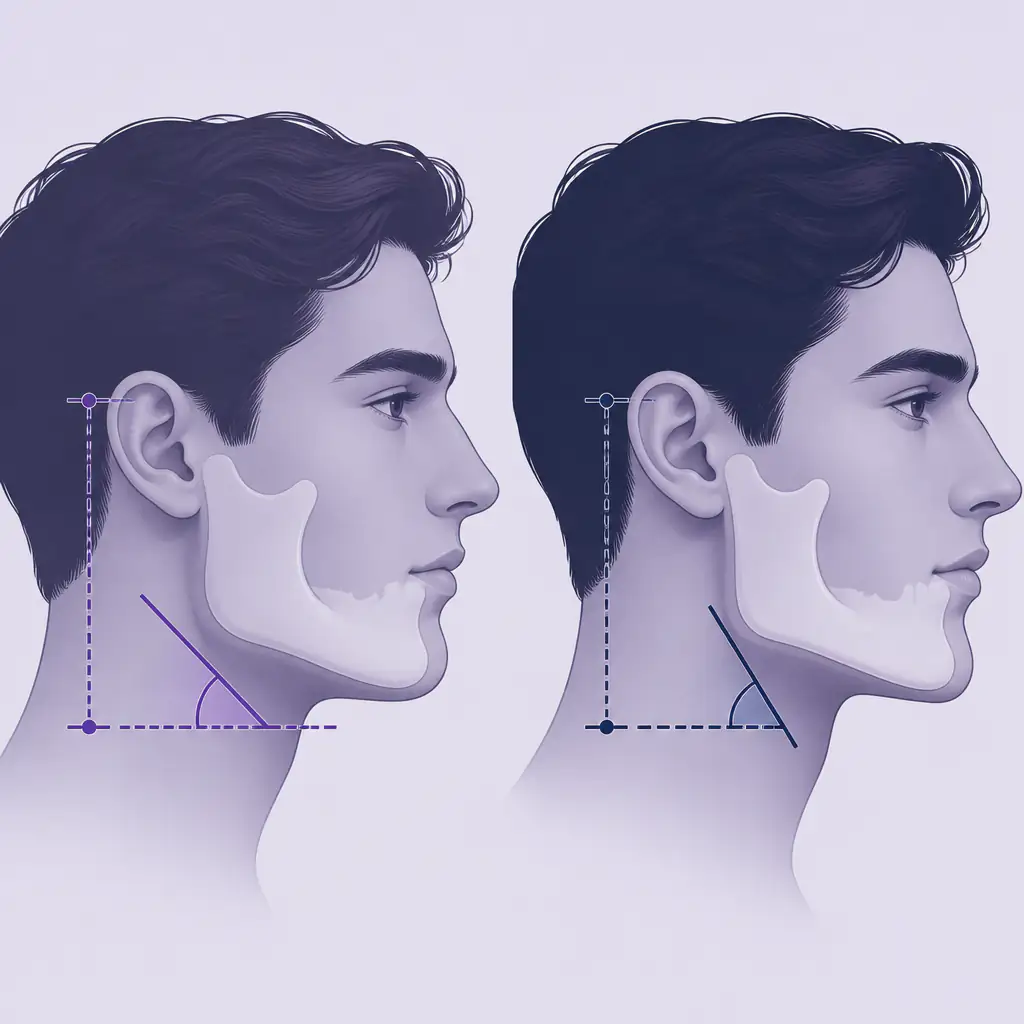
How Ramus Length Is Measured
Clinically, ramus length is assessed through:
- Lateral cephalometry: A standardized X-ray taken from the side with the head in a fixed position. Landmarks like the gonion and condylion are traced and the linear distance is measured.
- CBCT (cone beam computed tomography): A 3D imaging method used by oral surgeons that allows precise measurement from multiple planes, especially useful for surgical planning.
- Orthopantomogram (OPG/panoramic X-ray): A flattened panoramic image of the jaw, less precise for ramus length due to distortion but useful for a general assessment.
For the average person without access to clinical imaging, a rough self-assessment can be done by palpating the gonial angle (the bony corner behind your rear molars) and observing your profile in photos. A long, upright ramus will produce a sharply defined rear jaw corner and a tall vertical distance from that corner to your earlobe level.
If you want an objective assessment of your jaw structure from photos before pursuing any clinical evaluation, Aura offers AI-based jawline and facial structure analysis that can give you a baseline score and highlight specific areas of your lower face worth examining.
Ramus Length and Orthodontic Treatment
Ramus length has significant implications in orthodontics because growth of the ramus is one of the main drivers of facial change during adolescence. The condylar cartilage is a growth center, meaning that ramus length increases substantially between roughly ages 10 and 18, with males experiencing longer and more prolonged growth than females.
Orthodontists and oral surgeons pay close attention to ramus length when planning:
- Functional appliance therapy in growing patients (e.g., Herbst appliance, twin block), which research suggests may stimulate condylar growth and effectively increase ramus length in adolescents.
- Orthognathic surgery in adults, where procedures like a BSSO (bilateral sagittal split osteotomy) or vertical ramus osteotomy directly modify jaw position and can alter the functional ramus length.
- Distraction osteogenesis, a technique that gradually lengthens bone over time and is sometimes used for severe mandibular deficiencies.
It is worth noting that non-surgical interventions in adults have limited capacity to change bone dimensions. Chewing exercises, mewing, and posture adjustments may influence soft tissue appearance and muscle development around the jaw, but they do not meaningfully alter the ramus bone itself once skeletal maturity is reached.
Talk to a qualified orthodontist or oral and maxillofacial surgeon before considering any clinical intervention related to jaw structure.
What a “Good” Ramus Length Actually Looks Like
There is no universal ideal. Ramus length must be read in context of the entire face. That said, a few general patterns emerge from cephalometric norms and aesthetic analysis:
- A ramus that is proportionate to the face height, roughly one-third of total facial height in many norms, tends to look balanced.
- A relatively vertical ramus (steep inclination) combined with an acute gonial angle produces the sharp, defined jaw corners often associated with strong facial structure.
- Symmetry between left and right rami matters significantly. Asymmetric ramus development, a common finding, can cause facial asymmetry that becomes noticeable in photos.
In practical terms, someone with a short but very vertical ramus can still have an excellent jaw appearance. Someone with a long ramus but a very obtuse gonial angle may have a weak rear jaw definition despite the ramus length. The combination is what counts.
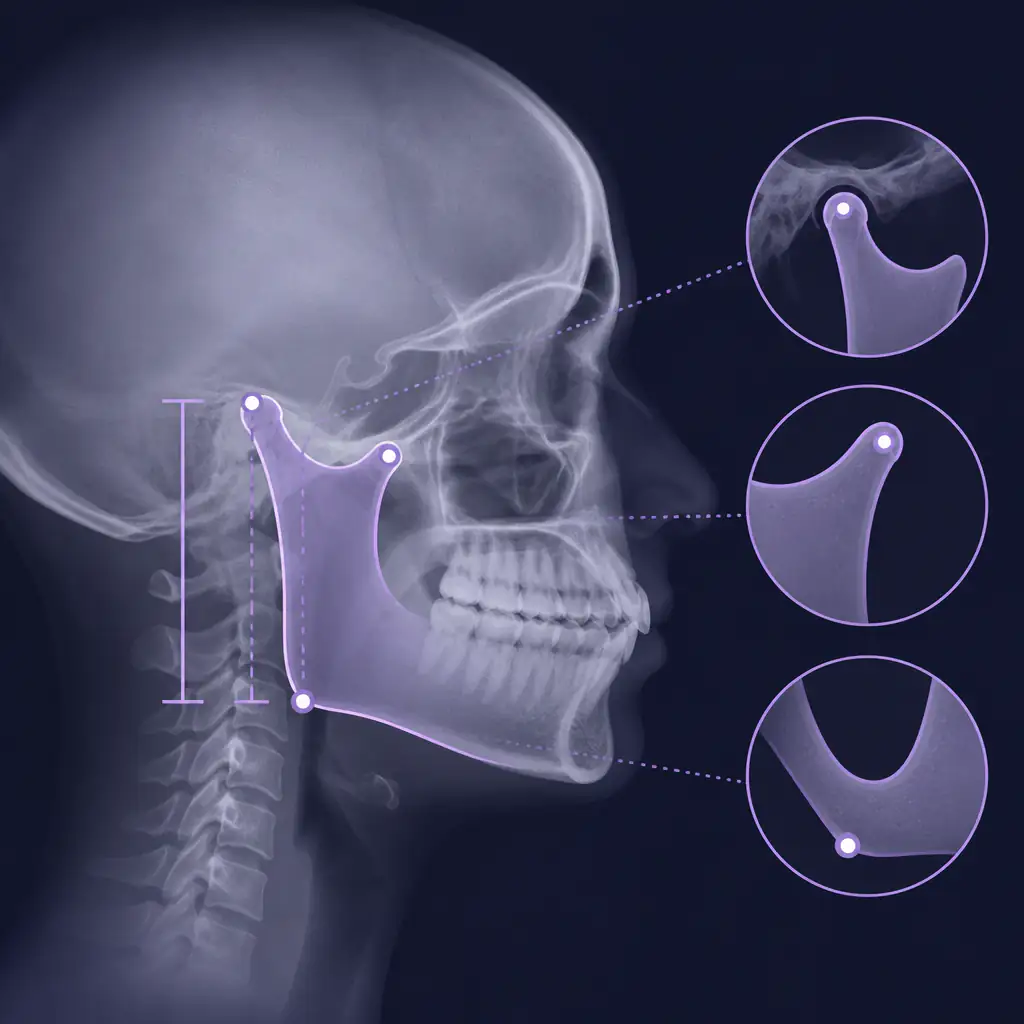
Practical Steps for Assessing Your Own Jaw Proportions
If you want to understand where your ramus length fits into your overall facial structure, here is a grounded approach:
- Take standardized photos. A true lateral (side) photo and a straight-on frontal photo under neutral lighting give you the clearest view of your jaw proportions. Avoid phone selfies at arm’s length, which distort facial dimensions significantly.
- Assess your lower face height. Stand in front of a mirror and compare the distance from the bottom of your nose to your chin with the distance from your hairline to your brow and your brow to your nose. Ideally these thirds are roughly equal.
- Feel your gonial angle. Press gently behind your rear lower molar and along the jaw edge toward the earlobe. A sharper, more distinct bony corner suggests a more favorable gonial angle regardless of ramus length.
- Get an objective analysis. Tools like Aura can analyze your jaw from photos and give you specific feedback on facial thirds, jaw definition, and overall facial harmony, which helps you frame any conversation with a clinician.
- Consult a professional if warranted. If you have functional concerns like TMJ pain, bite issues, or significant asymmetry, an orthodontist or oral surgeon can order proper imaging and measure your ramus length precisely.
Non-Surgical Ways to Influence Jaw Appearance
While ramus bone length itself cannot be changed without surgery in adults, there are legitimate ways to improve how your jaw area looks:
- Reduce overall body fat. Lower face fat is often the primary visual obstacle to jaw definition. Subcutaneous fat over the gonial region softens angles that the underlying bone creates.
- Masseter hypertrophy (natural). Consistent chewing and jaw muscle training may increase masseter size over time, which can widen and define the rear jaw from the front view. This is distinct from changing bone but can create a similar visual effect.
- Posture and head position. Chronic forward head posture compresses the visual appearance of the neck-jaw transition. Improving cervical posture can improve the jaw angle appearance without touching bone.
- Facial hair. For males, strategic beard shaping can visually lengthen or define the rear jaw and create the illusion of a stronger gonial region.
- Dermal fillers. Jawline filler injected at the gonial angle and along the mandibular border can simulate the appearance of a longer or more defined ramus region. Results are temporary and highly technique-dependent. Consult a board-certified practitioner.
None of these approaches change actual ramus length, but they can meaningfully change how your jaw reads visually, which is often the underlying goal.
Summary
Ramus length is a specific, measurable dimension of the mandible that plays a significant role in lower face height, jaw angularity, chin position, and overall facial balance. It is not the only jaw variable that matters, but understanding it gives you a more complete picture of why certain faces look the way they do and what kinds of interventions, whether lifestyle-based, orthodontic, or surgical, are actually relevant to your situation.
Knowing your baseline is the first step. From there, the path forward depends entirely on your specific anatomy and goals, which is why professional assessment matters far more than general advice.
Frequently asked questions
What is a normal ramus length in adults? +
In adults, ramus length typically ranges from about 50 to 70 mm, measured from the gonion to the condylion on a lateral X-ray. Males generally fall toward the higher end of that range. Values vary meaningfully by sex, ancestry, and individual skeletal pattern, so clinical norms from cephalometric studies are used for comparison rather than a single universal number.
Does a longer ramus always mean a better jawline? +
Not necessarily. Ramus length only contributes positively to jaw aesthetics when paired with the right gonial angle and overall facial proportions. A very long ramus with an obtuse gonial angle can produce a weak, poorly defined rear jaw. A shorter but steeply vertical ramus with an acute gonial angle often looks more defined. The combination of dimensions matters more than any single measurement.
Can ramus length be increased without surgery? +
In growing adolescents, functional orthodontic appliances may stimulate additional condylar growth, which can increase ramus length. In skeletally mature adults, bone dimensions cannot be meaningfully changed without surgical intervention such as orthognathic surgery or distraction osteogenesis. Non-surgical approaches like chewing exercises can build surrounding muscle but do not alter the bone itself.
How does ramus length relate to facial asymmetry? +
Asymmetric ramus development, where one ramus is noticeably longer or more vertical than the other, is a common cause of facial asymmetry. It can cause the chin to deviate to one side and create uneven jaw angles. Mild asymmetry is nearly universal, but significant differences are usually identified on panoramic or cephalometric X-rays and may be addressed through orthodontic treatment or surgery depending on severity.