 Aura: Looksmaxxing
 Gonial Angle: What It Is and Why It Matters
Learn what the gonial angle is, how it's measured, what makes it attractive, and how to assess and improve yours with practical, evidence-based steps.
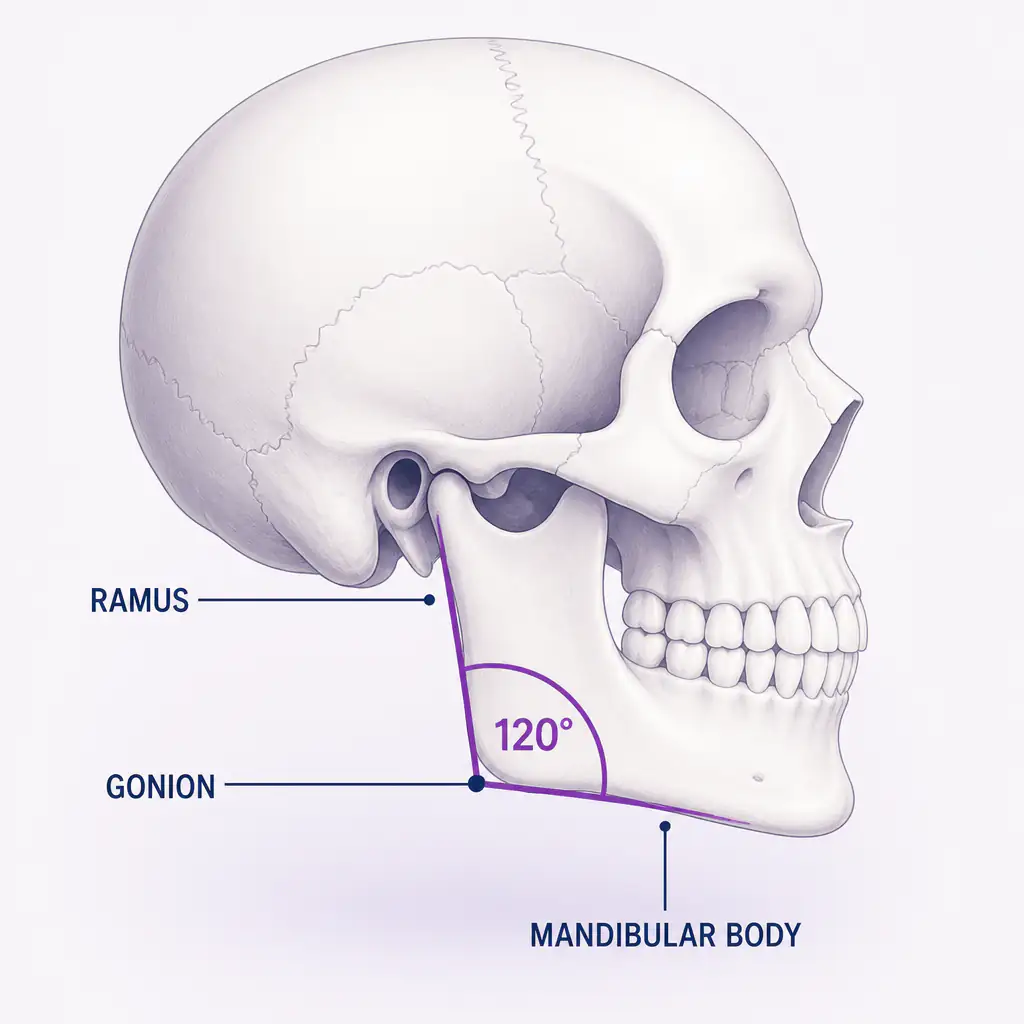
Your jaw is one of the most defining features of your face, and the gonial angle sits at the heart of what makes a jaw look strong, sharp, or weak. If you have ever wondered why some people seem to have a naturally sculpted jawline while others do not, this single anatomical measurement explains a large part of it.
This guide breaks down exactly what the gonial angle is, how it is measured, what the research says about ideal values, and what practical steps may help you work with what you have.
What Is the Gonial Angle?
The gonial angle (also called the mandibular angle) is the angle formed at the corner of the lower jaw where the vertical part of the jaw (the ramus) meets the horizontal part (the body of the mandible). In plain terms, it is the angle at the back corner of your jawline, just below and in front of your ear.
The word “gonial” comes from the Greek gonia, meaning corner or angle. In anatomy, the specific bony landmark at this junction is called the gonion.
How Is It Measured?
Clinically, the gonial angle is measured on a lateral (side-view) cephalometric X-ray, which is a standardized skull radiograph used in orthodontics and oral surgery. Two lines are drawn:
- One along the posterior border of the ramus (the vertical branch of the jaw)
- One along the inferior border of the mandibular body (the lower edge of the jaw)
The angle where these two lines intersect is the gonial angle. It is reported in degrees.
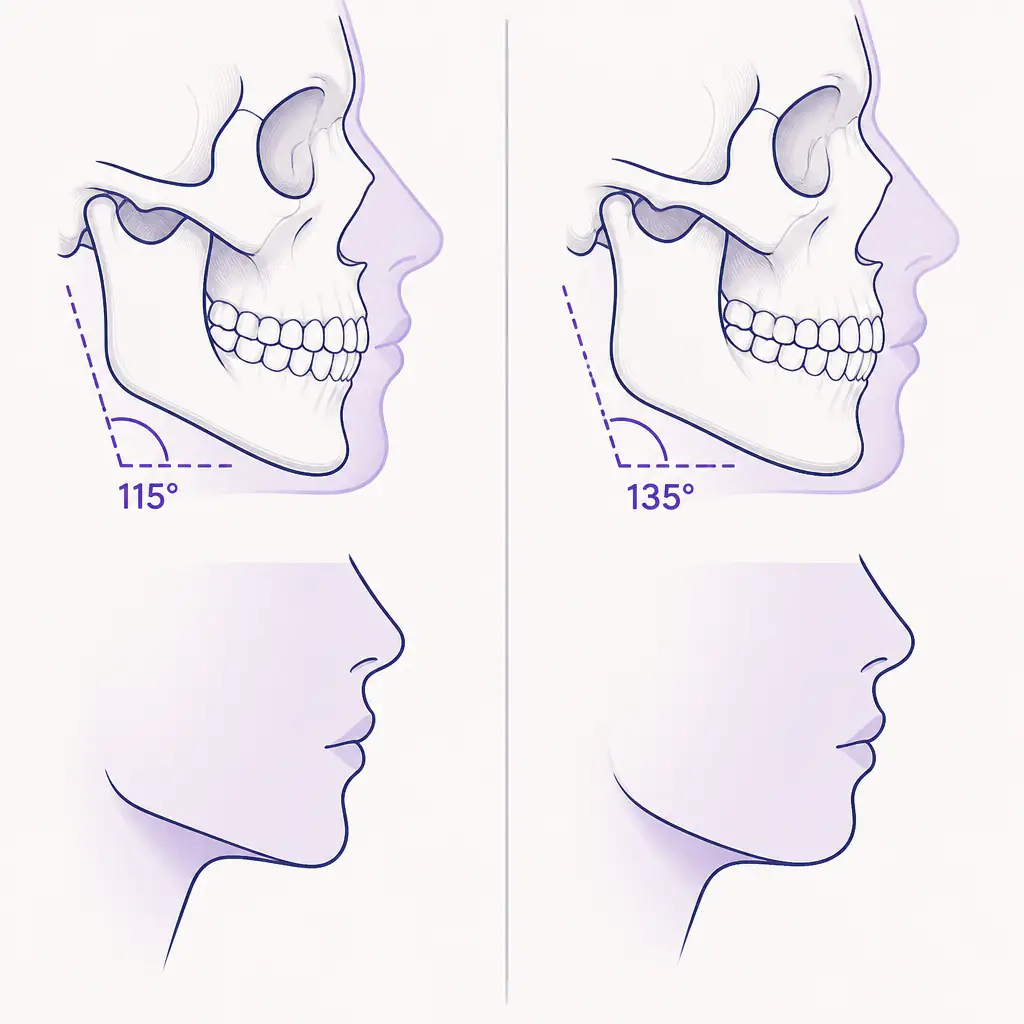
For adults, the average gonial angle typically falls between 115 and 130 degrees, though published norms vary slightly by population, sex, and age group.
Why the Gonial Angle Matters for Facial Aesthetics
The gonial angle is not just a clinical orthodontic measurement. It is a key driver of how your lower face looks to other people.
Lower Angles and Perceived Attractiveness
A lower gonial angle (roughly 110 to 125 degrees in males, slightly higher in females) tends to produce:
- A more squared or defined rear jaw corner
- Visible mandibular definition when viewed from the front or three-quarter angle
- A stronger, more angular lower face
Research in facial morphology suggests that lower gonial angles are generally associated with higher perceived masculinity in male faces and a clean, structured look in female faces. This is partly why jawline definition is so frequently discussed in the context of facial attractiveness.
Higher Angles and Their Effects
A higher gonial angle (above 130 to 135 degrees) tends to produce the opposite:
- A softer, rounder rear jaw transition
- Less visible jaw definition, especially in profile
- A face that may appear longer or narrower depending on other proportions
Higher gonial angles are also associated with certain functional issues. Because the masseter muscle attaches near the gonion, a high angle can be correlated with weaker bite force and a more retrognathic (set-back) lower face profile.
Sex Differences
Males generally have lower gonial angles than females, which contributes to the broader, more angular jaw shape typically seen as masculine. Female faces with moderately lower angles tend to read as defined rather than harsh, and the ideal range for women is generally considered a few degrees higher than for men. Context matters: face shape, cheekbone width, and chin projection all interact with the gonial angle to determine the overall impression.
Factors That Influence Your Gonial Angle
Understanding what shapes this angle is useful before thinking about any intervention.
Genetics
The primary driver of your gonial angle is your genetics. Bone growth patterns, including the angle and direction of mandibular development, are largely inherited. Studies on twins confirm that skeletal facial architecture is highly heritable.
Masseteric Hypertrophy and Muscle Development
The masseter is the thick chewing muscle that overlies the gonial region. Over time, consistent heavy use of this muscle (through chewing, bruxism, or deliberate training) can cause it to enlarge. A well-developed masseter adds visible bulk at the jaw angle and may slightly reshape the bony contour over very long periods, though changes to the actual bone angle are minimal in adults.
Growth and Development
The gonial angle is not fixed at birth. During childhood and adolescence, it decreases as the face grows downward and forward. Adults generally have lower gonial angles than young children. This is why facial growth direction during development matters so much: children who breathe through their mouths, have poor tongue posture, or chew very soft diets may develop higher gonial angles than their genetic potential would otherwise allow.
Body Composition and Soft Tissue
The bony angle itself does not change with fat loss, but the appearance of the jaw angle is heavily influenced by subcutaneous fat in the lower face and neck. Reducing excess body fat in this region allows the underlying bone structure to become more visible, which can make a moderate gonial angle look significantly more defined.
How to Assess Your Own Gonial Angle
Without a lateral cephalometric X-ray, you cannot measure your gonial angle precisely. However, you can get a useful visual assessment.
Self-Assessment in Photos
Take a true profile photo with your head in a neutral position (eyes level, no head tilt). Look at the back corner of your jaw:
- Does it form a noticeable corner or angle?
- Does the jaw sweep smoothly from vertical to horizontal with little definition, or is there a visible point?
A sharper, more visible corner suggests a lower gonial angle. A smooth, rounded curve suggests a higher one.
If you want an objective, structured analysis, Aura offers AI-powered jawline analysis that evaluates your jaw definition from uploaded photos, giving you a starting point before deciding on any changes.
Front-View Clues
From the front, a lower gonial angle often contributes to a more rectangular or square lower face shape. A higher angle tends to produce a triangular or oval lower face where the widest point is higher up.
Practical Ways to Improve Jaw Appearance
This is where the honest conversation begins. You cannot change bone structure through lifestyle alone as an adult, but you can influence how your jaw looks through several legitimate routes.
1. Lower Your Body Fat
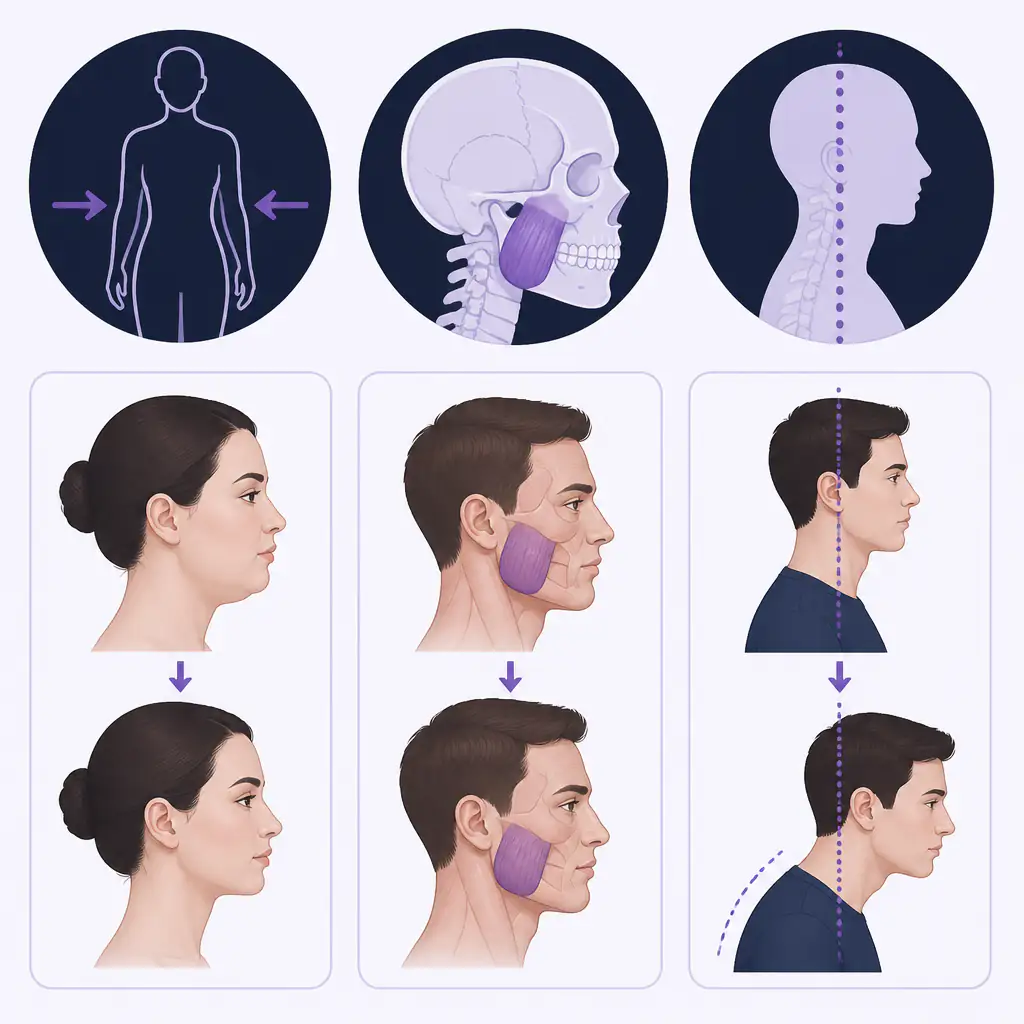
This is the highest-leverage, lowest-risk change you can make. Fat deposits in the buccal (cheek) area, jowls, and submental (under-chin) region obscure jaw definition. Even a modest reduction in overall body fat, achieved through a sustained caloric deficit, frequently produces a noticeable improvement in jawline visibility. For many people this alone moves their apparent jaw angle into a much more defined range.
2. Masseter Development
Mewing, chewing harder foods (such as tougher cuts of meat, raw vegetables, or specialty chewing gum like mastic gum), and deliberate jaw exercise may help develop the masseter muscle. A larger masseter adds visual mass at the jaw angle, which some users report makes their lower face look wider and more defined. Results vary, and the effect is primarily soft-tissue rather than skeletal.
3. Correct Posture
Forward head posture can visually compress and obscure the jaw angle. Keeping the head upright and the neck elongated allows the jaw to project more naturally. This is a quick, cost-free adjustment with broader health benefits beyond aesthetics.
4. Consider Facial Hair (for Men)
Strategic beard styling can visually reinforce jaw angularity. A beard that is kept shorter on the cheeks and fuller along the jawline can create the appearance of a lower, more defined gonial angle even when the underlying bone structure is less prominent.
Surgical and Non-Surgical Interventions
If you are considering any medical procedure, talk to a qualified surgeon or specialist before making any decisions. The information below is educational only.
For those with significantly high gonial angles or very little jaw definition who want a more structural change, there are clinical options.
Jaw Angle Implants
Silicone implants placed at the gonion can add width and definition to a soft or high-angle jaw corner. This is a surgical procedure with the associated recovery, risks, and costs. Results can look natural when sized appropriately for the face.
Masseter Botox (Reduction)
Counterintuitively, Botox injections into the masseter are used more often to reduce jaw width in people with hypertrophy. This is not useful for those wanting more definition, but it is worth understanding the distinction if you are researching jaw procedures.
Genioplasty and Orthognathic Surgery
For skeletal corrections, procedures like sliding genioplasty (chin repositioning) or full orthognathic surgery can address significant jaw discrepancies. These are major surgical interventions used primarily for functional reasons, though they have aesthetic implications as well.
Dermal Fillers
Hyaluronic acid fillers placed at the jaw angle are a non-permanent option that some practitioners use to add definition. Effects last roughly 12 to 18 months. Results depend heavily on the injector’s skill and the patient’s baseline anatomy.
Before considering any of these routes, use tools like Aura to get a clear, data-driven picture of your current facial structure and where your jaw definition actually stands relative to common benchmarks. Having an objective baseline makes conversations with practitioners far more productive.
The Gonial Angle in Context
It is worth keeping one thing in perspective: the gonial angle is one variable in a complex system. Attractiveness research consistently shows that it is the combination of features, including chin projection, cheekbone width, facial thirds, and skin quality, that determines overall facial impression. A person with a higher gonial angle but excellent proportions elsewhere can still have a very strong facial aesthetic.
Focusing obsessively on a single measurement can distort your self-perception. Use the gonial angle as a useful piece of information, not as a verdict on your appearance.
Start with the highest-leverage, lowest-risk changes (body composition, posture, muscle development) before considering anything more involved. Track your progress honestly, and consult qualified professionals before any clinical intervention.
Frequently asked questions
What is a good gonial angle for males? +
Most research places an aesthetically favorable gonial angle for males in the range of 110 to 125 degrees. Lower angles in this range tend to produce a more squared, defined jaw corner. That said, what looks good depends heavily on the rest of the face, including chin projection and cheekbone width.
Can you change your gonial angle without surgery? +
You cannot meaningfully change the bony angle itself without surgical intervention as an adult. However, you can significantly change how your jaw angle appears by reducing body fat to reveal underlying structure, developing the masseter muscle through consistent chewing or jaw exercise, and correcting head posture. These changes are soft-tissue and positional rather than skeletal.
How is the gonial angle measured accurately? +
The most accurate measurement is taken from a lateral cephalometric X-ray, a standardized side-view skull radiograph used in orthodontics and oral surgery. A clinician draws lines along the posterior ramus and the inferior mandibular border and measures the intersection. Photo-based estimates are possible but less precise.
Does the gonial angle affect more than just appearance? +
Yes. The gonial angle has functional implications as well. Higher angles are associated with reduced bite force and can be linked to certain growth patterns related to airway and breathing. In orthodontics, the gonial angle is one of several measurements used to plan treatment for bite correction and jaw alignment.