 Aura: Looksmaxxing
 Flared Gonions: What They Are and How to Address Them
Learn what flared gonions are, how inward or outward flaring affects your jawline aesthetics, and what options exist to address them.
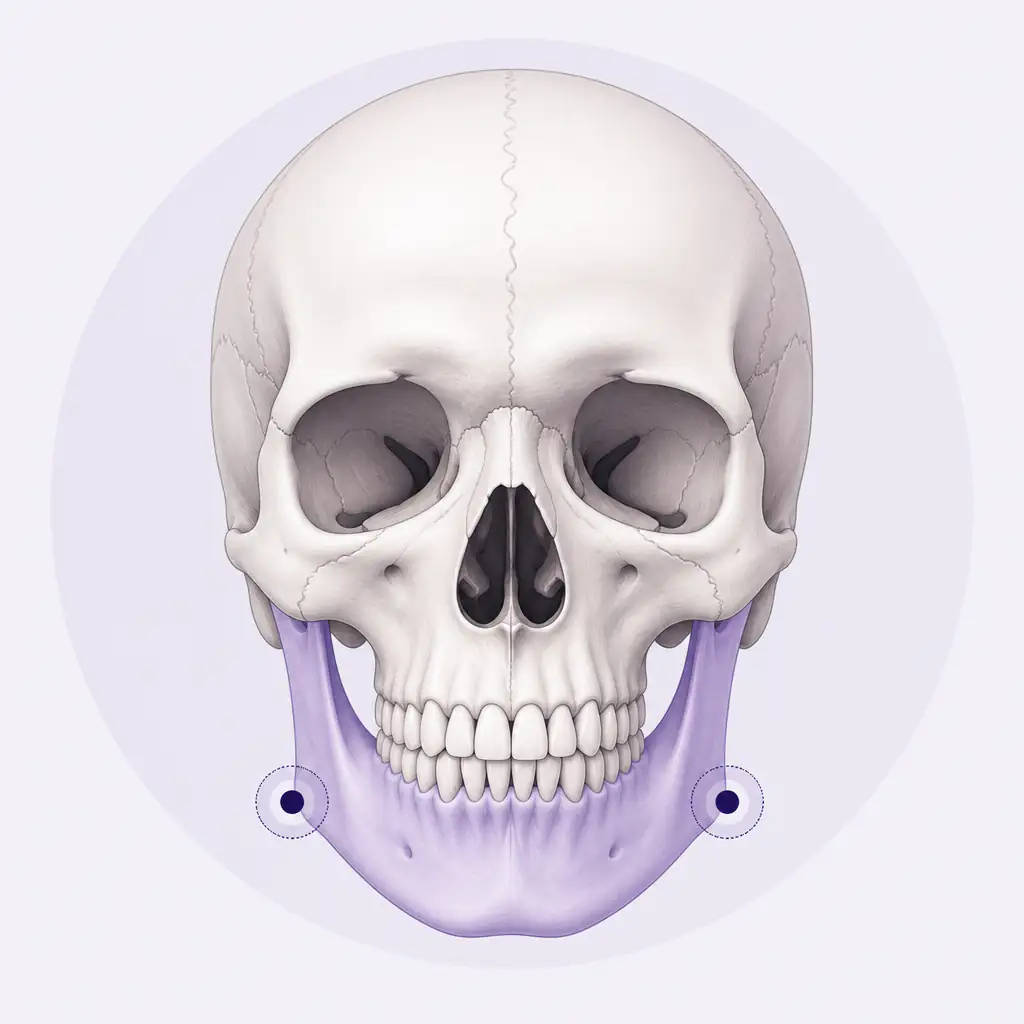
What Are the Gonions?
The gonion (plural: gonions or gonia) is the anatomical landmark at the angle of the mandible, meaning the posterior-inferior corner of your jaw where the vertical part of the jawbone (the ramus) meets the horizontal part (the body of the mandible). You have one on each side of your face.
When people talk about a “defined jawline,” the gonions are a central part of what they mean. Sharp, well-positioned gonial angles contribute to the squared-off, structured jaw shape that reads as masculine and strong in most facial attractiveness research. In female faces, slightly softer gonial angles are generally considered more harmonious, though definition still matters.
The direction those angles point, however, is something most people never think about. And that direction, specifically whether the gonions flare inward or outward, has a real impact on how your jaw looks from the front and from above.
What Are Flared Gonions, Exactly?
Flared gonions refers to a jaw angle orientation where the gonial corners splay outward, away from the midline of the face, beyond what is considered proportionate. Think of it as the jaw widening more aggressively as it moves toward the back of the face, creating a trapezoidal or even flared silhouette when viewed from above or head-on.
The opposite condition, inward-flared gonions, is when those same corners angle inward, toward the midline, giving the jaw a more tapered or pointed look at the back. This is sometimes described as a “V-shaped jaw” when the flaring is pronounced.
Neither direction is inherently bad. Context and degree matter enormously. But each has specific aesthetic consequences worth understanding.
The Gonial Angle Measurement
Anatomists and surgeons measure the gonial angle as the angle formed at the meeting point of the ramus and the mandibular body, typically measured on lateral X-rays or CT scans. The population average falls somewhere between 115 and 130 degrees, with lower angles (more acute) generally associated with a stronger, more defined jaw profile and higher angles (more obtuse) associated with a softer or more recessed jaw shape.
Flaring direction is a separate consideration from the gonial angle measurement itself. You can have a low gonial angle (sharp jaw angle) with significant lateral flaring, or a high gonial angle with very little flare. They are independent variables.
Why Do Some People Have Flared Gonions?
Several factors determine how your gonial angles are positioned:
- Genetics. Mandibular shape is heavily heritable. If your parents have wide, flared jaws, you are more likely to as well.
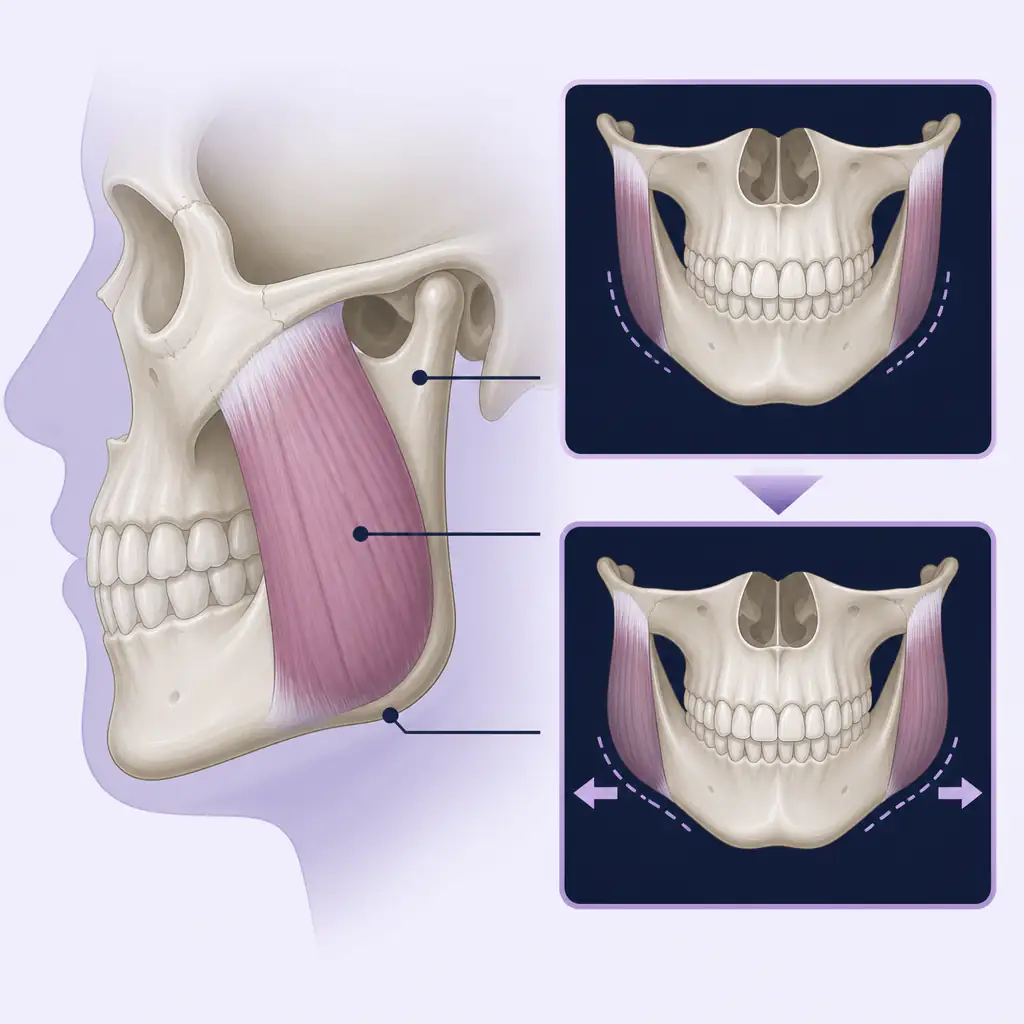
- Masseter muscle hypertrophy. The masseter is the large chewing muscle that attaches along the ramus and lower jaw. When it is overdeveloped, either from habitual teeth clenching (bruxism), chewing tough foods, or simply genetic muscle size, it can push the gonial angle region outward, creating the appearance of flared gonions even if the underlying bone is not particularly wide.
- Bone structure and mandibular growth patterns. During adolescent growth, the direction and rate of mandibular development influences final gonion position. Factors like sleep posture, tongue posture, and mouth breathing during growth may play a role, though the research here is still developing.
- Body fat distribution. Excess fat in the lower face and jaw region can make the jaw appear wider and more flared, independent of bone or muscle.
Aesthetic Implications: When Does It Matter?
Whether flared gonions are a problem depends on the overall context of your facial structure.
Outward-flared gonions can be advantageous in male faces when they create the appearance of a wide, square jaw. A jaw that is visibly wide at the back contributes to facial width ratios that many people find attractive. However, excessive flaring, particularly in faces that are already very wide through the cheekbones or temples, can make the lower face look disproportionately broad or boxy.
Inward-flared gonions tend to produce a narrower jaw appearance from the front and a more tapered silhouette from above. In female faces, this can look elegant and harmonious. In male faces seeking a strong jaw appearance, pronounced inward flaring can make the jaw look weak or narrow, especially when combined with a high gonial angle or weak chin projection.
The key question to ask is whether your gonion position is in proportion with the rest of your facial structure, specifically your bizygomatic width (cheekbone width), your bigonial width (jaw width), and your chin. A face where the cheekbones are noticeably wider than the jaw is generally considered more attractive in both sexes. A face where the jaw is wider than the cheekbones is often considered less ideal, and extreme lateral flaring of the gonions can push you in that direction.
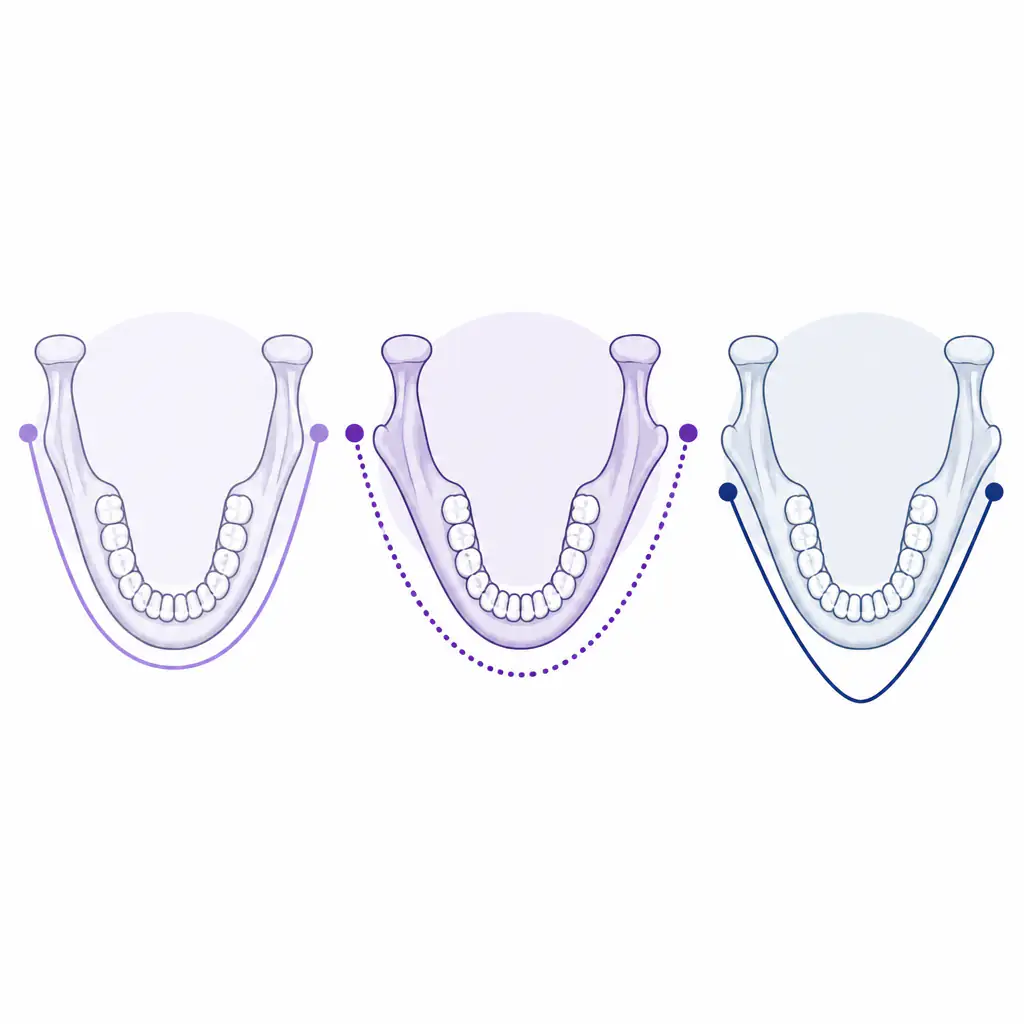
How to Assess Your Own Gonion Position
Self-assessment is imprecise without imaging, but there are useful ways to get a rough sense of your jaw geometry.
- Take a straight-on photo in neutral lighting, with your face relaxed and your head level. Look at the outer corners of your jaw. Do they extend noticeably beyond your cheekbones? Are they level with them, or narrower?
- Take an overhead photo by holding your phone above your head and tilting it down toward your face. This view reveals the jaw silhouette more clearly and shows whether your angles splay outward or taper inward.
- Palpate the angle. With clean hands, feel along the rear underside of your jaw to the corner. You can get a rough sense of how far out the angle sits.
For a more structured facial analysis, tools like Aura can provide an objective breakdown of your jawline geometry, including how your jaw proportions compare against standardized facial ratios. It is a useful baseline if you are trying to understand your face systematically before making any decisions.
Non-Surgical Approaches
Depending on what is driving your flared gonion appearance, several non-surgical options may help.
Masseter Reduction with Botulinum Toxin
If masseter hypertrophy is contributing to outward flaring, injections of botulinum toxin (commonly called Botox, though several brands exist) into the masseter muscle can reduce its bulk over time. As the muscle atrophies from reduced neural stimulation, the jaw narrows visually. Some users report a meaningful reduction in jaw width within a few months of treatment.
This approach works best when the flaring is primarily soft-tissue driven. If the bone itself is the main contributor, the effect will be more limited. Always consult a qualified medical professional before considering any injectable treatment.
Facial Exercises and Muscle Balance
Research on facial exercises is limited, but maintaining balanced muscle development through the face and neck may support better jaw posture and alignment. Mewing, the practice of maintaining correct tongue posture against the palate, is frequently discussed in this context. The evidence for it producing structural changes in adults is not strong, but proper oral posture is generally considered beneficial for overall facial muscle tone and may have minor aesthetic effects over time.
Body Fat Reduction
For those carrying excess facial fat, general fat loss through diet and cardiovascular exercise will reduce the soft tissue that can make gonions appear more flared or bulky than the underlying structure warrants. This is straightforward and has no downsides beyond the general effort involved.
Jawline Contouring with Filler
Strategically placed dermal filler along the jawline can redefine the visual line of the jaw without affecting the gonion angle itself. A skilled injector can sometimes create the illusion of a sharper, more defined jaw angle or soften an overly aggressive flare by adjusting how the light falls across the lower face. Results are temporary and highly dependent on injector skill.
Surgical Options
For those with structural, bone-level flaring that is significantly affecting their facial aesthetics, surgical interventions exist. These are serious procedures and should only be pursued after thorough consultation with a board-certified maxillofacial or craniofacial surgeon.
Gonial Angle Reduction (Mandible Contouring)
In cases of excessive lateral flaring, surgeons can perform mandible angle reduction or gonion shaving, removing bone from the angular region to narrow the jaw. This is most common in East Asian facial contouring practices, where a wide or square jaw is more frequently sought to be reduced. The surgery carries real risks including nerve damage, infection, asymmetry, and prolonged recovery, and should never be taken lightly.
Mandibular Angle Implants
For inward-flared gonions where the goal is to add width and definition, custom or semi-custom mandibular angle implants can be placed to augment the posterior jaw. This is a more nuanced procedure than chin implants and requires careful planning with CT imaging to achieve symmetrical results.
Talk to a qualified professional before considering any surgical procedure. Results vary significantly based on individual anatomy, surgeon skill, and healing.
Practical Tips for Managing Your Approach
If you are looking to address flared gonions, here is a sensible sequence to follow:
- Get a clear baseline assessment. Understand what is actually driving the appearance, bone, muscle, or fat, before deciding on any intervention. Imaging, or at minimum a thorough in-person consultation with a surgeon, is the only way to know for certain.
- Start with reversible options first. Fat loss, muscle management, and non-invasive treatments carry far lower risk than surgical procedures and are logical starting points.
- Be patient with non-surgical methods. Masseter reduction from botulinum toxin, for example, typically requires multiple sessions over several months to achieve noticeable results.
- Evaluate proportions, not just the gonions in isolation. Your jaw angle only matters relative to the rest of your face. Work on understanding your full facial geometry before fixating on one feature.
- Use objective tools where possible. Getting feedback from Aura or a clinical professional is more useful than relying on mirror perception, which tends to be inconsistent and emotionally influenced.
Conclusion
Flared gonions, whether outward or inward, are a normal anatomical variation with a spectrum of aesthetic implications. For most people, the degree of flaring is not extreme enough to warrant intervention. For others, particularly those where the flaring creates a proportional imbalance with the rest of the face, targeted options exist ranging from lifestyle changes to clinical treatments.
Approach the topic practically. Understand your anatomy first, prioritize lower-risk options, and consult qualified professionals before making any decisions about your face. Structural aesthetics are complex, and small changes can have cascading effects that are hard to predict without expert input.
Frequently asked questions
What causes flared gonions? +
Flared gonions can result from genetics, masseter muscle hypertrophy from teeth clenching or heavy chewing, or the natural growth pattern of your mandible during adolescence. Excess facial fat can also make the jaw appear wider or more flared than the underlying bone structure warrants.
Are flared gonions unattractive? +
Not necessarily. Outward-flared gonions can contribute to a wide, strong jaw appearance that is considered masculine in many contexts. Whether flaring is a problem depends on how the jaw width compares to the rest of your facial proportions, particularly your cheekbone width and chin.
Can masseter Botox reduce flared gonions? +
Botulinum toxin injections into the masseter muscle can reduce jaw width when the flaring is driven by muscle bulk rather than bone. Results typically develop over several months and require repeat treatments to maintain. A medical professional should assess whether this approach is appropriate for your specific anatomy.
Is surgery necessary to fix flared gonions? +
Surgery is rarely necessary and is only appropriate when the flaring is significant, bone-driven, and causing meaningful aesthetic or functional issues. Most cases are better addressed through non-surgical options first, and any surgical decision should follow thorough consultation with a board-certified maxillofacial surgeon.