 Aura: Looksmaxxing
 Positive vs Negative Canthal Tilt: Full Guide
Learn the difference between positive vs negative canthal tilt, how each affects your appearance, and what you can realistically do about it.
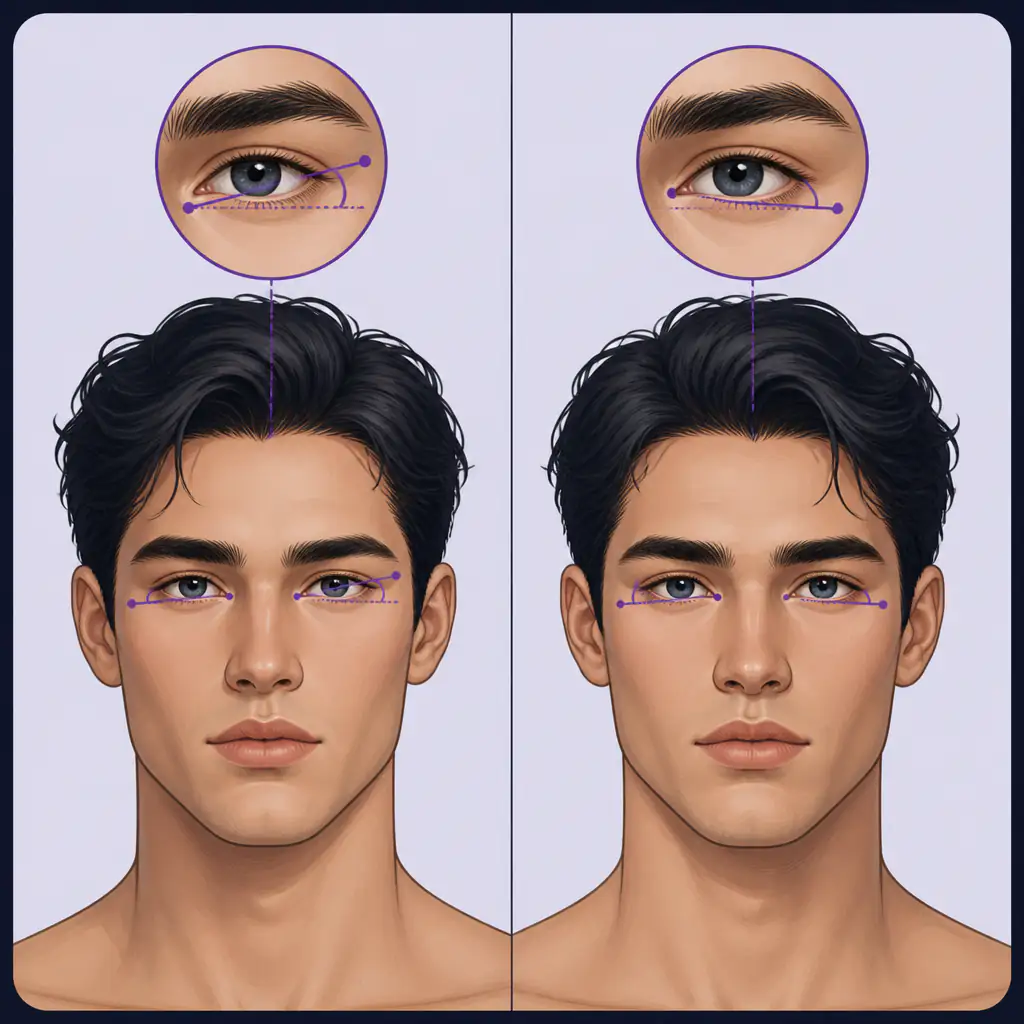
Canthal tilt is one of those facial features that most people never consciously notice, yet it shapes how faces register as attractive, alert, or tired in a fraction of a second. If you have ever looked at someone and thought their eyes looked sharp and intense, or conversely soft and droopy, canthal tilt was likely doing a lot of the work.
This guide breaks down exactly what positive and negative canthal tilt are, how to tell the difference, why it matters aesthetically, and what your realistic options look like.
What Is Canthal Tilt?
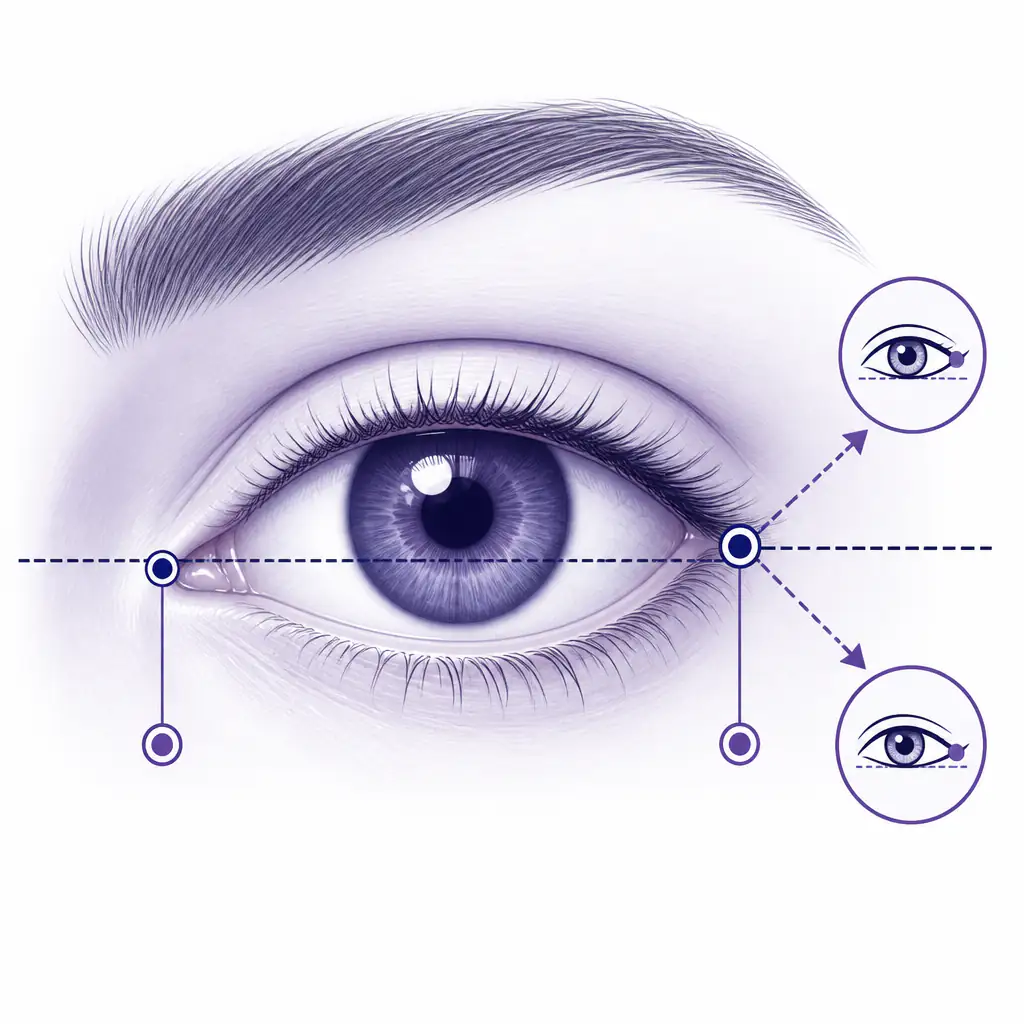
Canthal tilt refers to the angle formed by an imaginary line drawn between the inner corner of the eye (the medial canthus) and the outer corner of the eye (the lateral canthus). The direction and degree of that angle determines whether your canthal tilt is positive, neutral, or negative.
To measure it informally, draw or imagine a horizontal line across your face at the level of your inner eye corners. If the outer corners sit above that line, you have a positive tilt. If they fall below it, you have a negative tilt. If they sit at exactly the same height, your tilt is neutral.
This single measurement has an outsized effect on perceived attractiveness, alertness, and even dominance, which is why it gets discussed so frequently in facial aesthetics.
Positive Canthal Tilt: Characteristics and Perception
A positive canthal tilt means the outer corner of the eye sits higher than the inner corner. The angle is typically expressed in degrees above the horizontal plane.
What It Looks Like
- Eyes appear to angle slightly upward toward the temples
- Often described as almond-shaped or feline
- Associated with an alert, intense, and engaged expression at rest
- Common in people perceived as having “hunter eyes”
Why It Reads as Attractive
Research in facial attractiveness consistently links upward-angled eyes with higher perceived attractiveness scores in both men and women, though for slightly different reasons. In men, a positive tilt contributes to an appearance of intensity and assertiveness. In women, it is associated with a youthful, vibrant quality, partly because the lateral canthal region descends with age, meaning upward tilt signals youth.
The degree matters too. A very steep positive tilt can look exaggerated or unnatural. Most faces rated highly fall somewhere between 3 and 8 degrees above horizontal.
Negative Canthal Tilt: Characteristics and Perception
A negative canthal tilt means the outer corner of the eye drops below the level of the inner corner. The eye appears to slope downward toward the temples.
What It Looks Like
- Eyes angle downward at the outer edges
- Often described as droopy, sad, or tired-looking
- Can create the impression of low energy or submissiveness even when the person is neutral
- More common in people with certain ethnic backgrounds and bone structures, and also increases naturally with age as soft tissue descends
How It Affects Overall Facial Balance
Negative canthal tilt does not exist in isolation. It interacts with your brow position, cheekbone projection, and the overall vertical dimension of your midface. When lateral canthal descent is paired with lower cheekbone projection or a flatter midface, the effect is more pronounced. When cheekbones are well-projected and the brow is well-positioned, a mild negative tilt may be much less noticeable.
Side-by-Side Comparison
| Feature | Positive Canthal Tilt | Negative Canthal Tilt |
|---|---|---|
| Outer corner position | Above inner corner | Below inner corner |
| Typical angle | +3 to +8 degrees | -3 to -8 degrees (or more) |
| Perceived expression at rest | Alert, intense, engaged | Tired, sad, soft |
| Common descriptors | Almond, feline, hunter | Droopy, rounded, downturned |
| Changes with age? | Tends to decrease over time | Tends to worsen over time |
| Fixable non-surgically? | Partially, via makeup and style | Partially, via makeup and style |
Neutral tilt sits at zero degrees and is considered acceptable but unremarkable in most aesthetic frameworks. It does not create the negative associations of a downward tilt, but it also lacks the intensity that a moderate positive tilt can convey.
How to Accurately Assess Your Own Canthal Tilt
Self-assessment in a mirror is less reliable than you might think. Camera angle, lighting, and the natural tendency to raise your brows slightly when looking at yourself can all skew your perception.
A few more reliable approaches:
- Use a straight-on photo taken at eye level with neutral lighting and a relaxed expression. No tilting your head up or down.
- Draw a horizontal line across the photo at the level of your inner corners and see where your outer corners land relative to it.
- Use a face analysis tool to get an objective read. Aura includes canthal tilt detection and hunter-eye analysis as part of its full facial breakdown, which removes the guesswork from self-assessment.
Most people are surprised by their actual measurement. It is common to either overestimate or underestimate tilt when relying purely on mirror checks.
What Causes Canthal Tilt?
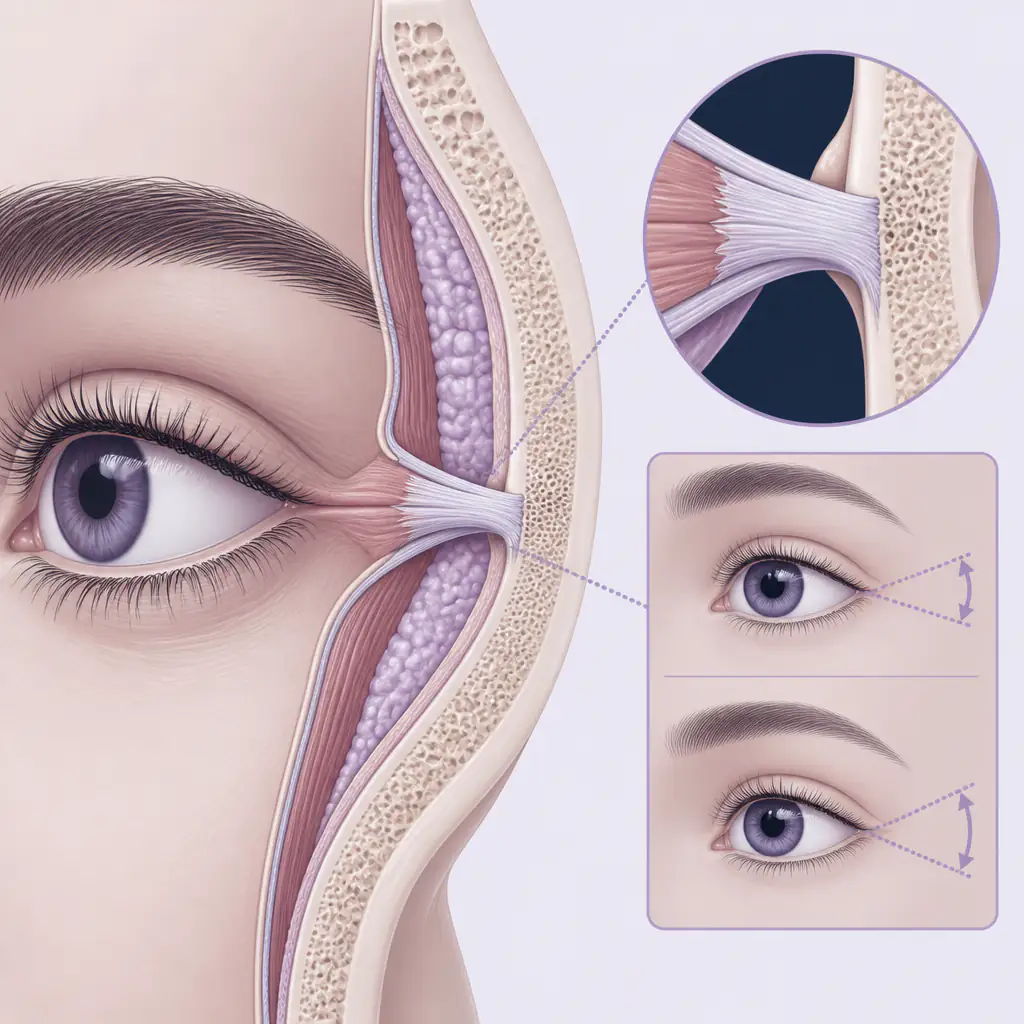
Canthal tilt is primarily determined by the shape and position of your orbital bones, specifically the lateral orbital rim. If the outer portion of your eye socket sits higher relative to the inner portion, your lateral canthus will rest higher, producing positive tilt. Bone structure is largely genetic.
Soft tissue also plays a role. The lateral canthal tendon anchors the outer corner of the eye to the orbital rim. Laxity in this tendon, which occurs gradually with age, allows the outer corner to descend over time. This is why many people who had neutral or mildly positive tilt in their twenties notice increasing downward tilt in their forties and beyond.
Skin and fat changes compound this. Volume loss in the lateral cheek and orbital area reduces the structural support beneath the outer eye, accelerating the descent.
Non-Surgical Ways to Improve the Appearance of Canthal Tilt
If surgery is not on your radar, several non-invasive approaches can meaningfully shift how your tilt reads. These do not change your bone structure, but they can change perception.
Makeup Techniques
- Upward-flicked eyeliner at the outer corner creates the visual impression of positive tilt even when the underlying anatomy is neutral or mildly negative
- Lifting the outer brow with makeup or grooming draws attention upward and counteracts a droopy outer corner
- Avoiding liner that follows the natural downward slope of the eye, which reinforces negative tilt
Hairstyle and Framing
Hairstyles that add height or volume at the crown can shift the viewer’s gaze upward, reducing the visual emphasis on downward-angled eyes. Strong, well-defined brows also help by creating a clean upper frame that draws attention away from the canthal angle.
Facial Exercise and Posture
Some practitioners suggest that consistent work on mewing (proper tongue posture) and overall facial muscle engagement may help maintain midface support over time. The evidence here is limited, and results, if any, are gradual. It is unlikely to shift canthal tilt directly, but maintaining strong facial structure can reduce how prominently a mild negative tilt reads.
Surgical and Minimally Invasive Options
For those interested in more direct correction, several procedures address canthal tilt. Speaking with a qualified oculoplastic surgeon or plastic surgeon is essential before considering any of these.
Canthoplasty and Canthopexy
Lateral canthoplasty repositions the lateral canthal tendon higher on the orbital rim, physically elevating the outer corner of the eye. Canthopexy is a less invasive version that tightens and suspends the existing tendon without detaching it. Both can produce meaningful upward shift of the outer corner.
Fox Eye Lift (Thread Lift)
A thread-based procedure that pulls the outer corner of the eye upward and slightly laterally. Results are less permanent than canthoplasty but the recovery is lighter. Longevity varies significantly by individual.
Filler in the Lateral Orbital Area
Strategically placed filler in the lateral cheek or orbital rim area can create the illusion of a more supported outer corner, subtly improving the appearance of canthal tilt without touching the eye itself. This is one of the more accessible options with a lower risk profile.
Important: All surgical and injectable procedures carry real risks. Talk to a qualified professional before considering any of these options. Results vary, and choosing an experienced, board-certified specialist matters significantly.
Canthal Tilt in Context: It Is One Feature Among Many
Canthal tilt gets a lot of attention in facial aesthetics discussions, and for good reason. It has a measurable effect on perception. But it is one feature operating within a system of dozens of features.
People with negative canthal tilt are not at some insurmountable disadvantage. Many highly regarded faces across modeling, film, and everyday life carry neutral or slightly negative tilt offset by strong bone structure, good skin, and overall facial harmony. Conversely, positive tilt on its own does not guarantee an attractive face if other proportions are off.
The most useful thing you can do is understand where you actually stand across all your features, not just one measurement. That means getting an honest, objective baseline. Running your photo through Aura gives you a breakdown across multiple dimensions, including canthal tilt, jawline, facial thirds, and more, so you can prioritize what actually moves the needle for your specific face rather than fixating on a single metric.
Focusing your energy on the features that will make the biggest difference for your overall look is far more efficient than over-indexing on any one angle.
Frequently asked questions
What is considered a good canthal tilt angle? +
Most facial aesthetics frameworks consider a positive tilt of roughly 3 to 8 degrees above horizontal to be optimal. Neutral (zero degrees) is generally considered acceptable, while negative tilt of more than a few degrees tends to create a tired or downturned appearance. The ideal range varies slightly based on sex, ethnicity, and overall facial structure.
Can negative canthal tilt be fixed without surgery? +
It can be improved in appearance without surgery but not structurally changed. Makeup techniques such as upward-flicked liner and lifted outer brows can visually simulate positive tilt. Minimally invasive options like filler placement may soften the effect. Only surgical procedures like canthopexy or canthoplasty actually reposition the outer corner.
Does canthal tilt change with age? +
Yes. The lateral canthal tendon loosens gradually over time, and soft tissue volume in the outer eye area decreases, both of which cause the outer corner to descend. People who had neutral or positive tilt in their twenties may notice increasing negative tilt by their forties. This is one reason upward canthal tilt is associated with youth.
How do I accurately measure my canthal tilt at home? +
Take a straight-on photo at eye level with a relaxed expression and neutral lighting. Draw a horizontal line at the height of your inner eye corners and note where your outer corners land relative to it. Avoid relying on mirror checks, since head position and brow elevation during self-viewing can easily skew your perception. A face analysis app can automate this measurement for a more objective result.