 Aura: Looksmaxxing
 Oval vs Diamond Face Shape: Key Differences
Learn how to tell oval and diamond face shapes apart, what makes each unique, and how to style both shapes to your advantage.
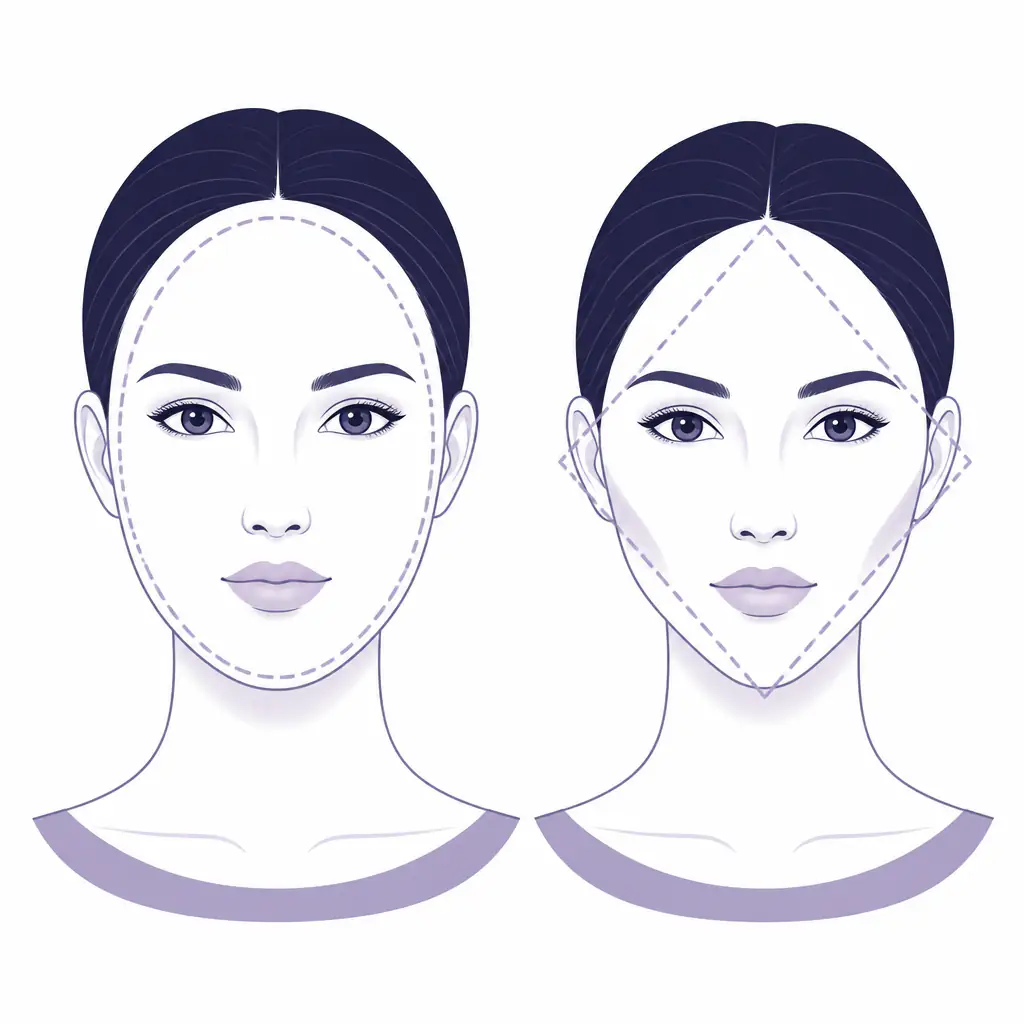
Knowing your face shape is one of the most practical steps you can take before changing your haircut, growing a beard, or choosing glasses. The problem is that oval and diamond face shapes are frequently confused, and the difference between them changes what actually looks good on you.
This guide breaks down the two shapes precisely, explains how to measure them, and gives you specific styling direction for each.
What Defines an Oval Face Shape
An oval face is often described as the “balanced” template because its proportions are close to the golden ratio ideals studied in facial aesthetics research. Here is what actually characterizes it:
- Forehead width is slightly wider than the jawline
- Cheekbones are the widest point, but only marginally
- Face length is roughly one and a half times the width
- Jaw tapers gently and is rounded, not angular
- No single feature dominates the silhouette
The key word for oval is continuity. The transition from forehead to cheek to jaw flows without sharp angles or abrupt width changes. When you trace the outline of an oval face, the curve is smooth and uninterrupted.
Because no single feature is exaggerated, oval faces tend to suit a wide range of haircuts, glasses, and beard styles. Most style guides default to oval as the benchmark that other shapes try to approximate.
What Defines a Diamond Face Shape
A diamond face has a distinctly different structure. The defining feature is narrow forehead and narrow chin with wide, prominent cheekbones. Imagine the four points of a diamond: a pointed chin at the bottom, a narrow forehead at the top, and the widest point sitting high at the cheekbones.
Specific markers of a diamond face:
- Cheekbones are clearly the widest point, often visibly prominent
- Forehead is noticeably narrow, often narrower than the cheekbones by a meaningful margin
- Chin is pointed or narrow, sometimes described as angular
- Face length is moderate to long
- The overall silhouette has two visible angle changes: one at the cheekbones and one where the jaw tapers to the chin
The diamond shape is less common than oval and often signals strong zygomatic arches (cheekbones). This can project a sharp, angular look that many find striking. The tradeoff is that certain hairstyles or eyewear can make the face look either top-heavy or bottom-heavy if chosen poorly.
Oval vs Diamond Face Shape: Side-by-Side Comparison
| Feature | Oval | Diamond |
|---|---|---|
| Widest point | Cheekbones (subtle) | Cheekbones (prominent) |
| Forehead | Slightly wider than jaw | Narrow |
| Jawline | Rounded, gentle taper | Angular, narrow chin |
| Chin shape | Softly rounded | Pointed or sharply defined |
| Overall silhouette | Smooth continuous curve | Two distinct angle shifts |
| Face length | ~1.5x width | Moderate to long |
| Rarest feature | N/A | Prominent cheekbone width |
The single most reliable distinguishing factor: look at your forehead relative to your cheekbones. In an oval face, they are close in width. In a diamond face, the cheekbones are noticeably wider than the forehead.
How to Measure Your Face Shape Accurately
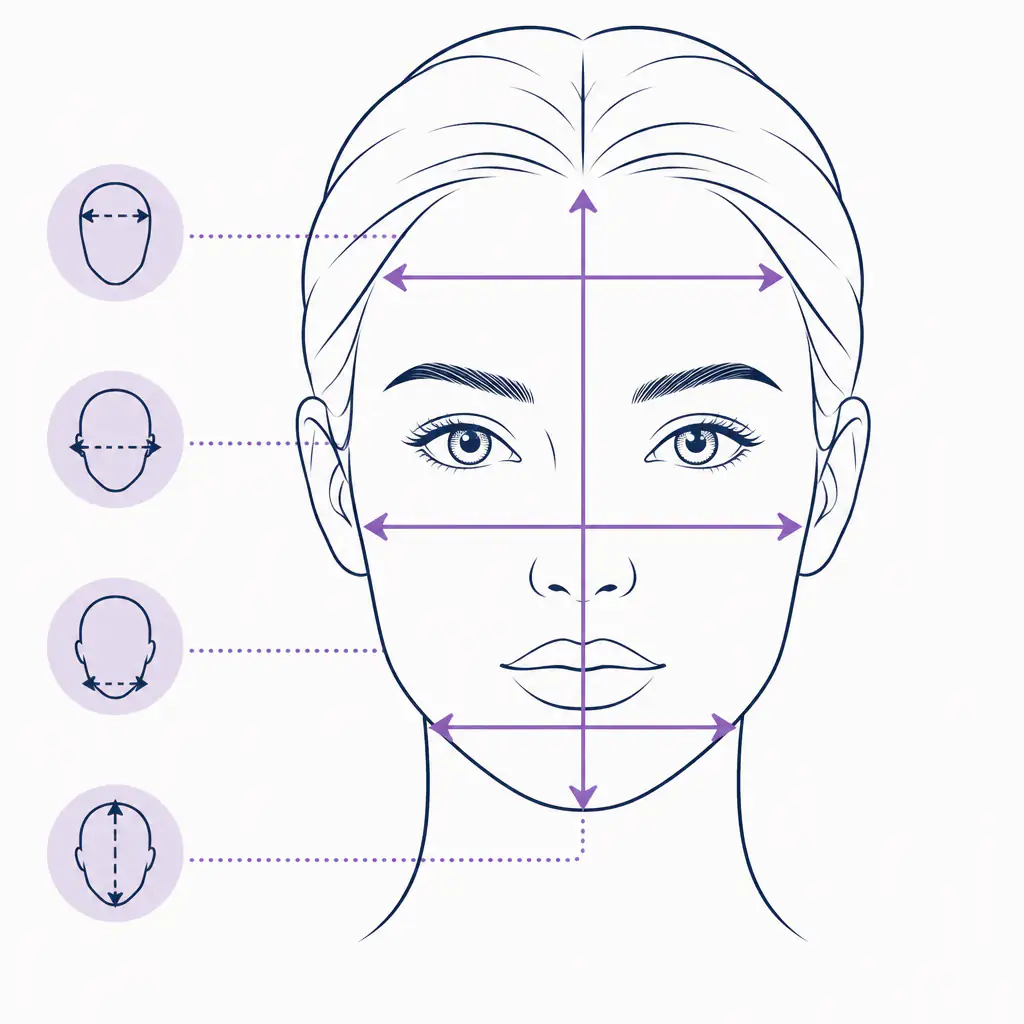
Self-assessment in a mirror is unreliable because of perspective distortion and personal bias. A more accurate method involves four measurements taken with a soft tape measure or ruler:
- Forehead width: Measure across the widest point of your forehead, roughly halfway between your eyebrows and hairline.
- Cheekbone width: Measure from the outer corner of one eye, across the bridge of the nose, to the outer corner of the other. This approximates your zygomatic width.
- Jawline width: Measure from the angle of one jaw (the corner where the jaw turns upward toward the ear) across to the other side.
- Face length: Measure from the center of your hairline straight down to the tip of your chin.
Interpreting the numbers:
- If cheekbones, forehead, and jaw are within about 5-10% of each other, and face length is about 1.3-1.5x the width, you are likely oval.
- If cheekbones are the clear maximum by 15% or more, forehead and jaw are both noticeably narrower, you are likely diamond.
If you want a more objective baseline, Aura uses AI to analyze facial proportions from a photo, including cheekbone prominence, jaw width, and overall facial geometry. It removes the guesswork from self-measurement.
Styling for an Oval Face Shape
Because oval is already proportionally balanced, the main goal is to maintain that balance rather than correct anything. Most styles work, but a few principles help you get the most out of the shape.
Hair
- Most lengths and textures suit oval faces well
- Avoid styles with extreme volume only at the sides, which can widen the midface unnecessarily
- Both center parts and side parts work
- Updos and slicked-back styles tend to look clean because the face structure holds up without framing
Glasses
- Almost every frame shape works
- Square and rectangular frames add definition if you want a sharper look
- Avoid very small frames that make the face appear large by contrast
Beard (for men)
- Light stubble to short beards suit oval faces without disrupting proportions
- A full beard adds length, which works if you want the face to read longer
- Heavy volume on the sides can make the face appear rounder
Styling for a Diamond Face Shape
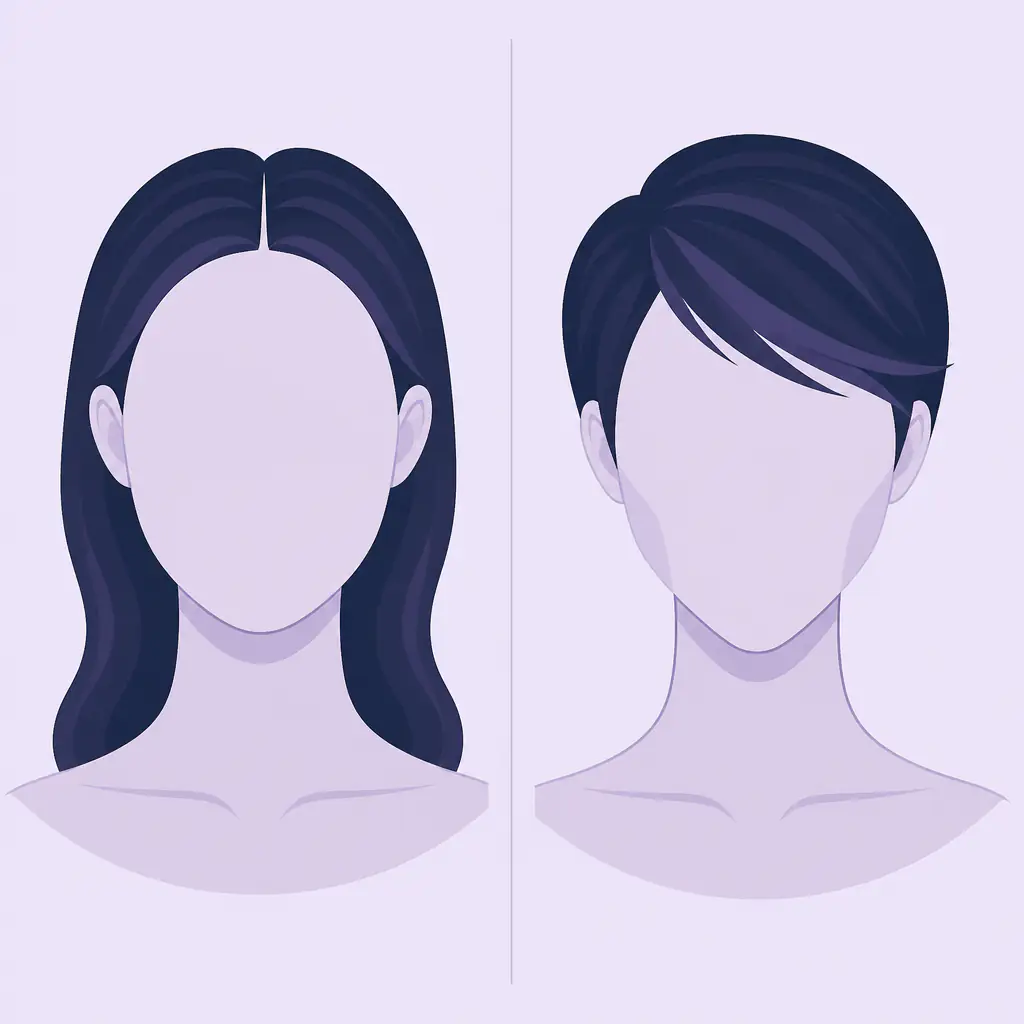
Diamond faces benefit most from styles that add width at the forehead and chin while softening or balancing the already-prominent cheekbones.
Hair
- Side-swept bangs or fringe adds visual width to the forehead
- Chin-length cuts (lob, bob) add width at the chin line
- Avoid styles that add volume at the cheekbones, which amplifies the widest point further
- Short hair on the sides with length on top can elongate and balance
Glasses
- Oval or rimless frames reduce the visual sharpness of the cheekbones
- Cat-eye frames work well because they draw attention upward toward the forehead
- Avoid very narrow frames that emphasize the pointed chin
Beard (for men)
- A beard with more volume at the chin visually widens the narrow lower face
- A fuller jawline beard balances the prominent cheekbones
- Avoid heavy cheek volume with a clean chin, which exaggerates the diamond width-to-chin ratio
Common Misidentifications and Edge Cases
Several face shapes overlap with oval or diamond in certain measurements, which causes frequent misclassification.
Oval vs Round: A round face has roughly equal width and length, with a soft jaw and full cheeks. An oval is longer relative to its width. If your face length-to-width ratio is below 1.3, you are likely round, not oval.
Diamond vs Heart: A heart face is wide at the forehead with a narrow chin, which is essentially the inverse of diamond. If your forehead is the widest point, it is heart. If your cheekbones are the widest point with a narrow forehead and narrow chin, it is diamond.
Diamond vs Oblong: An oblong face is long and narrow with relatively uniform width throughout. A diamond has clear width variation with cheekbones dominating. If your forehead and jaw are similar in width but your cheekbones are not dramatically wider, check whether oblong fits better.
For anyone who has measured multiple times and still is not sure, Aura provides AI-based facial structure analysis, including jawline scoring and cheekbone prominence detection, which can clarify borderline cases.
Practical Tips for Both Shapes
Regardless of which shape you have, a few general principles apply:
- Lighting matters more than most people realize. Harsh overhead lighting flattens features and makes most faces appear rounder. Side lighting reveals bone structure more accurately.
- Weight and body fat percentage affect face shape perception significantly. Buccal fat distribution and masseter muscle size both alter how wide or narrow the midface appears. Structural face shape is about bone, but soft tissue modifies what others actually see.
- Grooming consistency has a compounding effect. A well-maintained beard, clean haircut, or even consistent skincare changes how proportions read to others over time.
- Photography angle distorts shape assessment. A photo taken from below exaggerates the chin and jaw. A photo taken from above narrows the jaw and widens the forehead. For accurate self-assessment, use a photo taken at eye level with a neutral expression.
FAQ
Frequently asked questions
Is an oval face shape better than a diamond face shape? +
Neither is objectively better. Oval is considered proportionally balanced by conventional aesthetics standards, while diamond is rarer and often associated with prominent cheekbones, which research suggests many people find attractive. Both shapes have distinct advantages depending on context.
Can a face shape change over time? +
The underlying bone structure is fixed after development, but the perceived shape can shift with changes in body fat, muscle mass (particularly the masseter), and skin elasticity with age. Significant weight loss, for example, may reveal a more angular jaw that was previously obscured.
What is the rarest face shape? +
Diamond is generally considered one of the rarer face shapes because it requires a specific combination of narrow forehead, prominent cheekbones, and a narrow pointed chin occurring together. Oval and round are among the more common shapes.
How do I know if my cheekbones are prominent enough to be a diamond face? +
Take the four measurements described above. If your cheekbone width exceeds your forehead width by more than roughly 15% and your chin is visibly narrow, diamond is a reasonable classification. You can also use an AI facial analysis tool to get a more precise reading of your zygomatic prominence.