 Aura: Looksmaxxing
Best Glasses for an Oval Face: Almost Anything?
An oval face suits nearly every frame shape, so size becomes the deciding factor. How to read the numbers printed on the temple arm and use them.
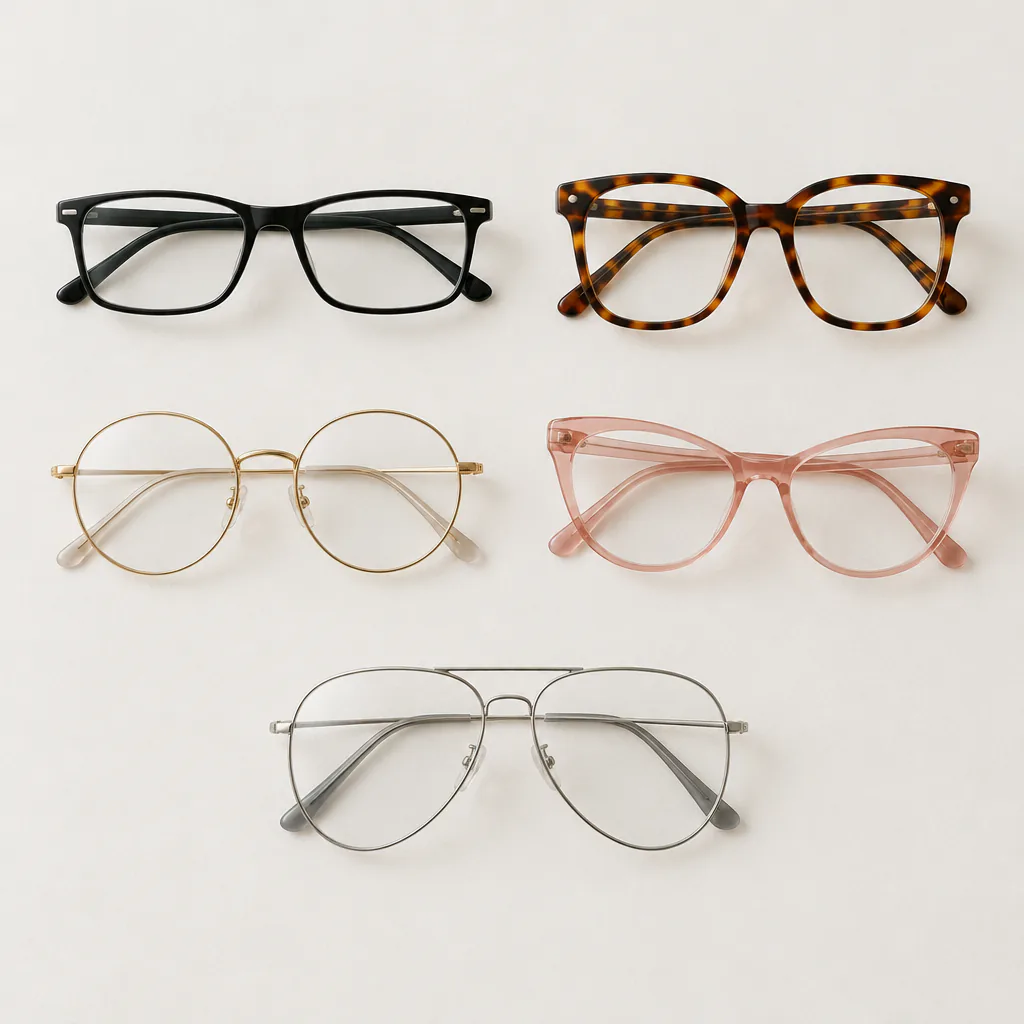
If you have an oval face, you have probably been told you can wear almost any glasses. That is broadly true, and it is also why the advice is hard to use. When everything works, you still need a way to choose.
This guide covers three things. First, which frame shapes are commonly recommended for oval faces and why. Second, the sizing numbers that matter more than the shape. Third, a fit checklist to run through before you buy.
One honest caveat up front. Face-shape matching is a styling convention used by opticians and eyewear retailers, not a measured science. Treat the shape advice below as a starting point. The fit and sizing guidance is the more concrete part.
What Counts as an Oval Face
There is no single clinical definition, and sources describe the oval shape a little differently:
- An ophthalmology practice describes it as a face that is longer than it is wide, with a rounded jaw and forehead.
- A retailer guide lists balanced features, high cheekbones and a narrow chin.
- Another guide describes it this way: face length exceeds width by a modest margin, the forehead is slightly wider than the jaw, and the chin is gently curved.
The common thread is balance. No single area, whether forehead, cheekbones or jaw, clearly dominates, and the outline has soft curves rather than sharp corners.
Many real faces sit between categories. An oval face can lean longer, which is closer to oblong. It can also lean shorter and fuller, which is closer to round. If yours is borderline, borrow a little from the advice for the neighbouring shape.
A quick self-check
This is an editorial suggestion, not a clinical method:
- Pull your hair back from your face and hairline.
- Take a straight-on photo at eye level in even light. Don’t tilt your head or use a wide-angle selfie lens up close.
- Compare roughly how wide your forehead, cheekbones and jaw look.
- Ask whether your face looks clearly longer than it is wide, and whether your jaw is rounded rather than angular.
If you want a second opinion, the Face Shape Finder gives your likely face shape with uncertainty, not a fixed label. It explains your forehead, cheek and jaw proportions and suggests styling options, including accessories like glasses. You can upload a photo before signing up. The free result is a subjective styling estimate, and the full findings need an account and a one-time purchase.
Why Oval Faces Are Called the Easy Shape
Eyewear sources broadly agree on this point. Frames Direct says oval faces suit almost any glasses frame shape. Vision Center points to natural symmetry and balanced features as the reason. A guide written for opticians agrees that most frame shapes work well.
That does not mean every frame looks equally good on you. Once shape is no longer the limit, two other things decide the result:
- Size and proportion. This matters most, and it gets its own section below.
- The effect you want. One useful framing is that the goal is not to “correct” anything but to create visual balance.
In practice, most frames fall into one of three approaches. This is our editorial framework, not a rule from any standards body:
- Contrast: angular frames against soft facial curves.
- Echo: curved frames that repeat your face’s softness.
- Statement: bolder shapes, colours or sizes that make the glasses a focal point.
The Best Frame Shapes for an Oval Face
Square and rectangular frames: contrast
These are the most commonly recommended options. Frames Direct notes that square and rectangular frames add contrast and definition to the softer curves of an oval face. The optician guide agrees that these shapes add structure and visual interest.
Editorial note: a thin metal rectangle reads as quiet and professional. A thick acetate square reads as deliberate and bold. Both are contrast. They just differ in volume.
Geometric frames: contrast with more personality
Hexagonal, octagonal and other faceted shapes push the contrast idea further. The optician guide groups geometric frames with square and rectangular ones as shapes that add structure to an oval face. They suit you if you want something more distinctive than a classic rectangle.
Round frames: echo, if well sized
Round frames work differently. Frames Direct explains that instead of adding contrast, they echo the softer curves of the face, giving a more relaxed or vintage look.
The catch is size. The same source warns that very small round frames can look out of balance, while a well-sized round frame complements the face without overpowering it. If round frames have felt off to you before, the size was likely the issue rather than the shape.
Cat-eye frames: lift at the outer corners
The upswept outer corners draw attention upward and outward. All About Vision says the cat-eye shape emphasizes your cheekbones and makes them look more contoured. Cat-eyes range from subtle, slightly lifted corners to strongly retro wings, so choose the intensity you like.
Aviators: watch the width
Aviators can work on oval faces, with one size caveat. Vision Center notes that aviators wider than your cheekbones can unbalance your features. If you like the teardrop shape, look for a pair that doesn’t extend well past your cheekbones.
Other options worth trying
These aren’t specifically backed by the sources above, so treat them as editorial suggestions:
- Browline frames: a heavier top rim with a lighter lower rim. A classic, structured look.
- Rimless or semi-rimless: minimal visual weight, so your features stay the focus.
- Oversized frames: these can work as a statement, but proportion matters more here than with any other style.
Quick comparison
| Frame shape | Main effect | Watch out for |
|---|---|---|
| Square / rectangle | Contrast, definition | Frames too narrow for your face |
| Geometric | Contrast with personality | Busy shapes you tire of quickly |
| Round | Echo, relaxed or vintage | Sizes that are too small |
| Cat-eye | Lift toward cheekbones | Wing intensity that doesn’t match your style |
| Aviator | Classic teardrop | Width past your cheekbones |
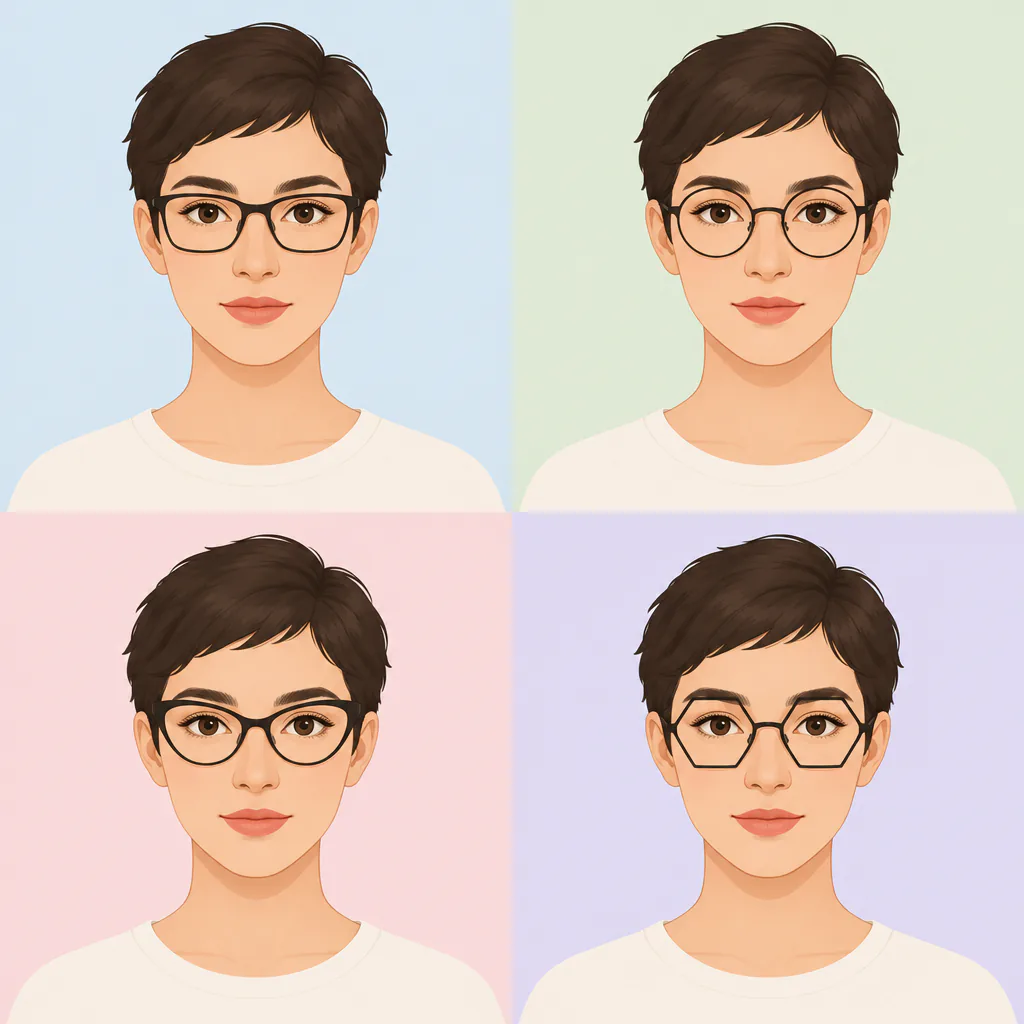
Size Matters More Than Shape
For oval faces, sizing is where most frame choices succeed or fail.
The one rule sources agree on
The most consistent warning is to avoid frames that are too narrow. The optician guide says the main thing to avoid is frames significantly narrower than the widest part of the face, because they disrupt the natural balance.
Sources differ slightly on how close the match should be:
- Frames Direct suggests frames at least as wide as the broadest part of your face.
- All About Vision says total frame width should match the width of your face at the temples, with enough room at the sides so the arms don’t dig in.
- One eye-care practice says your face width should match the frame’s combined lens and bridge measurements within 2-4mm.
- Another guide puts the tolerance at approximately 5mm of your widest facial dimension.
The practical takeaway is to aim for a frame about as wide as your face at the temples. Avoid noticeably narrower, and leave enough room that the arms don’t press on your head.
How to read the numbers on your glasses
Most frames have three numbers printed on the inside of the arm, usually formatted like 54-16-140. In order, these are:
- Lens width: the horizontal width of one lens, in millimetres.
- Bridge width: the gap between the two lenses, where the frame sits on your nose. Warby Parker gives a typical range of 14 to 24 mm.
- Temple length: the length of each arm. Common standards are 135, 140, 145 and 150 mm.
Find your size in five steps
- Start with a pair that fits. If you own glasses that feel right, check the three numbers inside the arm. That is your baseline.
- Measure if the numbers have worn off. Measure horizontally across one lens at its widest point for lens width. For bridge width, measure the shortest gap between the two lenses.
- Measure your face. Looking in a mirror, measure roughly from temple to temple.
- Use a size chart as a rough guide. For example, one retailer chart pairs a narrow face, under 129mm temple to temple, with a lens width of 50mm and under and arms of 135 to 140mm. Brands size differently, so treat charts as a starting point.
- Compare new frames against your baseline. Small differences in lens or bridge width change how a frame sits more than you might expect.
Fit Checklist Before You Buy
A flattering shape in the wrong fit will still look and feel off. Run through these checks in a store or during a home try-on:
- Eyes centred in the lenses. All About Vision says the center of each pupil should align with the optical center of each lens when you look straight ahead. This is why your pupillary distance is measured.
- No slipping. The same source says you should be able to move, bend and shake your head without your glasses sliding down your nose.
- No pressure at the sides. The arms should run back to your ears without digging into your temples or leaving marks.
- Comfortable bridge. The frame should rest on your nose without pinching or sitting so loose that it drops. (Editorial)
- Sensible brow position. As a common styling guideline, the top of the frame sits near your brow line rather than far above or well below it. (Editorial)
If you wear progressive lenses or have a strong prescription, ask your optician whether a frame is deep and large enough before you commit. Lens requirements can rule out some styles regardless of how they look.
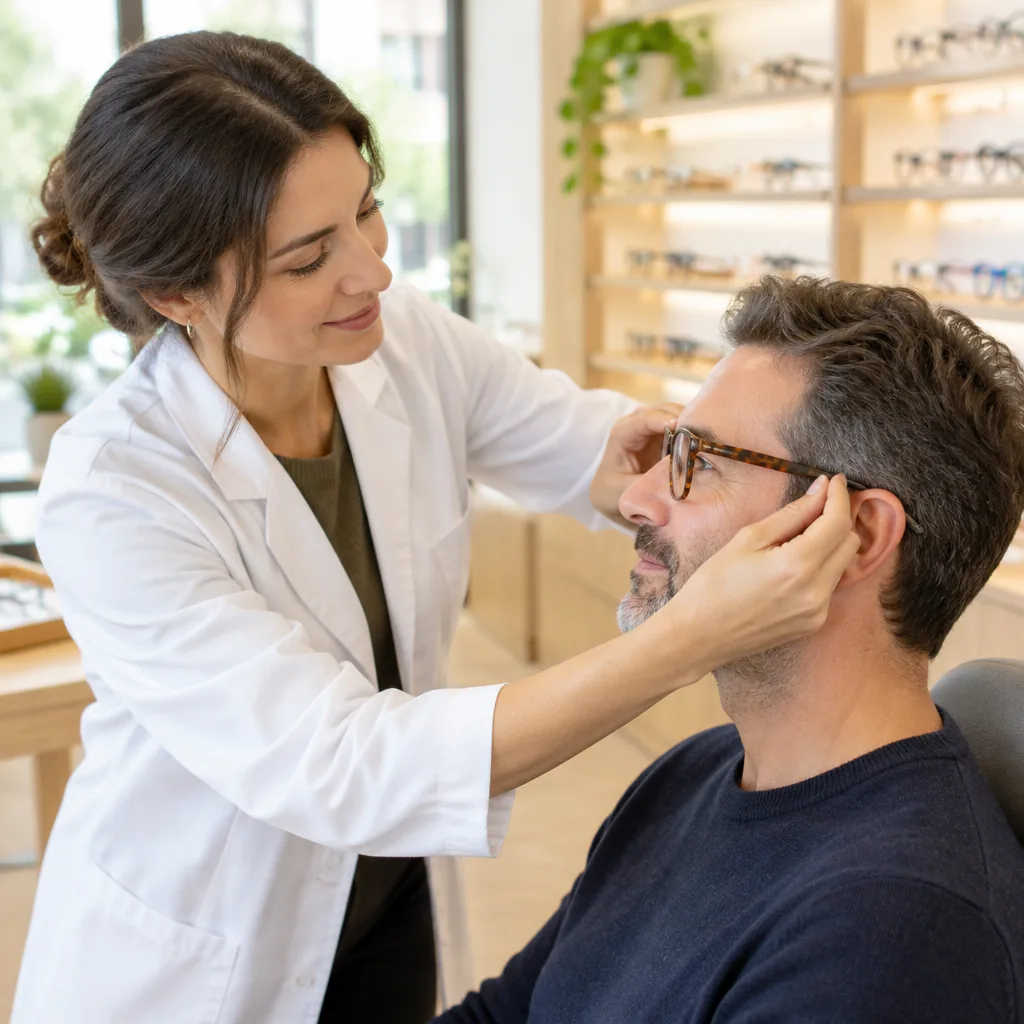
Colour, Thickness and Personal Style
Once shape and size are settled, these choices shape most of the final look. This section is editorial guidance, not sourced rules.
- Thickness sets the volume. Thin wire frames are understated. Thick acetate makes the glasses part of your outfit.
- Colour can match or contrast. Tortoiseshell and warm browns blend softly with many skin tones and hair colours. Black reads sharper and more graphic. Clear and pale frames look light and modern.
- Match your wardrobe, not just your face. If you mostly wear neutrals, a coloured frame can be your one accent. If your style is already bold, simpler frames keep things balanced.
- Style preferences are personal. A softly lifted cat-eye in a rose or champagne tone and a heavy black rectangle can both suit an oval face. Choose by the look you want to project, not by rules about who should wear what.
Common Mistakes to Avoid
- Picking by shape and ignoring width. This is the most common miss, since a narrow frame throws off an otherwise balanced face.
- Going too small with round frames. Small rounds are the style sources most often flag as looking out of proportion.
- Oversized aviators that pass your cheekbones. Size the teardrop to your face.
- Trusting one try-on photo. Check frames from the front and the side, in daylight, and with your usual hairstyle.
- Treating face shape as a verdict. It is a starting point. Comfort, prescription needs and personal taste all count more than matching a chart.
Sources & further reading
Frequently asked questions
What are the best glasses for an oval face shape? +
Square, rectangular and geometric frames are the most commonly recommended because they add contrast to soft curves. Round and cat-eye frames also work well, and aviators are fine if they aren't wider than your cheekbones. Because oval faces suit most shapes, frame size usually matters more than the shape you pick.
Can people with oval faces wear round glasses? +
Yes. Round frames echo the softer curves of an oval face for a relaxed or vintage look. The main caution is size, because very small round frames can look out of proportion, while a well-sized pair looks balanced.
How wide should glasses be for an oval face? +
Aim for a frame about as wide as your face at the temples. Sources give tolerances from a few millimetres to about 5mm, but they agree on avoiding frames noticeably narrower than the widest part of your face. Leave enough room that the arms don't press on your head.
What do the numbers on my glasses mean? +
The three numbers inside the arm, such as 54-16-140, are lens width, bridge width and temple length in millimetres. Bridge widths typically run from 14 to 24 mm, and temple lengths are commonly 135, 140, 145 or 150 mm. Use the numbers from a pair that fits you well as your baseline.
How do I know if my face is really oval? +
Oval faces are generally described as longer than they are wide, with a rounded jaw, a forehead slightly wider than the jaw and no dominant angles. Many faces fall between oval and oblong or between oval and round, so a straight-on photo with your hair pulled back makes it easier to judge. If yours is borderline, borrow from the advice for the neighbouring shape.