 Aura: Looksmaxxing
Oval Face Shape Hairstyles: Cuts That Work and Why
Oval face shape hairstyles explained: how to check your shape, which short, medium and long cuts stylists recommend, and how to brief your stylist.
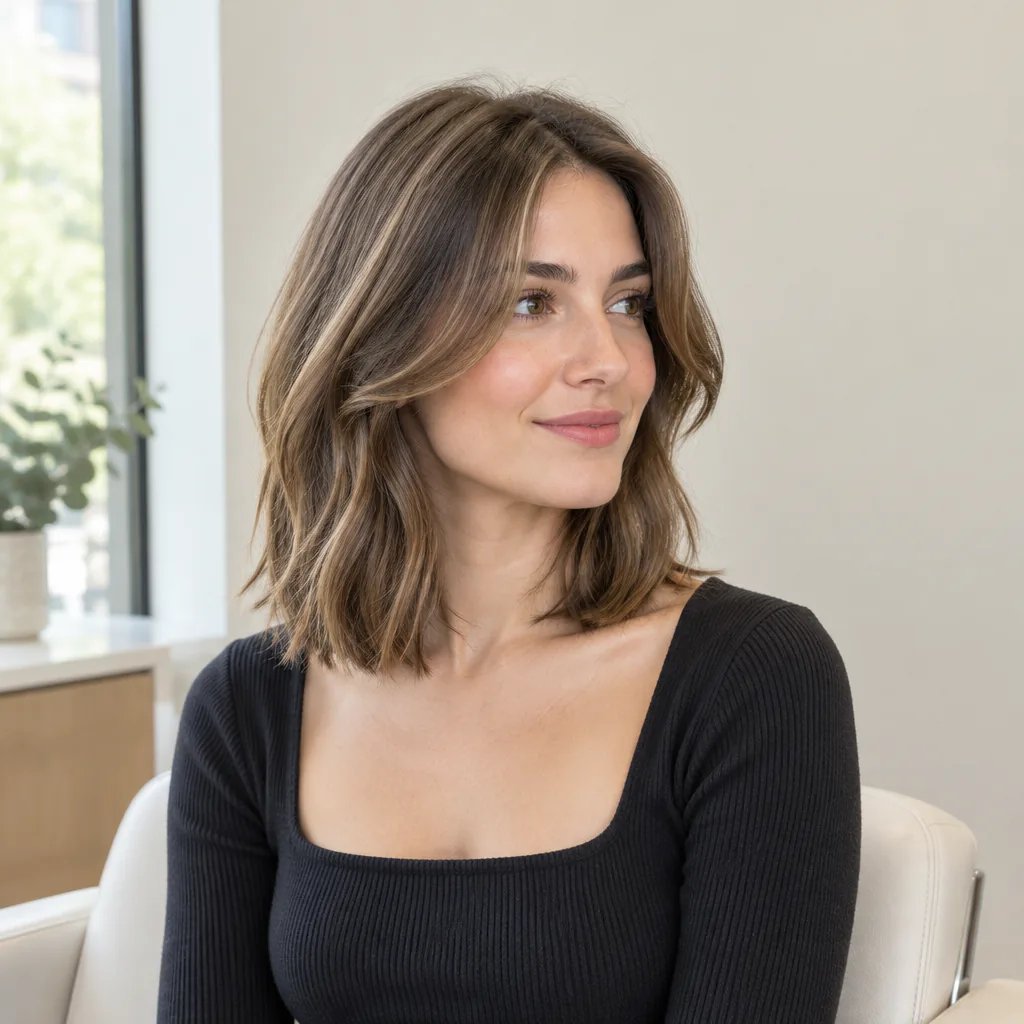
If you have an oval face, you have probably heard some version of “lucky you, anything works.” There is some truth in it. Stylists do treat the oval as one of the easiest shapes to cut for. But “anything works” doesn’t help much when you’re in the chair and have to choose one cut.
This guide covers four things:
- How to check whether your face is actually oval
- Which cuts working stylists keep recommending
- How to narrow the options using what matters more than shape: hair texture, density and how much styling you want to do
- How to brief your stylist
One note before we start. The haircut advice here comes from professional stylists and our own editorial judgment, not from controlled studies. Nobody has run a trial proving that a lob flatters oval faces. Treat it as informed opinion and test it against your own hair.
What Makes a Face “Oval”
Face shape describes proportions. Most guides use four measurements:
- Forehead width, measured across the temples
- Cheekbone width, across the most prominent points of the cheekbones
- Jaw width, near the angle of the mandible, the back corner of your lower jaw below the ear
- Face length, from the hairline to the chin
An oval face is usually described as:
- Noticeably longer than it is wide
- Widest at the cheekbones
- Tapering gently through the forehead and jaw, with a rounded rather than angular jawline
Definitions vary between guides. Some say the jaw is slightly narrower than the forehead. Others quote a rough length-to-width ratio of about 1.5 to 1. Treat both as loose rules of thumb, not hard cutoffs.
The number of categories also varies. Some guides use six face shapes, others seven, and the facial morphology literature recognizes anywhere from six to nine, depending on the study. Researchers who build automated classifiers place facial landmarks on photos and calculate key distances between them. This face shape classification study is one example. Even with that approach, face shapes are fuzzy categories, and many real faces sit between two of them.
How to Check Your Shape at Home
- Pull all your hair back off your face, including any fringe.
- Stand square to a mirror with your eyes level with the glass. Or take a straight-on photo at eye level with a neutral expression and no tilt.
- With a soft tape measure, or by careful eye, note your forehead width at the temples.
- Note your cheekbone width at the widest point.
- Note your jaw width at the corners of the jaw.
- Note your face length from the center of your hairline to the tip of your chin.
- Compare the numbers. You are probably oval, or close to it, if all three of these are true:
- Length is clearly the largest measurement.
- Your cheekbones are the widest point.
- Your jaw curves in softly instead of squaring off.
Measuring by hand or by eye is subjective. Two people can get different answers from the same face. Landing between oval and oblong, or between oval and heart, is common. Your hairline, hair density and growth pattern affect the final cut as much as the label does, and a stylist can judge those in person.
Why Stylists Call Oval Faces Flexible
Most face-shape haircut advice is about balance. A stylist adds width where a face is narrow, softens a strong angle, or adds or removes height. With an oval face, there is usually little to rebalance. A Beautycon feature on oval faces put it simply: there isn’t an imbalance that needs to be corrected. A Cosmopolitan feature republished on AOL frames it as enhancement rather than correction, and quotes stylist Jordanna Cobella: “It’s just about refining the shape.”
That flexibility has limits:
- It doesn’t mean every cut suits every oval face. Texture, density, hairline, neck length and personal style still decide whether a cut works.
- It doesn’t make oval the “ideal” face. That idea comes from the beauty industry, not from evidence.
- It does mean you can choose by preference. Decide which features you want to show off and how much upkeep you’re willing to do.
Stylist Nubia Suarez made a related point: oval shapes come in different symmetries depending on the client’s texture and curl type. The same face shape with different hair can call for a different cut.
Short Oval Face Shape Hairstyles
Short cuts put your whole face on display, so they suit people who like their features being visible. Celebrity hairstylist TerraRose told E! News that a textured pixie, a bixie or a really short crop can look incredible on an oval face, because the shape can support shorter, bolder cuts.
Textured Pixie or Crop
The hair is short all over, with texture worked through the top.
- Upkeep: It needs frequent trims to hold its shape.
- Texture: Straight and wavy hair both work.
- Fine hair: A little texturizing product keeps it from lying flat. (Editorial suggestion.)
Bixie
The bixie is a cross between a bob and a pixie. It’s longer and softer than a pixie, with layers through the sides and back. Choose it if you want a short cut that feels less severe, or if you’re growing out a pixie.
Blunt Bob or French Bob
TerraRose also recommends blunt bobs and French bobs for oval faces, because the cheekbones and jawline stay visible.
- Blunt bob: One length, cut around the jaw.
- French bob: Shorter, usually between cheekbone and jaw, often worn with a fringe.
In our experience, blunt ends make fine hair look fuller at the edges. Very thick hair may need internal thinning so the bob doesn’t puff out into a triangle. (Editorial suggestion.)
Medium and Long Cuts
The Lob
A lob is a long bob that sits around the collarbone. Stylist Farey told Who What Wear that the lob is still one of the most requested looks for oval faces. It’s a practical middle ground: short enough to feel styled, and long enough to tie back on lazy days.
Face-Framing Layers
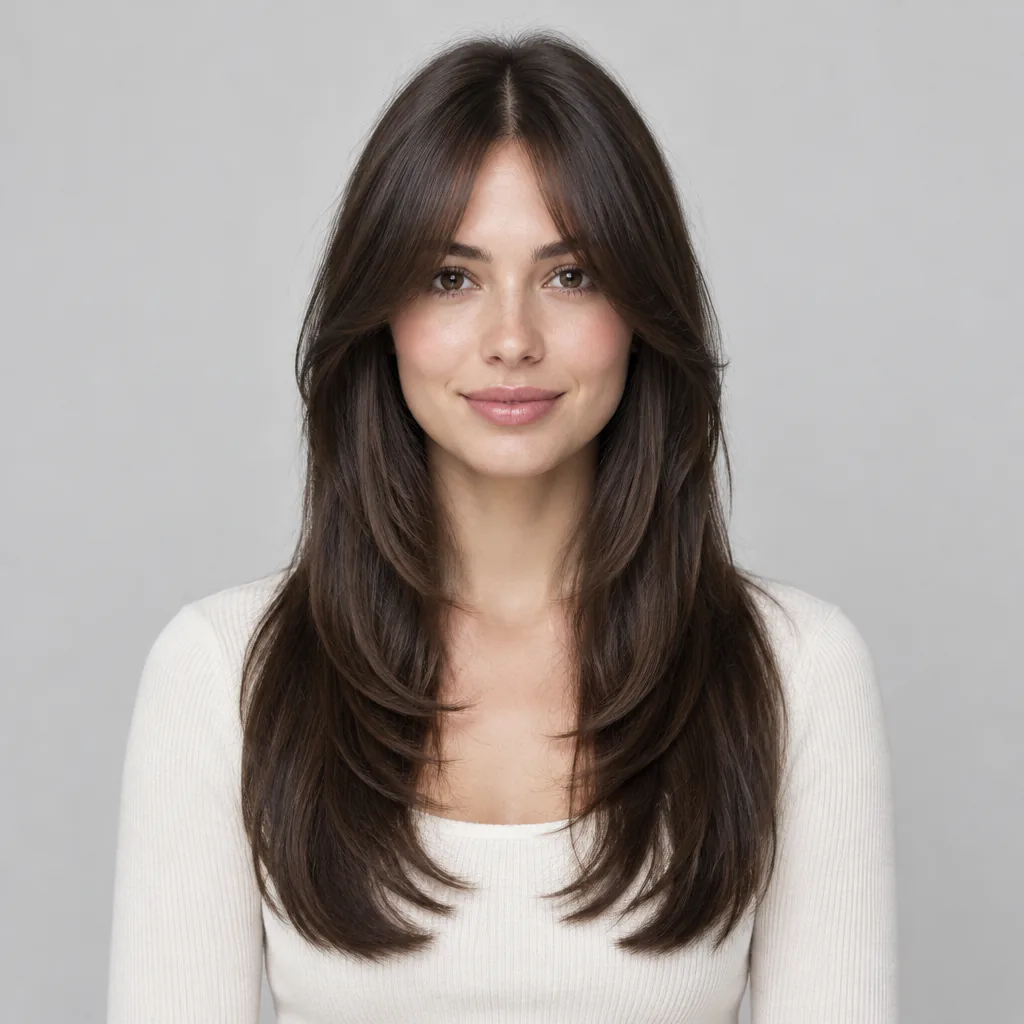
Farey and TerraRose both recommend face-framing layers that start around the cheekbones. TerraRose says these layers create movement and keep long hair from looking heavy.
It’s worth asking your stylist how visible you want the layers to be. In the same Cosmopolitan piece, Cobella describes long, “invisible” layers that enhance your natural texture rather than obvious, choppy sections.
Shoulder-Length Shag
A shag uses many layers and puts volume at the crown. It works especially well with natural waves or loose curls. On straight hair, expect more daily styling to get the piecey texture. (Editorial suggestion.)
Long, One-Length Hair
Very long hair cut to one length can hang flat and pull the eye straight down, a point one face-shape guide also makes. If you love length, you don’t have to give it up. A few long layers or face-framing pieces keep it from looking heavy. (Editorial suggestion.)
Bangs on an Oval Face
TerraRose calls oval faces “basically bangs-friendly territory,” and Farey names curtain bangs as a great choice. Some guides do warn against heavy, blunt bangs, because they cover the forehead and make the face look shorter. On an oval face, that’s a style choice rather than a mistake.
Our practical take:
- Curtain bangs are the lowest commitment. They part in the middle, sweep to the sides, and grow out into face-framing layers.
- Soft, wispy bangs add softness without a hard line across the forehead.
- Blunt, heavy bangs make a strong statement. Before committing, check two things:
- Whether you have a cowlick at the front hairline. A cowlick is a patch where hair grows in a different direction, and it can split a fringe.
- Whether you’ll blow-dry them most days.
Oval Face Hairstyles for Men
Barbers commonly describe oval faces as easy to cut for and good for experimenting. Every option below works for anyone who likes the look, regardless of gender.
Short Options
- Crew cut: Short sides with slightly longer hair on top. It’s clean and low-maintenance.
- Textured crop: Short sides with choppy texture on top, often worn with a short fringe.
- Buzz cut: It shows the whole face. Your head shape and hairline matter more here than face shape does.
- Side part with a taper: A classic, structured look that’s easy to style with a small amount of product.
Medium and Long Options
- Slicked back: It needs enough length on top to sweep back, and a product with some hold.
- Longer, natural flow: This works best with wavy hair. Regular trims stop it from going shapeless. (Editorial suggestion.)
If you have tight curls or coils, ask for the sides to be kept a little shorter than the top. That way the shape stays deliberate as it grows. (Editorial suggestion.)
Choose by Texture and Lifestyle, Not Just Shape
So many cuts suit an oval face that shape alone won’t narrow your choice. One haircut guide points out that, for oval faces, texture and lifestyle should decide. In practice:
Fine Hair
- Blunt bobs, lobs and longer bixies keep the ends looking full.
- Too many short layers can make fine hair look thin at the ends.
Thick Hair
- Shags, long layers and textured crops remove bulk and add movement.
- Ask for weight removal inside the cut, not only at the ends.
Wavy and Curly Hair
- Curl pattern changes how a cut sits once it dries.
- Curly hair can shrink considerably as it dries, so a cut done wet may end up shorter than you expect.
- Many curly-haired people prefer a stylist who cuts curls dry or curl by curl. (Editorial suggestion.)
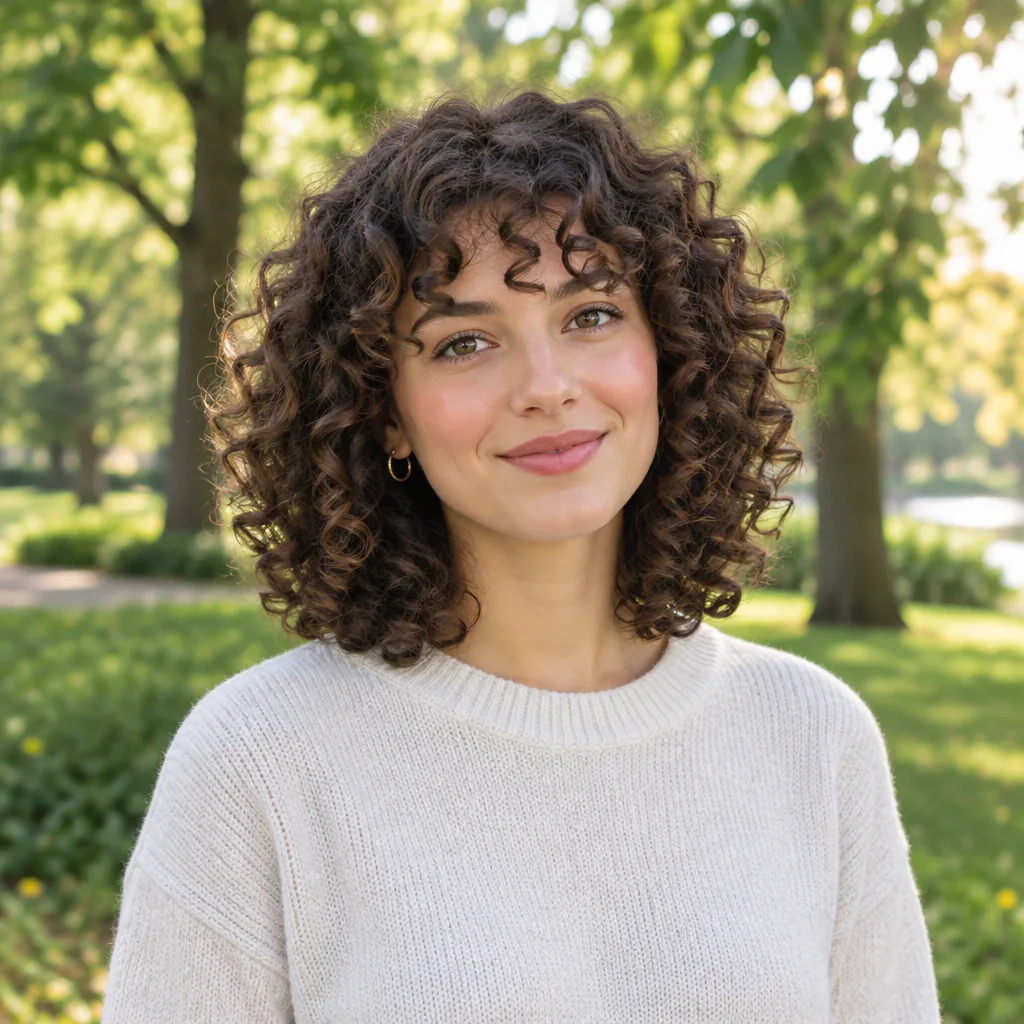
- Rounded layers and curly shags tend to sit well on oval faces.
How Much Styling You Want to Do
| Cut | Daily styling | Trim frequency | Suits |
|---|---|---|---|
| Buzz cut or crew cut | Minimal | Frequent | Most textures |
| Textured pixie or crop | Light product | Frequent | Straight, wavy |
| Blunt bob | Moderate, smoothing | Regular | Fine to medium, straight |
| Lob | Low to moderate | Moderate | Most textures |
| Shag | Moderate on straight hair, low on waves | Moderate | Wavy, curly, thick |
| Long with face-framing layers | Low | Less frequent | Most textures |
The table reflects editorial judgment, not measured data.
How to Brief Your Stylist
A clear brief matters more than choosing the “right” cut for your face shape. Here’s a simple routine:
- Bring two or three reference photos of people with hair like yours. A cut shown on thick, straight hair won’t look the same on fine, wavy hair.
- Say what you want to emphasize. It might be your cheekbones, eyes or jawline. That steers fringe length and where layers start.
- Be honest about upkeep. Tell your stylist how many minutes you’ll spend styling each morning and how often you can come in for trims.
- Ask what they see that you can’t. That includes cowlicks, density at the crown, hairline shape and growth direction.
- Agree on where to start. If you’re unsure, ask for a slightly longer version first. Taking more off later is easy.
If you’d like a written starting point before your appointment, Aura’s Haircut Finder is one option. It looks at your visible face shape, apparent hair texture and current length, plus any preferences you give it. It then suggests three named haircuts, with an explanation of why each might suit you and a stylist brief covering upkeep and what to ask for. It’s a recommendation report, not a try-on image, and it’s part of Aura Pro. The report also lists what a photo can’t show, such as scalp density and how your hair grows, which your stylist should check in person.
Common Mistakes to Avoid
- Choosing on face shape alone. On an oval face, texture and lifestyle narrow the options more than shape does.
- Copying a photo with completely different hair. Match texture and density first, and then the cut.
- Chasing an “ideal” face shape. The goal is a cut you like and can maintain, not making your face fit a template.
- Skipping the cowlick check before blunt bangs. This is a common reason a fringe won’t sit flat.
- Going very short and very dramatic at once. Moving to a bixie or a short bob first lets you see how your hair behaves at a shorter length.
Sources & further reading
Frequently asked questions
What is the best hairstyle for an oval face? +
No single cut is best. Stylists treat oval faces as flexible and regularly recommend lobs, face-framing layers, blunt bobs, textured pixies and curtain bangs. Choose based on your hair texture, density and how much styling you want to do.
Should people with oval faces avoid bangs? +
No. Stylists quoted in E! News and Who What Wear describe oval faces as well suited to bangs, especially curtain bangs. Some guides suggest skipping heavy, blunt bangs because they make the face look shorter, but that's a style preference. Check for a cowlick at your hairline before committing to a blunt fringe.
How do I know if my face is really oval? +
Pull your hair back and compare four measurements: forehead width, cheekbone width, jaw width and face length. An oval face is usually longer than it is wide, widest at the cheekbones, with a softly rounded jaw. Many faces fall between two shapes, so a stylist's in-person view of your hairline and growth pattern is still useful.
Are short haircuts good for oval faces? +
Yes, they are often a strong choice. Celebrity hairstylist TerraRose says textured pixies, bixies, very short crops and blunt or French bobs suit oval faces, with bobs letting you really see the cheekbones and jawline. For men, crew cuts, textured crops and side parts are common recommendations.
Does hair texture matter more than face shape for oval faces? +
Often it does. So many cuts suit an oval face that texture, density and lifestyle usually narrow the choice more. Fine hair tends to suit blunt lines, thick hair suits layers that remove bulk, and curly hair benefits from a stylist experienced in cutting curls.