 Aura: Looksmaxxing
Best Haircut for an Oval Face: 10 That Suit It
An oval face takes almost any cut, so the decision moves to hair type. Ten styles, how to confirm your shape, and how to brief your barber.
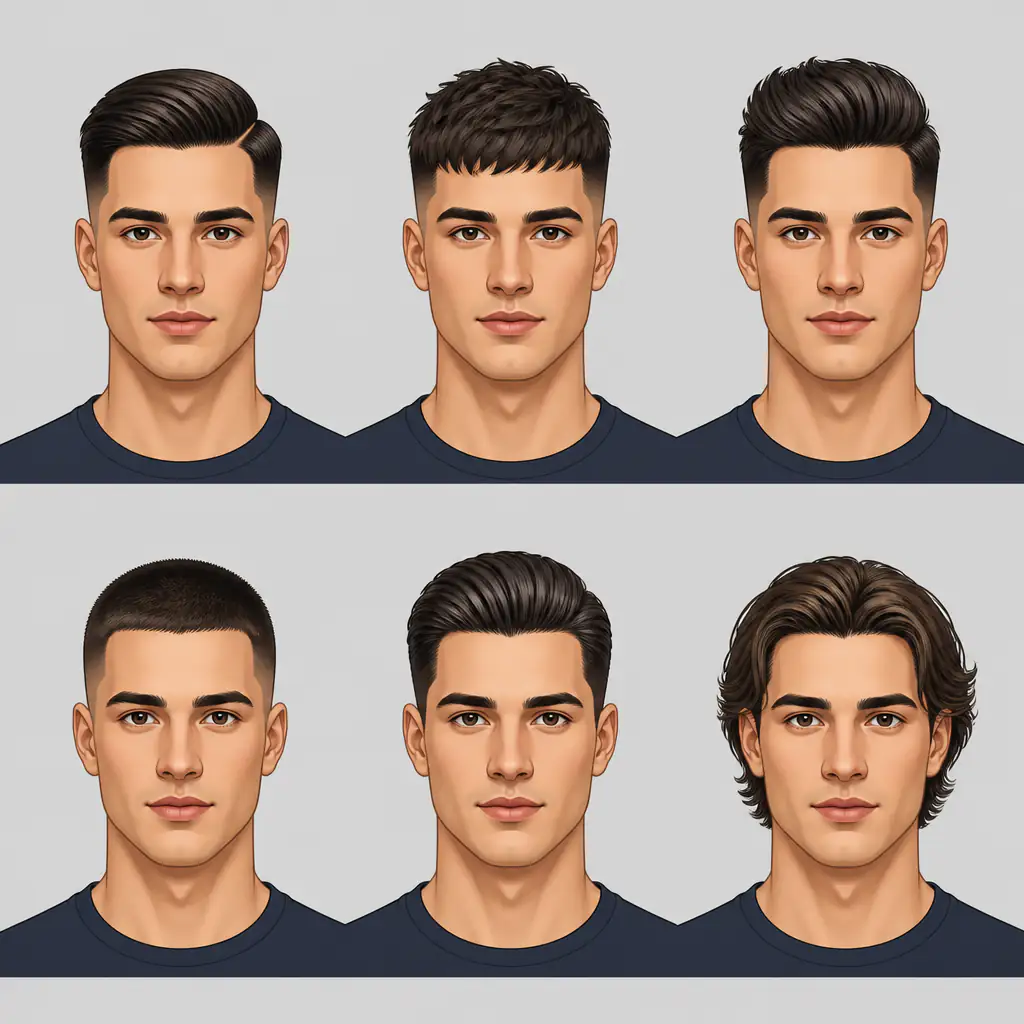
An oval face is often called the lucky face shape. Balanced proportions do give you more options than most men get. But more options is not the same as anything works. Plenty of guys with oval faces end up with cuts that make them look longer, rounder, or just forgettable. That usually happens because they skipped the details that decide how a haircut lands: hair texture, forehead height, hairline position, and jaw definition.
This guide covers how to confirm your face is actually oval, ten haircuts that suit it, how to adjust for your hair type and features, and what to say in the barber’s chair.
What Makes a Face Oval (and How to Confirm It)
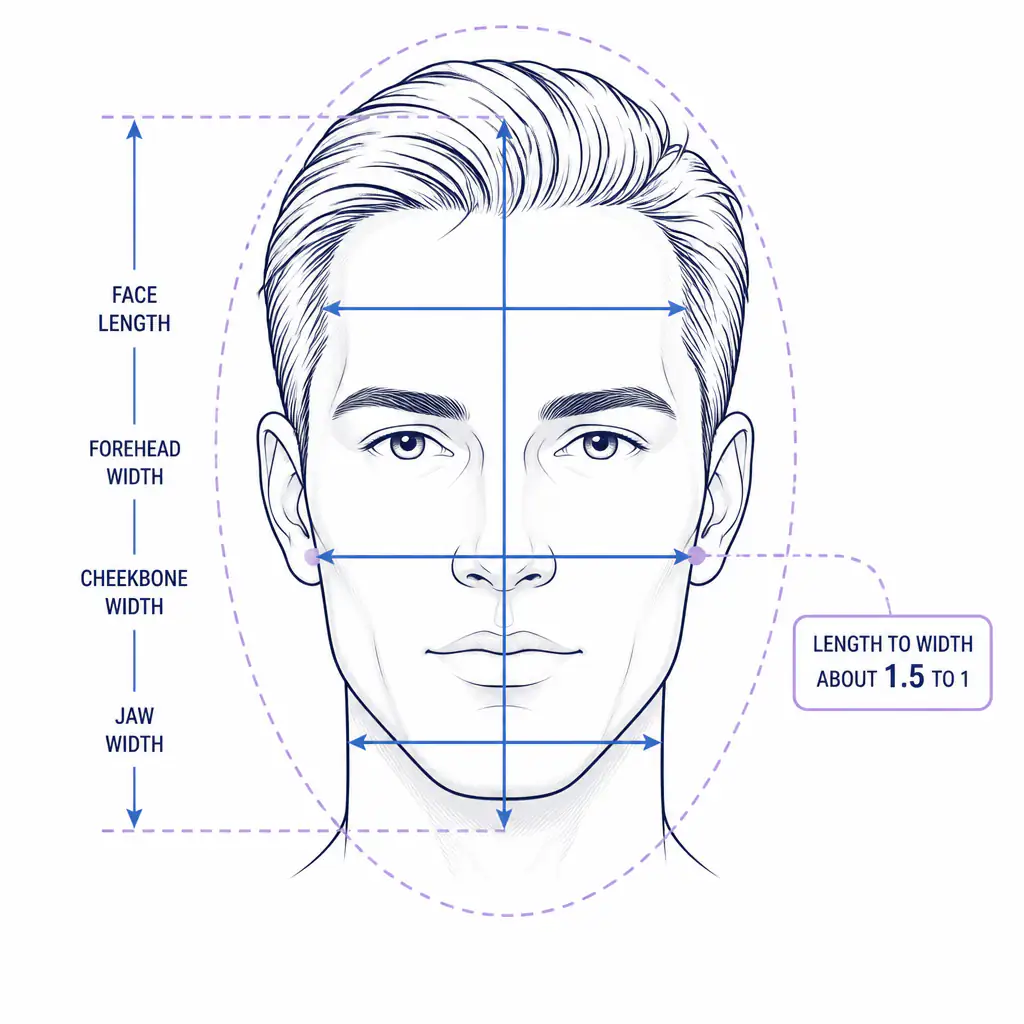
An oval face is defined by proportion, not by any single feature. The typical markers are:
- Face length is roughly 1.4 to 1.6 times the width at the cheekbones.
- Cheekbones are the widest point. The forehead is slightly narrower and the jaw is narrower still.
- The jawline tapers gently into a rounded chin rather than a sharp point or a flat, square edge.
- No single area dominates. The forehead, midface, and lower face read as roughly equal thirds.
A Quick Measurement Method
- Pull your hair fully back and face a mirror in even, frontal light.
- Measure face length from the center of your hairline to the bottom of your chin.
- Measure width across the cheekbones. These are the zygomatic arches, the bony ridges below the outer corners of your eyes.
- Measure forehead width at its widest point. Then measure jaw width from one jaw angle to the other. These corners are called the gonial angles.
- Divide length by cheekbone width. A result around 1.5, with the cheekbones as the widest measurement, points to oval.
Common Mix-Ups
The two shapes most often confused with oval are oblong and round. An oblong face has a similar taper, but its ratio is closer to 1.7 or higher. The forehead, cheekbones, and jaw are also nearly equal in width. A round face has a ratio near 1.0 to 1.2 and fuller cheeks.
The distinction matters. A tall quiff that looks sharp on an oval face can make an oblong face look stretched.
Tape measures and mirrors are imprecise, especially when you are measuring yourself. For a more objective read, Aura analyzes your facial proportions from a photo, including jawline definition and facial thirds. That gives you a clearer starting point before you commit to a new cut.
Why Oval Faces Suit So Many Haircuts
Most haircut advice for other face shapes is corrective. Round faces need height to add length. Square faces often benefit from softer texture. Oblong faces need side volume to add width. An oval face needs no correction, so the goal becomes preserving balance while showing off your best features.
Three principles guide nearly every good choice:
- Keep height moderate. Some lift on top is flattering. Too much height pushes your proportions toward oblong.
- Keep the sides controlled. Tight or tapered sides highlight the natural taper from cheekbones to jaw. Bulky sides can make the face read wider and rounder.
- Avoid hiding the forehead completely unless you have a reason to, such as a high forehead or a receding hairline. Your balanced proportions are an asset, and a heavy fringe covers a third of them.
The 10 Best Haircuts for Oval Face Men
Each cut below includes why it works, who it suits, and what to ask for.
1. Classic Taper With Side Part
This timeless option frames an oval face cleanly. The sides taper gradually from about a #2 or #3 guard near the ears to scissor length on top, with a defined part.
- Best for: straight to slightly wavy hair, medium to thick density
- Ask for: a medium taper, 2 to 3 inches on top, and a natural or lightly shaved part line
- Maintenance: a trim every 3 to 4 weeks
2. Textured Crop
The textured crop has a short, choppy top with a slight forward fringe, usually paired with a fade. The fringe sits high on the forehead, so it adds texture without hiding your proportions.
- Best for: thick straight or wavy hair, and men with a slightly high forehead
- Ask for: point-cut texture on top at 1 to 2 inches, a fringe cut at or above the brow line, and a mid or high fade
- Maintenance: every 2 to 4 weeks to keep the fade sharp
3. Quiff
The quiff brushes the front hair up and back. On an oval face, a moderate quiff adds polish and a little vertical interest without distorting your proportions.
- Best for: thick hair with some natural body
- Ask for: 3 to 4 inches at the front, graduating shorter toward the crown, with tapered or faded sides
- Styling tip: blow-dry upward and back, then use a matte clay. Aim for 1.5 to 2 inches of lift and stop there.
4. Crew Cut
The crew cut is short on the sides, slightly longer on top, and easy to live with. It shows your full face shape, which is exactly why it suits oval faces so well.
- Best for: almost every hair type, including fine hair
- Ask for: a #2 or #3 on the sides and about 1 inch on top, slightly longer at the front
- Maintenance: every 3 to 4 weeks
5. Buzz Cut
A buzz cut takes hair out of the equation. It only works if your head shape and facial proportions are balanced, and oval faces usually are. It also puts your jaw and cheekbones on full display, for better or worse.
- Best for: men with an even skull shape, clear skin, and a defined jawline, plus anyone with thinning hair who wants a clean look
- Ask for: a single guard all over (#2 to #4 is a safe range), or a slight fade at the sides for extra structure
6. Ivy League
The Ivy League is a longer crew cut with enough length on top to part and sweep to the side. It reads mature and professional and keeps the forehead partly visible.
- Best for: straight or wavy hair of medium density
- Ask for: 1.5 to 2.5 inches on top, tapered sides, and enough length at the front to part
- Styling tip: a light cream or low-shine pomade
7. Slick Back
The slick back combs hair straight back from the forehead. It looks sharp on oval faces because it fully exposes balanced proportions. Keep the sides tight so the look stays clean.
- Best for: straight or loosely wavy hair with 3 inches or more on top
- Ask for: an undercut or high taper on the sides, with length kept on top and through the crown
- Caution: if your hairline is receding at the temples, a slick back will highlight it
8. Medium-Length Flow
This style grows hair to roughly ear or collar length, swept back or to the side with natural movement. Oval faces carry length well because there is no excess width or length to offset.
- Best for: wavy or thick straight hair
- Ask for: layers to remove bulk, length kept around the ears, and light texturizing at the ends
- Maintenance: a trim every 6 to 8 weeks, mostly for shape
9. Curly Top With Taper
If your hair is naturally curly, let it do the work. A defined curly top with a taper or drop fade keeps volume on top where it belongs. It also stops the sides from puffing outward.
- Best for: curly and coily hair
- Ask for: curls shaped with scissors (ideally cut dry), a low or mid taper, and sides kept tight enough to avoid a rounded silhouette
- Styling tip: scrunch curl cream or leave-in conditioner into damp hair
10. Shoulder-Length Layered Hair
Long hair is a commitment, but an oval face is one of the best canvases for it. Layers are the key. Without them, long straight hair can drag the face downward and look flat.
- Best for: thick, wavy, or textured hair
- Ask for: face-framing layers starting around the cheekbones, with the ends kept light
- Maintenance: a trim every 8 to 10 weeks and a consistent conditioning routine
Matching the Cut to Your Hair Type
Face shape narrows your options. Hair type decides what actually works day to day.
| Hair type | Strongest options | What to avoid |
|---|---|---|
| Fine, straight | Crew cut, buzz cut, short textured crop | Long flat styles, tall quiffs that collapse by noon |
| Thick, straight | Quiff, slick back, side part, Ivy League | Leaving bulk at the sides |
| Wavy | Medium flow, textured crop, side part | Heavy product that kills natural movement |
| Curly | Curly top with taper, layered medium curls | Cutting curls short while wet, which can cause uneven shrinkage |
| Coily | Taper with a defined top, buzz cut, moderate high-top | Letting the sides grow wider than the top |
Density matters as much as texture. If you can easily see your scalp under bright light, favor shorter styles with texture. Length tends to make thin hair look thinner.
Adjusting for Your Specific Features
A face can be oval and still have features that shift the ideal cut. These are the most common adjustments.
High Forehead
A textured crop, or a soft fringe pushed slightly forward, reduces the visual height of the upper third. Avoid slick backs and big quiffs, which expose and extend it.
Receding or Thinning Hairline
Short cuts usually look better than trying to cover recession. A crew cut, textured crop, or buzz cut makes the hairline less of a focal point. If you are worried about ongoing hair loss, talk to a dermatologist before making long-term decisions.
Soft or Undefined Jawline
Tight sides and a bit of height draw the eye upward and create a sharper overall silhouette. A short, well-groomed beard may also help add structure to the lower face. Keep it fuller at the chin and tighter at the cheeks.
Strong, Defined Jawline
You can go shorter and cleaner. Buzz cuts, crew cuts, and slick backs put a strong jaw front and center.
Glasses
Thicker frames add visual weight to the midface. Pair them with slightly more volume on top so the frames do not dominate. Keep the sides neat where the arms of the glasses sit.
Cuts to Approach With Caution
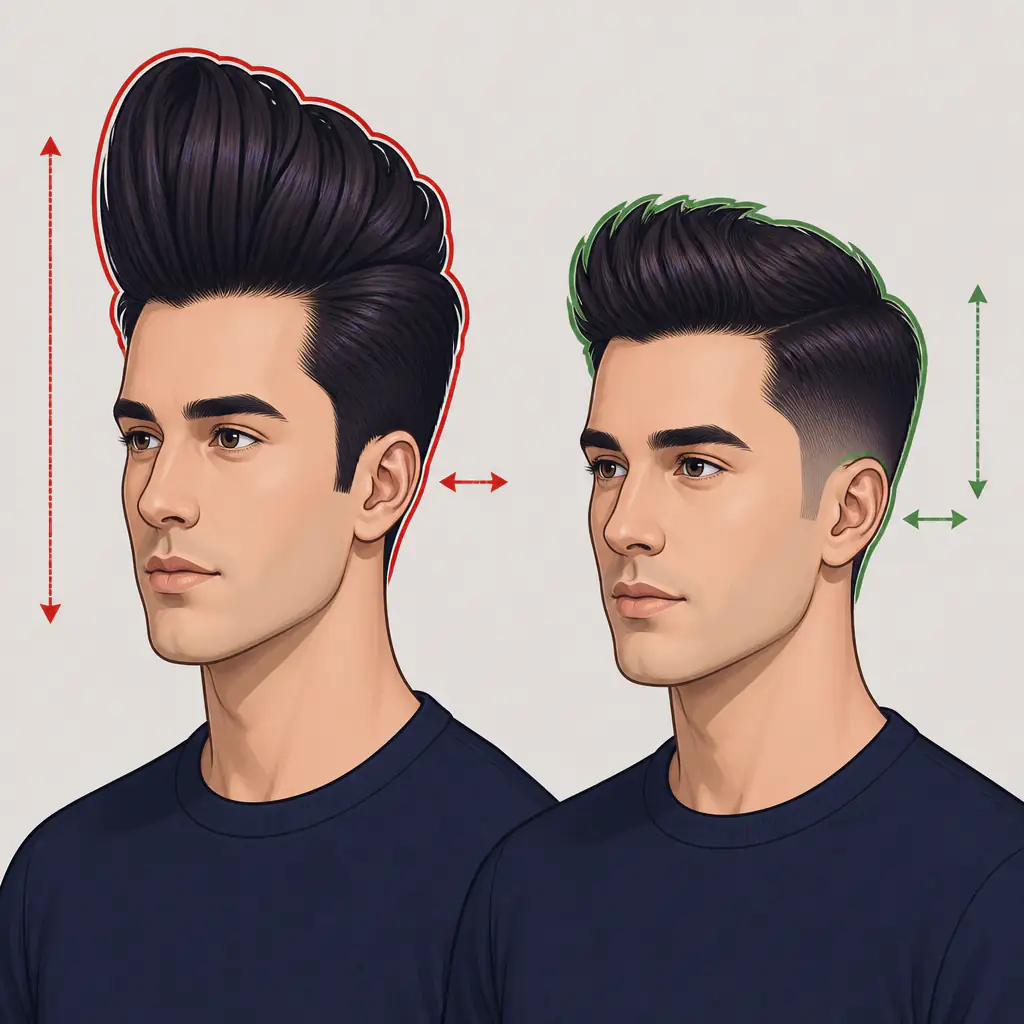
Oval faces handle most styles, but a few choices can work against you:
- Very tall pompadours. Several inches of height can push an oval face toward looking long and narrow.
- Heavy, blunt fringes. A thick fringe covering the whole forehead hides your proportions and can make the face look shorter and rounder.
- Wide, bulky sides. Too much volume at the temples and above the ears blurs the natural taper from cheekbones to jaw.
- Long, flat, unlayered hair. Without layers, long hair tends to hang and pull the face visually downward.
None of these are off-limits. They just need to be done in moderation.
How to Get the Cut You Actually Want
Most bad haircuts come from vague instructions, not bad barbers. These steps help you get consistent results.
- Bring two or three reference photos, ideally of men with hair texture similar to yours. A wavy cut on a model with thick straight hair will not translate.
- Use specific numbers. Ask for a #2 on the sides tapering up, about 2 inches on top instead of short on the sides.
- Clarify the fade or taper height. Low, mid, and high fades change the look dramatically.
- Explain how you style it. If you only spend two minutes on your hair, say so. Your barber can cut for low maintenance.
- Point out problem areas. Cowlicks, a thin crown, or temple recession all affect how the cut should be shaped.
- Photograph a cut you like from the front and side so you can show it next time.
It also helps to track how a new cut changes your overall look. Some users take before and after photos and run both through Aura to compare how the new style affects perceived facial balance and jawline definition. It is a simple way to judge a cut with fresher eyes than the barber’s mirror allows.
The Bottom Line
The best haircut for oval face men keeps your natural balance intact: moderate height, controlled sides, and enough forehead showing to let your proportions do the work. From there, let your hair type and specific features decide between a crop, a quiff, a slick back, or something longer. Start with a clean, easy-to-grow-out option like a taper side part or crew cut. See how it reads on you, then experiment from that solid baseline.
Frequently asked questions
Can men with oval faces wear any haircut? +
Oval faces suit more styles than any other shape, but not every cut works equally well. Very tall styles, heavy blunt fringes, and bulky sides can throw off your natural balance. Hair type and features like forehead height still matter.
Is a buzz cut good for an oval face? +
Usually, yes. Oval faces have balanced proportions, so a buzz cut tends to look clean and intentional. It works best if you have an even head shape and reasonable jaw definition, since nothing on top draws attention away from your face.
How do I tell if my face is oval or oblong? +
Divide your face length by your cheekbone width. Oval faces land around 1.5 with the cheekbones as the widest point. Oblong faces run closer to 1.7 or higher, with the forehead, cheekbones, and jaw nearly equal in width.
Should men with oval faces grow a beard? +
A beard is optional since oval faces do not need correction. A short, well-shaped beard may help add structure if your jawline is soft. If your jaw is already defined, stubble or a clean shave often shows it off better.
What is the lowest-maintenance haircut for an oval face? +
A crew cut or buzz cut is the easiest to maintain. Both need little to no styling and only a trim every 3 to 4 weeks. They also keep your balanced proportions fully visible.