 Aura: Looksmaxxing
Best Haircut for an Oblong Face: 8 Cuts, 1 to Skip
Eight cuts that add width and visually shorten a long face, the one style that makes it worse, plus beard pairings and a barber script.
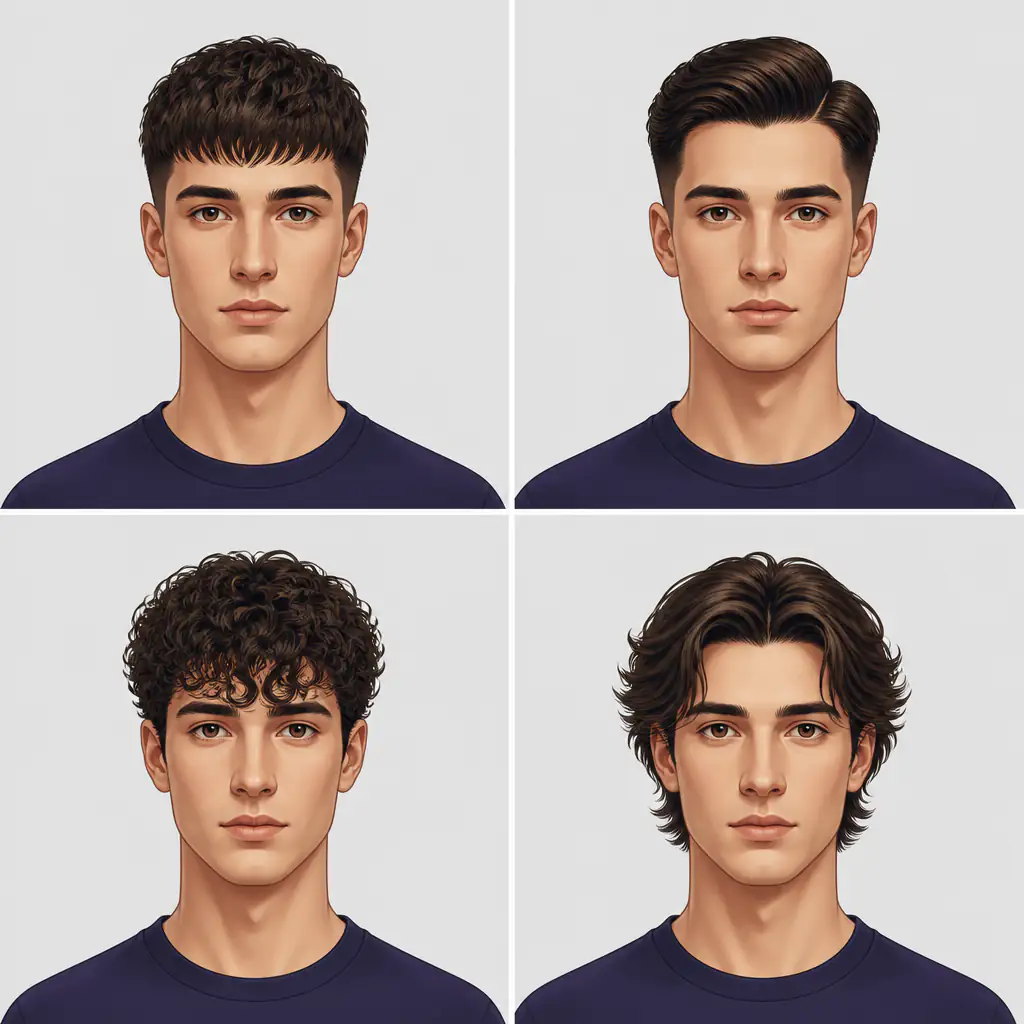
If your face looks long in photos, your forehead seems to take up half the frame, or a tall quiff makes your head look like an exclamation point, you probably have an oblong face shape. Oblong faces often come with strong structure: defined cheekbones, a straight jawline, and angles that photograph well. The challenge is proportion. The wrong haircut stretches your face even further. The right one makes it look balanced, slightly wider, and more masculine.
This guide covers which cuts work, which to avoid, and exactly what to tell your barber so you walk out with the result you wanted.
How to Tell If You Actually Have an Oblong Face
An oblong face (also called rectangular or long) is defined by length that clearly exceeds width, with the forehead, cheekbones, and jaw sitting at roughly similar widths. An oval face tapers gently toward the chin. An oblong face stays fairly straight down the sides.
The quick measurement test
- Pull your hair off your forehead and take a straight-on photo at eye level. Stand about 1.5 meters from the camera and zoom in slightly. Holding the phone at arm’s length distorts the face and makes the nose and midface look bigger.
- Measure face length from your hairline to the bottom of your chin.
- Measure bizygomatic width, the distance across the widest points of your cheekbones.
- Divide length by width.
As a rough guide, a ratio around 1.5 or higher, combined with fairly straight sides, points toward an oblong shape. Ovals tend to sit a bit lower and taper more at the jaw.
Common oblong features
- A tall forehead or high hairline
- A long midface or lower third, often with a longer chin
- Cheeks that drop straight down with little taper
- Jaw width close to cheekbone width
Self-measuring is easy to get wrong, especially with a receding hairline that makes the forehead look taller than it is. If you want an objective baseline, Aura analyzes facial proportions from a photo, including facial thirds and jawline, which can confirm whether length is really your dominant feature before you commit to a new cut.
The Core Principle: Add Width, Control Height
Every good haircut for an oblong face follows the same logic. Your face already reads as long, so the haircut should work against that, not with it.
- Keep height on top low to moderate. Every centimeter of vertical volume adds visual length to your head.
- Keep some fullness on the sides. Tight skin fades strip width from the temples, which makes the face look narrower and therefore longer.
- Use the forehead. A fringe, even a short one, breaks the vertical line and reduces how much face is visible.
- Favor horizontal lines and outward texture. Side parts, layered sides, and hair that moves sideways rather than straight up all add perceived width.
Think of it as framing. You are building a wider, shorter frame around a long picture.
The 8 Best Haircuts for Oblong Face Men
1. Textured French Crop
The French crop is short on the sides with a longer, textured top pushed forward into a short fringe. It is probably the single most reliable choice for an oblong face because it does two things at once: it covers part of the forehead and it keeps the top flat.
Ask for: a low or mid taper, 3 to 6 cm on top, point-cut texture, and a fringe that sits about a third of the way down the forehead. Keep the fringe slightly uneven so it looks natural rather than blunt.
2. Caesar Cut
The Caesar is a short, even-length cut with a straight horizontal fringe. That horizontal line across the forehead is exactly what a long face needs. It suits men with straight or wavy hair and is very low maintenance.
Ask for: scissor or clipper length around 2 to 3 cm on top, brushed forward, with sides no shorter than a #3 guard. Avoid pairing it with a high skin fade.
3. Classic Side Part with a Low Taper
A side part creates a diagonal and horizontal line that pulls the eye across the face instead of up and down it. It is a strong option for professional settings and for men whose hairline would make a fringe look awkward.
Ask for: 5 to 8 cm on top, a natural part (not a shaved hard part), and a low scissor taper so the sides keep some bulk. Style it flat and to the side, not swept upward.
4. Ivy League
The Ivy League is a longer crew cut with enough length at the front to part or push slightly sideways. It looks clean and masculine without adding height.
Ask for: a crew cut with 3 to 5 cm at the front, graduating shorter toward the crown, and sides at a #3 or #4. Style with a light matte product pushed to the side.
5. Modern Curtains
A soft middle or off-center part with the front pieces falling toward the temples can work well, as long as the hair has texture and some sideways movement. The fringe pieces cover the outer forehead and add width at the temples.
Ask for: 8 to 12 cm on top, layered so the front pieces curve outward, with medium-length sides tucked or blended rather than faded tight. Avoid this if your hair is very fine and lies completely flat.
6. Medium Textured Flow
Hair that reaches roughly ear length and flows back and to the sides adds a lot of width around the face. The key is texture and lift at the sides rather than at the crown.
Ask for: layers throughout, length kept around the ears, and weight left at the sides. Use sea salt spray and blow-dry the hair sideways and slightly back.
7. Shoulder-Length Layers
Longer hair can suit an oblong face if it is layered to create volume around the cheekbones and jaw. Long, one-length straight hair does the opposite and drags the face down.
Ask for: face-framing layers starting around cheekbone level, plus a side part. Wavy or thick hair handles this style best.
8. Curly Fringe with a Low Taper
Curly hair is a natural advantage for oblong faces because curls expand outward. A curly fringe falling onto the forehead with a low taper on the sides is one of the most balanced looks you can get.
Ask for: curls shaped (ideally cut dry) to stay rounded rather than tall, a fringe left long enough to fall forward, and a low taper that keeps volume above the ears.
Haircuts to Avoid (or Modify)
Some popular styles work against an oblong face. You do not have to rule them out completely, but know what they do.
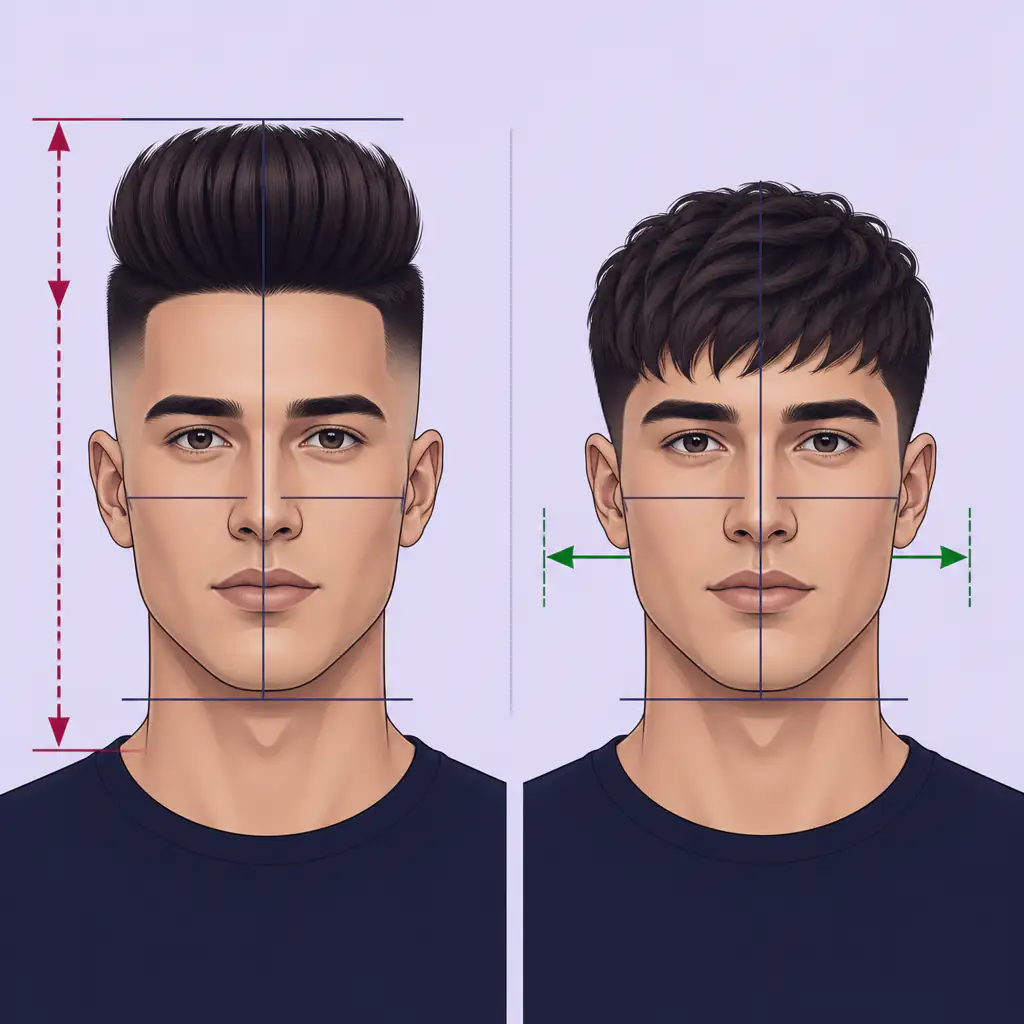
- Tall pompadours and high quiffs. Vertical volume is the fastest way to add length. If you love the look, keep it under 3 to 4 cm of lift.
- Faux hawks and mohawks. These concentrate height in a narrow strip, which elongates the head and narrows the sides.
- High skin fades with a long top. The contrast between bare sides and a tall top exaggerates length. A low taper is almost always the better call.
- Slicked-back undercuts. Exposing the full forehead while tightening the sides is the opposite of what your proportions need.
- Long, flat, one-length hair with a center part. Straight vertical curtains frame the face like two long lines.
- Very short buzz cuts. A buzz shows your head shape exactly as it is. It can work if you have a strong jaw and pair it with a beard that adds width, but it does nothing to balance length.
How to Ask Your Barber for the Right Cut
Vague requests like a short back and sides leave too much to interpretation. Use specific language.
- Bring two or three reference photos of men with similar hair texture, not just similar styles.
- Say the goal out loud: “My face is long, so I want to keep width on the sides and avoid height on top.” A good barber will adjust the cut around that.
- Specify the fade height. Ask for a low taper or a scissor-cut side. If you want clippers, say no shorter than a #3 above the ears.
- Talk about the fringe. Say where you want it to land on your forehead, for example just above the brows or a third of the way down.
- Ask for texture, not bulk. Point cutting or texturizing keeps the top from puffing up into a tall shape.
- Ask how to style it. Have the barber show you the direction to blow-dry and how much product to use.
Beard Strategy for Oblong Faces
Facial hair can either fix proportions or make them worse. The rule mirrors the haircut: add width at the sides, avoid length at the chin.
- Best options: short boxed beard, heavy stubble (3 to 6 mm), or a medium beard kept fuller on the cheeks and jaw angle.
- Keep the chin short. Trim the chin area one or two guard lengths shorter than the sides.
- Avoid: long pointed beards, goatees, and chin straps that extend downward. They add length to the lower third.
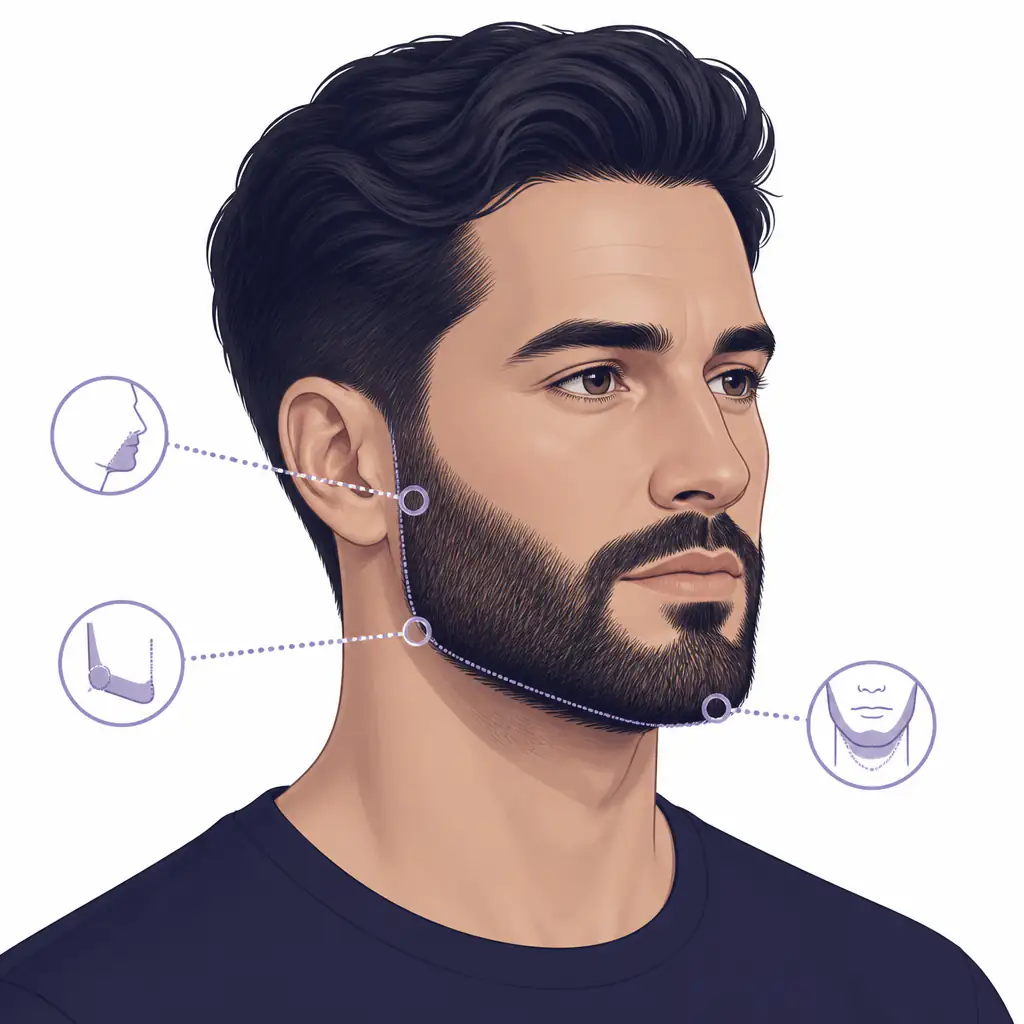
- Watch the cheek line. A low, natural cheek line usually looks better than a sharp, high one on a long face because it keeps more width.
A well-shaped beard can also visually widen the jaw at the gonial angle, the corner where the jawline turns upward toward the ear. This helps an oblong face look more square and grounded.
Styling Tips by Hair Type
Straight hair
Straight hair tends to lie flat and vertical, which is the least helpful direction for a long face. Use a pre-styler like sea salt spray, blow-dry the hair sideways and forward, and finish with a matte clay. Texturized cuts like the French crop and Caesar suit straight hair well.
Wavy hair
Wavy hair is very forgiving. Let the waves do the work, use a light cream, and avoid brushing it straight up. Medium textured flows and curtains are strong choices.
Curly or coily hair
Keep the shape rounded rather than tall. Ask your barber to remove weight from the top rather than the sides, and moisturize so curls clump outward. A tapered cut with a defined top in a short, rounded shape works far better than a high top.
Thinning hair or receding hairline
A receding hairline makes an oblong face look even longer because it raises the visible forehead. A short textured crop with a forward fringe is usually the best option because it hides the temples and lowers the visible hairline. Avoid growing the top long to compensate, since thin long hair separates and shows scalp. If you are considering medical treatment for hair loss, talk to a qualified professional before considering this.
Practical Tips That Make the Cut Work
- Product choice matters. Matte clays and pastes hold shape without adding shine or height. Heavy pomades encourage slick, tall styles.
- Blow-dry with intent. Ninety seconds of directional drying, sideways and forward, does more than any product.
- Trim every 3 to 5 weeks. Short styles lose their shape fast, and the sides usually grow out unevenly first.
- Choose wider glasses frames. Frames that are wider than they are tall, or with a strong brow line, add horizontal emphasis.
- Grow your sides a little. If you have worn high fades for years, letting the sides grow out by even a few millimeters can noticeably change your proportions.
- Compare under consistent conditions. Take photos from the same distance, lighting, and angle before and after a new cut. Some users run those photos through Aura to see how changes in framing affect perceived facial balance, which takes some of the guesswork out of choosing between two styles.
The best haircut for an oblong face is not one specific style. It is any cut that keeps the top controlled, leaves weight at the sides, and uses the fringe or part to break up vertical lines. Start with a French crop or side part if you are unsure, then adjust based on how your hair behaves and how the result looks in honest photos.
Frequently asked questions
What is the best haircut for an oblong face for men? +
A textured French crop is the most reliable choice because it keeps the top flat and uses a fringe to shorten the visible forehead. A side part with a low taper and a Caesar cut are also strong options. The common thread is low height on top and some fullness on the sides.
Should men with oblong faces get a fade? +
Yes, but keep it low. A low taper or scissor-cut sides keeps width around the temples, while a high skin fade removes that width and makes the face look longer. If you use clippers, staying at a
Do bangs or a fringe suit an oblong face? +
A fringe is one of the most effective tools for an oblong face because it breaks the vertical line and covers part of a tall forehead. Textured, slightly uneven fringes tend to look more natural than heavy blunt ones. Aim for it to land somewhere between the middle of the forehead and just above the brows.
Can long hair work for men with an oblong face? +
It can, as long as it is layered to add volume around the cheekbones and jaw. Long, one-length straight hair with a center part tends to drag the face down and exaggerate length. Wavy or thick hair handles longer layered styles best.
What beard style is best for an oblong face? +
Heavy stubble or a short boxed beard that stays fuller on the cheeks and jaw angle works best. Keep the chin trimmed shorter than the sides so the beard adds width instead of length. Avoid long pointed beards and goatees.