 Aura: Looksmaxxing
Best Haircut for a Triangle Face: 9 That Work
Nine cuts that add width up top to balance a heavy jaw, the styles that make the imbalance sharper, and barber wording that gets it right.
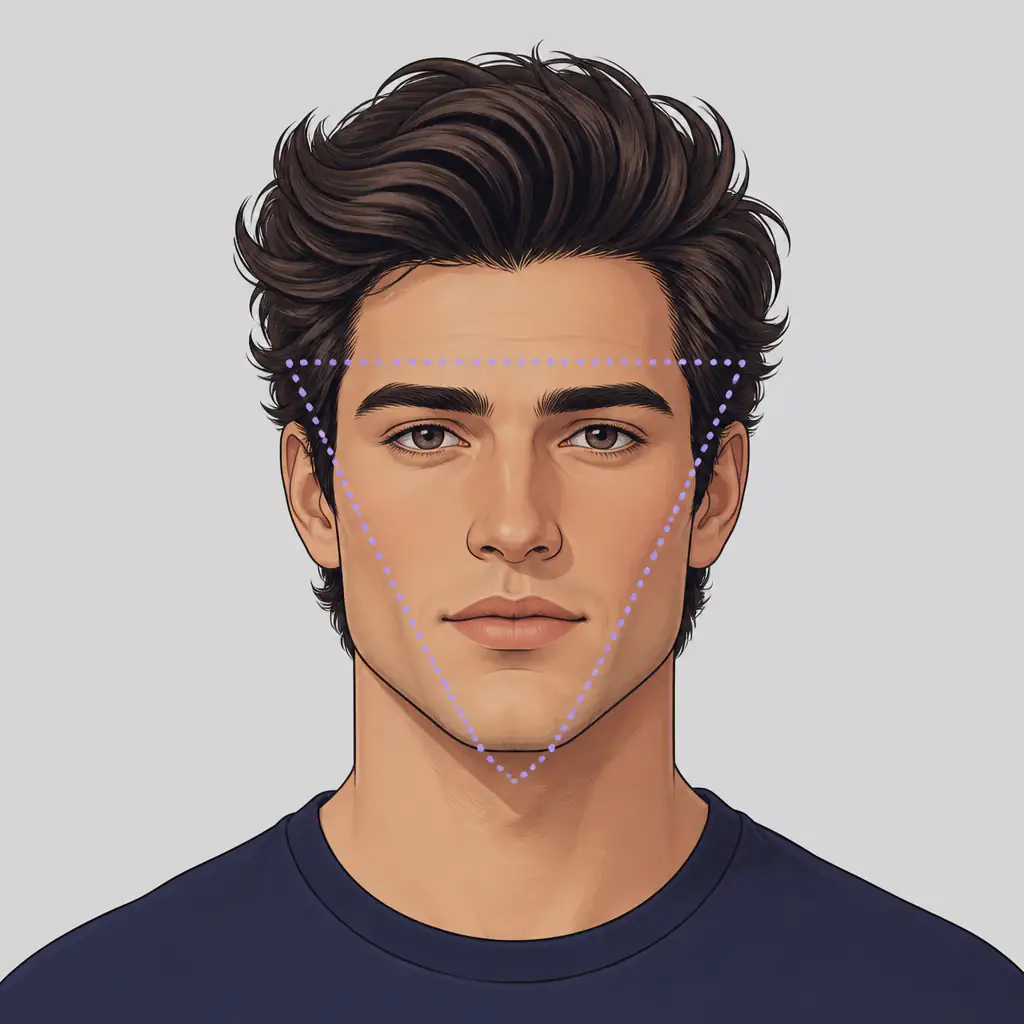
If your jaw is the widest part of your face and your forehead is noticeably narrower, a lot of generic haircut advice will steer you wrong. A tight skin fade with a short top looks sharp on an oval face. On a triangle face, it can make your jaw look heavier and your head look like it tapers to a point.
The good news is that a triangle face is one of the easiest shapes to balance with hair. You already have a strong lower third, which is a genuine asset. Your haircut only needs to build up the upper third so the whole face reads as proportional. This guide covers how to confirm your face shape, the specific cuts that work, what to avoid, and how to explain it all to your barber.
What a Triangle Face Shape Actually Looks Like
A triangle face, sometimes called a pear-shaped face, has three defining traits:
- Wide jawline. The mandible (lower jaw bone), especially around the gonial angle where the jaw turns upward toward the ear, sits wider than the cheekbones.
- Narrower forehead. The temples and upper forehead measure noticeably less across than the jaw.
- Cheekbones in the middle. The zygomatic arches (your cheekbones) are wider than the forehead but narrower than the jaw.
The overall silhouette widens as it moves down the face. It is less common than oval or square shapes, which is one reason good advice for it is hard to find.
Triangle vs. inverted triangle
These two get confused constantly, and the advice for each is nearly opposite. An inverted triangle (often grouped with heart-shaped faces) has a wide forehead and a narrow, sometimes pointed chin. If that sounds like you, the goal is to reduce width up top and add visual weight lower down, often with a beard. Everything in this article assumes the standard triangle: wide jaw, narrow forehead.
How to check your own face shape
Mirrors and close-up selfies are unreliable because phone lenses distort features at short distances, often making the nose and jaw look larger. Use this process instead:
- Pull your hair fully back off your forehead and temples.
- Have someone take a straight-on photo at eye level from about 1.5 to 2 meters away, then crop in.
- Compare three widths: forehead (temple to temple), cheekbones (widest point of the face), and jaw (gonial angle to gonial angle).
- If the jaw is clearly the widest and the forehead is clearly the narrowest, you have a triangle face.
If you want an objective read rather than eyeballing a photo, Aura runs a facial analysis that includes jawline assessment and facial proportions. That can help you confirm whether your jaw really is the dominant feature before you commit to a new cut.
The Core Principle: Build the Upper Third
Faces are often assessed in facial thirds: hairline to brow, brow to the base of the nose, and nose to chin. On a triangle face, the lower third carries most of the visual width. Hair is the only tool that can add mass to the upper third without changing anything else.
Every good haircut for this face shape follows three rules:
- Add volume and height on top. Lift at the crown and front visually extends the upper face.
- Keep some fullness at the temples. This is the most overlooked rule. Hair that sits slightly wider at temple level counteracts the narrow forehead directly.
- Keep weight away from the jawline. Hair that ends at or near the jaw draws attention to the widest point and makes it look wider still.
Think of it as reshaping the silhouette from a triangle toward an oval. You are not hiding your jaw. You are giving it a counterweight.
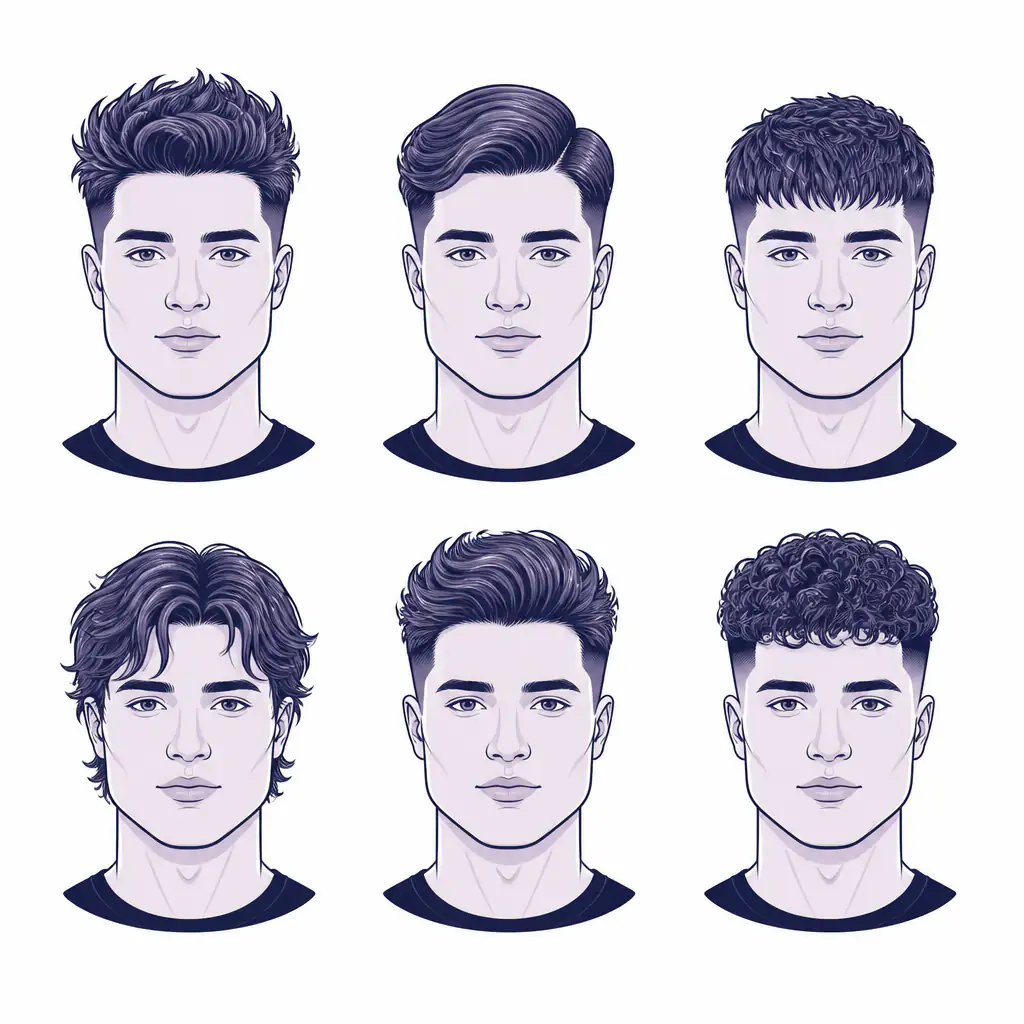
9 Best Haircuts for Triangle Face Men
All of these follow the three rules above. The right choice depends on your hair texture, density, and how much time you want to spend styling.
1. Textured Quiff
The top is left around 6 to 10 cm and styled up and slightly back, with texture rather than a sleek finish. The sides are kept at a medium length, not shaved.
- Why it works: Height at the front adds length to the upper third, and the messy texture creates width.
- Best for: Straight to wavy hair with medium or high density.
2. Side Part with Medium Sides
A classic side part, but with the sides cut using scissors or a longer clipper guard so they lie flat without showing scalp. A soft lift at the front keeps it from looking flat.
- Why it works: The part creates a horizontal line across the upper head, and the fuller sides widen the temple area.
- Best for: Professional settings and men with straight hair.
3. Textured Crop with a Loose Fringe
Short to medium length on top, cut with a lot of texture and pushed forward into a loose, uneven fringe. Avoid a blunt, heavy line across the forehead.
- Why it works: A broken-up fringe spreads across the forehead, making it read as wider. It also shortens a tall forehead if you have one.
- Best for: Thick hair, cowlicks, or receding temples.
4. Messy Medium-Length Layers
Hair grown out to roughly 8 to 12 cm all over, with layers cut through it so it moves and stacks rather than lying flat.
- Why it works: Layers build width high on the head. The overall length stops well above the jaw.
- Best for: Wavy hair and men who prefer a low-maintenance, relaxed look.
5. Modern Soft Pompadour
A pompadour with volume swept up and back, but softer and less glossy than the traditional version. The sides should be tapered gently, not faded to skin.
- Why it works: Maximum height at the front is a direct counterweight to a heavy jaw.
- Best for: Thick, straight hair and men willing to blow-dry.
6. Brushed-Up Low Taper
A shorter, cleaner option. The top is around 5 to 7 cm and brushed upward, and the sides use a low taper that only gets short near the ears and neckline.
- Why it works: You get a tidy look without stripping width from the temples.
- Best for: Men who want something neat and easy.
7. Curly Top with Low Taper
If you have curly or coily hair, let the top grow and keep it shaped round and full, paired with a low taper on the sides.
- Why it works: Natural curl creates width and height without any product, rounding out the top of the silhouette.
- Best for: Type 3 and type 4 curl patterns.
8. Swept-Back Flow
Longer hair, roughly ear length, swept back with some lift at the roots. The ends should finish around the ears or upper neck, not at the jawline.
- Why it works: The volume across the top and the sweep at the temples broaden the upper face.
- Best for: Thick, wavy hair and men comfortable with longer styles.
9. Ivy League with a Longer Top
A cleaner, more conservative cut where the front is left a little longer than usual and pushed up and to the side.
- Why it works: It keeps a polished outline while still adding height and some side volume.
- Best for: Office environments and fine to medium hair.
Haircuts to Avoid (or Modify)
Some popular styles work against a triangle face. You do not have to rule them out entirely, but understand what they do.
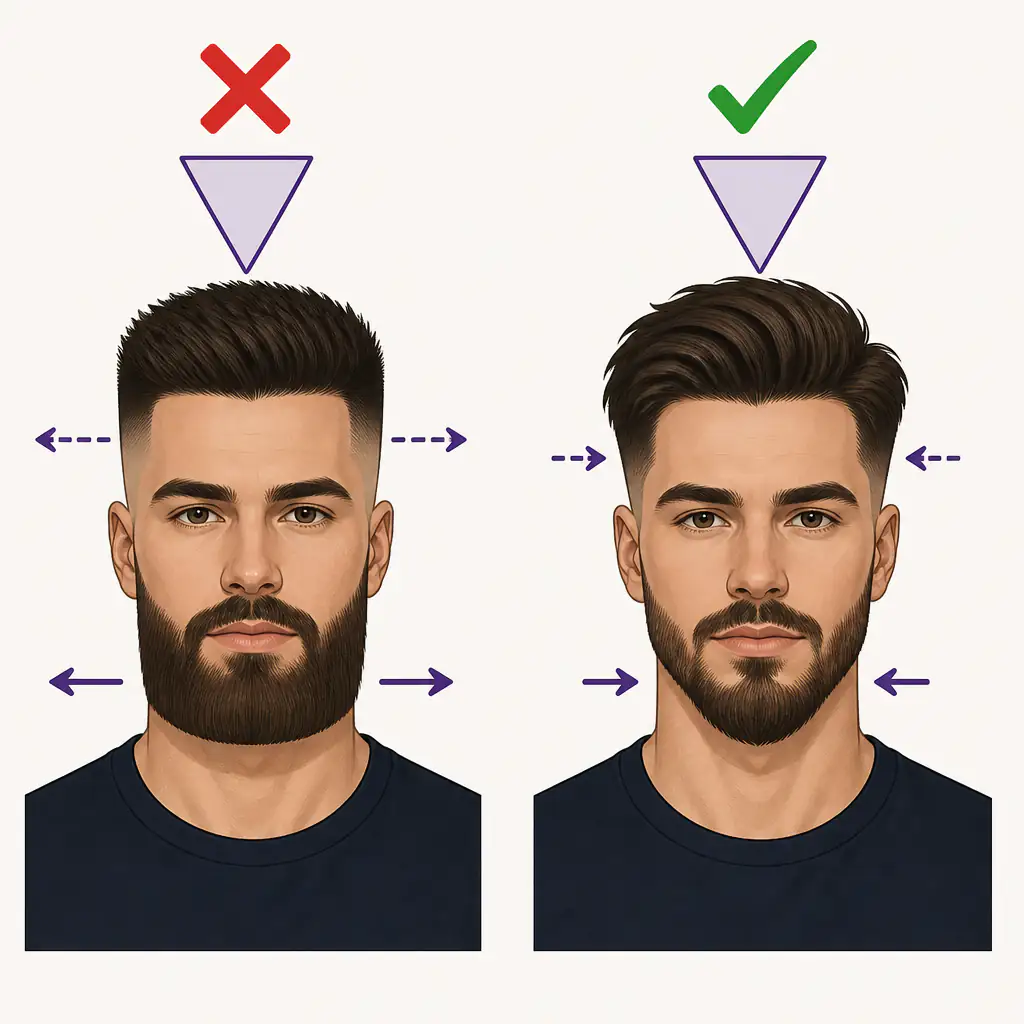
- Buzz cuts. With no hair on top, the head shape is fully exposed and the jaw becomes the dominant feature. A buzz can work if your jaw is only mildly wider, but it rarely flatters a true triangle.
- High skin fades with a short top. Shaving the sides high narrows the upper head even more, which exaggerates the triangle.
- Tall top with skin-tight sides. This is a common mistake. Lots of height with zero side width can create a cone effect, where the head looks pointed.
- Flat, slicked-down styles. Wet-look gel pressed against the scalp removes the volume you need.
- Hair that ends at the jaw. Chin-length or jaw-length cuts place a horizontal line right at your widest point.
- Flat center parts on long hair. Long hair falling straight down from a center part frames the jaw like curtains and adds width at the bottom.
Fades and Sides: Choosing the Right Length
The sides are where most triangle-face haircuts succeed or fail. Here is how the main options compare:
| Side style | Effect on a triangle face | Verdict |
|---|---|---|
| High skin fade | Narrows temples, emphasizes jaw | Avoid |
| Mid fade | Moderate narrowing | Use cautiously |
| Low taper | Clean neckline, keeps temple width | Recommended |
| Scissor cut sides | Natural fullness, softest outline | Recommended |
| Clipper #3 or #4 all over sides | Even width, low maintenance | Recommended |
A useful rule: the shortest part of your sides should sit below the temple line. Ask your barber to keep the hair above the ears and at the temples longer, and blend down from there. If you like the look of a fade, a low or drop fade that hugs the hairline behind the ear keeps the clean finish without stripping away width.
Beard and Facial Hair for a Triangle Face
Facial hair changes the shape of your lower third as much as a haircut changes the upper third, so it is worth planning both together.
What works
- Short sides, slightly longer chin. Keep the beard tight along the cheeks and jaw angles, and leave a little more length at the chin. This draws the eye downward and lengthens the face rather than widening it.
- Light stubble. A few millimeters adds definition without adding bulk.
- Clean shave. Many men with triangle faces have naturally defined jaws. If your haircut is doing the balancing work, a clean shave can look sharp.
- Mustache or goatee styles. These add visual weight to the center of the face rather than the sides.
What to avoid
- Full, boxy beards that extend outward at the jaw angles.
- Mutton chops or wide sideburns that run down to the jaw.
- Heavy beards paired with very short hair, which shifts the face’s visual center even lower.
If you grow a beard, ask your barber to shape the cheek line slightly low and keep the outline narrow at the jaw corners.
How to Talk to Your Barber
Vague requests like “short on the sides, longer on top” often end with a high fade you did not want. Be specific:
- Bring two or three reference photos of men with similar hair texture and a style from the list above.
- Name your face shape and goal. Say something like: “My jaw is wider than my forehead, so I want volume on top and to keep some width at the temples.”
- Specify the side length. Request a low taper or a specific guard, such as a #3 or #4, and say you do not want skin showing above the ears.
- Ask for texture on top. Point cutting or texturizing helps the hair stand up and spread instead of lying flat.
- Confirm where the length stops. For longer styles, make it clear the hair should finish above or around the ears, not at the jaw.
- Ask how to style it. A good barber will show you the direction to blow-dry and how much product to use.
Styling Tips That Make the Cut Work
Even the right haircut can fall flat without basic styling. These habits make the biggest difference:
- Use a blow dryer. Drying the top upward and the temples slightly outward on low heat builds volume that lasts all day. This is the single most effective step.
- Apply a pre-styler. Sea salt spray or a light volumizing mousse on damp hair gives grip and lift.
- Choose matte products. Clay, paste, or texture powder hold volume without weighing hair down. Heavy gels and pomades tend to flatten it.
- Style with your fingers. Raking product through creates a broken, textured finish that reads as wider.
- Trim every 3 to 5 weeks. Once the sides grow out to the jaw region, the balance shifts. Regular trims keep the proportions where you want them.
- Consider your glasses. If you wear them, frames with a stronger top line, such as browline or aviator styles, add width to the upper face the same way your hair does.
Take a front-facing photo before your cut and another a week after, under the same lighting and distance. Running both through Aura gives you a consistent way to compare how your proportions read, instead of relying on how you feel about it in a bathroom mirror.
The Bottom Line
The best haircut for triangle face men is any style that adds height on top, keeps some fullness at the temples, and keeps weight away from the jaw. Textured quiffs, side parts with medium sides, loose fringes, and layered medium-length cuts all do this well. Avoid high skin fades and anything that ends at your jawline. Pair the cut with a beard that stays narrow at the sides, style with a blow dryer and a matte product, and your strong jaw becomes a feature rather than the only thing people notice.
Frequently asked questions
What is the best haircut for a triangle face shape in men? +
The best options add volume on top and keep some width at the temples, such as a textured quiff, a side part with medium-length sides, or messy layered medium hair. These build up the narrower upper face so it balances the wider jaw.
Should men with a triangle face get a fade? +
A low taper or low fade usually works well because it keeps the neckline clean while preserving width at the temples. High skin fades tend to narrow the upper head and make the jaw look even wider, so they are best avoided.
Is a beard good for a triangle face? +
It can be, as long as it stays short and tight along the cheeks and jaw angles. Leaving slightly more length at the chin may help lengthen the face, while full, boxy beards tend to exaggerate jaw width.
What is the difference between a triangle and an inverted triangle face? +
A triangle face has a wide jaw and a narrow forehead, while an inverted triangle has a wide forehead and a narrow chin. The haircut advice is nearly opposite, so it is worth confirming your shape with a straight-on photo or a facial analysis tool before choosing a cut.
Can men with a triangle face wear long hair? +
Yes, as long as the length finishes around the ears or upper neck rather than at the jawline. Swept-back or layered longer styles with volume at the roots work well, while flat center-parted long hair tends to widen the lower face.