 Aura: Looksmaxxing
Best Haircut for a Square Face: 9 That Suit It
Nine cuts that work with a strong jaw rather than competing with it, the styles that flatten the look, and how to ask for it clearly.
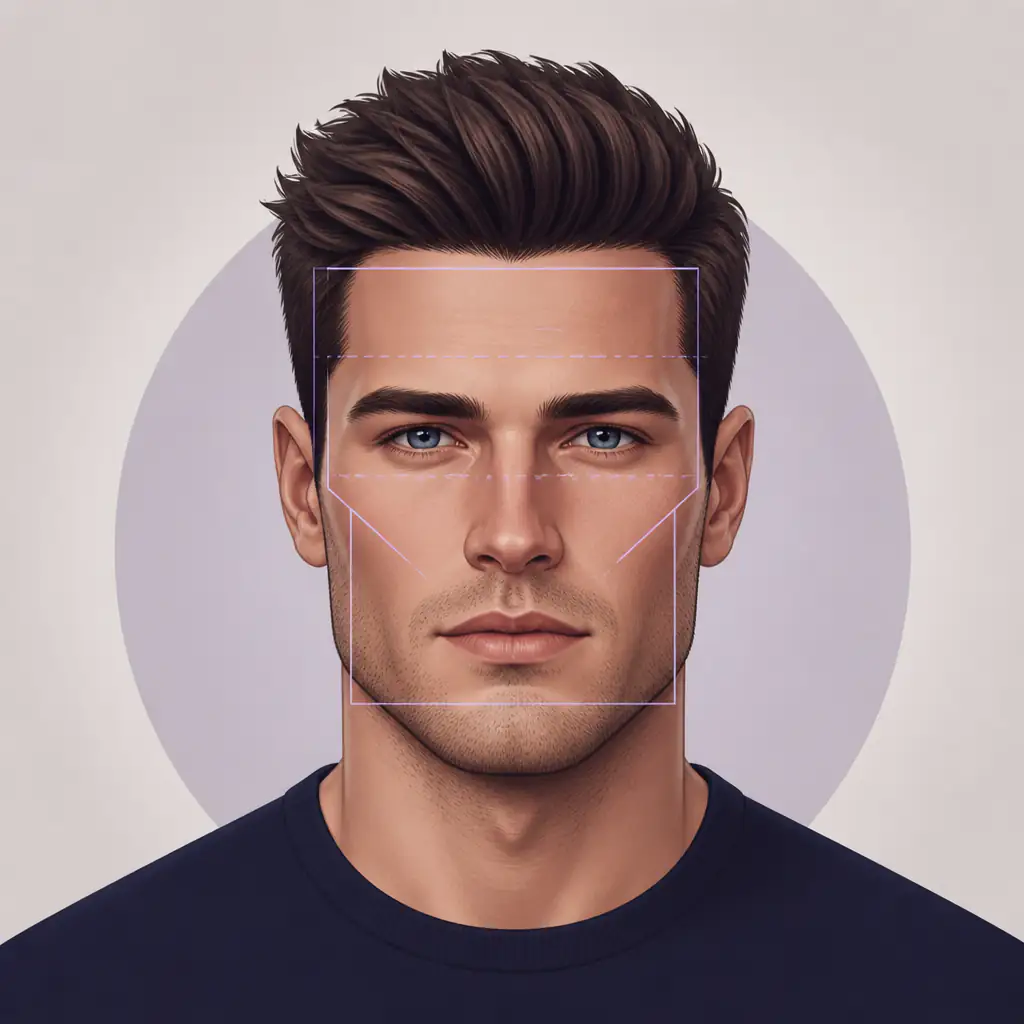
A square face is one of the easiest shapes to style well. You already have the feature many men want: a strong, defined jaw. A haircut does not need to fix anything. Its job is to frame that structure, add a little vertical balance, and avoid the few styles that make a strong face look blocky or heavy.
This guide covers how to confirm you actually have a square face, which cuts consistently work, which ones need adjustment, and how to explain what you want to a barber so you walk out with the right result.
How to Tell If You Have a Square Face
Face shape gets misjudged constantly. Plenty of men with oval or rectangular faces call themselves square because they have a decent jawline. Before you pick a cut, check the proportions.
A square face usually has:
- Similar widths across three zones. Forehead width, cheekbone width (the bizygomatic width, measured across the widest points of the cheekbones), and jaw width (the bigonial width, measured between the two angles of the jaw) are close to equal.
- A sharp jaw angle. The gonial angle is the corner where the lower edge of the jaw turns upward toward the ear. On a square face, this corner looks defined rather than rounded.
- Face length close to face width. If your face is noticeably longer than it is wide, you are more likely rectangular (sometimes called oblong).
- A straighter hairline. Many square faces have a flatter, more horizontal hairline rather than a rounded one.
Quick self-check
- Pull your hair fully back and stand in front of a mirror with even, front-facing light.
- Take a straight-on photo at eye level, not from below or above.
- Compare forehead, cheekbone, and jaw width. Then compare total length (hairline to chin) to width at the cheekbones.
If the three widths are close and length is only slightly greater than width, you are working with a square shape. If you want a more objective read than a bathroom mirror, Aura runs a facial analysis that includes jawline assessment and facial proportions. That can help confirm whether your jaw is actually the dominant feature before you plan a cut around it.
The Core Principle: Frame the Jaw, Add Height
Square faces tend to look best when the haircut does two things:
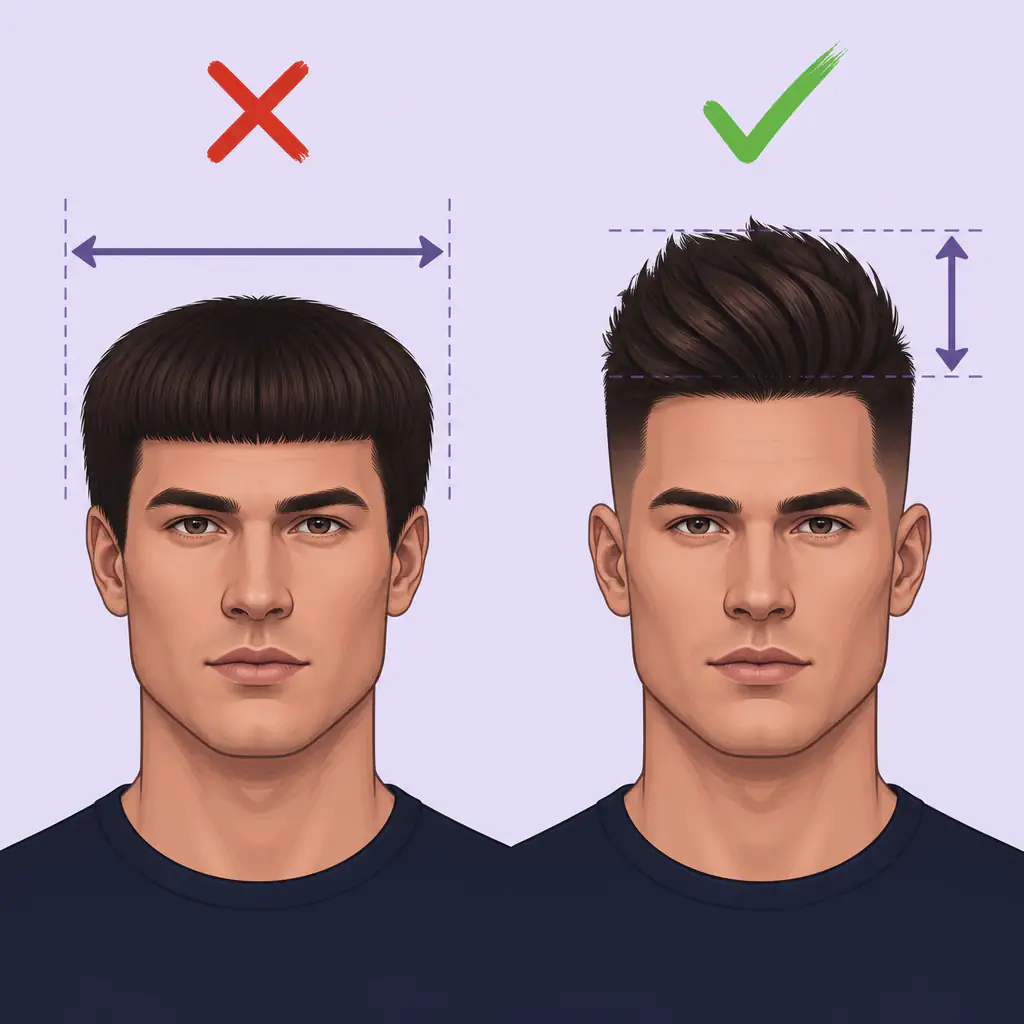
- Adds some vertical length. Volume or texture on top elongates the face slightly, moving the overall shape toward the oval proportions that usually read as balanced.
- Keeps width off the sides. Bulky sides stack horizontal width on a face that is already wide at the jaw and forehead. Shorter or tapered sides keep the silhouette clean.
There is also an optional third goal: softening. Some men want to lean into the angular look for a sharper, more masculine impression. Others prefer to soften it with texture and movement. Neither is wrong.
- Structured, clean cuts amplify the angles.
- Messy, textured cuts soften them.
Decide which direction you want before you sit in the chair. It makes every other choice easier.
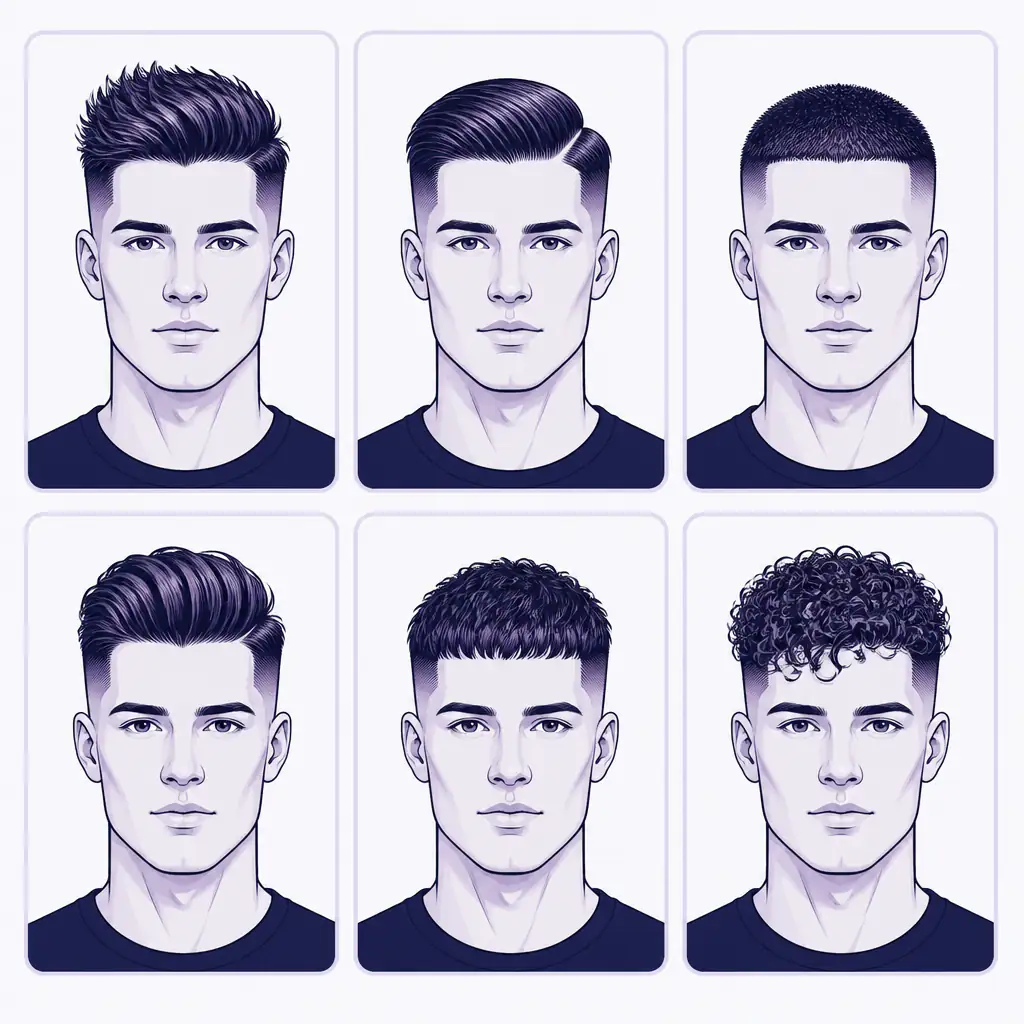
The 9 Best Haircuts for Square Face Men
1. Textured Quiff
The quiff is one of the most reliable options. Length on top (roughly 3 to 5 inches) is pushed up and slightly back, with tapered or faded sides. The height elongates the face, and the texture keeps it from looking stiff. Use a matte clay or paste rather than gel for a natural finish.
Best for: straight to wavy hair with medium to high density.
2. Classic Side Part
A side part with short to medium sides is clean and works in almost any setting. The asymmetry of the part subtly breaks up the symmetry of a square face. Ask for a soft natural part rather than a hard shaved line if you want a less severe look.
Best for: professional settings, straight hair, low daily effort.
3. Crew Cut
Short on the sides with slightly longer hair on top, tapering from front to back. A square face has enough built-in structure to carry a short cut without looking plain, and the small amount of length at the front adds just enough height.
Best for: low maintenance, active lifestyles, thick hair.
4. Buzz Cut
A buzz cut puts all the focus on bone structure. On a square face with a defined jaw, that can be a strong look. The tradeoff is that nothing adds height, so your face shape is fully exposed. A slightly longer guard on top (for example, a #3 on top with a #1 or fade on the sides) adds a touch of shape.
Best for: men confident in their head shape, thinning hair, hot climates.
5. Modern Pompadour
Volume swept up and back with tight sides, often paired with a fade. It adds the most height of any cut on this list, which makes it a good match for square faces on the shorter side. Skip it if your face is already long, since it can over-elongate.
Best for: thick hair, men willing to blow-dry and style daily.
6. Textured French Crop
A crop with a short fringe and a high fade is popular, but it needs care on a square face. A blunt, heavy fringe draws a horizontal line across the forehead. The fix is to ask for a textured, choppy fringe that sits slightly uneven, and to keep some height through the crown. Done this way, it softens the angles well.
Best for: minimal styling, thick straight hair.
7. Swept-Back Medium Length
Around 4 to 6 inches on top, swept back with a light product, with slightly longer tapered sides. This flowing style softens a square face while still showing the jaw. Keep the side length well above the jawline so volume does not sit at the widest point of the face.
Best for: wavy hair, men growing their hair out.
8. Curly Top With Taper
If you have natural curls or coils, let them live on top and keep the sides tapered. Curls add organic height and soften an angular jaw without hiding it. A drop fade or low taper keeps the outline tidy.
Best for: curly or coily hair.
9. Side-Swept Fringe
Longer front hair swept diagonally across the forehead creates an angled line that offsets the horizontal lines of a square face. It is a softer, more relaxed look. Keep the sides short so the fringe is the only focal point up top.
Best for: fine to medium straight hair, softer styling.
Quick Comparison Table
| Haircut | Height Added | Softens or Sharpens | Daily Effort |
|---|---|---|---|
| Textured quiff | High | Softens slightly | Medium |
| Classic side part | Low to medium | Sharpens | Low |
| Crew cut | Low | Sharpens | Very low |
| Buzz cut | None | Sharpens | Very low |
| Modern pompadour | Very high | Neutral | High |
| Textured French crop | Low to medium | Softens | Low |
| Swept-back medium | Medium | Softens | Medium |
| Curly top with taper | Medium to high | Softens | Low to medium |
| Side-swept fringe | Low | Softens | Medium |
Haircuts to Approach With Caution
None of these are off limits. They just tend to work against square proportions unless you adjust them.
- Heavy, straight-across fringes. A thick blunt fringe creates a hard horizontal line, making the forehead read as wide as the jaw and boxing in the face.
- Bulky, full sides. Long or puffy sides add width at the temples and make the head look wider than it is tall.
- Chin-length cuts with weight at the jaw. Hair that ends right at the jaw adds volume exactly where the face is already widest.
- Flat, slicked-down tops. Gel-flattened hair removes the vertical balance square faces benefit from.
- Very boxy flat-tops. A hard-cornered flat-top can echo the square shape too literally. If you want one, ask the barber to round the corners slightly.
Matching the Cut to Your Hair Type
Face shape is half the equation. Hair type decides what is realistic day to day.
Straight hair
Straight hair lies flat easily, so height usually requires product and a blow-dryer. Quiffs, side parts, and crops work well. Ask your barber for point cutting (snipping into the ends vertically rather than straight across) to add texture so the top does not look helmet-like.
Wavy hair
Waves give natural movement, which is ideal for softening angles. Swept-back styles and textured quiffs suit wavy hair with little effort. A sea salt spray before blow-drying helps define the texture.
Curly or coily hair
Keep length and volume on top and the sides short. Avoid letting curls expand outward at the temples, which adds width. A curl cream or leave-in conditioner keeps definition without crunch.
Thin or thinning hair
Shorter cuts usually look denser. A crew cut, textured crop, or buzz cut tends to disguise thinning better than longer styles that expose the scalp. Matte products add the appearance of thickness, while shiny products can make the scalp more visible.
Beards, Grooming, and the Full Frame
Facial hair changes how your jaw reads, so plan it alongside the haircut.
- Short, neat stubble (around 3 to 5 mm) sharpens the jawline further and pairs well with almost every cut above.
- A beard slightly fuller at the chin and shorter at the sides can lengthen a square face a little, the same way height on top does.
- Avoid wide, bushy beard sides. That adds width at the jaw, which is the opposite of what you want.
- Keep a clean neckline. A defined line about one to two finger widths above the Adam’s apple keeps the jaw crisp from the side profile.
Eyebrow grooming, skin quality, and posture also affect how sharp your face looks in photos. A haircut is one lever among several. If you want to see where you stand across all of them, Aura provides a PSL score along with a personalized improvement plan, which helps you prioritize changes instead of guessing.
How to Brief Your Barber
A great cut can fail because of a vague request. Use these steps:
- Bring two or three reference photos of men with a similar face shape and hair type, ideally from the front and the side.
- Specify length in numbers. For example: “Number 2 on the sides, faded to a 0.5 at the bottom, about 4 inches on top.”
- Say what you want to emphasize. Tell the barber you have a square face and want height on top with tight sides, and whether you want the result sharper or softer.
- Ask about texture. Request point cutting or texturizing on top if your hair is straight or very thick.
- Ask how to style it. Have them show you the product and technique they used so you can repeat it at home.
- Book maintenance. Faded sides usually lose shape in about 2 to 3 weeks. Longer styles can often go 4 to 6 weeks.
Practical Styling Tips
- Blow-dry for height. Dry hair upward and back with a brush or your fingers before adding product. Product holds height. It rarely creates it.
- Choose matte over shine. Clay, paste, and texture powder give a natural, lived-in finish. High-shine pomade suits slick styles, which are usually not the strongest choice for square faces.
- Start with less product. Use a pea-sized amount, warm it in your palms, and work it from back to front.
- Check photos from multiple angles. A cut that looks great straight on may look wide from a three-quarter view. Adjust side length if needed.
- Give a new cut a few days. Hair often settles and looks better a few days after a fresh cut.
Final Thoughts
The best haircut for a square face keeps the jaw as the main feature, adds some height, and keeps the sides controlled. If you are unsure where to start, a textured quiff, classic side part, or crew cut is a safe first move. From there, adjust toward sharper or softer styles based on how you want to come across. Your face shape gives you a strong base. The haircut just needs to frame it well.
Frequently asked questions
What is the best haircut for a square face male? +
A textured quiff is one of the most reliable choices because it adds height on top while keeping the sides tight. Side parts, crew cuts, and modern pompadours also work well. The common thread is volume on top with controlled, tapered sides.
Should men with square faces get a fade? +
Usually yes. A fade or taper keeps width off the sides of the head, which helps balance a face that is already wide at the jaw and forehead. Low, mid, and high fades can all work, depending on how sharp you want the overall look.
Is long hair good for a square face? +
Medium-length hair can work if it is swept back or textured and the sides stay above the jawline. Problems usually start when hair ends right at the jaw, since it adds volume at the widest part of the face. Very long styles are possible but need layering to avoid a boxy outline.
Can a beard help balance a square face? +
It can. Short stubble sharpens the jaw, while a beard kept slightly fuller at the chin and shorter at the sides may lengthen the face a little. Avoid beards that are wide and bushy at the sides, since they add width at the jaw.
How do I know if my face is square or rectangular? +
Both shapes have similar forehead, cheekbone, and jaw widths, but a rectangular face is noticeably longer than it is wide. A square face has length close to its width. Taking a straight-on photo with your hair pulled back makes the comparison much easier.