 Aura: Looksmaxxing
 Jawmaxxing: How to Improve Your Jawline
A complete jawmaxxing guide covering mewing, jaw exercises, filler, and surgery. Learn what actually works and what to skip.
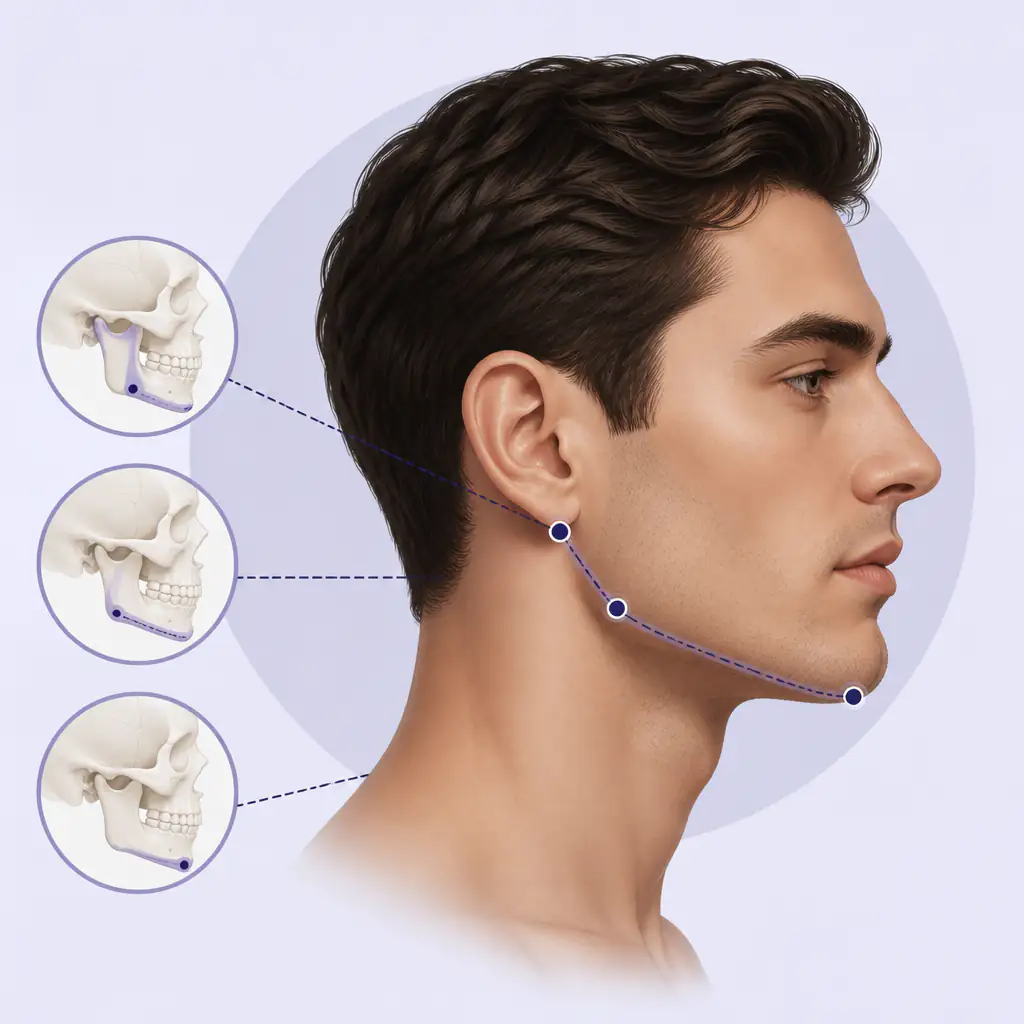
A sharp jawline is one of the most discussed topics in male facial aesthetics, and for good reason. The mandible (lower jaw) is a primary driver of perceived masculinity, facial harmony, and overall attractiveness ratings. Jawmaxxing, the practice of deliberately improving jawline definition and projection, sits at the intersection of lifestyle habits, posture correction, and, in some cases, medical intervention.
This guide breaks down what actually moves the needle, what is mostly noise, and where the real limits are.
What Is Jawmaxxing?
Jawmaxxing is a portmanteau of “jaw” and “maxxing” (maximizing). It refers to any deliberate effort to improve the appearance, structure, or definition of the jawline. This includes everything from daily habits like hydration and sleep to targeted exercises, dietary changes, and cosmetic procedures.
The term sits within the broader looksmaxxing community, where people apply systematic effort to optimize their physical appearance. Jaw improvement specifically gets so much attention because the jawline is one of the most visible and anatomically variable features on the face.
Why the Jaw Matters Aesthetically
Research in facial attractiveness consistently identifies jaw definition as a key component of an attractive male face. Specifically, assessors tend to rate higher:
- A well-defined mandibular angle (the corner where the jaw turns upward toward the ear)
- Adequate anterior projection of the chin (pogonion point)
- A visible, continuous jawline from ear to chin with minimal soft tissue obscuring it
- Symmetry between left and right sides of the jaw
For women, a softer jaw is generally considered more attractive, though definition still matters in the context of overall facial balance.
When Does Your Jaw Stop Growing?
Understanding the biology sets realistic expectations. The mandible generally finishes its primary growth around age 18 for women and age 21 for men, though some research suggests growth can continue in small amounts into the mid-twenties. After that, the bone itself is not going to reshape without mechanical intervention or surgery.
This does not mean nothing can change after your early twenties. What can still shift:
- Soft tissue and fat distribution: Losing body fat reduces the fat layer over the jaw, sharpening its appearance significantly.
- Muscle hypertrophy: The masseter muscle (the chewing muscle that sits at the jaw angle) can be trained and will visibly enlarge, adding width and definition.
- Posture and resting tongue position: Chronic forward head posture compresses the neck and can reduce the visual angle of the jaw. Correcting posture can restore it.
So even if your jaw has stopped growing, the visible jaw you present to the world is shaped by several factors that remain very much in your control.
The Non-Invasive Methods: What Has Evidence Behind It
Mewing and Tongue Posture
Mewing refers to maintaining the entire tongue pressed against the roof of the mouth (the palate) as a resting position. The theory, developed by orthotropist John Mew, is that consistent tongue pressure against the palate may influence craniofacial development over time.
In children and adolescents whose facial bones are still growing, there is more plausible biological support for this. In adults, the evidence is weaker, but some practitioners argue the practice may subtly influence soft tissue position and contributes to better overall head posture, which has real visual effects on the jawline.
Practically: mewing costs nothing, has no downside, and may help. It is worth doing, especially if you are in your teens or early twenties.
Jaw Exercises and Masseter Training
Chewing resistance training, whether through hard foods (raw carrots, tough meats) or tools like jawline exercise devices, can hypertrophy the masseter. A well-developed masseter adds visible width at the jaw angle, which increases the visual sharpness of the jaw’s transition.
This is not placebo. The masseter is a skeletal muscle and responds to progressive resistance like any other muscle. The effect is most visible in people with lower body fat who already have some jaw definition.
A few practical approaches:
- Mastic gum: A harder-than-average natural gum that provides more resistance than commercial chewing gum.
- Jaw trainers: Silicone resistance devices you bite down on. Useful if used consistently, but avoid excessive force to reduce the risk of TMJ (temporomandibular joint) irritation.
- Diet composition: A diet that includes more whole, fibrous foods naturally increases daily chewing volume.
Body Fat Reduction
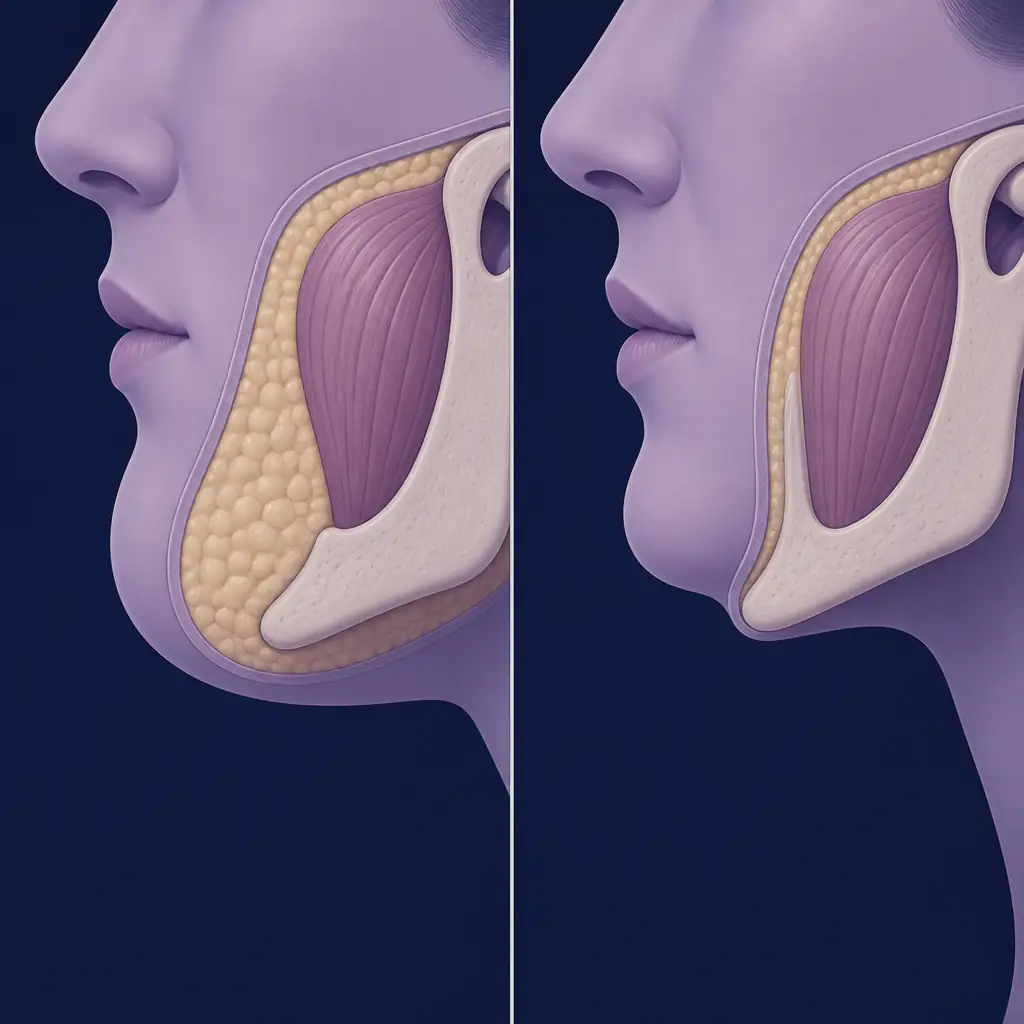
This is arguably the highest-ROI jawmaxxing method available. Fat is distributed across the face, and the submental (under-chin) and buccal (cheek) fat regions directly obscure the jawline. Getting lean reveals the jaw that already exists.
For most people, facial fat becomes noticeably reduced when total body fat drops below roughly 15% for men or 22% for women. The jaw and neck region are among the last places fat is shed, so meaningful results often require getting genuinely lean, not just “in shape.”
Sleep and Recovery
Chronic poor sleep causes facial puffiness through fluid retention, which softens the jaw. Eight hours of quality sleep, sleeping on your back (reduces compression asymmetry), and adequate hydration all contribute to consistently sharp facial presentation.
Cosmetic Procedures for Jaw Improvement
For people who have maxed out lifestyle changes and want to go further, cosmetic procedures are an option. These range from minimally invasive to surgical.
Important: Consult a qualified, board-certified medical professional before considering any cosmetic procedure. The information below is educational only.
Jaw Filler
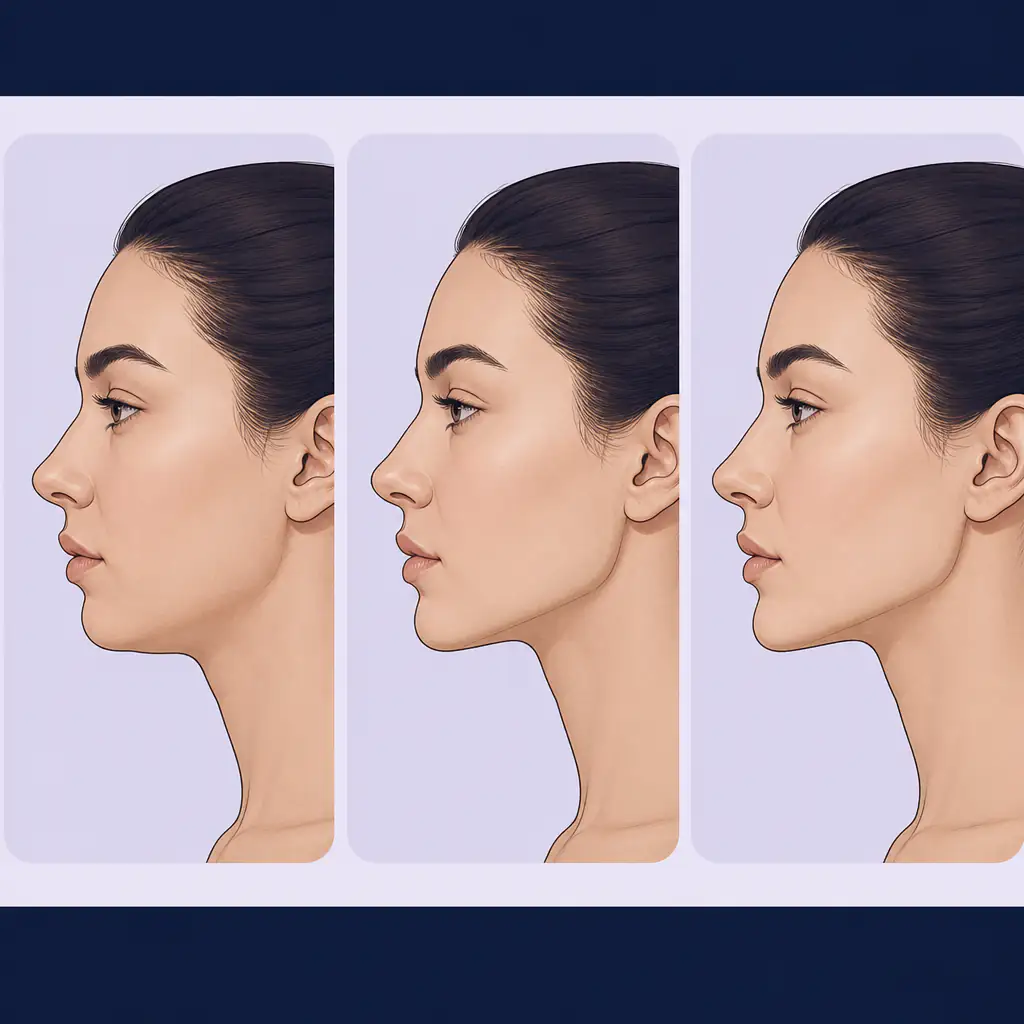
Dermal filler injected along the mandibular border and jaw angle can add definition, width, and projection without surgery. Jaw filler before and after results in men can look substantial when done well, particularly for adding jaw angle definition or strengthening a weak chin.
Key things to understand about jaw filler:
- Results last roughly 12 to 18 months for hyaluronic acid-based fillers (like Juvederm or Restylane), though individual variation is significant.
- Does chin filler migrate? This is a legitimate concern. Filler can shift from its injection site if placed incorrectly, in high-movement areas, or in large volumes. Migration is more common with poor injection technique or when filler is placed too superficially. Choosing an experienced injector significantly reduces this risk. So-called “bum chin” (a two-lobed chin appearance) is sometimes caused by filler migration or poor placement.
- Jaw filler is reversible if hyaluronic acid-based (dissolved with hyaluronidase), which makes it lower risk than surgical alternatives.
- Swelling is normal for 1 to 2 weeks post-procedure.
Chin Filler and Projection Issues
Some people notice that their chin sticks out when they smile. This can be a functional issue related to mentalis muscle overactivity (the chin muscle strains to help the lips close), or a structural one where anterior chin projection creates an irregular profile in motion. Small amounts of Botox in the mentalis, or in some cases repositioning filler, may help. A qualified injector can assess which applies to your situation.
If you feel my chin sticks out when I smile is a concern for you, it is worth getting a proper assessment rather than self-diagnosing from photos alone.
Surgical Options
For people seeking permanent structural change, surgical routes exist:
- Chin implants (genioplasty): Silicone implants placed over the existing chin bone to increase projection or width. Results are permanent and can be dramatic.
- Jaw angle implants: Implants placed at the mandibular angle to increase the width and definition of the back of the jaw.
- Sliding genioplasty: The chin bone itself is cut and repositioned. More complex but allows three-dimensional movement and is done using your own bone, not a foreign implant.
- Bimaxillary surgery: Repositions both upper and lower jaws. Reserved for significant skeletal discrepancies and is typically only considered after orthodontic workup.
Surgical procedures carry real risks including nerve damage, infection, implant displacement, and scarring. They require extended recovery. They are not casual decisions.
A Practical Jawmaxxing Stack
If you want a realistic, staged approach to jaw improvement, this is how to structure it:
- Reduce body fat first. You cannot properly assess your jaw until you can see it clearly. Get lean before spending money on anything else.
- Fix posture and tongue posture. Practice mewing. Address forward head posture if present. These are free and have compounding benefits.
- Train the masseter. Incorporate harder foods and consider a jaw trainer. Be consistent for at least three to six months before judging results.
- Sleep well and stay hydrated. These are not minor factors. Chronic puffiness from poor sleep can meaningfully reduce jaw definition.
- Get an objective assessment. Tools like Aura can give you a scored breakdown of your jawline, chin, and facial harmony before you start, so you have a real baseline rather than relying on self-perception, which tends to be unreliable.
- Consider non-surgical procedures if appropriate. Jaw filler is a reasonable next step for people who have done the above and want more. Consult a specialist.
- Surgical options last. Only consider surgery after exhausting non-surgical options and after a thorough consultation with a board-certified maxillofacial or plastic surgeon.
Understanding Jaw Maxxing in Context
One concept that sometimes appears in discussions of jaw improvement is height mogging, which refers to how height difference between two people causes one person to dominate the other’s perceived attractiveness or status in a social interaction. It is worth noting this in the jawmaxxing context because the jaw’s visual impact varies somewhat with viewing angle: looking up at someone makes their jaw less visible; looking down reveals it more clearly. This is one reason jaw definition matters more at eye level and in photos taken at face level or slightly below.
This also means that lighting direction and photo angle can substantially change how defined your jaw looks, which is why candid photos from multiple angles are more informative than a single well-lit selfie.
A useful thing Aura does here is run jawline analysis across your uploaded photos and give you a score that accounts for these variables, rather than you trying to mentally average across different conditions.
What Does Not Work
Being direct: some popular jawmaxxing claims are not supported by evidence.
- Gua sha and face rollers: These may temporarily reduce puffiness by moving lymphatic fluid, but they do not build muscle, reduce fat, or reshape bone. Any definition improvement is short-term.
- Chewing gum (regular softness): Too little resistance to produce meaningful masseter hypertrophy. It does not hurt, but do not expect structural changes.
- Jaw exercises that promise bone growth in adults: Bone does not remodel meaningfully from soft-tissue pressure in adults over 25. Claims suggesting otherwise are overstated.
- Specific foods that “sharpen” the jaw: No food selectively reduces facial fat. Total caloric deficit determines fat loss; distribution is genetic.
Focus on what is proven, be skeptical of anything that sounds too easy, and track your actual results rather than relying on testimonials.
Frequently asked questions
Does jawmaxxing actually work? +
It depends on the method. Reducing body fat, training the masseter, and fixing posture can produce visible changes and are well-supported. Bone-level changes in adults through exercises alone are not realistic. Cosmetic procedures like jaw filler can produce significant results but come with their own considerations.
When does your jaw stop growing? +
The mandible typically finishes primary growth around age 18 to 21, with minor changes possible into the mid-twenties. After that, bone structure is largely fixed, but the visible jawline can still be improved through fat loss, muscle development, and posture correction.
Does chin filler migrate? +
Filler migration is a real but relatively uncommon risk when the procedure is performed by an experienced injector using appropriate technique and volume. Hyaluronic acid fillers are reversible with hyaluronidase if migration does occur. Choosing a qualified practitioner is the most important factor in reducing this risk.
Why does my chin stick out when I smile? +
This is often caused by overactivity of the mentalis muscle, which strains during lip closure and pushes the chin forward or causes dimpling. It can also relate to underlying chin projection. A qualified injector or maxillofacial specialist can assess whether muscle relaxant injections or a structural approach is appropriate for your situation.