 Aura: Looksmaxxing
 Jaw Implants: What to Expect Before & After
Everything you need to know about jaw implants: types, surgery, recovery, risks, and how to decide if they're right for your face.
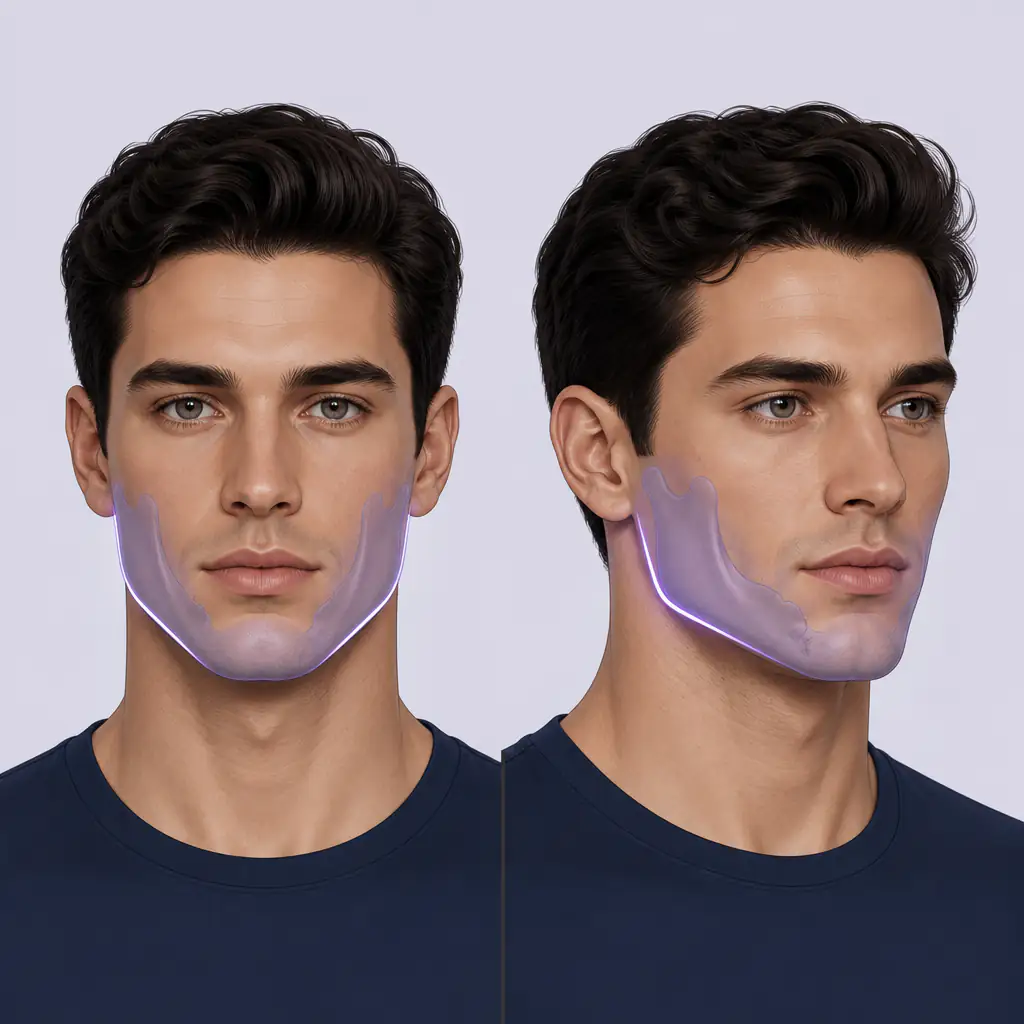
A well-defined jawline is one of the strongest contributors to perceived facial attractiveness in both men and women. For people whose jaw structure is anatomically limited, no amount of diet, exercise, or mewing will fully close the gap. That is where jaw implants come in.
This guide covers everything worth knowing before you consider the procedure: what jaw implants actually are, how surgery works, realistic recovery timelines, what can go wrong, and how to figure out whether you are a good candidate.
Important disclaimer: This article is informational only. Always consult a board-certified plastic or maxillofacial surgeon before making any decisions about surgical procedures.
What Are Jaw Implants?
Jaw implants are solid, biocompatible prosthetics placed over the lower jaw (the mandible) to alter its shape, width, or projection. They are distinct from chin implants, which target only the front-most point of the jaw. Jaw implants typically address the mandibular angle (the back corners of the jaw), the body of the mandible, or both.
The goal is to create a more defined, angular, or broader jawline depending on the patient’s existing bone structure and aesthetic goals.
Types of Jaw Implants
Most implants fall into a few categories based on material and design:
- Silicone implants: The most widely used option. Solid silicone is firm but slightly flexible, making it easier to shape and reposition if needed. It does not integrate with bone, which means it can technically be removed.
- Porous polyethylene (Medpor): A stiffer material that allows soft tissue and bone to grow into it over time. This creates a more stable long-term result but makes revision surgery significantly more difficult.
- Custom implants: Designed from a CT scan of the patient’s skull and milled or printed to match their exact anatomy. These are increasingly popular because they distribute pressure evenly and reduce the risk of asymmetry.
Off-the-shelf implants come in standard sizes and shapes. A surgeon selects the closest match, sometimes modifying it intraoperatively. Custom implants cost more and require additional planning time but offer better anatomical fit.
Who Is a Good Candidate?
Jaw implants are typically considered by people who have:
- A naturally weak or narrow mandibular angle
- Asymmetry in the lower jaw that cannot be corrected with non-surgical methods
- A desire for a more defined, angular lower face
- Finished skeletal growth (generally after age 18 to 20)
- Realistic expectations about the degree of change possible
People with active dental issues, certain autoimmune conditions, or a history of poor wound healing may not be suitable candidates. Your surgeon will evaluate jaw bone density, bite alignment (occlusion), and soft tissue thickness before recommending a path forward.
If you want an objective baseline before booking a consultation, tools like Aura can analyze your facial structure and give you a clear picture of your current jawline metrics, which can actually be useful context to bring into a surgical conversation.
The Surgical Procedure: What Actually Happens
Jaw implant surgery is almost always performed under general anesthesia, though local anesthesia with sedation is sometimes used for smaller procedures.
Incision Placement
The most common approach uses incisions placed inside the mouth, along the lower gum line near the back molars. This leaves no visible external scarring. In some cases, particularly for angle implants, a small external incision may be made just under the jawline.
Implant Placement
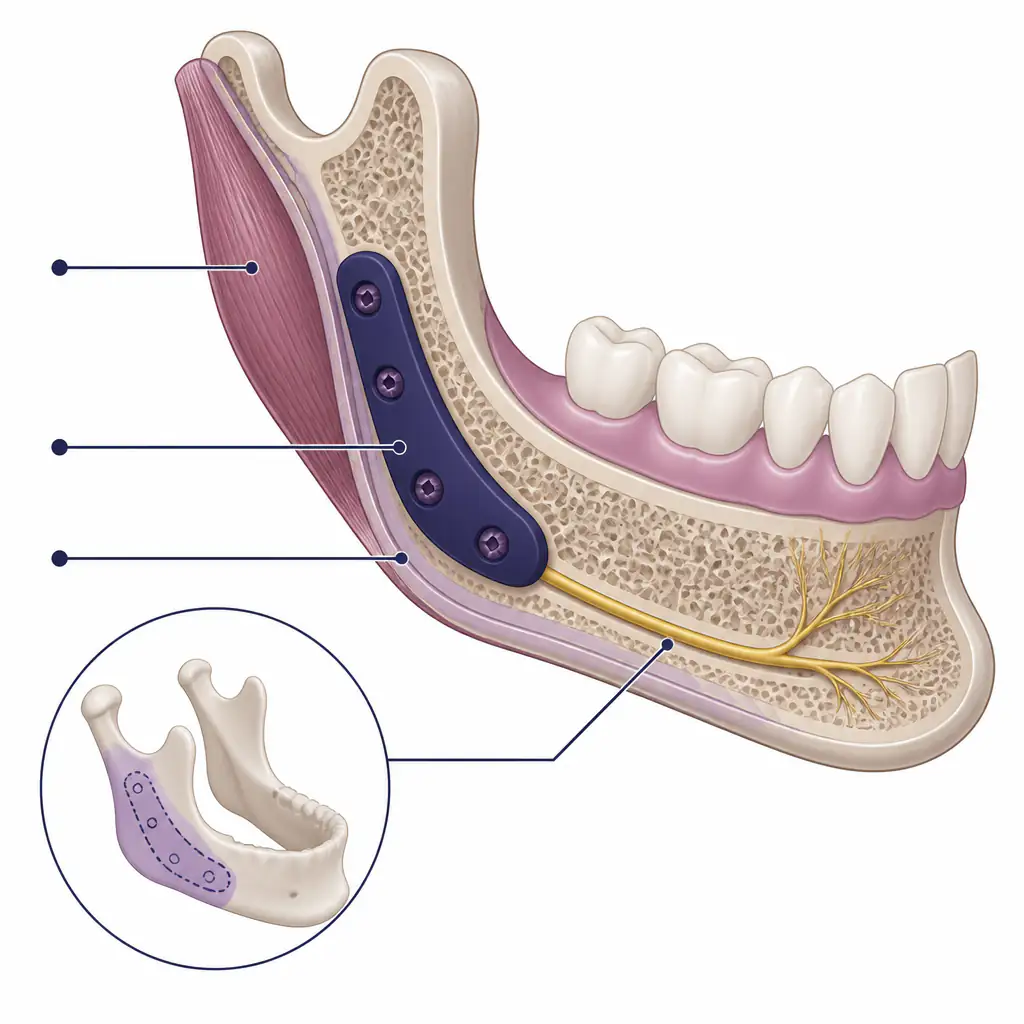
The surgeon creates a pocket in the periosteum (the dense connective tissue that covers the bone) and places the implant directly against the bone. The implant is typically secured with small titanium screws to prevent migration, though some surgeons rely on the pocket itself to hold it in place.
The entire procedure usually takes between one and two hours depending on complexity.
Combined Procedures
Jaw implants are frequently performed alongside:
- Chin implants for overall lower face definition
- Rhinoplasty to balance mid and lower facial proportions
- Bichectomy (buccal fat removal) to accentuate the jawline from the sides
Combining procedures increases surgical time and recovery but may reduce total downtime compared to staging them separately.
Recovery Timeline
Recovery from jaw implants is longer and more uncomfortable than many patients anticipate. Here is a realistic breakdown:
Days 1 to 3: Significant swelling, pain managed with prescribed medication, limited mouth opening. A liquid or very soft diet is necessary.
Week 1 to 2: Swelling peaks around day three to five, then begins to reduce. Most patients can return to desk work within a week. The jaw will feel tight and movement will be restricted.
Weeks 3 to 6: Most visible swelling resolves. Soft foods transition back to a normal diet. Strenuous physical activity is still restricted to reduce the risk of implant shifting.
Months 3 to 6: The implant fully settles into position. Residual swelling in the deep tissue dissipates. This is when you can accurately assess the final result.
Full result: Some patients report that minor swelling and firmness persist for up to a year, particularly with porous polyethylene implants.
Oral Hygiene During Recovery
Because incisions are inside the mouth, oral hygiene is critical. Surgeons typically prescribe a chlorhexidine rinse and antibiotics to minimize infection risk. Brushing must be done carefully, avoiding the surgical site in the early weeks.
Risks and Complications
Jaw implants carry the standard risks of any surgical procedure, plus some specific to this area. Being informed about them is not meant to discourage you but to help you ask the right questions.
Common Issues
- Swelling and bruising: Expected and temporary.
- Numbness: The mental nerve (which runs along the mandible and supplies sensation to the chin and lower lip) can be stretched or compressed during surgery. Temporary numbness is common. Permanent nerve damage is rare but possible.
- Asymmetry: Even with careful planning, minor differences between sides can occur. Custom implants reduce this risk compared to off-the-shelf designs.
Serious Complications
- Infection: Particularly concerning with intraoral incisions given bacterial exposure. Serious infections may require implant removal.
- Implant migration: If not properly secured, an implant can shift from its intended position, altering the result.
- Bone resorption: Long-term pressure from an implant can cause the underlying bone to thin over time, particularly with heavier silicone implants.
- Capsular contracture: Scar tissue forming around the implant can harden and distort its appearance, more commonly seen with softer implants.
Revision rates for jaw implants are not trivial. Some studies suggest revision surgery is needed in roughly 10 to 20 percent of cases over a 10-year period, though this varies significantly by technique and implant type.
Cost and What Influences It
Jaw implant surgery is almost never covered by insurance unless it is part of reconstructive treatment following trauma or a documented medical condition. Pricing varies widely based on geography, surgeon experience, implant type, and whether additional procedures are combined.
General ranges:
- Standard silicone implants: $5,000 to $10,000 total (surgeon fee, anesthesia, facility)
- Custom implants: $10,000 to $20,000 or more, depending on the design and scanning costs
These figures are rough estimates. Always get an itemized quote from your surgeon’s office.
Choosing a surgeon based on cost alone is a significant risk with this procedure. The mandibular angle is a technically demanding area. Look for a surgeon with a documented portfolio of jaw work and board certification in plastic surgery or oral and maxillofacial surgery.

Non-Surgical Alternatives Worth Comparing
Before committing to surgery, it is worth understanding what non-surgical options can and cannot realistically achieve:
- Masseter hypertrophy: Heavy jaw training can increase masseter muscle size, widening the lower face somewhat. This takes months to years and is more effective in people with thinner faces.
- Dermal fillers: Hyaluronic acid fillers injected along the mandible can improve definition temporarily (typically 12 to 18 months). Results are subtler than implants and not permanent. Filler in this area carries specific vascular risks and should only be done by an experienced injector.
- Kybella or fat reduction: Reducing submental fat can make the jaw appear more defined without adding projection.
For people who want a permanent, structural change in jaw width or angle definition, none of these alternatives replicate what an implant achieves. But for those uncertain about committing to surgery, trying a non-surgical approach first can provide useful information about what direction of change suits them.
Using Aura to get a structured jawline analysis can help you identify whether your primary issue is projection, width, or overall definition, which directly informs whether surgery, fillers, or training is the more logical starting point.
Practical Tips Before Your Consultation
- Get a CT scan if considering custom implants. Some surgeons offer this as part of the consultation; others require you to arrange it separately. It provides the clearest picture of your bone anatomy.
- Review before-and-after photos critically. Look for patients with a similar starting point to yours, not just the best outcomes in the portfolio.
- Ask specifically about nerve risk. Request the surgeon’s personal complication rate for nerve issues, not just the general literature rate.
- Plan your recovery around your schedule. Visible swelling for two to three weeks means avoiding important public-facing events during that period.
- Understand the revision policy. Ask upfront what happens if you need a revision and whether that carries an additional fee.
- Avoid blood thinners and certain supplements (fish oil, vitamin E, aspirin) for at least two weeks before surgery as directed by your surgeon.
FAQ
Frequently asked questions
How long do jaw implants last? +
Silicone jaw implants are considered permanent but can be removed or replaced if needed. Porous polyethylene implants integrate with surrounding tissue, making them harder to revise but also very stable. Neither material degrades in the body under normal circumstances, so the implant itself does not have an expiration date. However, some patients choose revision over time due to changes in facial aging or aesthetic preferences.
Does jaw implant surgery affect your bite? +
When performed correctly by an experienced surgeon, jaw implants should not alter your bite. The implant sits on top of the bone within the periosteal layer and does not involve the joint or teeth. However, poorly placed implants or those that migrate can occasionally cause discomfort or pressure that affects how the jaw closes. This is one reason surgeon selection matters significantly.
Can jaw implants be removed if I am unhappy with the result? +
Silicone implants can generally be removed, though the tissue pocket and surrounding anatomy may have changed. Porous polyethylene implants are much harder to remove because tissue grows into the material. If removal is a concern, silicone is typically the lower-risk choice for reversibility. Discuss this explicitly with your surgeon before proceeding.
Is there a non-surgical alternative that gives similar results to jaw implants? +
Dermal fillers placed along the mandibular angle can improve definition and width temporarily, and some patients find the result satisfying enough to avoid surgery. However, fillers cannot replicate the structural projection or permanence of an implant. For mild improvements, fillers are a reasonable starting point. For significant structural change, they are unlikely to achieve the same outcome.