 Aura: Looksmaxxing
 Jaw Filler Before and After Men: What to Expect
Explore jaw filler before and after results for men. Learn what changes are realistic, how the procedure works, costs, risks, and recovery.
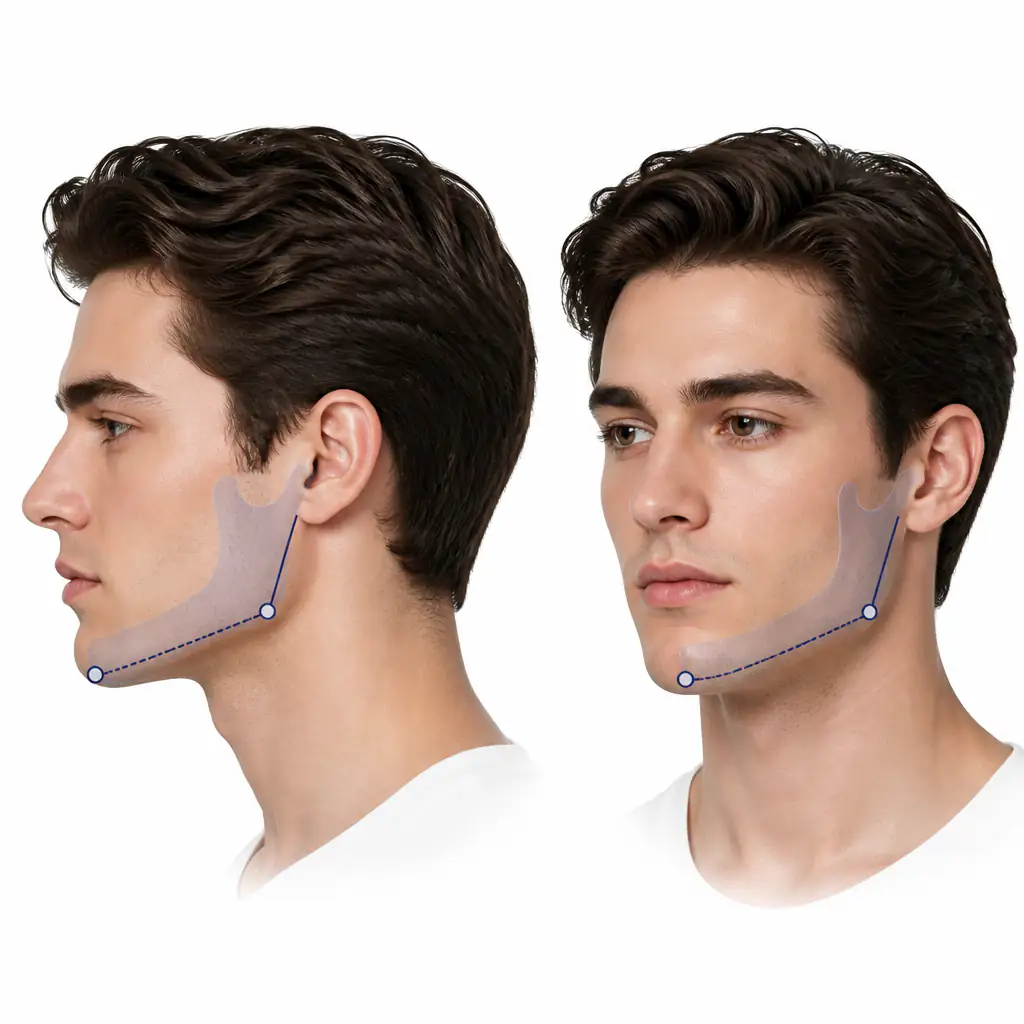
Jaw filler has become one of the most searched non-surgical cosmetic procedures for men over the past several years, and the interest makes sense. A well-defined jawline is closely tied to how masculine, healthy, and structured a face appears. Unlike surgery, filler offers a relatively low-commitment entry point with visible results and no general anesthesia required.
But the before-and-after photos circulating online can be misleading. Some show dramatic transformations that required multiple syringes, skilled injectors, and ideal bone structure underneath. Others show subtle shifts that disappointed patients who expected more. This guide breaks down what jaw filler actually does, what realistic before-and-after results look like for men specifically, and how to go in with the right expectations.
Always consult a qualified medical professional before pursuing any injectable treatment. This article is for informational purposes only.
What Jaw Filler Actually Does to Male Facial Structure
Jaw filler, most commonly made from hyaluronic acid (HA), is injected along the mandible, the lower jawbone, to add definition, volume, and angularity. For men, injectors typically target three areas:
- The jaw angle (gonion): the back corners of the jaw, which when widened create a broader, more rectangular lower face
- The mandibular body: the horizontal stretch of the lower jaw, which can be sharpened to reduce softness along the sides
- The chin-jaw junction: the area where the chin meets the lateral jaw, important for creating a continuous, defined lower border
Hyaluronic acid fillers such as Juvederm Volux and Restylane Lyft are the most commonly used products in this region because they are denser and more cohesive, meaning they hold shape better under the mechanical stress of chewing and speaking.
Filler does not move bone. It builds soft tissue volume around existing bone structure. This distinction matters because a man with a naturally narrow or recessed mandible will see different results than someone with a strong underlying bony frame that simply lacks soft tissue definition.
Jaw Filler Before and After: What Changes Are Realistically Visible
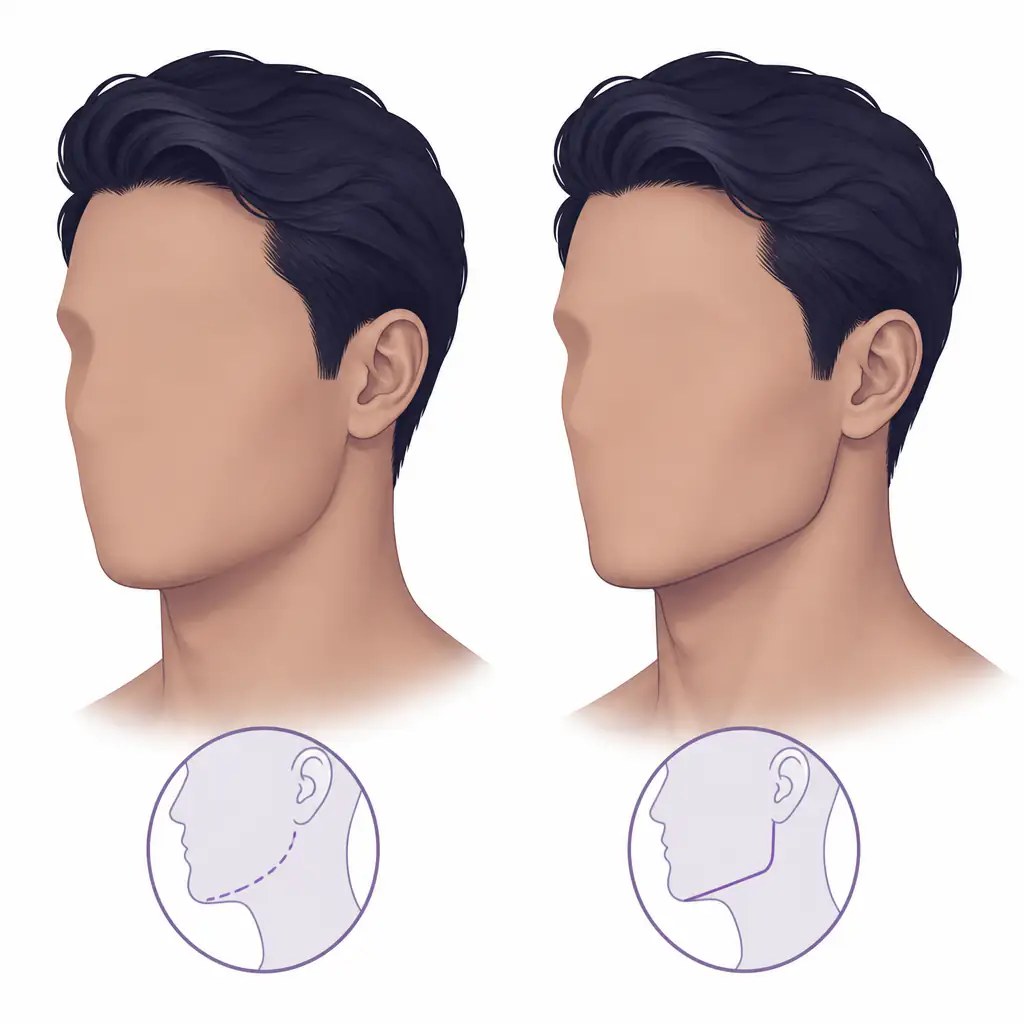
For most men, realistic before-and-after changes include:
- A more defined jaw angle when viewed from the front and three-quarter angle
- Reduced soft tissue blurring along the lower jawline
- A slightly wider lower facial third, which can balance a narrower chin or prominent cheekbones
- Improved jaw-to-neck transition, which reduces the appearance of a soft or undefined jaw-neck border
What filler typically does not produce:
- A dramatic chin projection increase (that requires chin-specific filler or implants)
- Bone-level structural change
- Permanent results (HA fillers dissolve over 12 to 18 months in most patients, sometimes faster in high-movement areas)
- Results equivalent to jaw implants or orthognathic surgery in cases of significant skeletal deficiency
Most providers use between 1 and 4 syringes (1 mL per syringe) for male jaw augmentation, with higher volumes producing more noticeable changes. Some men with a strong starting structure see a meaningful upgrade with just 1 to 2 mL. Others with significant asymmetry or volume loss may require more across multiple sessions.
How to Read Before-and-After Photos Critically
Before-and-after photos in aesthetics medicine are notoriously inconsistent. When evaluating jaw filler results for men, look for these factors:
Lighting and angle consistency
Photos taken from the same angle, with the same lighting and the same facial expression allow fair comparison. A jawline can look dramatically more defined simply by turning the head slightly or using harsher side lighting. If the before photo is soft and the after photo is high-contrast, the comparison is not reliable.
Swelling versus final result
Most HA fillers cause temporary swelling for 3 to 14 days post-injection. Some practitioners photograph patients at day 3 to 5, when swelling is at its peak, which inflates the apparent result. Ask specifically to see photos taken at 4 weeks or later.
Syringe volume disclosed
A result using 4 mL of filler across the jaw and chin combined is not the same as a 1 mL result. Legitimate practitioners disclose total volume used.
Injector skill and anatomy
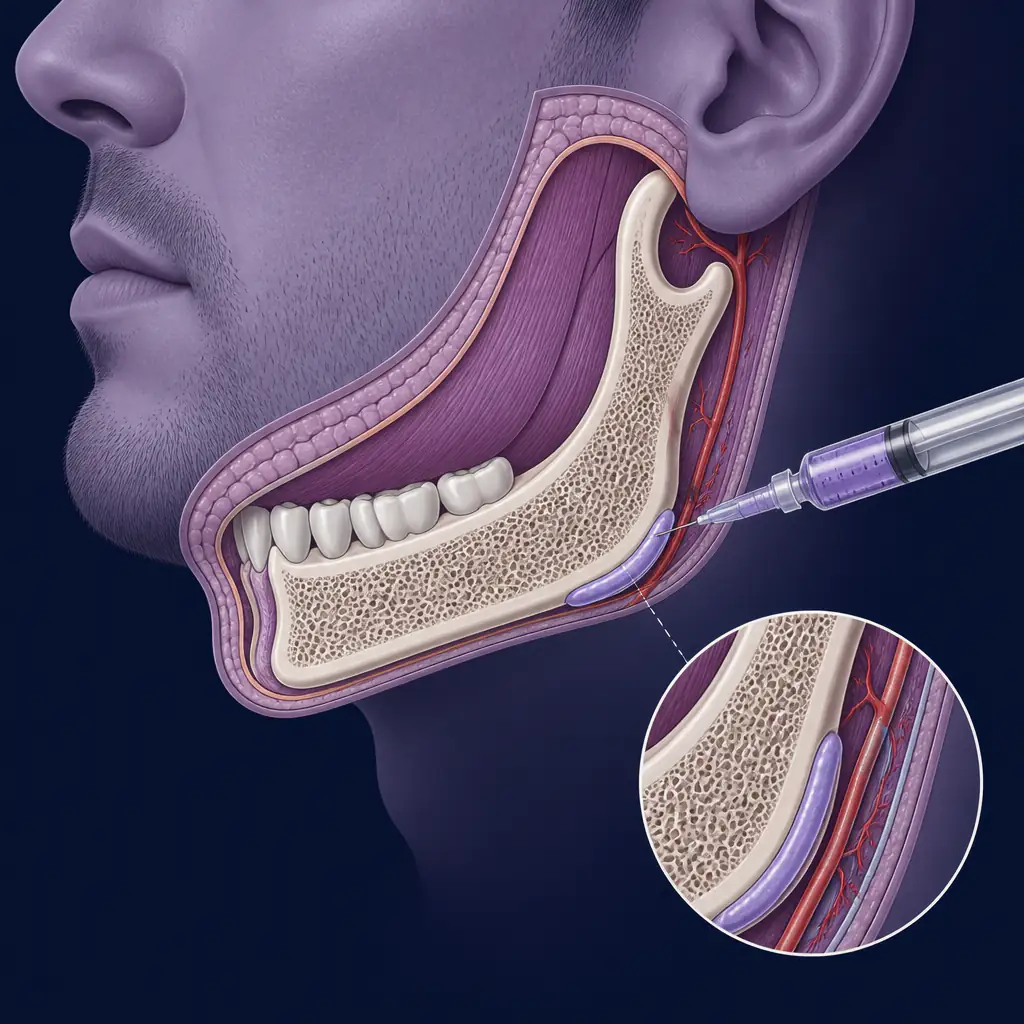
The same volume of product placed by different injectors in slightly different anatomical planes can produce very different outcomes. Supraperiosteal placement, meaning injecting directly on the bone’s surface, is generally preferred for structural jaw augmentation because it minimizes migration and provides firmer support.
What the Procedure Feels Like and What Recovery Looks Like
For men considering jaw filler for the first time, here is a straightforward overview of the process:
- Consultation: A qualified injector assesses your bone structure, soft tissue distribution, and facial proportions. They should discuss what is achievable given your anatomy.
- Mapping and marking: The injector marks the target points along the mandible.
- Topical or local anesthesia: Most products contain lidocaine, and many injectors apply topical numbing cream 20 to 30 minutes before.
- Injection: Using either a needle or blunt-tipped cannula (the latter reduces bruising risk), the injector deposits product at the periosteal level along the jaw.
- Molding: The injector may manually shape the filler immediately after placement.
Recovery timeline for most men:
- Days 1 to 3: Noticeable swelling, possible bruising, some tenderness along the jaw
- Days 4 to 7: Swelling begins to resolve, bruising fades
- Days 10 to 14: Most visible swelling is gone, result is clearer
- Week 4 onward: Final result visible as remaining fluid dissipates and filler integrates
Most men return to normal activity the same day, though strenuous exercise and alcohol are typically advised against for 24 to 48 hours.
Cost, Longevity, and Maintenance
Jaw filler pricing varies significantly based on location, injector experience, and product used. In the United States, expect to pay between $700 and $2,000 per syringe at a reputable clinic. A male jaw augmentation using 2 to 3 syringes commonly costs $1,400 to $4,000 per session.
Longevity depends on:
- The specific product used (denser fillers like Volux may last longer in structural areas)
- Individual metabolism (some people break down HA faster)
- How much movement occurs in the area
- Total volume placed (larger volumes can last slightly longer)
Most men who maintain jaw filler results return for a touch-up or full replacement between 12 and 18 months after their initial treatment.
If you want to understand your current facial proportions and jaw definition before committing to filler, Aura offers an AI-based jawline analysis that can give you an objective read on where your jaw sits relative to ideal masculine proportions. It is a useful starting point for setting realistic goals before a consultation.
Risks and Limitations Men Should Know
Jaw filler is not risk-free. The most common complications are minor: bruising, swelling, asymmetry, and lumpiness that resolves on its own or can be massaged out.
More serious but rare complications include:
- Vascular occlusion: Filler injected into or compressing a blood vessel can cut off circulation to tissue. The facial artery and its branches run near the mandible, making injector anatomy knowledge critical.
- Migration: Poorly placed or overly soft filler can shift over time, softening the result or creating unnatural contours.
- Tyndall effect: Less common in deep jaw injections, but superficially placed HA can create a bluish discoloration under the skin.
- Granuloma formation: A rare inflammatory response to the filler material.
Choosing a board-certified dermatologist, plastic surgeon, or orofacial specialist with documented experience in male facial anatomy significantly reduces these risks. Male facial tissue is generally thicker and more vascular than female tissue, which affects both injection technique and bruising likelihood.
Is Jaw Filler Right for You
Jaw filler tends to work best for men who:
- Have a reasonably defined underlying bone structure but lack soft tissue definition or angularity
- Want to correct mild to moderate asymmetry
- Have realistic expectations about the limits of a non-surgical approach
- Are not candidates for or not ready to consider surgical options like jaw implants
It is a poor fit for men expecting implant-level results, those with significant mandibular recession (where orthognathic surgery or implants would serve better), or anyone seeking a permanent solution.
If you are unsure where your jaw falls on the spectrum, an honest AI facial analysis through Aura can help you identify your specific weak points before spending on consultations. Understanding your baseline, including your gonial angle, lower third balance, and chin projection, helps you walk into a practitioner’s office with informed questions rather than vague goals.
Practical Tips Before Your First Appointment
- Photograph yourself consistently: Take photos from the front, 45-degree angle, and profile under neutral daylight before any treatment. This is your baseline.
- Research your injector: Check their before-and-after gallery specifically for male jaw cases, not just general filler work.
- Ask about product selection: Confirm they use a dense, cohesive HA filler appropriate for structural areas, not a soft lip or tear-trough product.
- Start conservatively: Many experienced injectors recommend a conservative first session to see how your tissue responds, then add volume at a follow-up if needed.
- Avoid blood thinners: Stop aspirin, ibuprofen, fish oil, and alcohol at least 48 to 72 hours before your appointment to reduce bruising.
- Plan your timing: Schedule around any important events. Even if swelling resolves quickly, it is wise to have at least two weeks of buffer.
Frequently asked questions
How much jaw filler do men typically need? +
Most men use between 1 and 4 syringes (1 mL each) depending on their starting anatomy and goals. Men with stronger underlying bone structure may see meaningful improvement with 1 to 2 mL, while those seeking more significant augmentation or correcting asymmetry may require 3 to 4 mL across one or more sessions.
How long does jaw filler last in men? +
Hyaluronic acid jaw filler typically lasts 12 to 18 months in most men, though individual metabolism, product choice, and total volume placed all affect longevity. Dense structural fillers like Juvederm Volux may persist slightly longer than softer HA products in this area.
Can jaw filler be reversed if I don't like the result? +
Yes. Hyaluronic acid fillers can be dissolved using an enzyme called hyaluronidase, which breaks down the filler within 24 to 48 hours. This is one of the primary advantages of HA-based products over permanent or semi-permanent fillers.
Is jaw filler painful for men? +
Most patients describe the procedure as mildly uncomfortable rather than painful. Most HA fillers contain lidocaine to reduce discomfort, and topical numbing cream is typically applied beforehand. The jaw area may be tender for a few days post-treatment, but significant pain is not a normal part of recovery.