 Aura: Looksmaxxing
 Hyper Masculine Face: Traits, Science & How to Develop One
Learn what defines a hyper masculine face, the science behind each trait, and practical steps you can take to develop a stronger, more defined look.

What separates a face that reads as powerfully masculine from one that simply looks “okay”? The answer is not one single feature. It is a collection of structural, soft-tissue, and proportional traits that work together to signal high androgen exposure, facial harmony, and physical health. Understanding each of these traits gives you a clear roadmap, whether your goal is grooming, training, or knowing where you actually stand right now.
This guide breaks down the specific anatomy of a hyper masculine face, what the research says about why these traits are attractive, and the practical steps you can take to move your appearance in that direction.
What Defines a Hyper Masculine Face
The term “hyper masculine face” refers to a face that scores high on traits associated with elevated testosterone exposure during both puberty and adult life. These are not arbitrary preferences. Research in evolutionary psychology consistently shows that observers, across many cultures, rate faces with certain structural features as more dominant, healthier, and more attractive in a masculine context.
The core traits fall into a few categories:
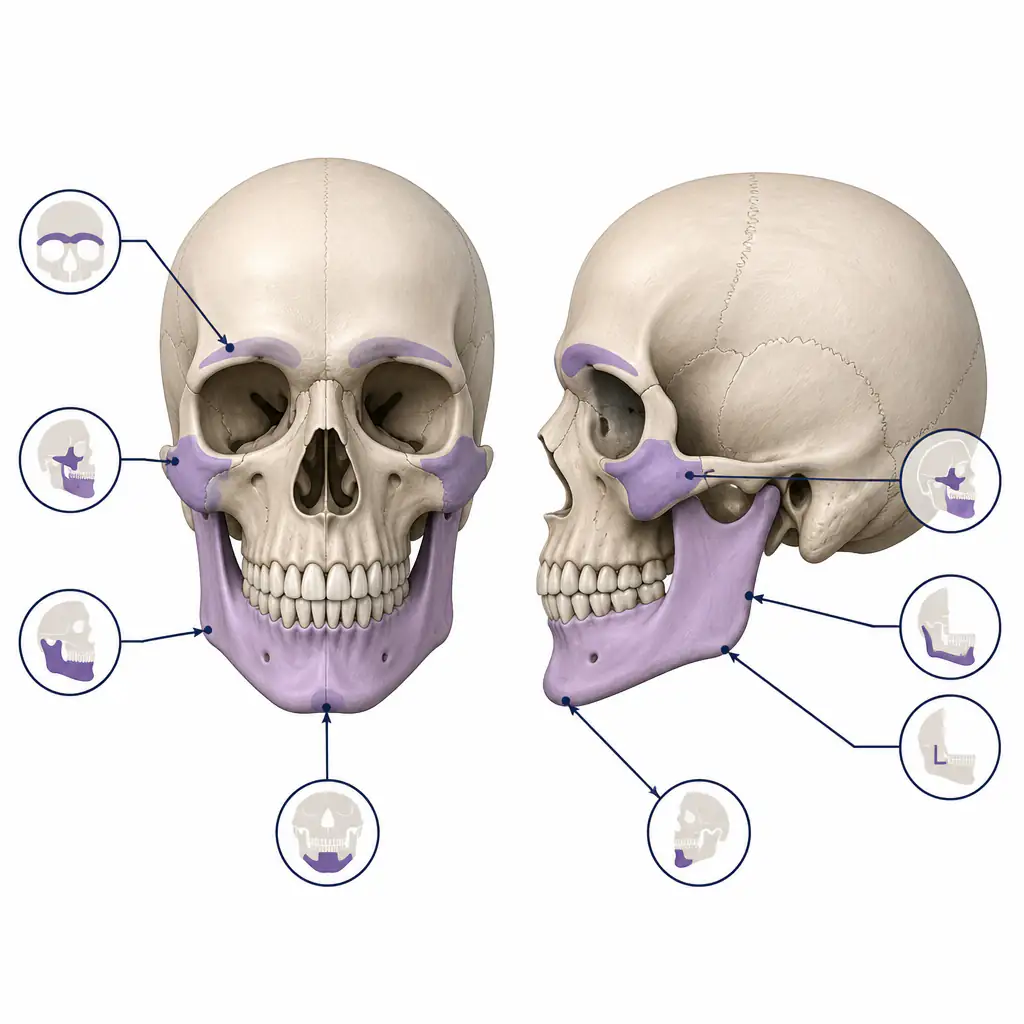
- Bone structure: Wide, square jaw, prominent cheekbones, a strong brow ridge (supraorbital ridge), and a well-projected chin.
- Eye area: Deep-set, forward-grown orbital bones that create what is often called a “hunter eye” appearance, where the upper eyelid is partially covered by the brow bone.
- Lower third: A defined, forward-projected mandible (jawline) with a clear gonial angle (the angle at the back corners of the jaw).
- Skin and soft tissue: Low body fat percentage in the face, which allows the underlying bone structure to show through clearly.
- Facial width-to-height ratio (fWHR): A wider face relative to its height is consistently linked to perceptions of dominance and testosterone exposure in peer-reviewed studies.
None of these traits operate in isolation. A sharp jawline with no cheekbone projection looks incomplete. Strong brows without proper eye support look harsh without depth. The whole package works as a system.
The Science Behind Masculine Facial Traits
Several decades of research have examined what makes faces read as masculine. The underlying driver is androgens, primarily testosterone and dihydrotestosterone (DHT), which shape craniofacial bone growth during puberty.
Facial Width-to-Height Ratio
The facial width-to-height ratio (fWHR) is one of the most studied metrics in face perception research. It is measured as the distance between the cheekbones divided by the height from the upper lip to the mid-brow. Studies published in peer-reviewed journals have found that men with higher fWHR are perceived as more dominant and that fWHR correlates with actual testosterone levels in some samples. A wider face is a core signal of androgen exposure.
The Brow Ridge and Orbital Bones
The supraorbital ridge, the bony shelf above the eye socket, develops more prominently under androgenic influence. When this ridge projects forward, it causes the eyes to appear deeper set and more shadowed from the front. This is the anatomical basis of the hunter-eye look. It conveys alertness and intensity, qualities that observers associate with masculinity and dominance.
The Mandible and Gonial Angle
The mandible is the lower jaw bone. In high-androgen faces, it tends to be wider, longer, and more forward-projected. The gonial angle, where the jaw bends at the back near the ear, is ideally close to 90 degrees for a square, defined appearance. A weak or recessed mandible, sometimes caused by mouth breathing patterns during development or genetic factors, reduces the sharpness of the lower face significantly.
Cheekbone Prominence
Well-developed zygomatic bones (cheekbones) create a mid-face that catches light and creates visible facial planes. Combined with low facial fat, prominent cheekbones contribute to the chiseled, angular quality most people associate with a hyper masculine face.
How Body Fat Affects Facial Masculinity
Facial fat distribution is one of the most controllable variables affecting how masculine your face looks. Even strong underlying bone structure can be obscured by excess subcutaneous fat in the cheeks, under the chin, and along the jawline.
Research suggests that facial adiposity (fat level) is a strong cue observers use to judge health and attractiveness. Men with lower facial fat are consistently rated as healthier and more attractive. The mechanism is straightforward: lower body fat reveals the bone structure that is already there.
Practical fat-loss principles for facial definition
- Sustained caloric deficit. There is no way to spot-reduce facial fat. Total body fat loss will reduce facial fat proportionally. A moderate deficit of 300 to 500 calories below your maintenance level is sustainable and preserves muscle.
- Sufficient protein intake. Targeting 0.7 to 1 gram of protein per pound of bodyweight while in a deficit helps preserve muscle mass and, by extension, the muscle definition that supports the face.
- Resistance training. Building muscle elsewhere raises your basal metabolic rate and improves overall body composition, which reflects in the face over time.
- Sodium and hydration management. High sodium intake and chronic dehydration both cause water retention that can blur facial features. Adequate water intake and reducing processed food sodium may help reduce this effect.
For most men, getting to a body fat percentage in the 10 to 15 percent range is where facial structure becomes noticeably sharper. Some users report visible jaw definition improvements after losing as little as 8 to 12 pounds.
Training and Posture Factors
Beyond body composition, a few physical habits can meaningfully affect how your face looks in day-to-day life.
Mewing and Tongue Posture
Mewing refers to the practice of resting the tongue flat against the roof of the mouth, rather than on the floor of the mouth or behind the front teeth. Proponents argue that consistent tongue posture over years may help support proper maxillary (upper jaw) development and facial structure, particularly in younger individuals. The evidence in adults is limited and largely anecdotal. That said, correct tongue posture costs nothing and supports proper breathing habits, which have their own health benefits.
Neck and Trap Development
A muscular neck and developed trapezius muscles create a visual frame for the face. A thick, developed neck makes the jaw appear more defined by contrast and signals physical strength. Exercises like neck curls, neck extensions, shrugs, and deadlifts directly build this area. This is one of the most underrated and accessible improvements available to most men.
Posture and Head Position
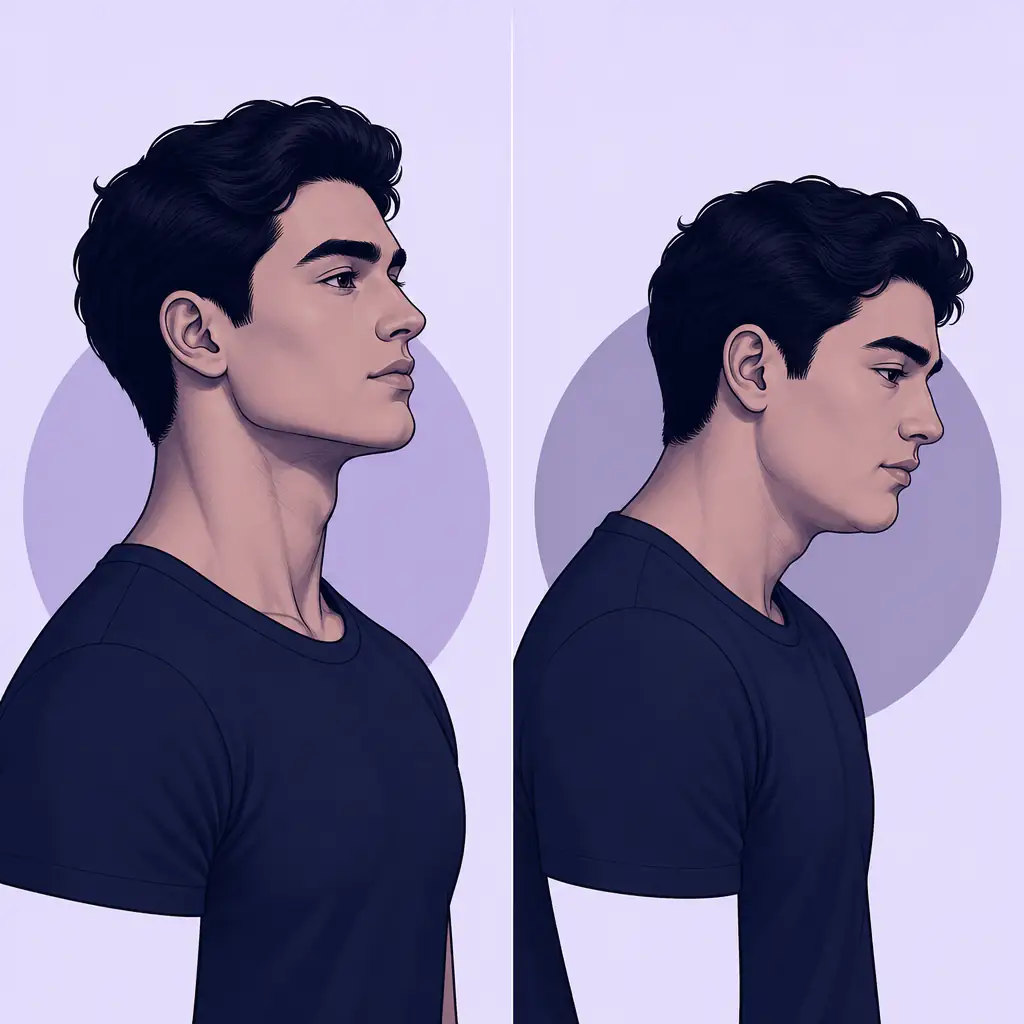
Forward head posture, where the head juts forward relative to the shoulders, compresses the appearance of the neck and reduces the visibility of the jawline from the front. Correcting posture through thoracic spine mobility work and neck strengthening creates a more upright, defined silhouette.
Grooming to Emphasize Masculine Features
Grooming cannot change bone structure, but it can significantly enhance the features you already have.
Beard styling
A well-maintained beard is one of the most powerful tools for shaping the perceived jawline. Research consistently shows that heavy stubble to full beards are rated as more attractive and dominant by observers. More importantly, beard shaping can be used strategically:
- Fading higher on the cheeks reduces a round or wide mid-face appearance.
- Keeping length on the chin visually extends a shorter lower third.
- Sharp neckline at the correct height (roughly two finger-widths above the Adam’s apple) prevents the beard from blending into the neck and keeps the jaw looking defined.
Skincare and skin quality
Clear, even-toned skin with good texture enhances the visibility of facial structure. A basic routine, including a cleanser, SPF, and a retinoid if tolerated, can improve skin quality measurably over several months. Research suggests that skin health is a significant contributor to perceived attractiveness independent of facial structure.
Haircut choice
High-fade and tapered haircuts draw the eye toward the face and, specifically, toward the jawline. Long, heavy hair on the sides can visually widen the temples and diminish the jaw’s prominence. A clean cut that contrasts the sides against the top creates a more structured facial frame.
Medical and Procedural Options
Some men pursue procedural options to address structural limitations. These are worth understanding, but require careful consideration.
Always talk to a qualified medical professional before considering any of the following.
- Jaw filler (hyaluronic acid): Temporary dermal filler injected along the mandible and chin can sharpen the jawline without surgery. Results typically last 12 to 18 months. Results vary significantly by practitioner skill.
- Masseter botulinum toxin: Injecting botulinum toxin into the masseter muscles (the jaw chewing muscles) reduces their bulk if they are overdeveloped, creating a slimmer lower face. Note that for men seeking a wider, more masculine jaw, this is generally not recommended.
- Chin and jaw implants: Surgical implants can add projection to the chin and widen the jaw permanently. This is a significant procedure with real recovery time and risks. Candidate selection and surgical planning are critical.
- Bimaxillary surgery (orthognathic surgery): For significant skeletal discrepancies like a severely recessed mandible, orthognathic surgery repositions the jaw bones. This is major surgery, but results are permanent and structural.
- Malar (cheek) implants: Add projection to flat or underdeveloped cheekbones. Again, a permanent surgical option that requires thorough professional consultation.
Getting an Objective Baseline
One of the hardest things about working on your appearance is accurately assessing where you actually stand. Most people either overestimate or underestimate the strength of their features, partly because of familiarity bias (you are used to your own face) and partly because of lighting and angle differences.
Using Aura can give you a calibrated, objective starting point. The app analyzes your facial structure across dimensions like jawline definition, hunter-eye scoring, facial symmetry, and overall masculinity, then generates a personalized improvement plan. Having a clear baseline makes it much easier to prioritize where your effort will actually move the needle.
Putting It All Together
A hyper masculine face is the result of several overlapping factors: genetics set the structural potential, hormones during development shape the bones, body composition determines how much structure is visible, and grooming refines the presentation. Most men can move meaningfully in this direction through the controllable variables, particularly body fat reduction, neck and trap development, beard styling, and skincare.
Start with the fundamentals. Get lean, train consistently, and groom with intention. Once you have those dialed in, you will have a much clearer picture of what structural factors, if any, are worth addressing further.
Frequently asked questions
What is the most important feature of a hyper masculine face? +
There is no single most important feature, but jaw and brow structure are the most consistently rated traits in research on facial masculinity. A well-defined mandible, strong gonial angle, and prominent supraorbital ridge together create the strongest masculine impression. Facial fat level is also critical because it determines how much of the underlying structure is actually visible.
Can you develop a more masculine face as an adult? +
Bone structure is largely set after puberty, but several controllable factors can meaningfully improve your appearance. Reducing body fat to reveal existing structure, building the neck and trapezius muscles, correcting posture, and using strategic grooming like beard shaping can all produce noticeable improvements. Some procedural options also exist, but require professional consultation.
Does mewing actually work for adults? +
The evidence for mewing producing structural changes in adults is limited. The palate and surrounding bones are largely fused by adulthood, making significant structural changes unlikely from tongue posture alone. That said, correct tongue posture supports better breathing habits and costs nothing, so it is reasonable to practice even if the structural effects are modest.
How does body fat percentage affect facial masculinity? +
Facial fat can mask bone structure significantly, even in men with strong underlying features. Research suggests that lower facial adiposity is a key cue for perceived health and attractiveness. Most men see a noticeable increase in jaw definition and facial sharpness when they reach the 10 to 15 percent body fat range, though this varies by individual fat distribution patterns.