 Aura: Looksmaxxing
 Why Big Noses Are Considered Unattractive
Explore why a big nose can read as unattractive, the facial ratios behind it, and practical steps you can take to improve your overall appearance.
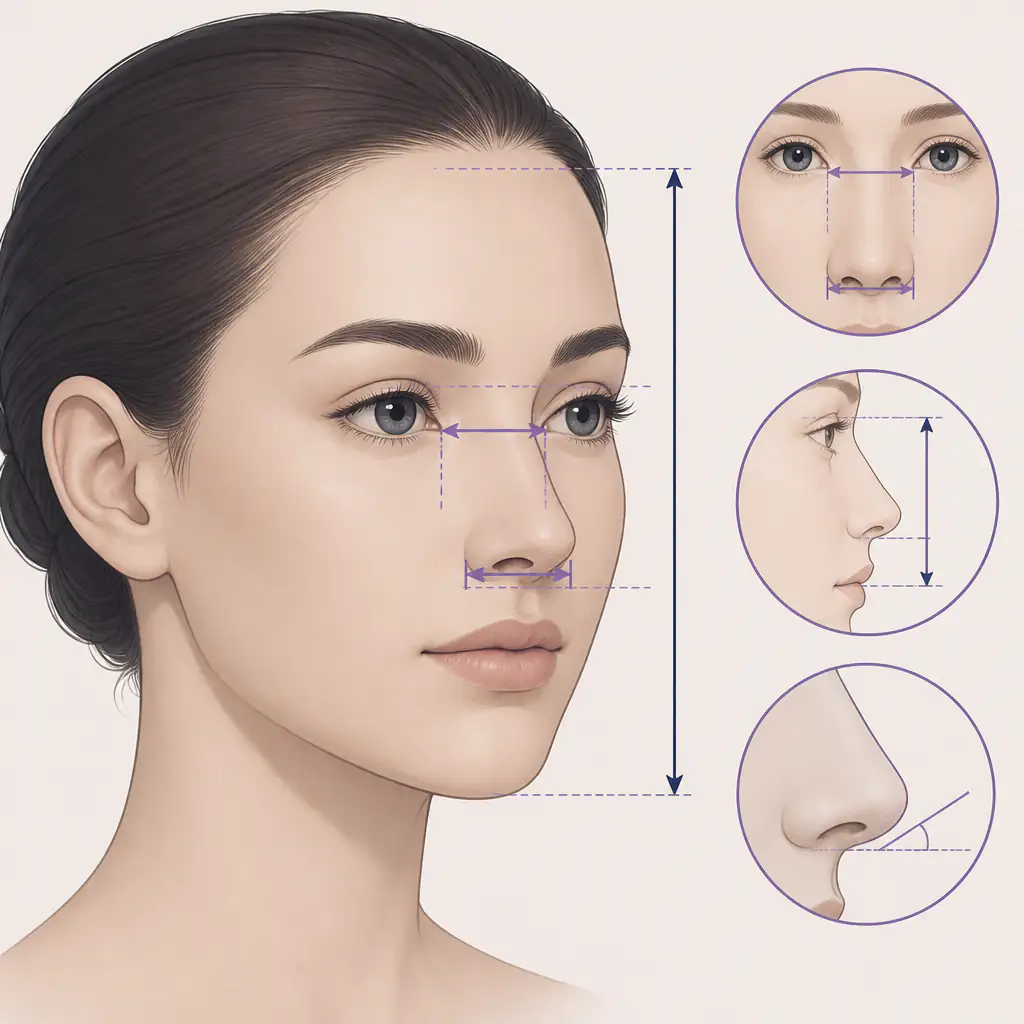
Most people who search “big nose unattractive” are not looking for validation of insecurity. They want a straight answer. So here it is: nose size matters in attractiveness research, but the reason is more specific than you might think. It is rarely the nose in isolation. It is how the nose interacts with the rest of the face that creates a visual problem. Understanding that distinction changes everything about how you approach it.
What the Research Actually Says About Nose Size and Attractiveness
Attractiveness judgments are heavily driven by facial proportion and symmetry. The nose sits at the center of the face, both literally and visually, which means it anchors how observers read the rest of your features.
Studies in facial aesthetics consistently point to the nasofacial angle, the nasal-to-facial width ratio, and tip projection as the key variables. A nose is not perceived as unattractive simply because it is large in absolute terms. It is perceived as unattractive when it falls outside the proportional “sweet spot” relative to the surrounding structures.
The generally cited ideal proportions include:
- Nasal width equal to roughly the distance between the inner corners of the eyes (the intercanthal distance)
- Nasal length no greater than approximately one-third of the total vertical face length
- Tip projection following what is sometimes called the Goode ratio: the horizontal distance from the nasal tip to the alar base should be roughly 55-60% of the nose’s total length
When a nose significantly exceeds these ratios, the face reads as unbalanced. The nose draws visual attention away from the eyes and mouth, which are the features humans instinctively scan first in social interactions.
The Specific Features That Make a Large Nose Read as Unattractive
Not all large noses create the same visual problem. The specific characteristic that tends to be rated most negatively varies by nose type.
Dorsal Hump
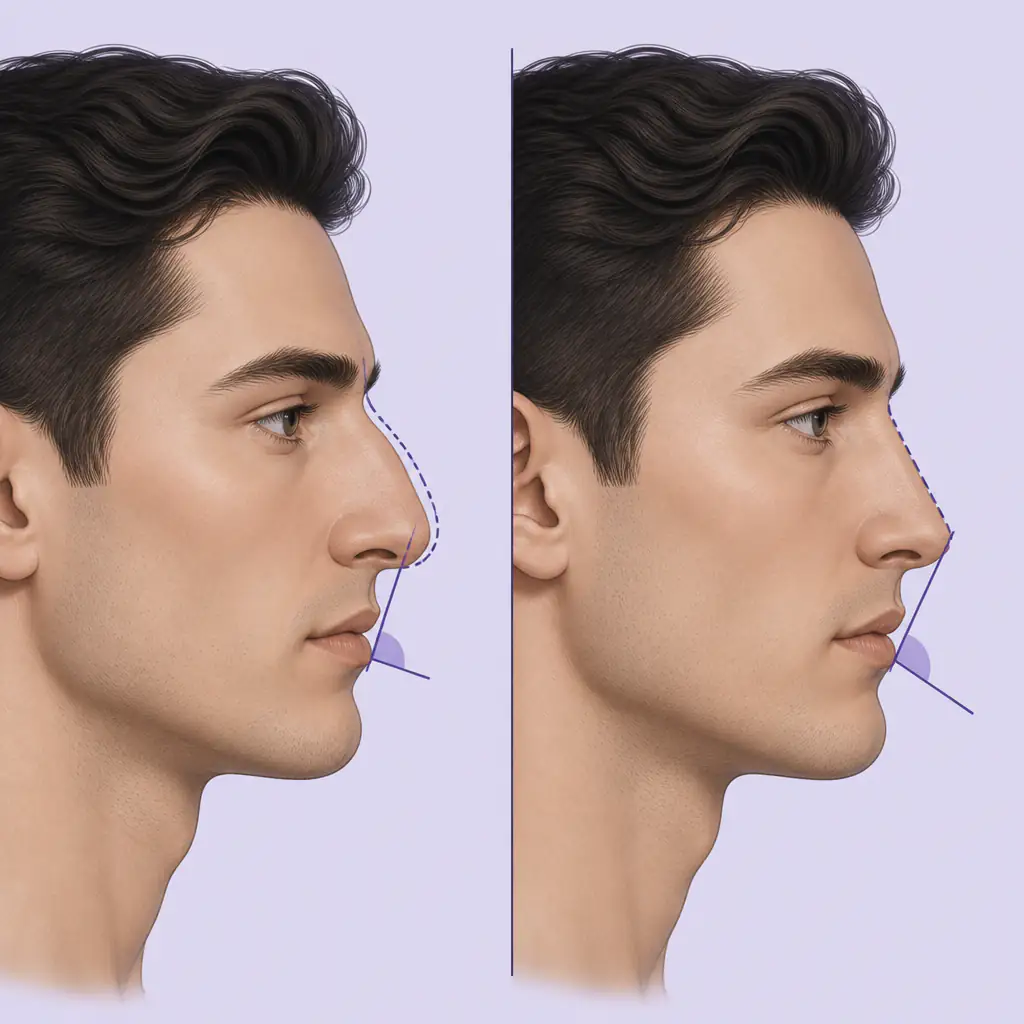
A dorsal hump (the bump along the nasal bridge) breaks the straight or slightly concave profile line that most aesthetic standards favor. In a side-profile view, it creates a convex silhouette that draws the eye in a way that feels visually “heavy.” Research on profile attractiveness consistently ranks a straight or gently curved nasal bridge higher than a humped one, regardless of overall nose size.
Bulbous or Wide Tip
A wide or bulbous nasal tip (technically, increased tip lobule width) scatters reflected light unevenly across the center of the face. Because the tip is the most prominent part of the nose in a frontal view, excess width here visually expands the mid-face and can reduce the perceived sharpness of surrounding features.
Excessive Projection
A nose that projects too far forward from the face (measured by the nasofrontal angle and nasolabial angle) creates an imbalance in the depth dimension. The face appears “leading” with the nose rather than presenting the eyes and cheekbones as primary features.
Downward-Pointing Tip
An acute nasolabial angle (the angle between the base of the nose and the upper lip, ideally around 90-95 degrees in men and 100-105 degrees in women) makes the nose appear to droop, which adds visual heaviness to the lower mid-face and shortens the perceived upper lip.
Why the Rest of Your Face Determines How Much Your Nose Matters
This is the part most articles skip. A nose that would look large on one face can look perfectly proportional on another. The surrounding structures either compensate or amplify the nose’s visual impact.
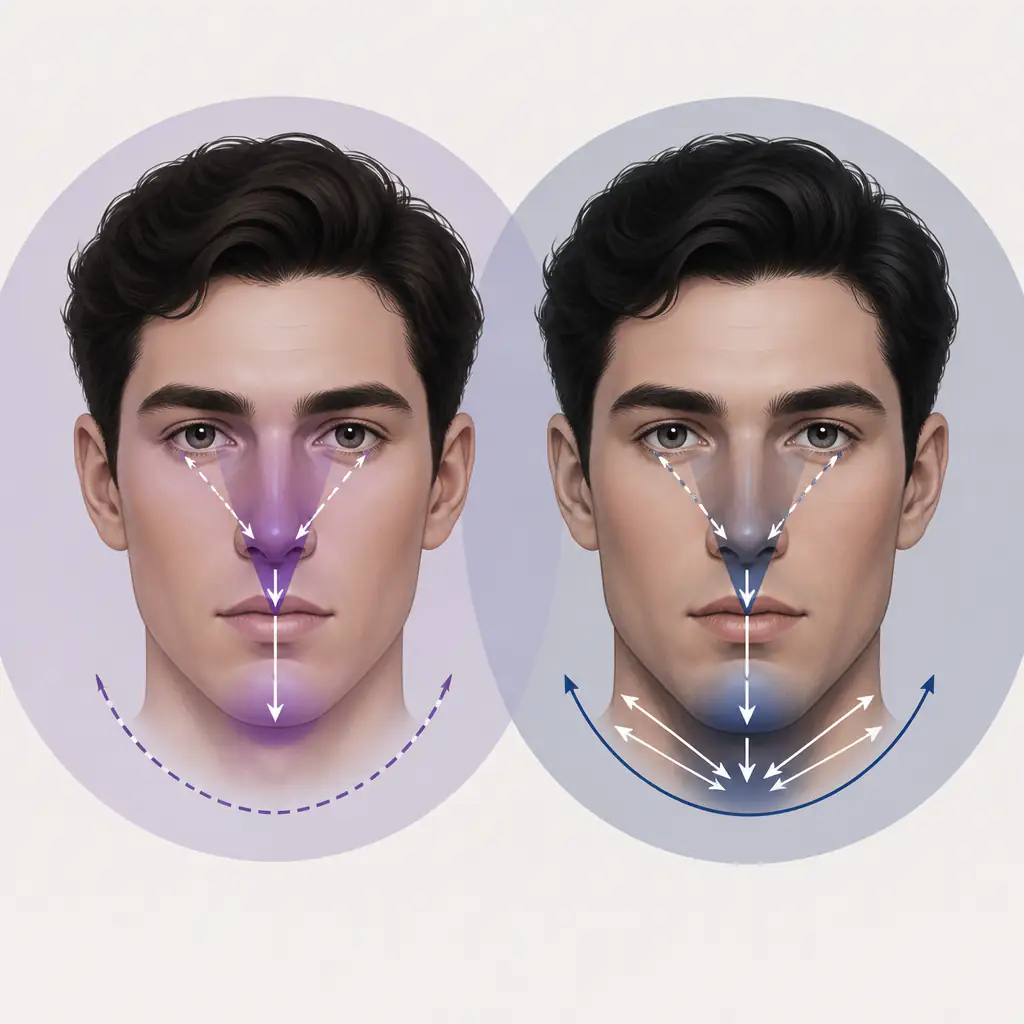
Jawline and chin projection are the most important compensating factors. A weak chin or a recessed jaw increases the relative visual dominance of the nose. When the lower third of the face lacks definition, the mid-face (where the nose lives) becomes the structural anchor of the face by default. This is why rhinoplasty surgeons often evaluate chin projection before recommending any nasal procedure.
Cheekbone prominence also plays a role. Strong zygomatic arches (cheekbones) draw the eye upward and outward, reducing the central dominance of the nose. A flat mid-face, by contrast, leaves the nose with no visual competition.
Eye area matters too. Deep-set eyes or a strong brow ridge create more facial depth and structure, which contextualizes a larger nose within a more angular overall face. A flatter, softer facial structure leaves the nose as the single most prominent three-dimensional element.
Before assuming your nose is “the problem,” it is worth getting an objective read on your overall facial structure. Aura analyzes your facial proportions including jawline definition, midface structure, and feature balance, which gives you a clearer picture of whether your nose is actually the limiting factor or whether other areas are the priority.
Practical Non-Surgical Ways to Reduce the Visual Impact of a Large Nose
Surgery is an option some people consider, but it is far from the only lever available. Several non-invasive strategies can meaningfully shift how your nose reads in person and in photos.
Improve Lower-Face Structure
Because chin and jaw projection are the most powerful visual counterbalances to a prominent nose, anything that improves the lower third of your face will proportionally reduce the visual impact of the nose. This includes:
- Mewing (correct tongue posture applied consistently over time) may help improve maxillary and mandibular positioning in the long term, though results vary significantly and the evidence base is still developing
- Chewing harder foods to develop the masseter muscle, which adds width to the lower face
- Maintaining low body fat, particularly in the face, which reveals the jaw angle and chin definition that soft tissue obscures
Facial Hair
For men, a well-groomed beard or stubble can visually lengthen and strengthen the lower face, redistributing visual weight away from the nose. A goatee or chin-focused beard style in particular adds projection to the chin area.
Hairstyle
Hairstyles that add volume at the sides (rather than height at the top) widen the visual frame of the face, which reduces the relative prominence of a central feature like the nose. A very tight side-parted style or slicked-back hair narrows the face frame and does the opposite.
Posture and Camera Angle
A slightly elevated camera angle (camera positioned just above eye level, shooting slightly downward) compresses the apparent length of the nose in photos. Straight-on or upward-angled shots do the reverse. This is not manipulation; it is understanding how three-dimensional structures translate to two-dimensional images.
Skincare and Facial Definition
Lean, well-defined skin with visible bone structure underlying it always makes facial features read more proportionally. Reducing facial puffiness through hydration, sodium management, and consistent sleep is one of the cheapest high-return moves available.
What About Cosmetic Procedures?
For those who want a more direct solution, there are both non-surgical and surgical routes.
Non-surgical rhinoplasty (using dermal fillers to camouflage a dorsal hump or refine the tip) is a temporary option with lower risk than surgery. It sounds counterintuitive to add volume to a large nose, but strategic filler placement can smooth the nasal profile and create the illusion of better projection ratios.
Surgical rhinoplasty remains the most definitive option for structural changes. Results, when performed by an experienced surgeon, can be significant and permanent.
Chin augmentation (either via filler or implant) is often recommended alongside nasal procedures specifically because of the compensatory relationship discussed above.
Always talk to a qualified medical professional before considering any cosmetic procedure. The right approach depends entirely on your specific anatomy, health history, and goals.
How to Think About This Honestly
There is a difference between understanding why a feature is perceived a certain way and obsessing over a flaw. Attractiveness research is clear that the nose matters, but it is equally clear that it is one variable in a complex system. People with large noses are not categorically unattractive. Facial harmony is about the relationship between features, not any single feature in isolation.
The most productive approach is to get an accurate read of your actual facial structure, identify the specific variables that are limiting your overall rating, and prioritize the ones that are most actionable. That might mean the nose is not actually your highest-leverage target.
If you want a structured starting point, Aura provides a PSL-scored facial analysis with breakdowns by feature, including midface harmony, so you can see exactly where your face scores well and where the gaps are before deciding where to focus your energy.
Frequently asked questions
Is a big nose always considered unattractive? +
Not automatically. Research shows that nose size is evaluated relative to the surrounding facial structures. A larger nose on a face with strong jawline definition, prominent cheekbones, and good overall symmetry is often rated as proportional rather than unattractive. The issue arises when the nose is visually dominant relative to weak or soft surrounding features.
Which specific nose features are rated most negatively in attractiveness research? +
A dorsal hump in profile view, a bulbous or wide tip in frontal view, and a drooping tip with an acute nasolabial angle tend to receive the lowest attractiveness ratings in facial aesthetics studies. Excessive tip projection relative to the nasal base is also consistently flagged. The specific problem feature matters more than overall nose size.
Can you make a big nose look smaller without surgery? +
Yes, to a meaningful degree. Improving jaw and chin definition, choosing wider hairstyles, managing body fat percentage to reduce facial puffiness, and using a slightly elevated camera angle in photos all reduce the visual dominance of the nose. These are not dramatic fixes, but they are real and cumulative.
Should I get a rhinoplasty if I am unhappy with my nose? +
That is a decision that requires a consultation with a qualified plastic or facial surgeon, not an internet article. Before pursuing surgery, it is worth getting a clear picture of your overall facial proportions, because in many cases improving another feature such as the chin provides more visual improvement than nasal surgery alone. Always talk to a qualified professional before considering any procedure.