 Aura: Looksmaxxing
 Hunter Eyes vs Almond Eyes: Key Differences Explained
Learn the real differences between hunter eyes and almond eyes, how each is defined anatomically, and what they mean for facial aesthetics.
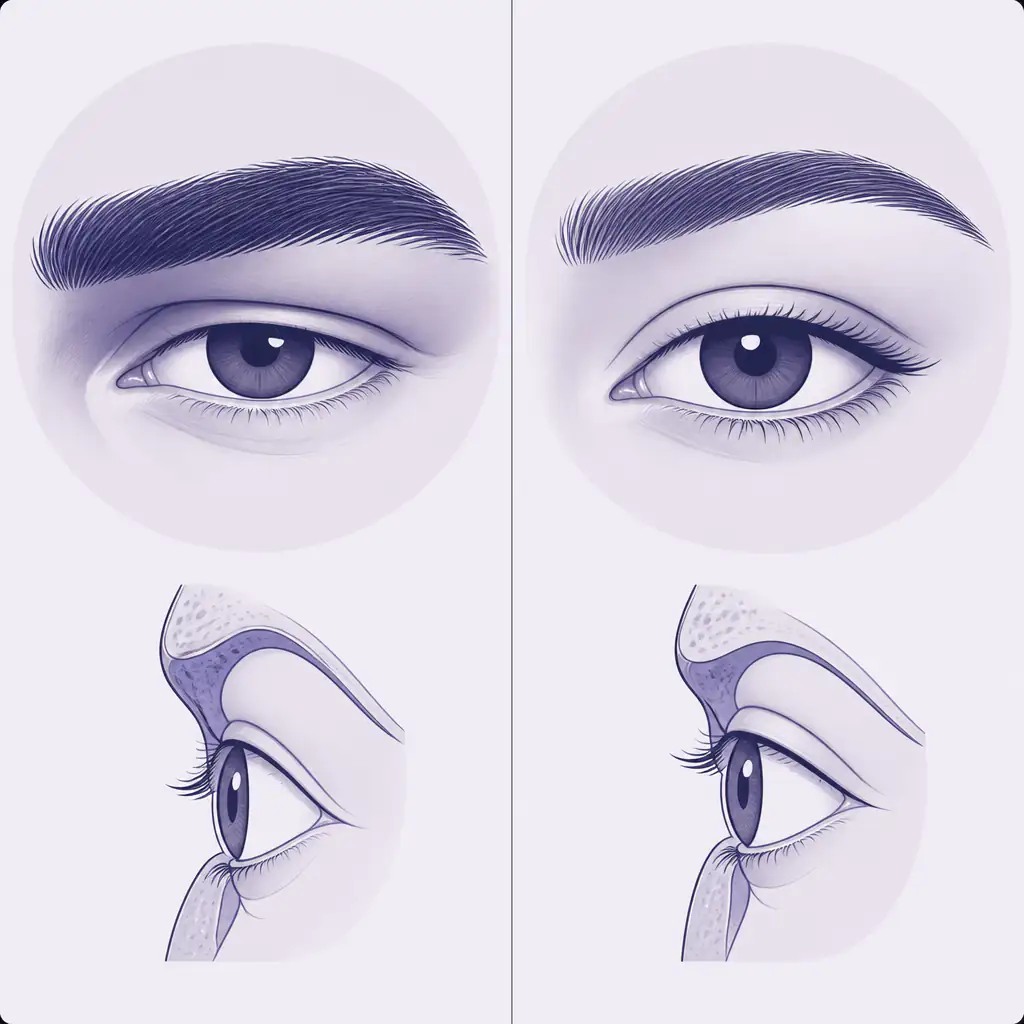
When people talk about attractive eye shapes, two terms come up constantly: hunter eyes and almond eyes. They sound similar, they’re often confused, and occasionally people use them interchangeably. They are not the same thing. Each describes a distinct set of anatomical features, and understanding the difference matters if you’re serious about analyzing or improving your facial aesthetics.
This guide breaks down exactly what defines each eye shape, how they compare side by side, what makes each one considered attractive (and why), and what you can practically do with that information.
What Are Hunter Eyes?
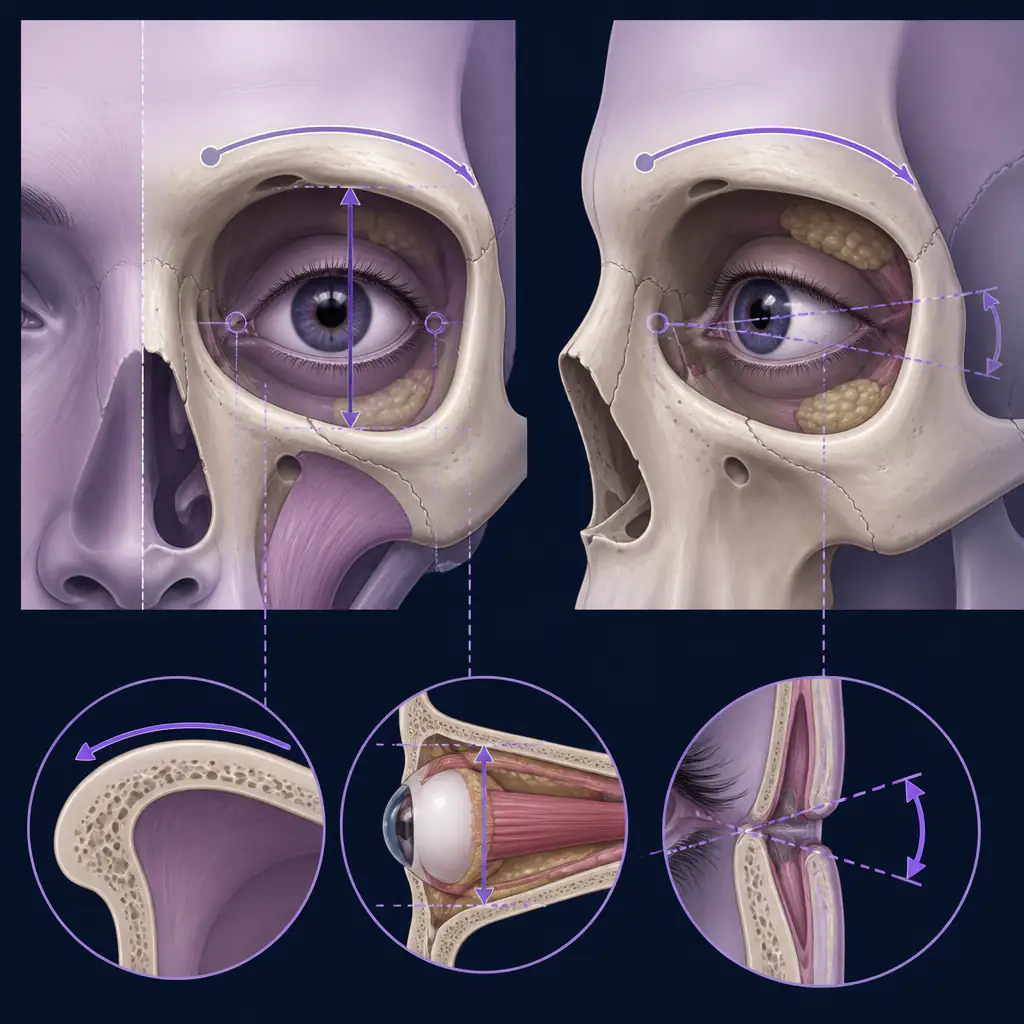
The term “hunter eyes” refers to a specific combination of structural features centered on the position and tilt of the eye relative to the orbital bone.
The Core Anatomy
Hunter eyes are characterized by:
- A low, prominent brow ridge (supraorbital ridge) that sits close to the eye, partially hooding the upper lid
- A neutral to slight positive canthal tilt, meaning the outer corner (lateral canthus) sits at or above the level of the inner corner (medial canthus)
- Deep-set positioning within the orbit, which creates shadow under the brow and gives the eyes a recessed, intense appearance
- Compact upper eyelid show, meaning there is little visible eyelid between the lash line and the brow
The “hunter” label comes from the association with predatory animals, whose eyes face forward with a focused, intense quality. In humans, this translates to a look that reads as alert, confident, and assertive. The brow bone protrusion plays a central role here. When the brow ridge casts a shadow over the eye, it creates natural contrast and depth that flat facial structure simply cannot replicate.
What Hunter Eyes Are Not
Hunter eyes are not just “small eyes” or “squinting eyes.” People sometimes mistake hooded lids or monolids for hunter eyes. The difference is intentional anatomy versus incidental lid shape. A person can have large eyes that still qualify as hunter eyes if the orbital structure is deep-set and the canthal tilt is positive.
What Are Almond Eyes?
Almond eyes describe the shape of the eye opening itself, specifically the visible aperture between the upper and lower eyelids.
The Core Anatomy
Almond eyes are defined by:
- An oval-like eye opening that is wider in the middle and tapers symmetrically toward both the inner and outer corners
- Both corners pointing slightly downward from the widest central point, creating the classic almond or eye-of-a-needle silhouette
- A balanced upper and lower lid curve with no dramatic hooding or excess skin
- Moderate visible eyelid (lid show) that frames the iris cleanly
The almond shape is widely considered a neutral, versatile standard in facial analysis. It appears across many ethnicities and is frequently cited in ophthalmology and cosmetic surgery literature as an aesthetically balanced form. The shape draws the eye inward toward the iris, creating a naturally framed look that works well with most facial structures.
What Almond Eyes Are Not
Almond eyes are not deep-set by definition. They can be surface-level or deep-set depending on the orbital anatomy of the individual. The defining feature is purely the outline shape of the visible eye opening, not the depth, tilt, or brow structure.
Hunter Eyes vs Almond Eyes: Side-by-Side Comparison
Here is a direct comparison of the two across the features that matter most in facial aesthetics analysis:
| Feature | Hunter Eyes | Almond Eyes |
|---|---|---|
| Primary defining trait | Orbital depth and brow prominence | Eye aperture shape |
| Canthal tilt | Neutral to positive (outer corner equal or higher) | Variable, often slightly positive |
| Lid show | Minimal, often hooded | Moderate, clean lid visible |
| Brow ridge | Prominent, overhanging | Not a defining factor |
| Perceived expression | Intense, focused, dominant | Soft, open, balanced |
| Can they overlap? | Yes | Yes |
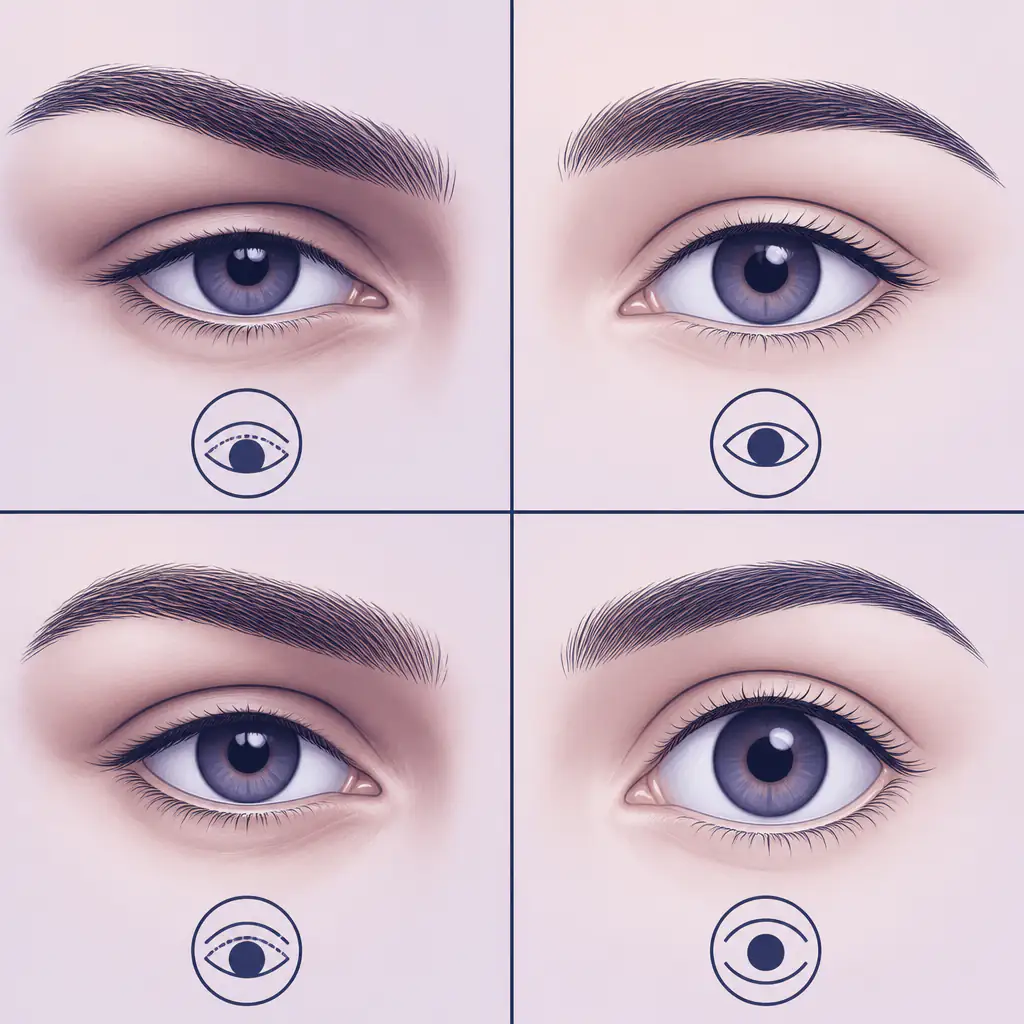
The last row is important. These two descriptors are not mutually exclusive. A person can have almond-shaped eyes that are also deep-set with a strong brow ridge, making them technically both almond and hunter. The terms describe different dimensions of eye anatomy. “Hunter” is about structure and depth. “Almond” is about shape and silhouette.
Why the Distinction Matters for Facial Aesthetics
In practical facial analysis, the two terms serve different purposes.
Hunter eyes are used when evaluating the three-dimensional structure of the midface and orbital area. They relate to bone structure: the depth of the eye socket, the projection of the supraorbital ridge, and the canthal tilt. These are features that change significantly with bone structure changes or, more dramatically, with surgical intervention.
Almond eyes are used when evaluating the two-dimensional outline of the eye as seen from the front. This is more relevant for makeup, cosmetic procedures like blepharoplasty (eyelid surgery), and assessing symmetry.
If you’re trying to understand your own eye structure accurately, it helps to evaluate both dimensions separately. Apps like Aura use AI to assess facial features including canthal tilt and eye shape classification, which can give you a more objective read on where your eyes sit on both of these spectrums without relying on a mirror selfie.
Which Eye Shape Is Considered More Attractive?
This depends heavily on context and the framework being used.
The Case for Hunter Eyes
In male facial aesthetics specifically, hunter eyes are frequently rated as highly attractive. Research in evolutionary psychology suggests that prominent brow ridges and deep-set eyes correlate with perceptions of dominance, maturity, and health. The shadow cast by a pronounced orbital rim adds contrast to the face, which tends to photograph well and create a stronger first impression.
For men, the combination of hunter eyes with a well-defined jawline and cheekbones is often cited as the apex of masculine facial structure in analytical frameworks.
The Case for Almond Eyes
Almond eyes are considered universally attractive across genders and cultures. Their symmetry and clean framing of the iris make them a consistent benchmark in beauty analysis. Cosmetic surgeons often use the almond shape as the target outcome for eye-area procedures because it tends to flatter most face shapes without looking extreme.
For women, almond eyes are often associated with a balanced, elegant look. They work with a wide range of makeup styles and tend to age well compared to rounder or more protruding eye shapes.
The Honest Answer
Attractivness is multifactorial. Neither eye shape is objectively “better” across all faces. What matters more is how your eye shape fits your overall facial harmony, including the distance between your eyes, the width of your face, your nose structure, and your cheekbone position. A set of perfect hunter eyes on a face with poor midface development may look less cohesive than almond eyes on a well-proportioned face.
Practical Tips for Working With Your Eye Shape
Regardless of which eye shape you have, there are non-surgical ways to work with your natural structure.
For Hunter Eyes
- Maintain low body fat, particularly in the face. Higher body fat can obscure orbital depth and reduce the shadow effect that makes hunter eyes distinct.
- Mewing and tongue posture may support midface development over time. Research on orthotropics is ongoing, but consistent correct oral posture is low-risk and potentially beneficial.
- Grooming the brows to follow the natural arch without over-shaping preserves the brow ridge effect.
- Lighting awareness in photos: side lighting enhances orbital depth, while flat frontal lighting flattens it.
For Almond Eyes
- Eye-area skincare focused on reducing puffiness and dark circles preserves the clean lid show that defines almond eyes. Ingredients like caffeine and retinol are commonly used for this.
- Makeup techniques such as a subtle cat-eye liner extension can accentuate the tapered outer corner characteristic of the almond shape.
- Sleep quality and hydration directly affect periorbital puffiness, which can temporarily distort the almond outline.
For Both
- Reducing overall body fat tends to improve eye shape appearance across the board by reducing facial puffiness and making bone structure more visible.
- Consistent sleep (7 to 9 hours) reduces periorbital fluid retention, which affects how both eye shapes present.
- If you’re considering any cosmetic procedure related to your eyes, canthopexy, blepharoplasty, or orbital rim augmentation, talk to a qualified, board-certified surgeon before making any decisions. These are surgical interventions with real risks and variable outcomes.
Before committing to any protocol, it’s worth getting an objective baseline assessment of your current eye structure. Aura provides AI-based analysis of canthal tilt, eye shape, and other facial features, which can help you identify what you’re actually working with before deciding what to focus on.
Common Misconceptions
“Hunter eyes are always more attractive than almond eyes.” Not true. This claim circulates in online aesthetics communities but doesn’t hold up under scrutiny. Both shapes have strong aesthetic cases, and context matters significantly.
“You can’t have both.” You can. Many faces with high aesthetic ratings in clinical and community-based assessments show features of both. Almond shape plus deep-set positioning is a recognized combination.
“Hunter eyes require surgery to develop.” While orbital structure is largely genetic, factors like body composition, facial fat distribution, and even posture affect how the orbital area presents. Non-surgical optimization is worth exploring before considering anything invasive.
“Almond eyes are weak or feminine.” Almond eyes appear on faces rated highly attractive across genders. The shape itself is not gender-coded. What creates a masculine or feminine impression is the surrounding structure, brow, bone, and overall proportions, not the aperture shape alone.
Frequently asked questions
Can you have both hunter eyes and almond eyes at the same time? +
Yes. Hunter eyes describe orbital depth and brow structure, while almond eyes describe the shape of the eye aperture. These are independent dimensions, so a person can have an almond-shaped eye opening that is also deep-set with a strong brow ridge, satisfying both definitions simultaneously.
Are hunter eyes more attractive than almond eyes? +
Neither is universally more attractive. Hunter eyes are often rated highly in male facial aesthetics for their association with structural dominance and depth, while almond eyes are considered a balanced, widely flattering shape across genders and cultures. Attractiveness depends on how either shape fits the overall facial proportions.
Can you naturally develop hunter eyes without surgery? +
The core bone structure of hunter eyes is largely genetic, but factors like body fat percentage, facial puffiness, and posture can affect how the orbital area presents. Reducing body fat and maintaining correct oral posture may improve the appearance of orbital depth, though results vary and significant structural change requires surgical intervention.
What is canthal tilt and why does it matter? +
Canthal tilt refers to the angle between the inner corner (medial canthus) and the outer corner (lateral canthus) of the eye. A positive tilt means the outer corner sits higher, which is generally associated with a youthful and lifted appearance. A negative tilt means the outer corner sits lower, which can give a tired or drooping look. Canthal tilt is one of the key metrics in facial aesthetics analysis and is relevant to both hunter and almond eye assessment.