 Aura: Looksmaxxing
 How to Raise Your Hyoid Bone: What Actually Works
Learn how to raise your hyoid bone through targeted exercises and posture habits. Discover what the research says and what you can realistically expect.
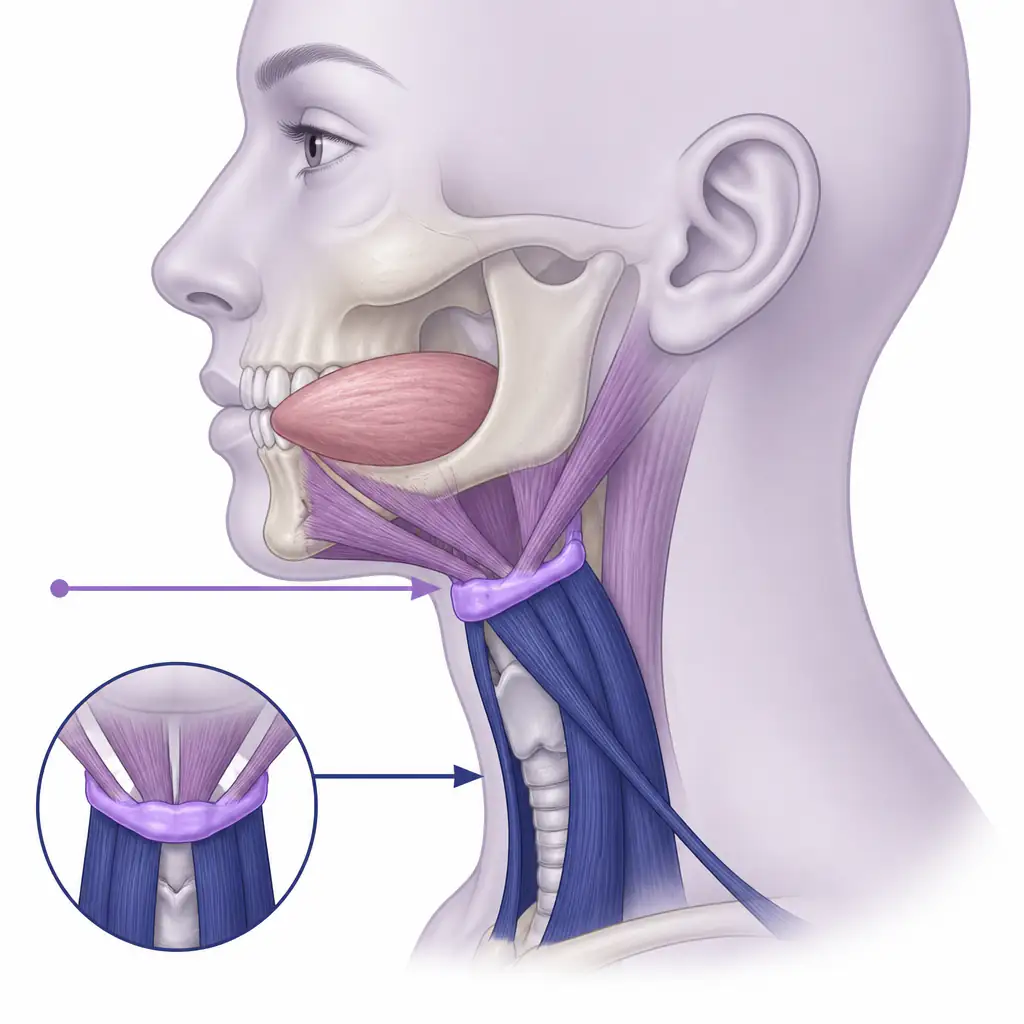
The hyoid bone sits at the base of your tongue, roughly at the level of the third cervical vertebra, and it plays a more important role in your appearance than most people realize. It anchors the muscles of the tongue, jaw, and neck, and its vertical position influences how your neck and submental region, the area under the chin, looks from the side and front.
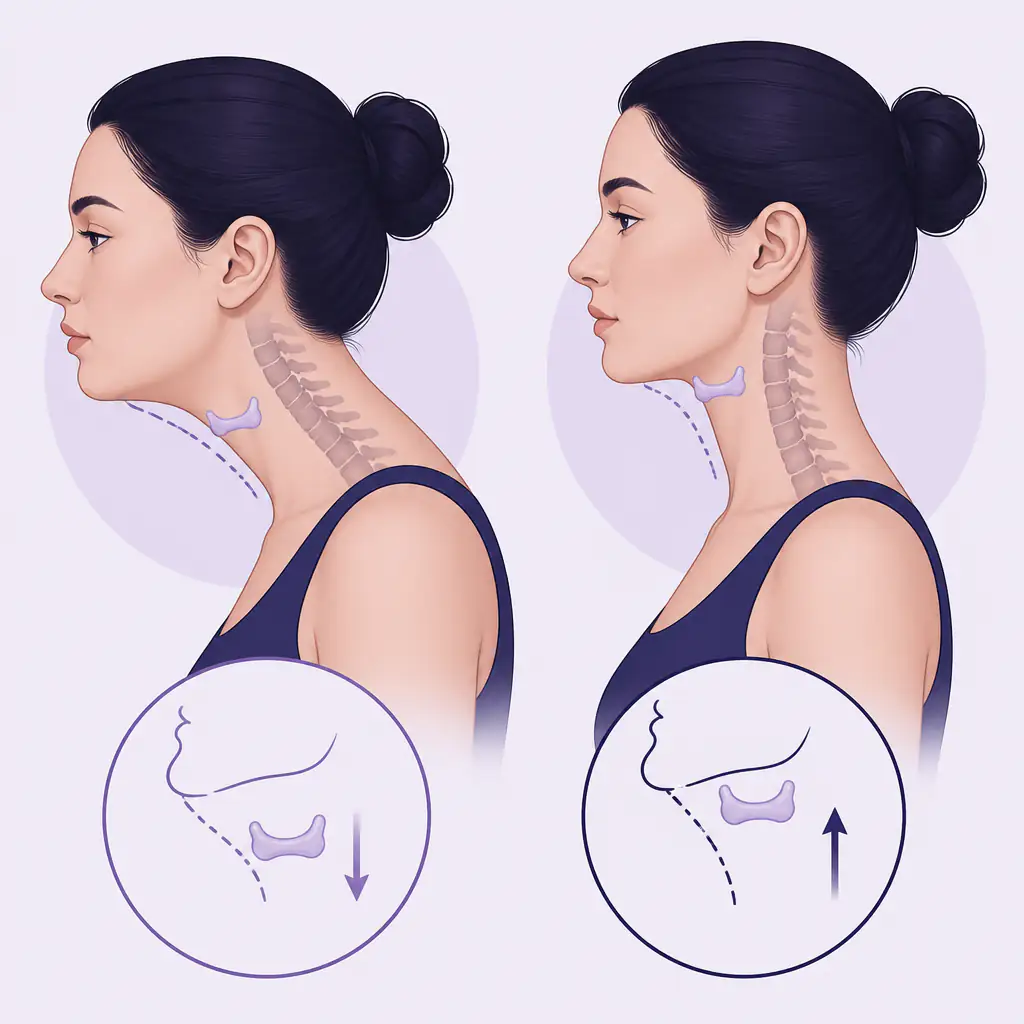
If the hyoid sits low, the tissue under the jaw tends to look heavier and less defined, even in people with low body fat. This is why some individuals who focus on jaw and facial aesthetics start asking how to raise the hyoid bone. The short answer is: it is possible to influence its resting position over time, but the process requires consistency, correct technique, and realistic expectations.
This guide covers the anatomy you need to understand, the exercises and habits that may help, and what the evidence actually says.
Why Hyoid Position Matters for Facial Aesthetics
The hyoid is unique in the human body. It is the only bone that does not articulate directly with any other bone. Instead, it is suspended by a complex web of muscles and ligaments connecting it upward to the skull, inward to the tongue, downward to the larynx, and forward to the chin via the mylohyoid and geniohyoid muscles.
Because of this suspension system, the hyoid’s resting position is largely determined by muscle tone and habitual posture rather than fixed skeletal architecture. A hyoid that rests higher and closer to the mandible is associated with:
- A more defined jawline and submental angle
- A cleaner neck silhouette
- Better tongue posture and airway geometry
Research in cephalometric imaging, which uses X-rays to measure skull and neck landmarks, consistently shows that individuals with stronger suprahyoid muscle tone tend to have higher hyoid positions. The suprahyoid muscles, which include the mylohyoid, geniohyoid, digastric, and stylohyoid, are the primary targets of any hyoid-raising protocol.
The Connection Between Mewing and Hyoid Position
Mewing, the practice of resting the entire tongue against the roof of the mouth, directly engages the muscles attached to the hyoid. When the tongue presses upward correctly, the suprahyoid muscles contract isometrically, pulling the hyoid upward and forward.
This is not incidental. Dr. John Mew’s original work on orthotropics emphasized tongue posture precisely because of its downstream effects on facial bone position, airway, and soft tissue. The hyoid is part of that chain.
Practicing proper tongue posture consistently may help maintain a higher hyoid resting position over time, particularly in younger individuals whose musculoskeletal system is more responsive to functional stimuli. Adults can still benefit, but adaptation tends to be slower and more subtle.
The key point: mewing is not just about palate expansion. At the muscle-and-bone level, it is also a sustained isometric exercise for the hyoid complex.
Exercises That May Help Raise the Hyoid Bone
Below are the most evidence-adjacent exercises used in speech therapy, myofunctional therapy, and the looksmaxxing community to target hyoid position. None of these are guaranteed to produce specific cosmetic outcomes, but they address the muscle groups directly responsible for hyoid elevation.
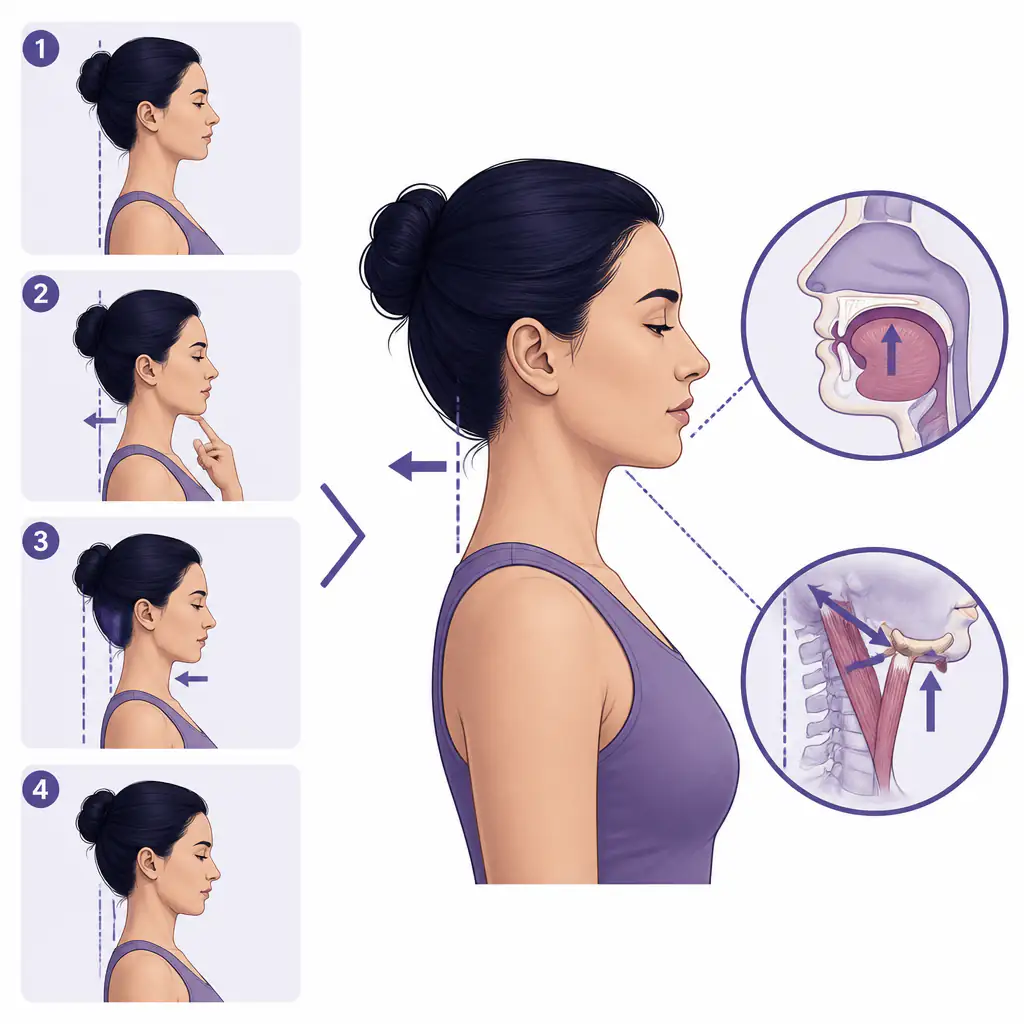
1. Chin Tucks with Suprahyoid Engagement
This is the foundational movement. It strengthens the muscles that pull the hyoid upward while also correcting forward head posture, which mechanically depresses the hyoid.
How to perform it:
- Sit or stand with your spine straight.
- Pull your chin straight back, creating a gentle double-chin effect. Do not tilt your head down.
- While holding the tuck, press your tongue firmly to the roof of your mouth.
- Hold for 5 seconds. Release slowly.
- Repeat 10 to 15 times per set, two to three sets daily.
The combination of the chin tuck and tongue press simultaneously activates the geniohyoid, which runs from the chin to the hyoid, and the mylohyoid, which forms the floor of the mouth.
2. Tongue-to-Roof Isometric Holds
This isolates the suprahyoid muscles more directly.
- Open your mouth slightly.
- Press the tip and body of your tongue to the palate as hard as you can without closing your jaw.
- Hold for 10 seconds.
- Relax for 5 seconds.
- Repeat for 8 to 10 rounds.
You should feel fatigue at the base of the tongue and under the chin after a few sets. That is the target musculature responding.
3. Swallowing Against Resistance
Used in dysphagia (swallowing difficulty) rehabilitation, this exercise directly trains hyoid elevation because the hyoid must rise sharply during each swallow.
- Place two or three fingers lightly on the hyoid bone so you can feel it move.
- Swallow firmly and deliberately, trying to maximize the upward movement of the hyoid.
- Practice 15 to 20 controlled swallows.
- For added resistance, swallow with your head tilted very slightly forward (chin toward chest).
4. The Jaw-Open Tongue Press
This variation increases the range of motion demand on the suprahyoid muscles.
- Open your mouth as wide as comfortable.
- Press the tongue tip to the spot just behind your upper front teeth (the incisive papilla).
- Hold while maintaining a wide-open jaw for 5 seconds.
- Repeat 10 times.
The wider the jaw is open, the more the suprahyoid muscles must contract to elevate the tongue, creating greater tension through the hyoid complex.
Posture and Lifestyle Factors That Affect Hyoid Position
Exercises alone will not produce lasting change if your daily habits are working against you. The following factors have a measurable impact on hyoid resting position.
Correct Your Head Posture
Forward head posture is probably the single biggest environmental driver of a low hyoid position. When the head sits in front of the center of gravity, the infrahyoid muscles, which run below the hyoid down to the sternum and clavicle, become chronically tight. This downward tension counteracts any upward pull from the suprahyoid group.
For every inch your head drifts forward from neutral, the effective load on the cervical spine increases significantly. Correcting this posture through wall angels, thoracic extensions, and conscious head retraction throughout the day may reduce the downward pull on the hyoid.
Nasal Breathing
Mouth breathing requires the tongue to sit low in the floor of the mouth, which passively depresses the hyoid over time. Habitual nasal breathing, by contrast, keeps the tongue elevated and the suprahyoid muscles in a mild state of contraction during rest.
If you are struggling to breathe nasally at night, consider evaluating for nasal obstruction with an ENT before spending months on exercises.
Body Composition
Subcutaneous fat in the submental area can mask hyoid position visually even if the bone itself is elevated. Reducing overall body fat will make any improvements in hyoid position more visible. This is not about extreme leanness; even modest fat loss in the face and neck region can significantly change how the jawline and neck junction appear.
Sleep Position
Sleeping on your back with proper cervical support maintains neutral head and neck alignment overnight. Sleeping face-down or with a pillow that pushes the head forward can undo daytime posture work. A low-profile cervical pillow that keeps the head in line with the spine is worth considering.
How Long Does It Take to See Results
This is where honest expectation-setting matters. The hyoid’s resting position is influenced by muscle tone, and muscle tone changes slowly with consistent training.
In myofunctional therapy, patients practicing structured tongue and swallowing exercises typically begin to notice measurable changes in muscle strength within four to eight weeks. Visible changes in soft-tissue appearance under the jaw may take several months of consistent practice.
Factors that influence your rate of progress:
- Age: Younger individuals generally see faster adaptation.
- Starting posture: People with significant forward head posture may need to address that first before hyoid exercises translate to visible results.
- Consistency: Daily practice outperforms sporadic intense sessions.
- Genetics: Bone structure, fat distribution, and muscle insertion points vary and will set limits on what is achievable without intervention.
If you want an objective baseline before starting this kind of protocol, tools like Aura can analyze your jawline and submental area from photos, giving you a reference point to track changes over time rather than relying on subjective perception.
What Cannot Be Changed Without Medical Intervention
It is important to be direct about limitations. Exercises can improve muscle tone and resting posture, but they cannot:
- Structurally relocate the hyoid to a significantly higher skeletal position in an adult
- Correct hyoid depression caused by anatomical anomalies or post-surgical scarring
- Produce results equivalent to surgical hyoid suspension procedures
Hyoid suspension surgery exists as a procedure primarily in the context of sleep apnea treatment, where the hyoid is physically anchored to the thyroid cartilage to open the airway. Some surgeons also perform it in the context of neck rejuvenation. These are serious medical procedures with recovery time, risks, and costs that require careful evaluation.
If you are considering any surgical or medical procedure related to hyoid position, consult a qualified maxillofacial surgeon or ENT specialist before making any decisions.
Building a Consistent Daily Routine
Here is a simple framework that incorporates the exercises and habits described above without requiring a significant time investment.
Morning (5 minutes):
- 2 sets of chin tucks with tongue press (10 reps each)
- 10 deliberate swallowing exercises with finger on hyoid for feedback
Throughout the day:
- Maintain correct tongue posture (full tongue on palate) whenever you think of it
- Keep nasal breathing as the default
- Periodically check and correct head position
Evening (5 minutes):
- 2 sets of jaw-open tongue press (10 reps each)
- 2 sets of tongue-to-roof isometric holds (8 rounds)
Tracking your adherence with a simple habit app or journal makes a meaningful difference in long-term consistency. If you want a more structured approach to monitoring facial changes alongside your routine, Aura provides jawline and facial analysis that can help you document progress with more precision than selfie comparisons alone.
The bottom line is that raising the hyoid bone through non-surgical means is a gradual process rooted in correcting muscle tone and posture. The exercises are low-risk, require no equipment, and address real anatomical mechanisms. Approach it as a long-term habit rather than a quick fix, and the probability of seeing meaningful improvement is reasonable.
Frequently asked questions
Can you actually raise your hyoid bone with exercises? +
You cannot move the hyoid to a dramatically new skeletal position through exercise alone in adulthood, but you can improve the resting tone of the muscles that support and elevate it. Over time, stronger suprahyoid muscles may help the hyoid sit higher at rest, which can subtly improve the appearance of the submental area and jawline.
How is hyoid position related to mewing? +
Correct mewing requires pressing the full tongue against the palate, which activates the suprahyoid muscles that attach to the hyoid and pull it upward. Consistent mewing effectively acts as an isometric exercise for the hyoid complex, meaning it may help maintain or improve hyoid position over time as a secondary effect of proper tongue posture.
How long does it take to see changes from hyoid exercises? +
Measurable increases in suprahyoid muscle strength can appear within four to eight weeks of daily practice according to myofunctional therapy research. Visible changes in the soft tissue appearance of the neck and jaw may take several months and depend on factors like starting posture, body composition, age, and consistency.
Is hyoid suspension surgery worth considering? +
Hyoid suspension is a legitimate surgical procedure used primarily for sleep apnea and, in some cases, neck aesthetics. It carries real surgical risks and requires a significant recovery period. Anyone considering it should consult a qualified maxillofacial surgeon or ENT specialist to evaluate whether they are a suitable candidate and to understand the potential outcomes and risks fully.