 Aura: Looksmaxxing
 How to Grow Masseter Muscle for a Stronger Jaw
Learn how to grow masseter muscle with proven exercises, diet tips, and lifestyle habits that may build a more defined, stronger jaw over time.

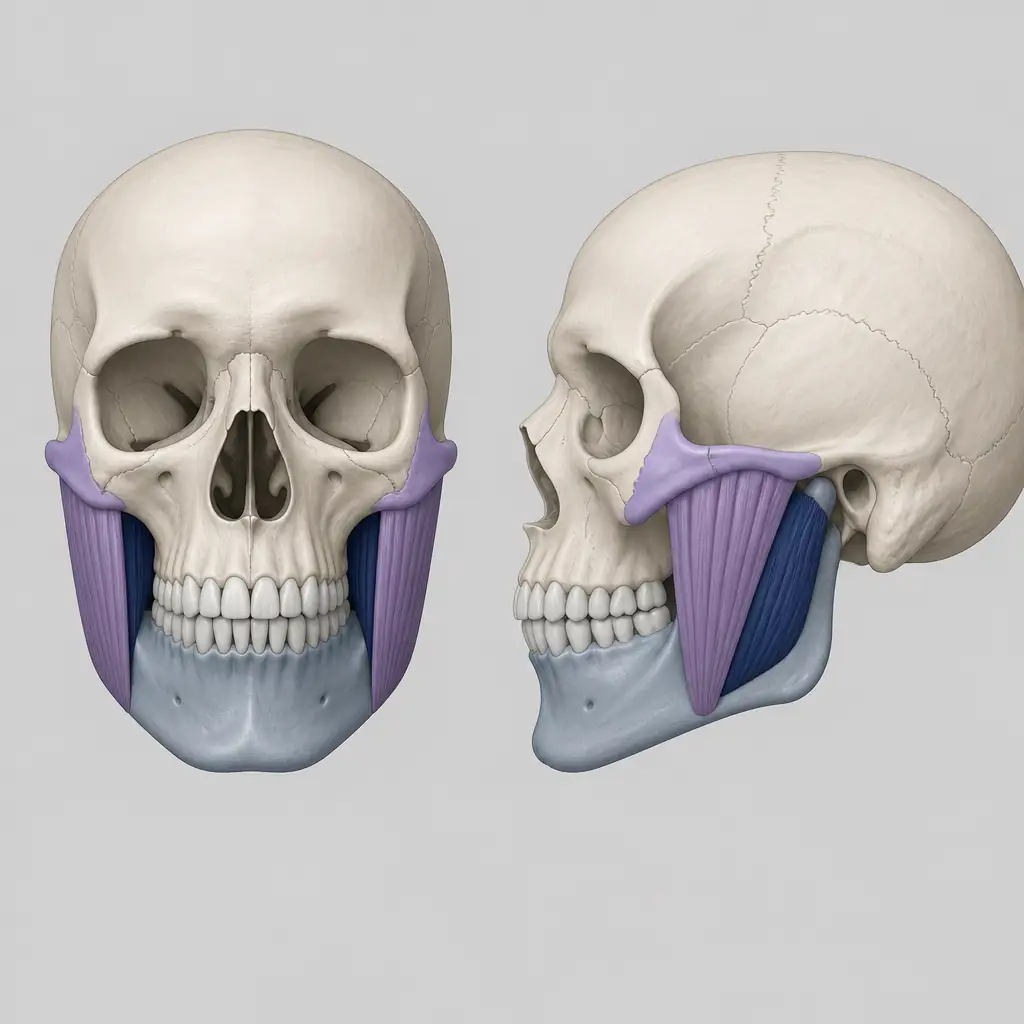
The masseter is one of the most powerful muscles in the human body relative to its size. It sits at the back of your jaw, connecting your cheekbone to your lower jawline, and it is responsible for chewing, clenching, and biting. When it develops, it creates that squared, angular jaw appearance that reads as masculine and defined.
The good news: the masseter responds to resistance training just like any other skeletal muscle. The less obvious news: it requires consistency, the right stimulus, and patience. This guide covers everything you need to actually grow this muscle, not just keep it busy.
Understanding the Masseter Before You Train It
The masseter is a paired muscle, one on each side of your face. It has two layers:
- The superficial head originates from the zygomatic arch (cheekbone) and runs diagonally downward. This is the part most visible as a jaw “bulge” when clenched.
- The deep head sits underneath and contributes more to raw bite force than to visible definition.
When people talk about growing the masseter for aesthetic purposes, they are mostly targeting the superficial head. Hypertrophy here creates a wider, squarer lower face.
Important baseline: genetics determine where your masseter sits and how it responds to training. Some people have naturally prominent masseters from years of eating a high-resistance diet. Others have thin masseters despite similar habits. Before committing to a training plan, it helps to know where you currently stand. Tools like Aura can give you an AI-based jawline analysis and a baseline score, so you have something objective to track your progress against.
What Actually Causes Masseter Hypertrophy
Muscle growth follows a simple principle: progressive overload. You apply a stimulus, the muscle recovers, and it grows slightly larger to handle that load next time. The masseter is no different.
The most reliable way to apply progressive overload to the masseter is through chewing resistance. Your jaw closes against something that pushes back, your masseter contracts under load, and over weeks and months, the fibers thicken.
This is why people who regularly eat tough foods, like jerky, hard cheeses, raw vegetables, or gum over years, sometimes develop noticeably wider jaws. The muscle adapted to the demand placed on it.
Key variables that influence masseter growth:
- Resistance level of whatever you are chewing
- Volume of repetitions (sets and duration)
- Frequency of training sessions per week
- Recovery time between sessions
- Protein intake to support muscle repair
The Best Exercises and Methods to Grow the Masseter
Mastic Gum
Mastic gum is a natural resin from the Pistacia lentiscus tree. It is significantly harder than regular chewing gum and does not break down quickly. Research suggests it provides substantially more resistance per chew than conventional gum.
How to use it:
- Start with 1-2 pieces per session (roughly 1-2 grams total)
- Chew for 20-30 minutes per session
- Begin with 3-4 sessions per week to avoid overuse soreness
- Progress to daily use over 4-6 weeks as your jaw adapts
- Alternate sides periodically to develop both masseters evenly
Some users report jaw soreness in the first two weeks, similar to the muscle soreness after starting a new gym exercise. This is normal and typically fades as the muscle adapts.
Falim Gum
Falim is a Turkish sugar-free gum that is much harder than standard gum but softer than mastic. It is a useful starting point if mastic gum feels too intense, and it is cheaper and more widely available.
Use it the same way: controlled sessions of 20-30 minutes, not mindless all-day chewing.
Jaw Trainers and Silicone Chews
These are silicone or rubber devices designed specifically for jaw resistance training. Quality varies widely between products. The key feature to look for is adjustable resistance levels, so you can progress over time rather than staying at the same load indefinitely.
Protocol:
- 3 sets of 20-30 reps per side, 4-5 times per week
- Rest 30-60 seconds between sets
- Do not train to failure on every session. Leave one or two reps in reserve to reduce injury risk.
Dietary Texture as Passive Training
Shifting your diet toward tougher whole foods adds meaningful daily volume without formal training sessions:
- Whole raw vegetables (carrots, celery, bell peppers)
- Tough cuts of meat (not over-cooked)
- Hard cheeses
- Nuts
- Dried fruit and jerky
This will not replace dedicated resistance training for growth, but it adds cumulative load across the day.
Programming Your Jaw Training Week
Treating the masseter like any other muscle means applying sound programming principles.
| Day | Activity |
|---|---|
| Monday | Mastic gum: 2x 20 min sessions |
| Tuesday | Rest or dietary texture only |
| Wednesday | Jaw trainer: 3x 20 reps per side |
| Thursday | Rest |
| Friday | Mastic gum: 2x 20 min sessions |
| Saturday | Jaw trainer: 3x 20 reps per side |
| Sunday | Full rest |
This gives you four training days and three rest days per week. The masseter recovers relatively quickly compared to larger muscle groups, but it still benefits from recovery windows, especially early in training.
After 6-8 weeks, you can increase either session duration or resistance level, not both at once.
Nutrition for Masseter Growth
Muscle hypertrophy does not happen without adequate nutrition. The masseter is no exception.
Protein: Research suggests 0.7 to 1 gram of protein per pound of bodyweight per day supports muscle protein synthesis in people actively training. Prioritize complete protein sources: lean meats, eggs, dairy, and legumes.
Caloric intake: Growing any muscle is easier in a slight caloric surplus. You do not need a dramatic bulk, but being consistently under-fed will blunt your results.
Hydration: Dehydrated muscles fatigue faster and recover more slowly. Drink water consistently throughout the day.
Avoid excessive alcohol: It impairs muscle protein synthesis and disrupts sleep, both of which slow recovery.
Realistic Expectations and Timeline
This is the part most guides skip over, and it matters.
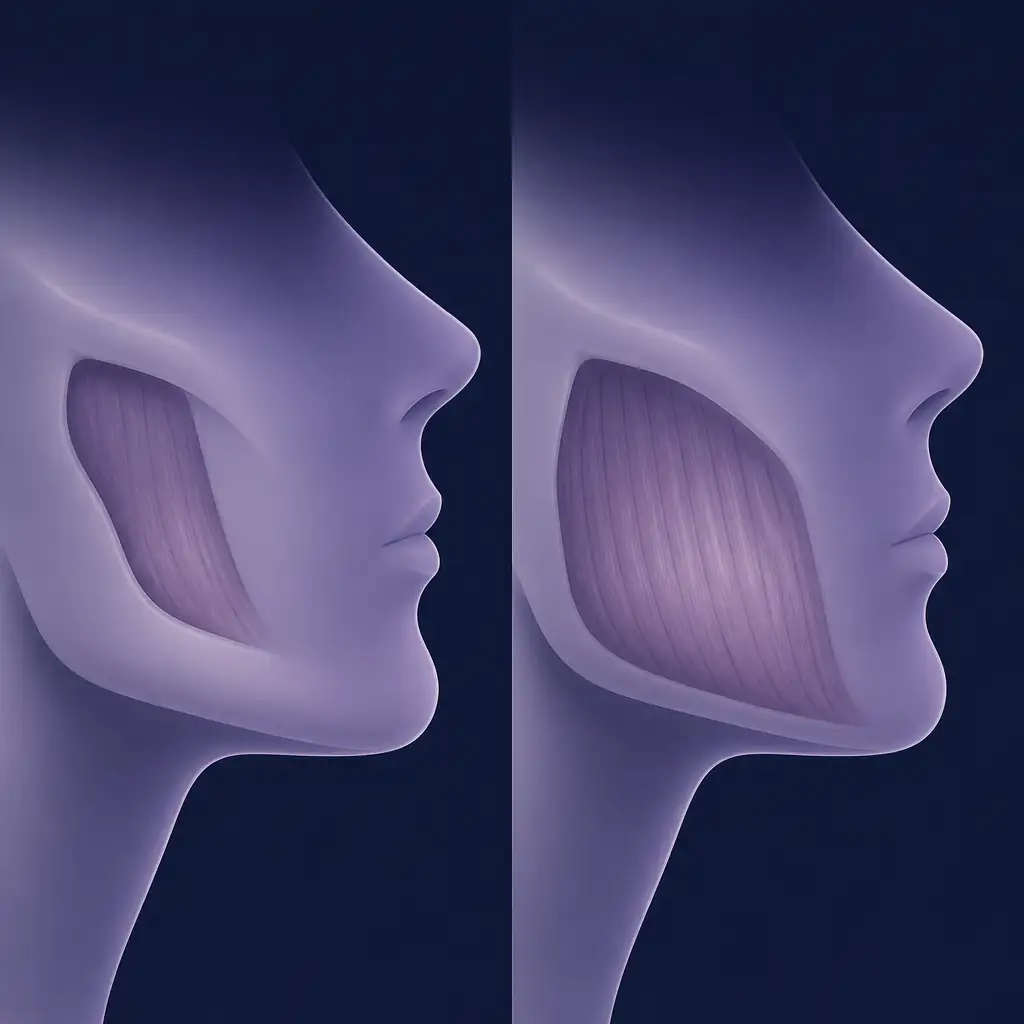
The masseter is a relatively small muscle. Even with consistent training and good nutrition, visible changes take time. Most people who track progress carefully report:
- Weeks 1-4: Adaptation phase. Soreness, slight increase in jaw endurance, no visible change.
- Weeks 5-12: Some users report subtle thickening when clenching. Jaw feels stronger and more fatigued during training.
- Months 3-6: Visible hypertrophy begins to appear in some individuals, particularly when viewed from the front or at an angle.
- 6+ months: More consistent results for those who have maintained progressive overload and adequate nutrition.
Your starting point matters a great deal. Someone with low body fat and thin masseters may see visible results sooner than someone carrying more facial fat, where the muscle definition is obscured.
If you want to measure progress objectively, periodic photos taken under consistent lighting from the same angles are more reliable than bathroom mirror checks. Some users use Aura to re-run their jawline analysis every few months and compare scores over time.
Common Mistakes That Slow Progress
Training without rest: The masseter is resilient, but overuse causes tendon irritation around the temporomandibular joint (TMJ). Pain in front of the ear, clicking, or jaw locking are warning signs to back off.
Inconsistent effort: Chewing gum for three hours once a week does less than 20-minute focused sessions four times a week. Frequency and consistency matter more than occasional intensity.
Ignoring asymmetry: Most people have one masseter that is slightly larger than the other. Chewing equally on both sides during training sessions helps reduce this imbalance over time.
Expecting only muscle to change the jaw: The masseter contributes to jaw width, but overall jaw shape is also influenced by bone structure, fat distribution, and bite mechanics. Muscle growth will enhance what you have, not reconstruct it.
Stopping too soon: People often quit after 4-6 weeks when they do not see dramatic results. The timeline above is real. If you are consistent, changes tend to appear, just not immediately.
When to Talk to a Professional
If you experience persistent jaw pain, clicking, locking, or headaches that started after beginning a jaw training routine, consult a dentist or an oral and maxillofacial specialist before continuing. TMJ disorders are manageable but worsen if ignored.
For those considering more significant interventions like masseter filler or implants to enhance jaw width, always consult a qualified medical professional before pursuing any such procedure. This article covers natural muscle development only.
Practical Tips to Get Started This Week
- Order mastic gum or Falim gum. Pick one to start. Both are inexpensive and widely available online.
- Take baseline photos. Front-facing and 45-degree angle shots under consistent lighting. Save them.
- Set a training schedule. Block specific days in your calendar. Treat jaw sessions like gym sessions.
- Audit your diet. Check your protein intake and replace overly processed soft foods with higher-resistance whole foods where possible.
- Track for 90 days. Give the process enough time before evaluating results. Short-term judgment leads to quitting before the adaptation window closes.
Growing the masseter is one of the more accessible facial improvements available to anyone willing to train consistently. No equipment beyond a piece of gum is strictly required to start. The payoff, a wider, more defined jaw, is a direct result of applied effort over time.
Frequently asked questions
How long does it take to grow the masseter muscle visibly? +
Most people do not see visible changes until at least 3 to 6 months of consistent training with progressive resistance. Early weeks involve adaptation rather than visible hypertrophy. Results also depend on your starting muscle size, body fat level, and nutrition.
Is chewing gum enough to grow the masseter? +
Regular soft chewing gum provides too little resistance to drive meaningful hypertrophy. Harder alternatives like mastic gum or Falim gum offer significantly more resistance and are better suited for this purpose. Dedicated jaw trainer devices can also be effective when used with a structured protocol.
Can masseter training cause TMJ problems? +
Overtraining the jaw without adequate rest can irritate the temporomandibular joint, potentially causing pain, clicking, or stiffness. Starting conservatively, allowing recovery days, and stopping if you experience joint pain near your ear are important precautions. Consult a dentist or specialist if symptoms persist.
Will growing the masseter make my face look too wide? +
For most people, moderate masseter hypertrophy adds definition and squareness to the jaw without dramatically widening the face. Very high-volume training over many years can produce a noticeably wider lower face, which some find desirable and others do not. You control the outcome by managing training volume.