 Aura: Looksmaxxing
8 Jawline Exercises: Which Ones Do Anything?
Eight jawline exercises sorted by what the evidence supports: which build the masseter, which do nothing, and which put your jaw joint at risk.

If you have been looking in the mirror and wishing your jaw had more definition, you are not alone. The jawline is one of the most scrutinized features in facial attractiveness research, and for good reason. A well-defined mandible (the lower jaw bone) communicates structural symmetry and facial proportion, two things the human eye picks up on almost instantly.
The honest reality: no exercise will reshape bone. What exercises can do is strengthen and develop the muscles that surround and support your jaw, reduce the soft tissue laxity that blurs the jawline edge, and improve your resting posture in ways that make your existing structure more visible. For many people, that difference is more significant than they expect.
Below are eight exercises worth adding to a consistent routine, along with guidance on how to do them correctly and what to realistically expect.
Why Jaw Muscles Matter for Your Appearance
The jaw is controlled by several key muscles. The two most relevant to aesthetics are:
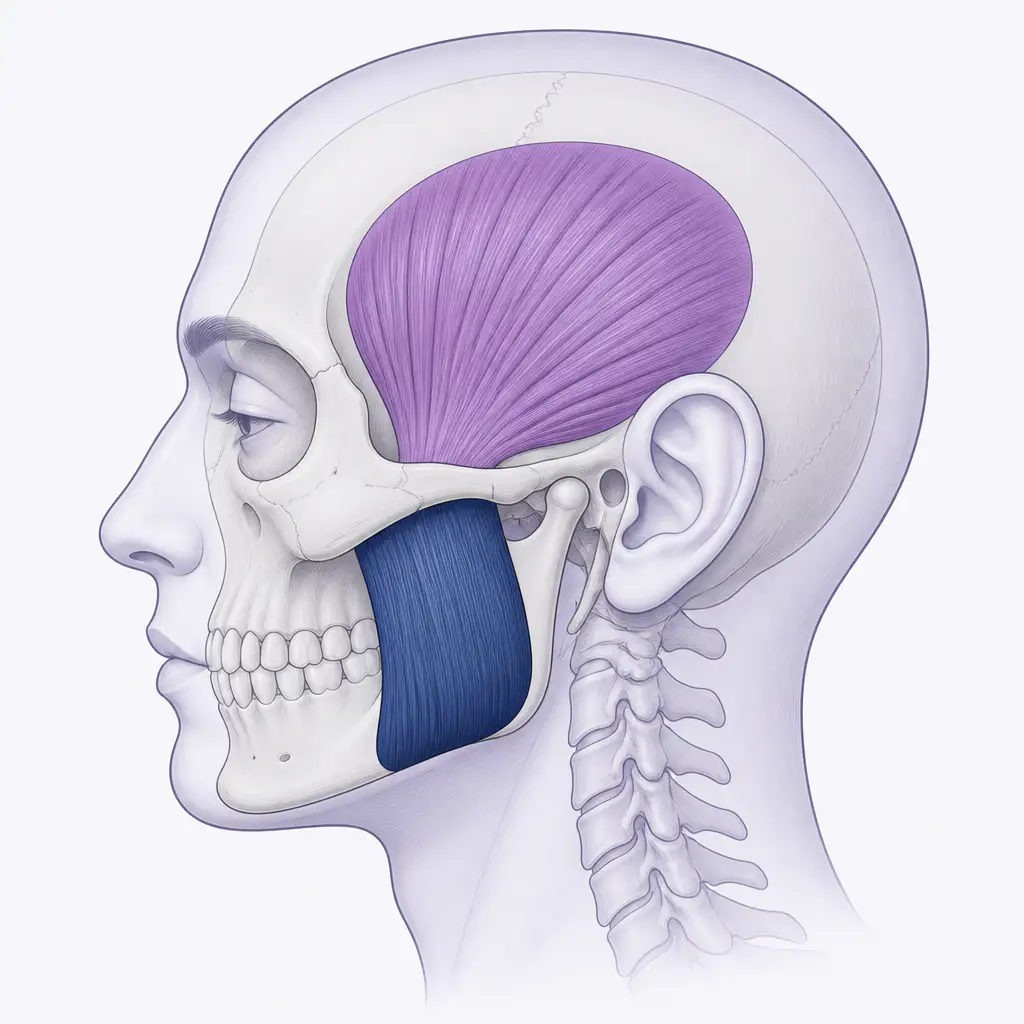
- Masseter: The thick, square muscle on either side of the jaw. When developed, it widens the lower face and creates the boxy, angular jaw shape associated with a strong facial structure.
- Temporalis: A fan-shaped muscle at the temple. Development here fills the temporal hollow and adds to overall facial width in the upper third.
Subcutaneous fat (the layer just beneath the skin) also plays a major role. Even well-developed jaw muscles can be hidden under excess facial fat. This is why diet, sleep, and overall body composition interact with any exercise program aimed at jaw definition.
Before starting any routine, it can be useful to get an objective read on where your jaw currently stands. Aura offers AI-based jawline analysis and gives you a measurable baseline, so you can track whether changes over weeks or months are actually happening.
The 8 Best Jawline Exercises
1. Mewing (Tongue Posture)
Technically not an exercise in the traditional sense, mewing is the practice of resting your tongue flat against the roof of your mouth, with the back third of the tongue pressing upward. Proponents argue that consistent tongue posture applies low-level upward and forward pressure on the palate, which may influence facial structure over time, particularly in younger individuals whose bones are still adaptable.
How to do it:
- Close your mouth with your teeth gently touching.
- Press the entire tongue surface, including the back portion, against the roof of your mouth.
- Breathe through your nose.
- Hold this as your default resting position throughout the day.
Research on mewing as a structural intervention is limited, but improved tongue posture clearly helps with nasal breathing and head posture, both of which affect how your jaw is perceived.
2. Chewing Resistance Training (Mastic Gum)
Chewing harder substances, such as mastic gum or falim gum, places significantly more resistance on the masseter than standard chewing. The principle is similar to how any resistance training works: repeated contraction under load leads to hypertrophy (muscle growth) over time.
How to do it:
- Start with 10 to 15 minutes per day of chewing a hard gum.
- Chew on both sides alternately to avoid developing asymmetry.
- Gradually increase duration as the muscle adapts.
Some users report visible masseter development within 8 to 12 weeks of consistent use. Avoid over-training, as excessive jaw clenching can contribute to temporomandibular joint (TMJ) discomfort.
3. Jaw Clenching and Releasing
This simple exercise directly targets the masseter through controlled contraction.
How to do it:
- Sit or stand with good head posture.
- Clench your jaw firmly for 5 to 10 seconds.
- Relax completely for 5 seconds.
- Repeat for 10 to 15 reps.
You should feel the masseter muscle bulge at the sides of your jaw during the clench. Focus on symmetrical effort on both sides.
4. Chin Tucks
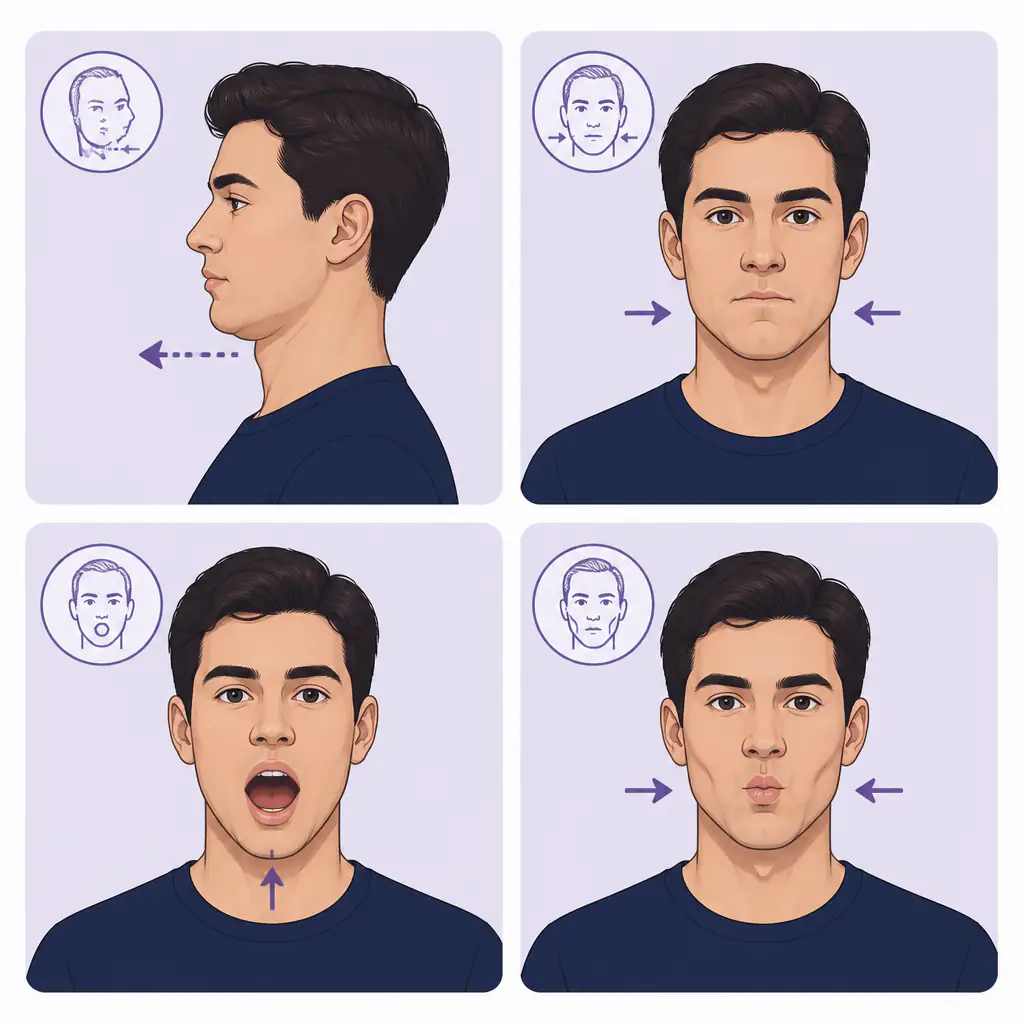
Chin tucks primarily train posture by strengthening the deep cervical flexors (the muscles at the front of the neck), which pull the head back into alignment over the spine. This matters for jaw appearance because forward head posture causes the chin to recede visually and softens the neck-to-jaw angle.
How to do it:
- Sit or stand tall, looking straight ahead.
- Without tilting your head, gently pull your chin straight back, creating a mild double chin.
- Hold for 5 seconds.
- Release and repeat 10 to 15 times.
Regular chin tucks may improve the cervico-mental angle (the angle between your neck and chin), which is a key component of jaw sharpness that many people overlook entirely.
5. Neck Resistance Training
The platysma and sternocleidomastoid (SCM) are muscles that run along the neck and connect into the lower face and jaw area. Keeping these muscles toned reduces the appearance of a soft or poorly defined neck-jaw transition.
How to do it:
- Place your hand against your forehead.
- Push your head forward while resisting with your hand, so no movement actually occurs (isometric hold).
- Hold for 10 seconds, relax, and repeat.
- Do the same pushing backward against a hand placed at the back of your head, and laterally on each side.
Aim for 3 sets of 10-second holds in each direction, three to four times per week.
6. Vowel Exercises (O and E Sounds)
Exaggerated vowel movements engage the muscles around the mouth and jaw, including the orbicularis oris and the zygomaticus, which influence cheek and jaw definition.
How to do it:
- Open your mouth as wide as possible and say an exaggerated “O.”
- Then stretch your lips wide and say an exaggerated “E” (like a wide smile without your teeth touching).
- Alternate between the two, doing 20 repetitions.
This exercise also helps with muscle tone around the lower cheeks, which contributes to how visible the jawline edge appears.
7. Lip Pulls and Chin Raises
This movement targets the muscles of the chin, lower jaw, and neck simultaneously.
How to do it:
- Keep your face neutral and relaxed.
- Push your lower jaw forward and slightly upward, as if you are trying to reach your nose with your lower lip.
- Hold for 10 to 15 seconds.
- Return to neutral and repeat 10 times.
You will feel a stretch and contraction along the chin and neck. Research suggests that exercises engaging the mentalis (chin muscle) and platysma may help reduce submental (under-chin) laxity over time.
8. Smiling Fish Face (Cheek Hollowing)
Succing in your cheeks while slightly smiling engages the buccinator (the main cheek muscle) and zygomaticus. This exercise is particularly useful for people who carry more fat in the midface, as toning the cheek muscles may help improve the overall contour from cheekbone to jaw.
How to do it:
- Suck your cheeks inward while keeping your lips slightly pursed.
- Try to hold a mild smile at the same time.
- Hold for 5 seconds, release, and repeat 15 to 20 times.
How to Build a Consistent Routine
Exercises only work if you do them regularly. Here is a practical structure:
| Frequency | Exercises to Include |
|---|---|
| Daily | Mewing (all day), mastic gum chewing (10-15 min) |
| 4-5x per week | Jaw clenching, vowel exercises, fish face |
| 3x per week | Chin tucks, neck resistance, lip pulls |
Key principles:
- Symmetry matters. Always train both sides equally.
- Consistency over intensity. Doing less, more often, beats long sessions done occasionally.
- Combine with good sleep, hydration, and a calorie-controlled diet if fat reduction is part of the goal. Facial fat responds to overall body fat percentage, not spot training.
- Give it at least 8 to 12 weeks before assessing results.
What Exercises Cannot Do
It is worth being direct here. If your jawline concerns are primarily structural, such as a recessed chin, a weak mandible angle, or significant skeletal asymmetry, no amount of exercise will address the underlying bone. Bite problems and real skeletal asymmetry are medical questions for an orthodontist. Jaw surgery exists for those, but we don’t recommend it for appearance: risks include lasting numbness of the lips and chin and a recovery of months.
If you are unsure whether your goals are achievable through lifestyle changes or whether they require professional input, starting with an honest assessment of your facial structure is useful. Tools like Aura can give you a data-driven look at your current facial proportions and identify which specific areas of your jawline are underperforming relative to ideal ratios, so you are not guessing.
For anything involving medical procedures or structural interventions, always speak with a qualified medical professional before pursuing treatment.
Practical Tips to Get More Out of Your Routine
- Check your posture throughout the day. Most jaw-definition work is undone by hours of forward head posture at a desk.
- Sleep on your back if possible. Side and stomach sleeping can contribute to facial asymmetry over time.
- Stay hydrated. Water retention in the face, often caused by high sodium intake or poor hydration, blurs definition more than most people realize.
- Track your progress with photos. Take a front-facing and side-profile photo in the same lighting every four weeks. Changes are gradual and easy to miss without documentation.
- Do not overtrain the masseter. TMJ issues are real. If you notice clicking, jaw pain, or headaches, reduce intensity and frequency.
Frequently asked questions
How long does it take to see results from jawline exercises? +
Most people who train consistently report noticeable changes in muscle tone and jaw definition after 8 to 12 weeks. Results depend heavily on your starting body fat percentage, genetics, and how consistently you train. Progress is gradual, so tracking with monthly photos is recommended.
Can jawline exercises change bone structure? +
No. Exercises cannot reshape the mandible or alter skeletal structure in adults. What they can do is develop the surrounding muscles, particularly the masseter, and improve posture in ways that make your existing bone structure more visible. For structural concerns, consult an orthodontist or maxillofacial surgeon.
Is mewing actually effective for jaw definition? +
Evidence for mewing as a structural intervention in adults is limited. However, correct tongue posture encourages nasal breathing and better head posture, both of which can meaningfully improve how your jaw appears. It is most likely to have structural effects in children and adolescents whose palates are still developing.
Can chewing gum build jaw muscles? +
Chewing harder gums, such as mastic or falim gum, does place resistance on the masseter muscle and may promote hypertrophy over time. Some users report visible development with consistent use over several months. However, excessive chewing can strain the TMJ, so it is important to start gradually and stop if you experience jaw pain or headaches.