 Aura: Looksmaxxing
Haircuts for a Receding Hairline: 6 That Hide It
Six cuts that work with a receding hairline instead of fighting it, why the comb-forward backfires, and the exact words to use at the barber.
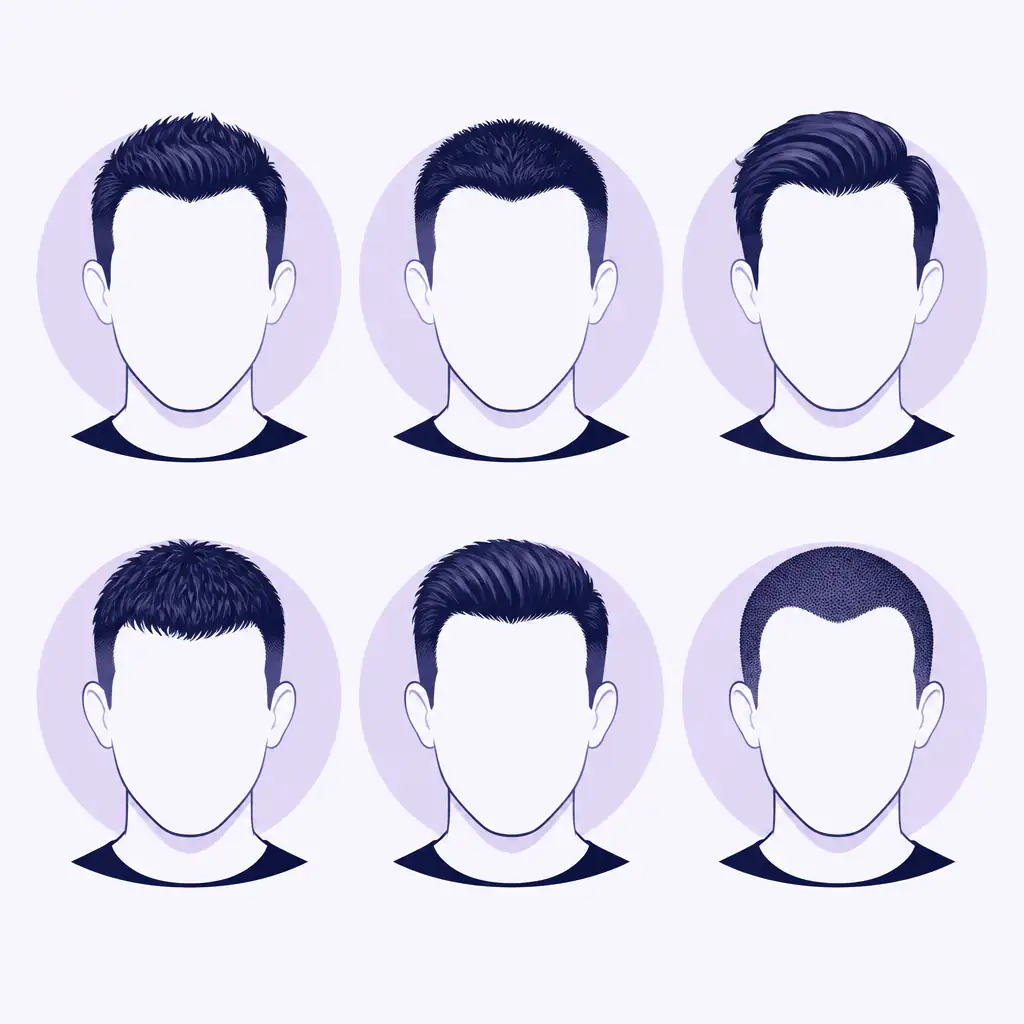
A receding hairline does not have to dictate your style. In fact, the right haircut can redirect attention, create the illusion of density, and make your overall facial structure look more defined. The wrong cut, on the other hand, can draw the eye straight to what is missing.
This guide covers six haircuts that genuinely work for a receding hairline, explains why they work, and gives you enough detail to walk into a barbershop knowing exactly what to ask for.
Why the Right Haircut Matters More Than You Think
Hair loss tends to follow predictable patterns. The most common is androgenetic alopecia, which typically starts at the temples and the frontal hairline, gradually forming an “M” shape. As the temples recede, the contrast between the remaining hair on top and the bare skin becomes more visible, especially under bright lighting.
The goal of a good haircut for a receding hairline is usually one or more of the following:
- Reduce contrast between the scalp and hair by keeping the sides short
- Add visual weight to areas that still have density
- Frame the face in a way that draws attention to your features rather than your hairline
- Keep proportions balanced so no single area looks disproportionately sparse
Understanding your specific hairline shape before committing to a cut helps. Tools like Aura can give you an objective facial analysis, including hairline assessment, so you have a clearer picture of what you are working with before you sit in the barber’s chair.
1. The Buzz Cut
The buzz cut is the most straightforward option and, for many men, the most effective. By keeping all the hair uniformly short, you eliminate the contrast between thinning and dense areas entirely. There is no longer a defined hairline to compare against because everything is the same length.
How to get it right
- A grade 1 to 3 clipper guard (roughly 3mm to 10mm) works best for most receding hairlines
- A skin fade at the temples can blend the transition from scalp to hair even more smoothly
- If you have a well-defined jawline or strong cheekbones, the buzz cut tends to highlight those features rather than the hairline
The buzz cut works especially well for men whose receding hairline is paired with thinning on the crown. Trying to grow out the top while the temples are bare creates an uneven silhouette. Keeping everything short solves that imbalance immediately.
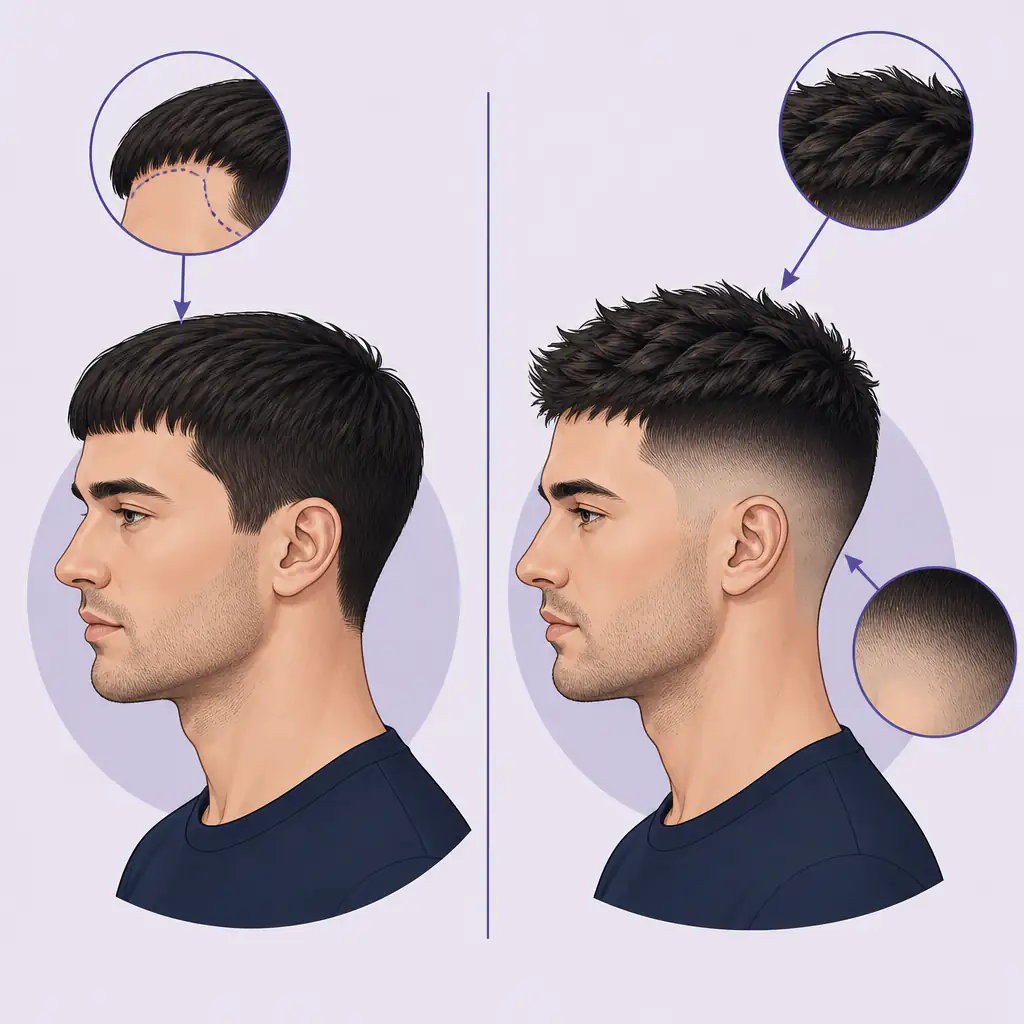
2. The Caesar Cut
The Caesar cut features a short, horizontally cut fringe brought forward over the forehead. It was popularized in ancient Rome and has remained a practical option for men managing a receding hairline for good reason: the forward fringe covers the recession at the temples without relying on a combover.
Key characteristics
- Hair on top is kept between 1 to 2 inches long
- The fringe is cut straight across, slightly forward
- Sides are typically tapered or faded short
- Works best with straight or slightly wavy hair; curly hair tends to push the fringe up rather than forward
The Caesar cut does require enough density at the front to form a fringe. If the hairline has receded significantly, the cut may need to be modified by starting the fringe further back on the scalp where density is still good.
3. The Crew Cut
The crew cut is a classic for a reason. It keeps the top hair short and structured, with a gradual taper or fade on the sides and back. Unlike the buzz cut, the crew cut leaves slightly more length on top, which allows for some styling flexibility.
Why it suits a receding hairline
The crew cut does not attempt to hide the hairline. Instead, it embraces the structure of the head and keeps everything proportional. The short length on top means the difference between the hairline and the hair behind it is minimal. There is no long top section to collapse and reveal patchy coverage.
- Best with 0.5 to 1.5 inches on top
- Ask for a high skin fade or taper fade on the sides for a clean look
- Works with most hair textures
- Easy to maintain between cuts
4. The Slick Back
The slick back works well for men with a widow’s peak or a mildly receding hairline that still has reasonable density at the front. By combing the hair straight back with a medium or high-shine pomade, you turn the recession into a natural-looking feature rather than a flaw.
This cut fails if pushed too far. Men with significant temple recession who attempt a slick back often end up drawing attention to exactly what they are trying to hide, because the pulled-back style reveals the full extent of the hairline. If your recession is mild to moderate, the slick back can look sharp and deliberate.
Styling tips
- Use a medium-hold, high-shine pomade or a water-based clay depending on how structured you want the look
- Blow dry the hair back before applying product to add volume
- Keep the sides tight with a fade to avoid adding width to the silhouette
5. The Short Textured Crop
The textured crop has become one of the most reliable options for men dealing with thinning or a receding hairline. It keeps the hair on top short but uses texture and movement to create the illusion of density that flat, long hair cannot achieve.
What makes it work
When hair is cut with texture, pieces catch light at different angles. This scattering of light makes the hair appear thicker than it actually is. For men with fine or thinning hair, this is one of the most effective visual strategies available.
- Ask your barber for a disconnected fade or skin fade on the sides
- Request point cutting or texturizing scissors on top to create movement
- Use a matte clay or texture paste to enhance the look; avoid heavy pomades that weigh hair down
- Works particularly well if your hair is naturally fine or wavy
The textured crop also works well because it draws the eye to the styled portion of the hair rather than the hairline itself. The visual focus shifts to the texture and shape rather than the recession.
6. The Shaved Head
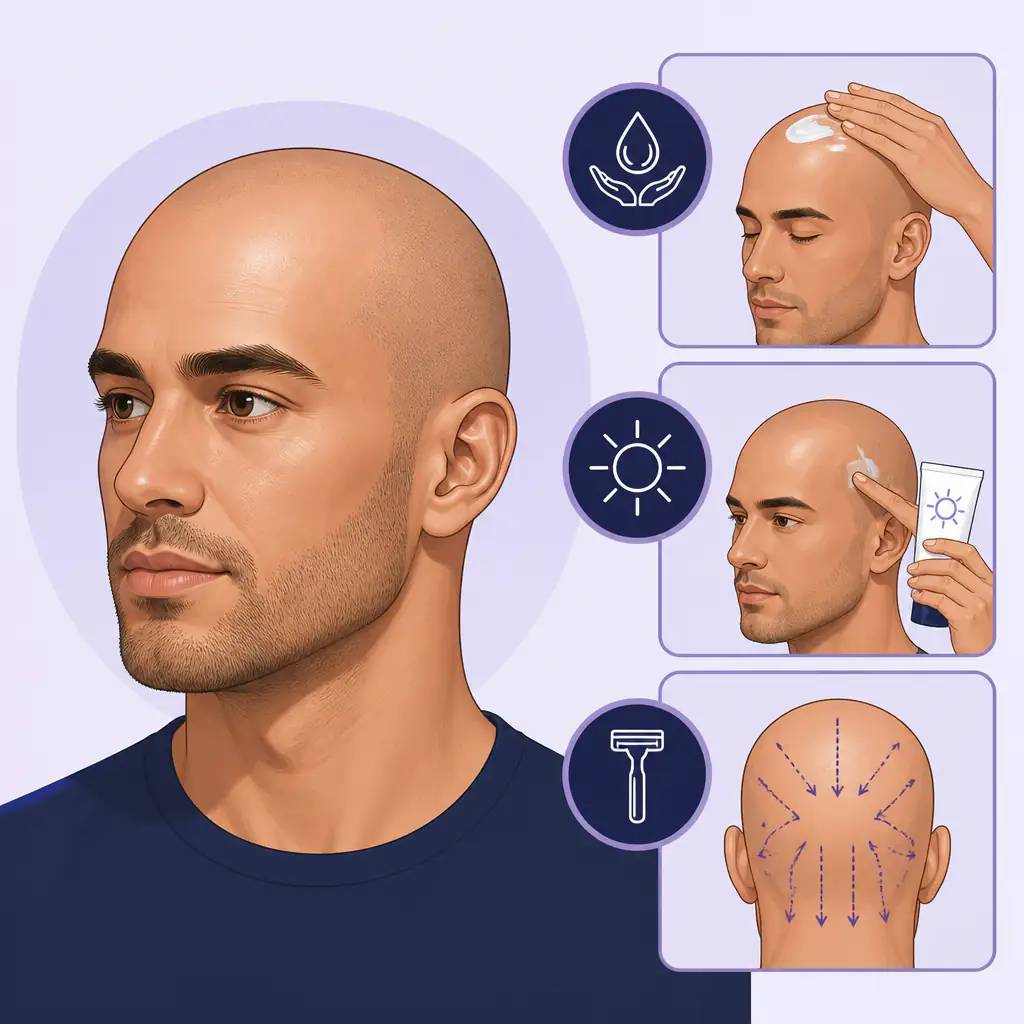
If the recession has progressed to the point where styling is becoming a daily exercise in damage control, shaving the head completely is a legitimate and often underrated option. It eliminates the problem by removing the variable entirely.
Research suggests that men with fully shaved heads are often perceived as more dominant and, in some cases, more masculine than men with thinning or patchy hair. A well-maintained shaved head with a healthy scalp looks intentional. Patchy coverage does not.
Making the shaved head work
- Keep the scalp moisturized and protected from UV exposure, since bare scalp is more susceptible to sunburn
- A light scalp oil or SPF moisturizer is practical, not optional
- Regular maintenance (every few days to once a week) keeps the look clean
- Men with strong facial structure tend to carry the look most easily. If you are unsure how your facial features translate without hair, an objective analysis from Aura can give you useful feedback on jaw definition, facial symmetry, and other structural elements that matter more when there is no hair framing the face
Practical Tips Before Visiting the Barber
Knowing which haircut suits you is one thing. Getting the result you want from the barbershop is another. A few practical points:
- Bring a reference photo. Even experienced barbers benefit from a visual reference. Terms like “fade” or “textured” mean different things to different people.
- Be specific about the fade height. Low, mid, and high fades produce noticeably different results. Ask to see examples if you are unsure.
- Tell your barber about your concerns. A good barber will adjust the approach once they know you want to minimize the appearance of a receding hairline. They may suggest a technique you have not considered.
- Visit more frequently. Shorter cuts look their best in the first one to two weeks. Stretching cuts to every six or eight weeks tends to let the shape fall apart, which makes hairline recession more visible.
- Consider the lighting in your usual environments. Harsh overhead lighting makes hairline recession more obvious. Keeping the sides and back very tight reduces contrast regardless of the light source.
What to Avoid
Some cuts actively make a receding hairline look worse:
- Long hair on top with short sides: This creates a visual imbalance where the thinning front is the most noticeable element
- Combover styles: Unless executed very precisely, they read as an attempt to conceal, which draws more attention than the hairline itself would
- Heavy products on fine hair: Pomades and gels that add shine to flat hair make the scalp visible through the hair, increasing the appearance of thinning
- Growing hair long to compensate: More length does not mean more coverage. It usually means more contrast between covered and uncovered areas
The common thread across all good haircut choices for a receding hairline is working with what you have rather than against it. Shorter, well-structured, and intentionally styled will always outperform longer and unkempt.
Frequently asked questions
Which haircut is best for a severely receding hairline? +
For a significantly receded hairline, the buzz cut or a fully shaved head tends to work best. Both eliminate the contrast between thinning areas and the scalp, which is usually what makes heavy recession most noticeable. Trying to style around severe recession with longer cuts often draws more attention to it.
Can a haircut actually make a receding hairline look less noticeable? +
Yes, to a meaningful degree. Cuts that reduce contrast between hair and scalp, add texture to create the illusion of density, or frame the face without exposing the hairline can all minimize how visible the recession appears. The effect is real, even if the haircut does not change the underlying hairline itself.
How often should I get a haircut if I have a receding hairline? +
Every three to four weeks is a reasonable target for most short cuts. Shorter styles like buzz cuts or fades lose their shape quickly, and a clean, fresh cut tends to look much sharper than a grown-out version of the same style. More frequent cuts also keep the fade lines tight, which is where much of the visual effect comes from.
Are there hairstyling products that help with the appearance of thinning hair? +
Matte clays and texture pastes generally work better than shiny pomades for thinning hair. They add definition and separation without making the scalp visible through the hair, which heavier glossy products tend to do. Volume-building sprays applied before blow drying may also help create lift at the roots on fine hair.