 Aura: Looksmaxxing
How to Get Hunter Eyes: 5 Tips That Actually Work
Hunter eyes are mostly bone, and bone does not move. What the term means, which traits are fixed, and 5 things that do change the look.
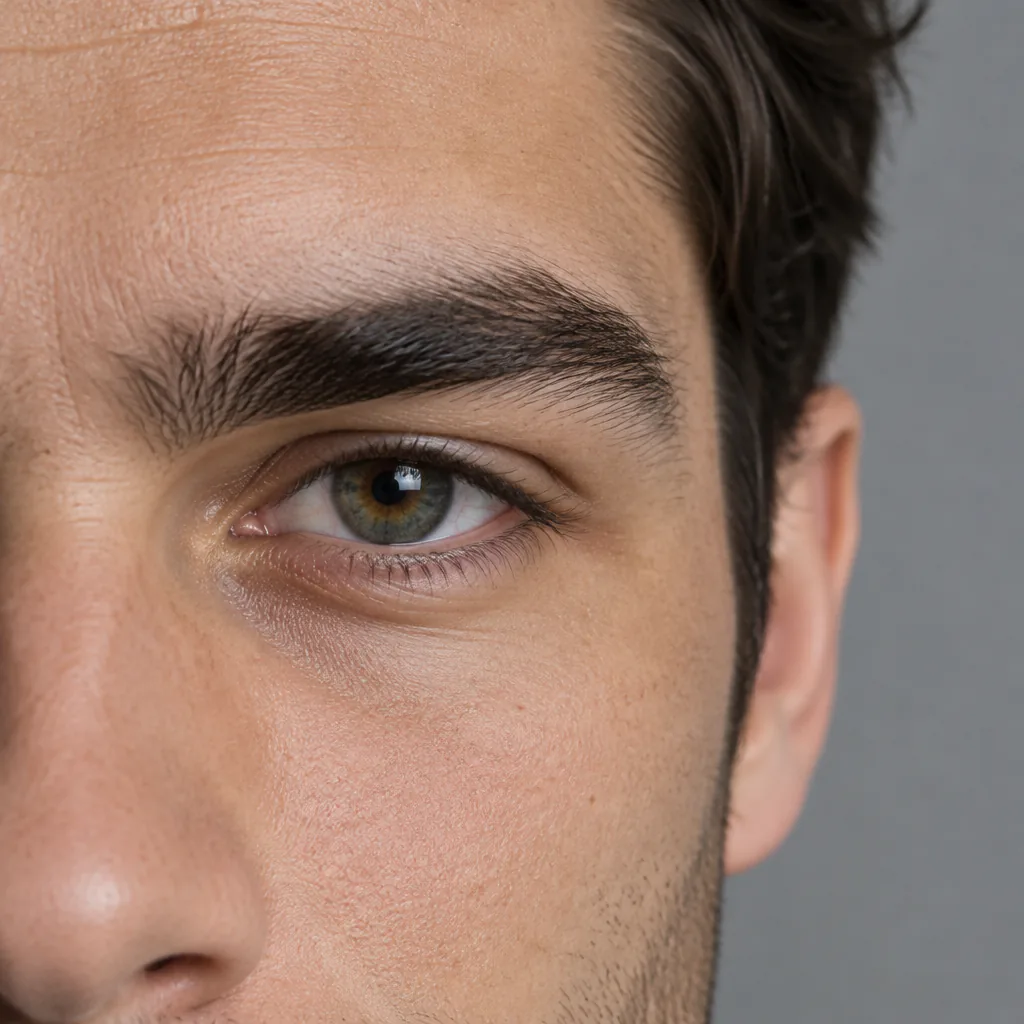
Search “how to get hunter eyes” and you’ll find two kinds of answers. One kind promises that exercises, routines or posture tricks will reshape your eyes. The other kind is less exciting and more useful. Most of the look comes from bone and eyelid anatomy you were born with, and a smaller part comes from how you present it.
This guide takes the second approach. You’ll learn what the term actually describes, which parts are fixed, and five practical tips for making the most of the eye area you have. No miracle claims and no fake before-and-after photos.
What “hunter eyes” actually means
“Hunter eyes” is slang, not a medical term. It comes from looksmaxxing forums, and it has no clinical definition. The terms “hunter eyes” and “prey eyes” are internet coinages rather than anatomical terminology, but they point to real, describable features.
In community usage, the label is shorthand for a cluster of traits:
- Positive canthal tilt. The outer corner of the eye sits higher than the inner corner. In anatomical writing, canthal tilt is described as the inclination of the eye’s horizontal axis between the inner corner (endocanthion) and the outer corner (exocanthion).
- Low upper-eyelid exposure. Little of the upper lid shows between the lashes and the crease when your eyes are relaxed.
- A straighter lower lid. The bottom edge of the eye opening runs flatter instead of curving deeply.
- Deep-set eyes. The eyes sit back under the brow, so the brow ridge frames and shades them.
The contrast term is “prey eyes.” These are rounder and more open, with high lid exposure and a neutral or slightly negative tilt.
One point gets lost in forum threads. Canthal tilt is the most cited trait, but there is no agreed scientific threshold at which positive tilt becomes “hunter eyes”. If someone gives you an exact degree number as the cutoff, they are stating an opinion, not a measured standard.
What you can’t change, and what you can
Before picking tips, sort the traits into two groups. This one step saves months of chasing things that won’t move.
Largely fixed
- Orbital depth, eye shape and the bony orbital rim. These are skeletal. In an adult they do not change without surgery.
- Overall eye shape. Eye shape is largely determined by genetics.
- Canthal tilt. Tilt is a function of where the eye corners sit, so in an adult it is not something grooming or exercise moves. You can change how it appears in a photo, but not the underlying anatomy.
Changes over time
- Upper-lid exposure depends on brow ridge, orbit shape and soft tissue. It also changes with age as eyelid skin loses elasticity.
- Brow position also shifts. As we age, brows tend to sag and weigh down the upper eyelids. This is aging, not a deeper orbit, and it isn’t a goal to aim for.
Within your control
- How you groom and shape your brows
- How you light, angle and frame photos of your face
- Your expression, especially whether you habitually widen your eyes
One source lists the main controlling factors for this part of the look as orbital depth, fat pad distribution, brow positioning and genetics. Of those four, brow positioning is the one you can influence day to day, through grooming and expression. That is why the tips below focus there.
5 realistic tips for a hunter-eye look
These are editorial styling suggestions, not measured or clinical results. They change presentation, not anatomy.
1. Break the look into its parts before chasing it
“Hunter eyes” bundles four separate traits under one label. Few people have all four strongly, and plenty of people have one or two. Instead of asking “do I have hunter eyes?”, ask more specific questions:
- Does my brow sit fairly low and close to my eye?
- How much upper lid shows when my face is relaxed?
- Do my outer eye corners look upward, level or downward?
- Do my eyes sit back under the brow or level with it?
This matters because each trait responds differently. Brow grooming affects how the brow line looks. Lighting affects how deep-set the eyes appear. Tilt and orbital depth don’t respond to either. Knowing which trait you’re working on stops you from expecting a brow trim to fix your canthal tilt.
2. Check your eye area under fair conditions
Most self-assessments go wrong at the photo stage. Small changes in camera position change what your eyes appear to do:
- Camera roll. If the phone is rotated even slightly, a level line through your eye corners will look tilted.
- Head pose. Tilting your chin up or down, or turning your head, changes how the inner and outer corners line up in the image.
- Lens distance. A phone held very close distorts the features nearest the lens.
For a fair check, use a straight-on photo at eye level, at arm’s length or more, with your head level, your face relaxed and even light. Take a few shots and compare them. If the results disagree, treat the tilt as uncertain.
If you’d rather have a structured second look, you can upload a photo to Aura’s Canthal Tilt Checker before signing up. The only free output is a subjective styling-potential estimate. The full findings are part of Aura Pro ($9.99 a month or $49.99 a year). Those full findings are left and right eye observations, which classify the apparent tilt of each eye as upward, approximately level, downward or not assessable; photo limitations, which explain how camera roll, head pose and uncertainty affect the result; and styling context. The tool does not give degree measurements or diagnoses.

3. Groom your brows toward a lower, straighter line
Your brows are the most adjustable part of the eye-area frame. Brow lifting moves things in the opposite direction from the hunter look: a more lifted brow is what produces a more open eye area. So if you want a more hooded, focused look, avoid grooming that raises or sharply arches the brow.
Editorial suggestions:
- Clean up, don’t reshape. Remove stray hairs between the brows and well below the natural brow line. Leave the bottom edge mostly intact, since over-plucking it pushes the visible brow line upward.
- Keep the body full. A dense brow sitting close to the eye reads as a stronger frame than a thin, high one.
- Flatten a heavy arch carefully. If you have a peaked arch, let hairs at the peak grow in rather than plucking around it. Results depend on your natural growth.
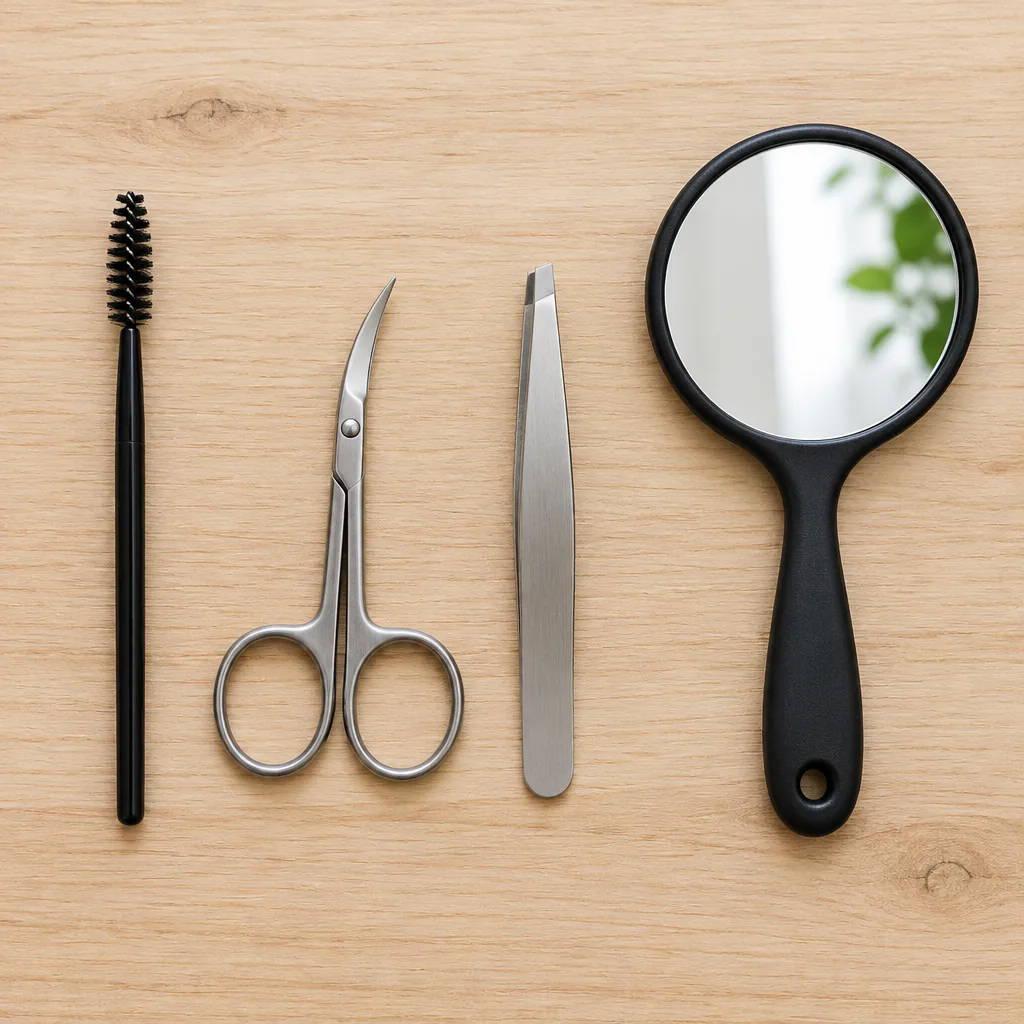
- Trim long hairs, don’t remove them. Brush brow hairs upward and trim only the ends that extend past the line. This keeps the shape tidy without thinning it.
If you prefer a softer or more arched brow, which is common in feminine styling, that’s a valid choice. The hunter look is one aesthetic, not a requirement, and you don’t need to adopt it.
4. Control lighting, angle and expression in photos
Much of what people call “hunter eyes” in photos is shadow. Deep-set eyes look deep because the brow ridge shades the upper lid. Lighting can emphasize or flatten that effect without changing anything about your face.
Editorial suggestions for photos:
- Light from slightly above. Light from above and slightly in front casts a soft shadow under the brow. Flat, direct front light, like an on-camera flash, removes that shadow and makes the eye area look more open.
- Keep the camera at eye level. Shooting from far below exaggerates lid exposure and nostrils. Shooting from far above changes the brow-to-eye relationship in the other direction. Eye level is the most honest default.
- Relax your eyes. Many people widen their eyes when a camera points at them, which shows more upper lid and sclera (the white of the eye). Before the shot, let your forehead relax and your eyelids settle naturally. A slight lift in the lower lids, like a small genuine smile reaching the eyes, often reads as calmer and more focused.
- Consider frames if you wear glasses. A frame with a fairly straight top line echoes a low, straight brow. This is a styling choice, not a correction.
These tips work only in photos and in how you hold your face. They don’t alter anatomy, and they aren’t meant to.
5. Skip the myths, exercises and exact numbers
The hunter-eyes topic attracts confident claims that don’t hold up. Before you commit time or money, filter these out:
- Eye exercises and facial “training.” No eye exercise changes orbital depth, and skeletal eye-area traits do not change in adults without surgery.
- Mewing as an eye fix. Mewing claims concern the upper jaw, and the evidence for meaningful adult skeletal change is weak.
- Biological “signals.” Some pages state that deep-set eyes signal high testosterone exposure during development, but they present this as fact without evidence. Treat it as forum lore.
- Exact tilt targets. As noted above, there’s no agreed cutoff for what counts as hunter-eye tilt. Number targets add anxiety without adding accuracy.
What about cosmetic procedures?
Talk to a qualified professional before considering this. An oculoplastic surgeon (a surgeon who specializes in the eyelids and orbit) can explain what is realistic for your anatomy.
Two facts help set expectations:
- Eyelid surgery works on soft tissue. Blepharoplasty operates on the soft tissue around the eye, not on the eye itself. Removing excess upper-lid skin can make an eye look more open by lifting visual weight off the lid margin. That’s often the opposite of what hunter-eye searchers want. We don’t recommend eyelid surgery for appearance either way: risks include dry eyes, eyes that are harder to close, asymmetry and scarring.
- Non-surgical options mostly push toward a wider look. Makeup, lash extensions, under-eye filler, brow-lifting injectables and certain eye drops can make eyes look more open. Most of them push toward a wider look, not a hooded one. Under-eye filler in particular is not worth the risk: filler entering a blood vessel near the eye has caused permanent vision loss.
There’s also a risk of overshooting. Exaggerated tilt can look unnatural or “surgical”. More is not automatically better.
Keep the goal in proportion
The hunter-eyes framework is narrow, and it has blind spots worth knowing about.
- It handles human variation poorly. Every trait in the hunter/prey framework varies substantially between ancestral populations, including upper-eyelid shape and orbital shape. A natural difference in lid structure isn’t a flaw to correct.
- It isn’t the only attractive eye area. The look is not required for attractiveness, and softer, rounder or more open eye areas can also be attractive when they fit the rest of the face.
- It’s male-coded. Forums mostly apply the term to men. Many people, including many women, prefer a more open, lifted eye area, and that preference is as legitimate as any forum ideal.
A useful reframe is to stop asking “how do I get hunter eyes?” and ask “how do I present the eye area I have at its best?” The second question has practical answers: honest photos, deliberate brow grooming, good lighting and a relaxed expression.
Quick checklist
- Learn the four traits behind the label and check which ones you already have.
- Assess your eyes with straight-on, eye-level, relaxed photos, and treat inconsistent results as uncertain.
- Groom brows to keep them full, low and fairly straight, unless you prefer a different shape.
- Light photos from slightly above, keep the camera at eye level, and avoid widening your eyes.
- Ignore exercises, mewing promises and exact degree targets.
- Discuss any procedure with a qualified oculoplastic surgeon, and expect soft-tissue changes, not new bone structure.
Sources & further reading
Frequently asked questions
Can you actually get hunter eyes naturally? +
Not in the anatomical sense. Orbital depth, eye shape and the orbital rim are skeletal and don't change in adults without surgery. You can change how your eye area is presented through brow grooming, lighting, camera angle and expression.
Do eye exercises or mewing give you hunter eyes? +
No. No eye exercise changes orbital depth, and the evidence for meaningful adult skeletal change from mewing is weak. Be skeptical of any routine that promises to reshape bone.
What canthal tilt counts as hunter eyes? +
There's no agreed scientific threshold. The term is forum slang, and the degree targets you see online are opinions, not measured standards. Photo angle and head pose also change how tilt appears, so a single selfie is not a reliable reading.
Will eyelid surgery give me hunter eyes? +
Usually not. Blepharoplasty works on soft tissue around the eye, not the eye itself, and removing upper-lid skin tends to make eyes look more open, not more hooded. We don't recommend eyelid surgery for appearance. If a drooping lid blocks your vision, that is a medical question for an oculoplastic surgeon.