 Aura: Looksmaxxing
 How to Get Positive Canthal Tilt (What Actually Works)
Learn how to get positive canthal tilt through exercises, styling, makeup, and procedures. Practical, honest advice on improving your eye area.
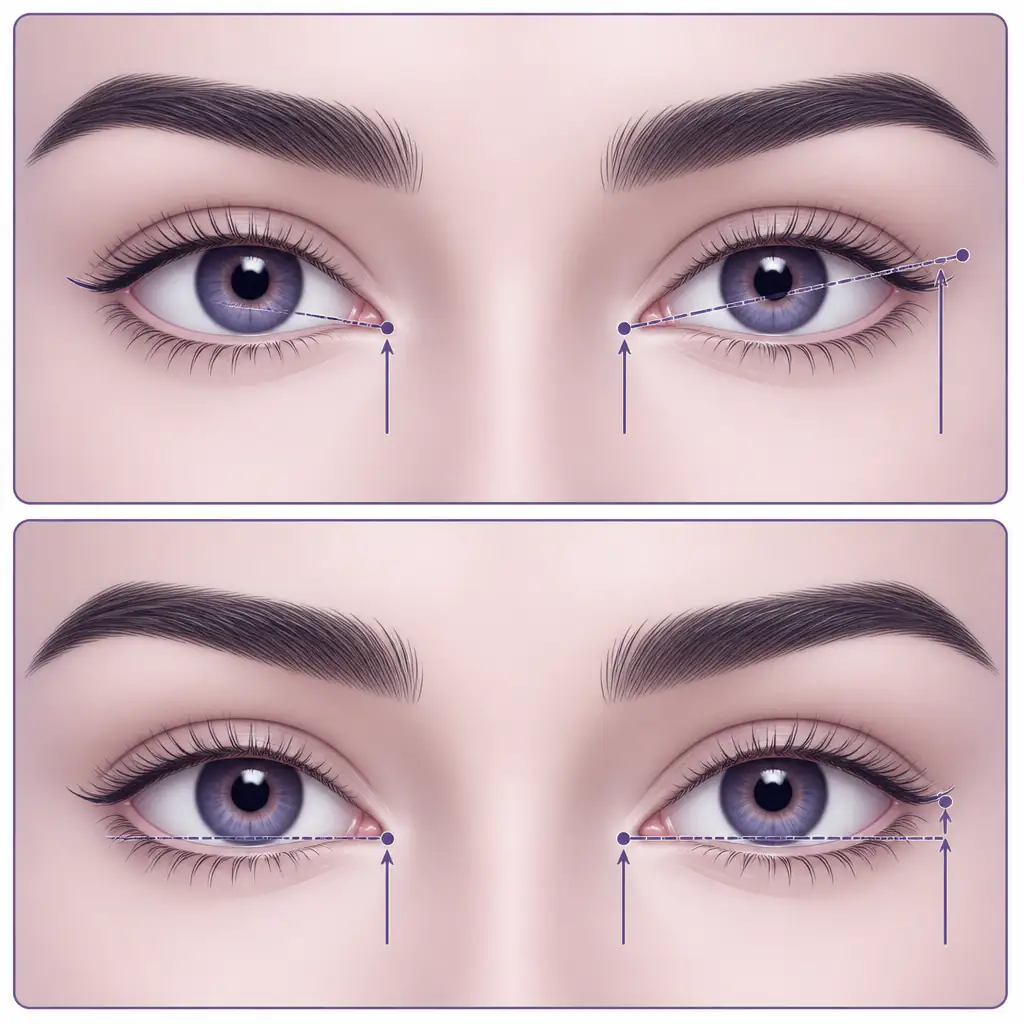
Canthal tilt is one of those facial features that quietly shapes how attractive your eyes look, even if most people can’t name what they’re responding to. A positive canthal tilt means the outer corner of your eye (the lateral canthus) sits higher than the inner corner (the medial canthus). The result is an upward, slightly almond-shaped eye appearance that reads as alert and youthful.
A negative canthal tilt is the opposite: the outer corner droops below the inner corner, which can make eyes appear tired, droopy, or aged. Most people have a tilt somewhere close to neutral, but even a small shift in either direction has a measurable effect on perceived attractiveness.
This guide breaks down what actually moves the needle on canthal tilt, from low-effort styling tricks to more permanent options, and is honest about what each approach can and cannot do.
What Determines Your Canthal Tilt
Your canthal tilt is primarily set by bone structure, specifically the lateral orbital rim (the outer bony ridge of your eye socket) and the attachment points of your canthal tendons. The medial and lateral canthal tendons anchor the eyelids to the bone, and the height difference between those anchor points determines your natural tilt.
Soft tissue also plays a role. Fat pads around the eye, skin laxity, and the thickness of the lower eyelid all influence how the tilt appears. This matters because some of these soft tissue factors can be addressed without touching bone.
Genetics largely determine your baseline. Certain populations statistically average a more positive tilt than others, which is why it’s associated with what many describe as “hunter eyes” in aesthetic communities. That said, the visible tilt you present is not purely anatomical. Lifestyle factors, facial fat distribution, and even posture can subtly affect how your eye area reads.
How to Assess Your Current Canthal Tilt
Before changing anything, get an honest baseline. Stand in front of a mirror in neutral lighting, look straight ahead at eye level, and draw an imaginary horizontal line from your inner corner outward. If your outer corner sits above that line, you have a positive tilt. If it sits below, it’s negative.
Photographs taken straight-on with no chin tilt are more reliable than mirrors because mirrors invite unconscious compensation. A slight head tilt up or down shifts how the tilt appears dramatically.
If you want a more objective read, Aura includes hunter-eye detection and eye-area analysis as part of its facial scoring, which can give you a consistent measurement to track changes against rather than eyeballing it each time.
Non-Surgical Methods That Can Improve Appearance of Canthal Tilt
These approaches do not physically move bone or tendon, but they can meaningfully change how your canthal tilt is perceived.
Makeup and Eye Styling
This is the fastest and most reversible option. The goal is to visually extend the eye upward at the outer corner.
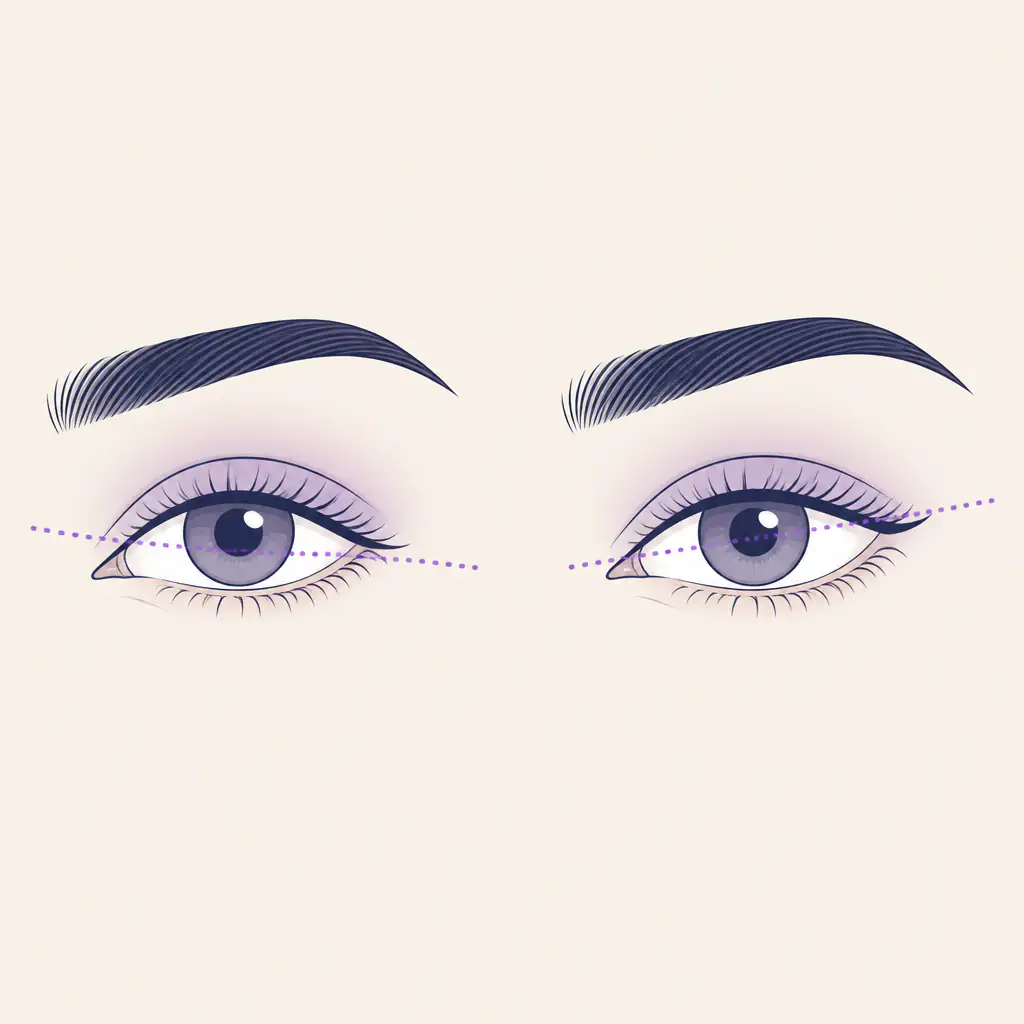
- Winged eyeliner: Draw the wing angling upward from the outer corner rather than straight outward. The angle should follow the line from your inner corner to the tail of your eyebrow.
- Lower lash line shadow: Apply a dark shadow only to the outer third of the lower lash line, tapering it downward slightly. This makes the outer lower lid look longer and optically pulls the outer corner up by contrast.
- Avoid tight-lining the full lower waterline: Lining the full lower waterline in black makes eyes look rounder and can flatten or reverse the appearance of upward tilt.
- Outer corner mascara emphasis: Apply extra coats of mascara to outer lashes and angle them upward using an upward-curling motion.
- Highlight the inner corner: A light shimmer at the inner canthus draws attention there and makes the outer corner read as higher by comparison.
For men who don’t use makeup, some of these principles translate to grooming: a well-groomed brow tail that angles slightly upward at the outer end reinforces the visual line of a positive tilt.
Facial Fat and Body Composition
Higher body fat levels tend to deposit periorbital fat (fat around the eye socket), which can cause lower eyelid fullness that gives the appearance of a more neutral or negative tilt. Reducing overall body fat, particularly in the face, often makes the bony orbital structure more visible and the canthal tilt more apparent.
This is not guaranteed and the degree of effect varies significantly by genetics, but it is one of the few lifestyle factors with a real structural basis.
Mewing and Facial Posture
Proper tongue posture (tongue flat against the palate, back third of the tongue applying light upward pressure) is claimed by many to influence midface structure over time. The mechanism proposed is that consistent upward pressure on the palate may support the maxilla and orbital floor.
The evidence here is mostly anecdotal and long-term, particularly for adults. In developing adolescents, there may be more potential for structural influence. Some users report subtle improvements in overall facial structure after months of consistent practice, though isolating the effect on canthal tilt specifically is difficult.
It costs nothing and carries no risk, which makes it worth maintaining regardless.
Cosmetic Procedures That Directly Address Canthal Tilt
These options go further and can create more permanent changes. They vary significantly in invasiveness, cost, recovery time, and permanence.
Important: Talk to a qualified medical professional before considering any cosmetic procedure. The information below is for educational purposes only and does not constitute medical advice.
Canthoplasty and Canthopexy
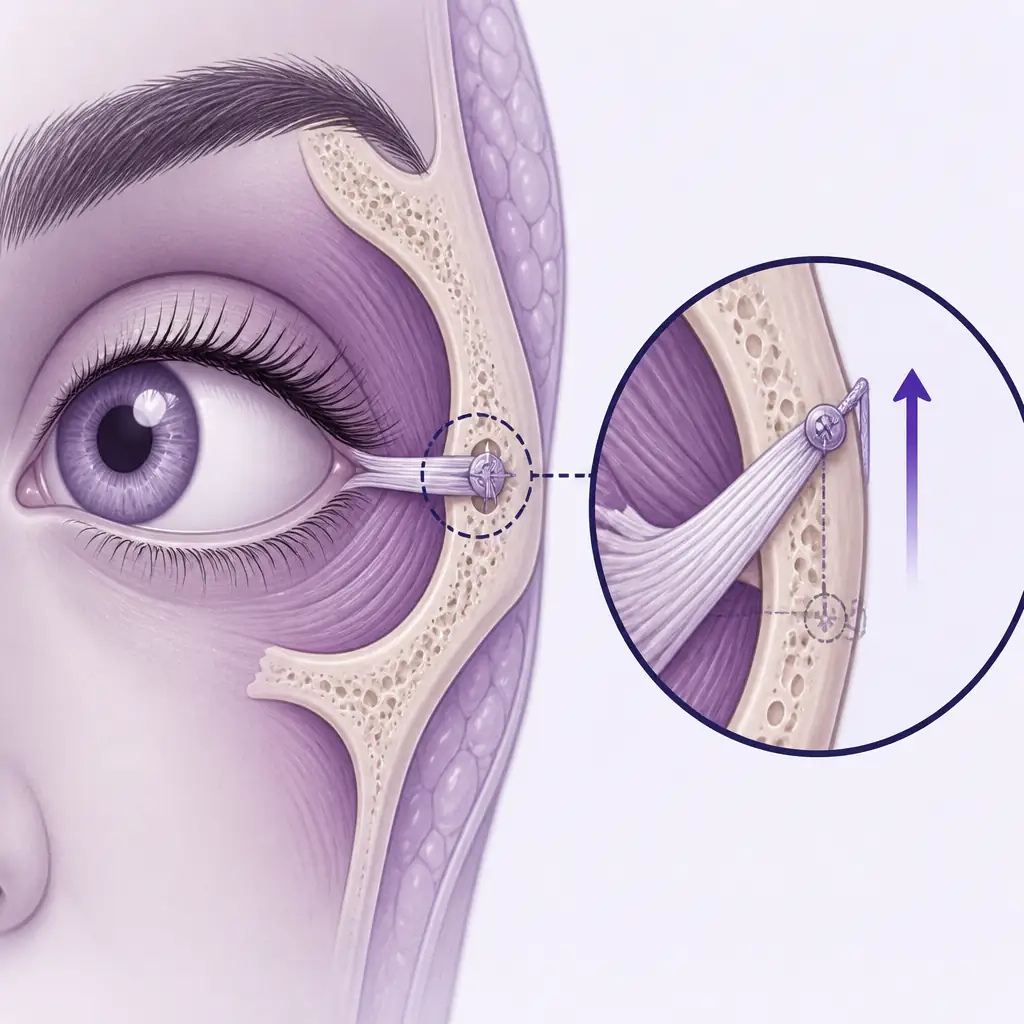
Lateral canthoplasty is a surgical procedure that repositions the lateral canthal tendon. A surgeon detaches or modifies the tendon attachment at the outer corner and reattaches it at a higher point on the orbital rim, physically tilting the outer corner upward.
Canthopexy is a less invasive variation that tightens and repositions the tendon without fully detaching it. It tends to have less dramatic results but also fewer risks and a shorter recovery.
These procedures are performed by oculoplastic surgeons or plastic surgeons with specific eye-area expertise. Results, when done well, are permanent. Revision is possible but complex. Finding a surgeon with a strong portfolio of canthoplasty work specifically is essential, as this is a technically demanding procedure.
Fox Eye Surgery (Thread Lift at the Canthus)
A temporary option that uses dissolvable threads inserted near the outer corner to mechanically pull it upward. Results typically last six to twelve months before the threads dissolve. It is less invasive than canthoplasty but also less precise and less permanent.
Some practitioners also offer a non-thread version using strategic filler placement near the lateral orbital rim to create the appearance of upward tilt, though results vary considerably.
Botox for the Lower Eyelid
A small injection of botulinum toxin into the orbicularis oculi muscle just below the outer lower lid can relax the muscle enough to let the lower lid drop slightly, which paradoxically creates the appearance of a more positive tilt. This is a subtle effect and requires a practitioner experienced with periorbital Botox specifically.
Results last roughly three to four months. The margin for error is narrow since too much relaxation of the lower lid can cause functional issues.
Orbital Rim Implants
For those whose negative tilt is primarily driven by a recessed lateral orbital rim, custom implants placed along the outer orbital rim can project the bone structure forward and subtly elevate the outer canthus. This is a more involved surgery with a longer recovery and is less commonly performed than canthoplasty alone.
Building a Realistic Plan
Most people reading this do not need surgery. The non-surgical approaches, if applied consistently, can meaningfully improve how the eye area reads in photos and in person. Here is a practical hierarchy:
- Assess your baseline honestly using consistent-angle photos or a tool like Aura to get objective data.
- Reduce facial fat if body composition is a realistic lever for you. Even modest fat loss in the face can sharpen orbital definition.
- Learn basic eye styling techniques whether or not you use cosmetics daily. Understanding the visual principles helps with grooming decisions too.
- Maintain proper facial posture (mewing, upright head carriage, relaxed jaw). Low effort, no downside.
- Consult a specialist only after exhausting non-invasive options and only if the concern significantly affects your confidence. Get multiple opinions before committing to any procedure.
Positive canthal tilt is one feature among many that influences overall facial harmony. Isolating it and treating it in a vacuum often produces less satisfying results than addressing facial aesthetics more holistically.
What to Avoid
- Stretching or pulling the outer corner of your eye: There is no evidence this changes tilt and repeated mechanical stress on the canthal tendon may over time cause laxity, which works in the opposite direction.
- Unqualified practitioners for any procedure: Periorbital work done poorly can affect vision and is difficult to correct.
- Chasing extreme results: A tilt of roughly 3 to 5 degrees upward is generally considered aesthetically optimal. Overcorrection creates an unnatural appearance.
FAQ
Frequently asked questions
Can you naturally change your canthal tilt without surgery? +
You cannot physically reposition the canthal tendon without a procedure, but you can meaningfully change how your canthal tilt appears. Reducing facial fat, using strategic eye makeup or grooming, and improving facial posture all influence the perceived tilt. For many people, these changes are enough to make a visible difference.
How much does lateral canthoplasty cost? +
Pricing varies widely by surgeon, location, and the complexity of the procedure. In the United States, lateral canthoplasty typically ranges from $3,000 to $8,000 or more when performed by an experienced oculoplastic surgeon. Always prioritize surgeon experience and a specific portfolio of eye procedures over cost.
Does mewing actually improve canthal tilt? +
There is no controlled clinical evidence that mewing changes canthal tilt directly. The proposed mechanism involves gradual maxillary expansion influencing orbital floor position, which theoretically could affect lower eyelid position over years. Some individuals report subtle changes in overall facial structure, but attributing specific tilt changes to mewing alone is difficult to verify.
What is the difference between canthopexy and canthoplasty? +
Canthoplasty involves detaching the lateral canthal tendon and reattaching it at a new, higher point, which allows for more significant repositioning. Canthopexy tightens and elevates the tendon without fully detaching it, producing subtler results with less surgical risk. Your surgeon will recommend the appropriate technique based on your anatomy and desired outcome.