 Aura: Looksmaxxing
 How to Get Forward Growth: A Practical Guide
Learn how to get forward growth of your face and jaw with mewing, posture work, and lifestyle changes. Evidence-based tips for real results.

If you have spent any time in the looksmaxxing space, you have heard the term “forward growth” thrown around constantly. But what does it actually mean, and more importantly, what can you realistically do about it?
Forward growth refers to the anterior projection of the facial bones, particularly the maxilla (upper jaw) and mandible (lower jaw). A face with strong forward growth tends to have a prominent chin, a well-defined jawline, high cheekbones with forward projection, and eyes that sit beneath a pronounced brow ridge rather than appearing sunken. The opposite, a face with predominantly downward or backward growth, often presents with a longer mid-face, a recessed chin, a less defined jaw angle, and flatter cheekbones.
The good news is that while genetics set the foundation, several factors influence how your facial bones develop, especially during growth years, and how your soft tissue and posture frame your bone structure at any age.
What Drives Facial Forward Growth
Facial growth direction is shaped by a combination of genetics, oral posture, breathing patterns, and mechanical forces on the skull over time. Orthodontists and craniofacial researchers have documented this extensively through cephalometric (skull X-ray) studies comparing different populations and individuals with varying airway and oral habits.
The key forces at play:
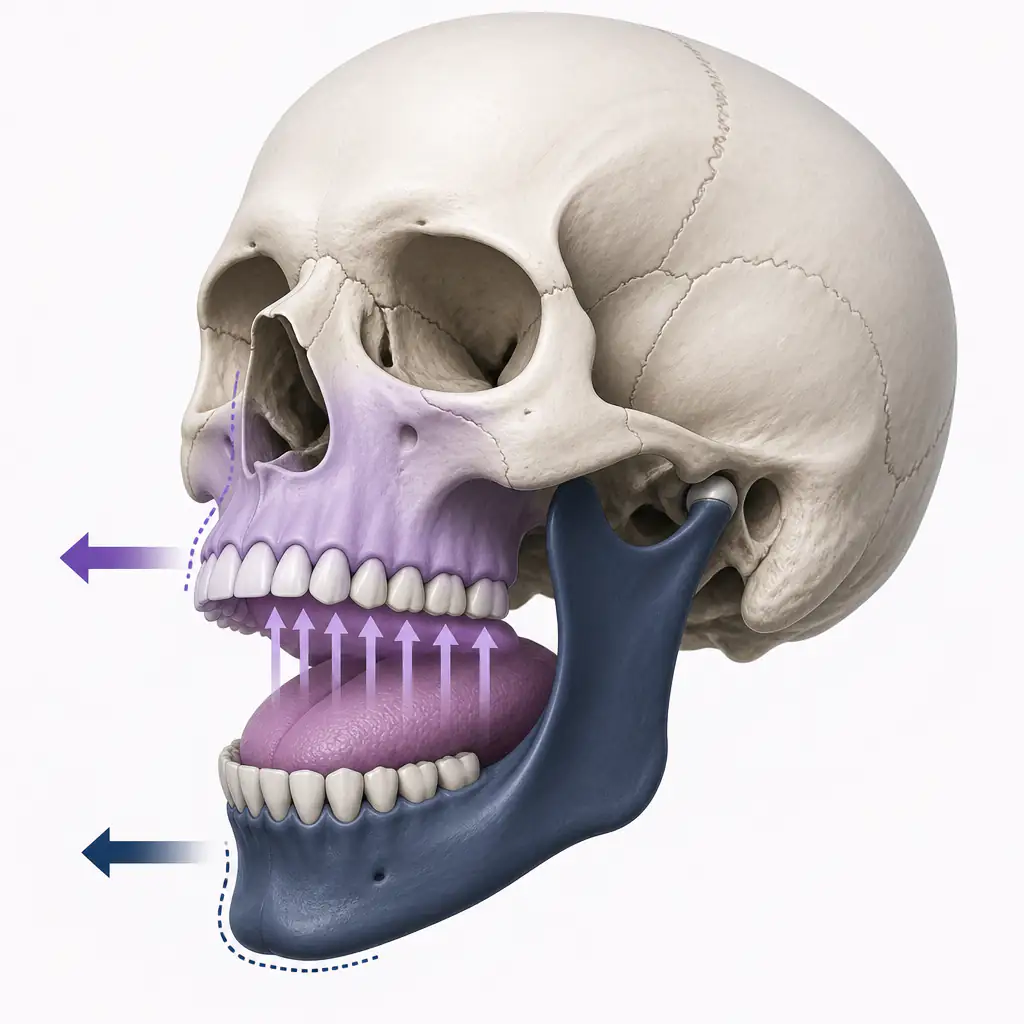
- Tongue pressure on the palate. The tongue is a muscular organ that, when rested correctly against the roof of the mouth, applies upward and forward pressure to the maxilla. Over time, especially during childhood and adolescence, this helps widen and project the upper jaw forward.
- Bite mechanics. Chewing hard foods requires the jaw muscles, primarily the masseter and temporalis, to generate force. This stimulates bone remodeling and can contribute to a stronger, more projected jaw.
- Breathing pattern. Chronic mouth breathing tends to encourage downward and backward facial growth. Nasal breathing maintains proper tongue posture and internal pressure, which supports a more forward growth pattern.
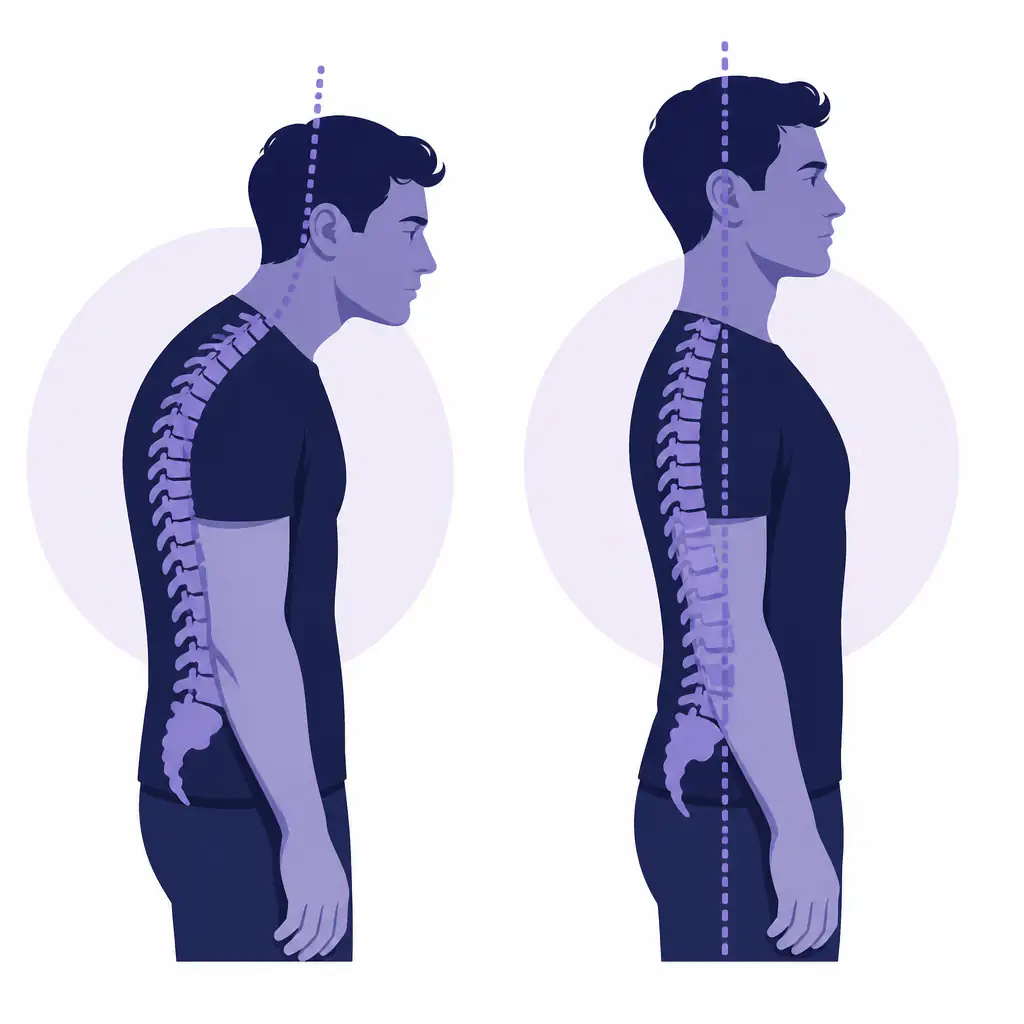
- Head and neck posture. Forward head posture shifts the mandible backward relative to the cranium, compressing the temporomandibular joint (TMJ) and reducing the apparent projection of the lower jaw.
Understanding these mechanisms is the starting point for doing something about them.
Mewing: The Foundation of Forward Growth Training
Mewing is the practice of maintaining correct oral posture, specifically resting the entire tongue flat against the roof of the mouth, teeth lightly together or in light contact, and breathing through the nose. It is named after Dr. John Mew and his son Dr. Mike Mew, British orthodontists who have argued that oral posture is a primary driver of facial development.
For adults, the evidence on bone remodeling from mewing alone is limited and largely anecdotal. Bone is less plastic after the growth plates close, typically in the late teens to early twenties. However, correcting oral posture can still produce measurable changes in soft tissue positioning, muscle tone, and the perceived definition of the jaw and cheekbones.
How to Mew Correctly
- Close your lips gently. Your mouth should be closed without tension in the chin or lip muscles.
- Place your back teeth in light contact. Not clenched, just lightly touching or near each other.
- Lift your entire tongue to the palate. This is the most commonly misunderstood part. The back third of the tongue must be engaged, not just the tip. Think of a suction cup seal rather than just touching the tip to the front of your palate.
- Breathe through your nose exclusively. If nasal obstruction prevents this, addressing the obstruction (deviated septum, allergies, chronic congestion) is a prerequisite.
- Hold this posture passively throughout the day. The goal is for it to become your default resting state, not a conscious exercise you do for ten minutes.
Consistency over months and years is what matters here. There are no shortcuts.
Chewing and Jaw Stimulation
Bone responds to mechanical load. This is well established in orthopedic medicine: weight-bearing exercise increases bone density, and the same principle applies to the jaw.
The masseter muscle, the thick chewing muscle you can feel at the sides of your jaw when you clench, attaches along the ramus (back portion) and body of the mandible. Consistent, forceful chewing stimulates this area and may contribute to mandibular development, particularly in younger individuals still in growth phases.
Practical Approaches
- Eat harder, denser foods. Raw carrots, apples, tough meats, and fibrous vegetables require more chewing force than processed, soft foods.
- Chew gum. Mastic gum is popular in looksmaxxing communities because it is significantly harder than standard chewing gum. Some users report improved jaw definition and masseter hypertrophy over time. Start with small amounts to avoid TMJ irritation.
- Chew bilaterally. Make a habit of chewing evenly on both sides rather than favoring one side, which can create facial asymmetry over time.
Be cautious here. Excessive or aggressive chewing can strain the TMJ, which is a joint with limited capacity for self-repair. If you experience clicking, popping, or pain in the jaw joint, ease off and consult a professional.
Posture and Its Effect on Facial Projection
This is one of the most underrated factors in how your face looks, and it is something you can act on immediately.
Forward head posture, where the head juts in front of the shoulders rather than sitting directly above them, causes the mandible to drop and retract slightly. It also increases tension in the submental muscles beneath the chin, which can create the appearance of a double chin even in lean individuals. Correcting this shifts your entire facial profile.
Posture Correction Basics
- Ears over shoulders, shoulders over hips. This is the neutral spine alignment you are aiming for when standing and sitting.
- Strengthen the deep cervical flexors. These small muscles at the front of the neck are chronically underactive in people with forward head posture. Chin tucks (gently retracting the chin while keeping your gaze level) are a simple daily exercise.
- Stretch the suboccipital muscles. Tight muscles at the base of the skull are often responsible for pulling the head forward. Gentle stretching and massage in this area can help.
- Adjust your screen height. Most forward head posture is driven by looking down at phones and laptops for hours daily. Raising your screen to eye level removes the primary cause.
Breathing: Nasal vs. Mouth Breathing
Chronic mouth breathing is associated with altered facial development in children, and it negatively affects the appearance of the face in adults as well. When you breathe through your mouth, your tongue drops from the palate, your lips part, and the internal pressure dynamics that support the midface are disrupted.
If you are a habitual mouth breather:
- Get evaluated for nasal obstruction by an ENT (ear, nose, and throat specialist).
- Address allergies if they are contributing to congestion.
- Consider mouth taping at night as a tool to retrain nasal breathing during sleep. Surgical tape or purpose-made mouth tape placed horizontally across the lips can help, though start gradually and ensure you can breathe fully through your nose before using it.
Switching to nasal breathing is not cosmetic. It affects sleep quality, cardiovascular health, and craniofacial muscle tone simultaneously.
Assessing Where You Stand
Before committing to months of habit changes, it helps to have an objective sense of your starting point. What is your jaw projection like? How does your midface sit relative to your chin? Are your eyes hooded or do you have negative canthal tilt that affects your overall facial harmony?
This is where a tool like Aura can be genuinely useful. Aura uses AI to analyze your facial structure across several dimensions, including jawline definition, facial thirds, and eye area characteristics, and gives you a personalized breakdown of what is strong and what could be improved. Having a clear baseline lets you track changes over time rather than relying on subjective self-assessment in the mirror.
What Forward Growth Cannot Be Achieved Through Lifestyle Alone
It would be dishonest not to address the ceiling here. If you are a fully grown adult with significant skeletal retrusion, meaning the jaw or midface is substantially set back due to genetics or growth pattern, lifestyle interventions will improve your appearance and health but will not replicate the results of skeletal intervention.
For significant maxillary or mandibular retrusion, options exist in the clinical space:
- Orthognathic surgery (jaw surgery) can physically move the maxilla or mandible forward. This is a major surgical procedure with a significant recovery period.
- SARPE (surgically assisted rapid palatal expansion) widens and can mildly advance the maxilla in adults whose midpalatal suture has fused.
- MSE (maxillary skeletal expander) is a device some orthodontists use, though its effectiveness in fully mature adults is debated.
These are medical procedures with real risks and significant costs. Speak to a qualified orthodontist or maxillofacial surgeon before considering any of them. Do not pursue them based on online advice alone.
Building a Consistent Protocol
Forward growth, to whatever degree you can influence it, is a product of consistent daily habits rather than any single technique. Here is a realistic framework:
- Fix your breathing first. Everything downstream depends on nasal breathing and correct oral posture.
- Practice correct mewing posture throughout the day. Set reminders if needed until it becomes automatic.
- Upgrade your diet texture. Incorporate harder, more fibrous foods and reduce processed soft foods.
- Work on neck and postural alignment daily. Ten minutes of chin tucks and suboccipital stretching goes a long way.
- Be consistent for at least six months before evaluating results. Bone and muscle adaptation take time. Progress is slow and incremental.
- Document your progress objectively. Take consistent photos in the same lighting and angle. Tools like Aura can help you track facial changes and keep your analysis grounded.
The people who see real improvements are not the ones who try everything for two weeks. They are the ones who make these habits part of their daily routine and stay patient.
Frequently asked questions
Can adults actually get forward growth, or is it only possible during childhood? +
Significant skeletal forward growth from lifestyle changes is much harder to achieve after the growth plates close, typically in the late teens to early twenties. However, adults can still see improvements in soft tissue definition, muscle tone, posture, and perceived jaw projection through consistent mewing, chewing habits, and postural correction. For structural skeletal changes, orthognathic surgery is the only reliably documented option in adults.
How long does mewing take to show results? +
Most people who report visible changes from mewing describe a timeline of six months to two or more years of consistent practice. Results vary significantly based on age, starting structure, and how consistently correct posture is maintained. Younger individuals during active growth phases tend to see more pronounced changes.
Is mastic gum actually better than regular chewing gum for jaw development? +
Mastic gum is considerably harder than standard chewing gum, which means it requires more chewing force and provides greater mechanical stimulation to the masseter and surrounding jaw muscles. Some users report improved masseter definition and jaw appearance over time. That said, start slowly to avoid straining the temporomandibular joint, and stop if you experience any joint pain or clicking.
Does nasal breathing actually affect facial structure? +
Research in craniofacial development strongly suggests that chronic mouth breathing is associated with downward and backward facial growth patterns, particularly in children. In adults, switching to nasal breathing improves tongue posture, reduces submental muscle tension, and supports the soft tissue framing of the midface and jaw. It may not reverse existing bone structure but it creates better conditions for all other facial improvement habits.