 Aura: Looksmaxxing
HGH Face Before and After: What Really Changes
Explore HGH face before and after effects: which facial features change, what the science says, and how to track your results objectively.
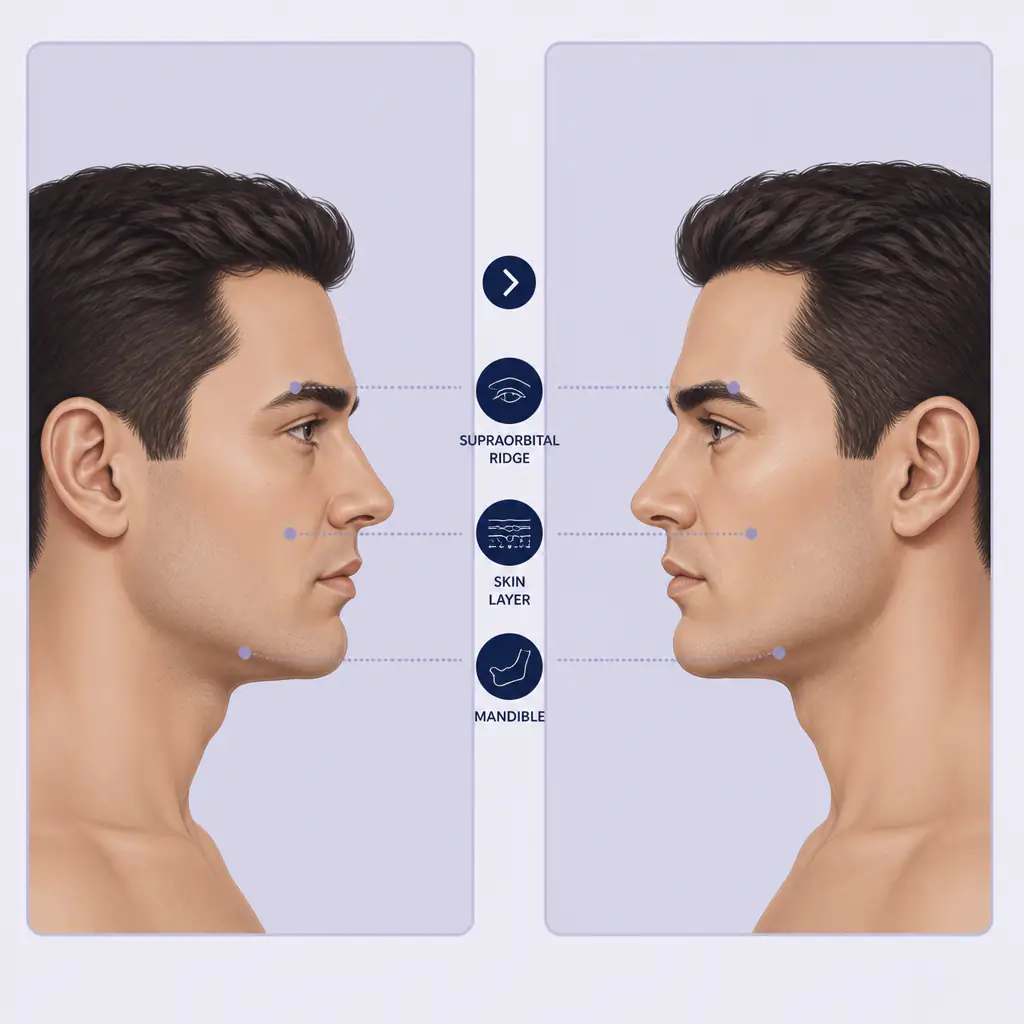
Human growth hormone is one of the most discussed compounds in appearance-focused communities, and the face is where people first claim to notice changes. Before you draw conclusions from a handful of photos posted online, it helps to understand the biology behind what HGH actually does to facial structure, what the realistic timeline looks like, and how to tell signal from noise when comparing before and after photos.
This article breaks down the mechanisms, the documented changes, and the honest limitations. Talk to a qualified medical professional before considering any hormone therapy. HGH is a prescription compound with real risks, and nothing in this article constitutes medical advice.
How HGH Affects Facial Tissue and Bone
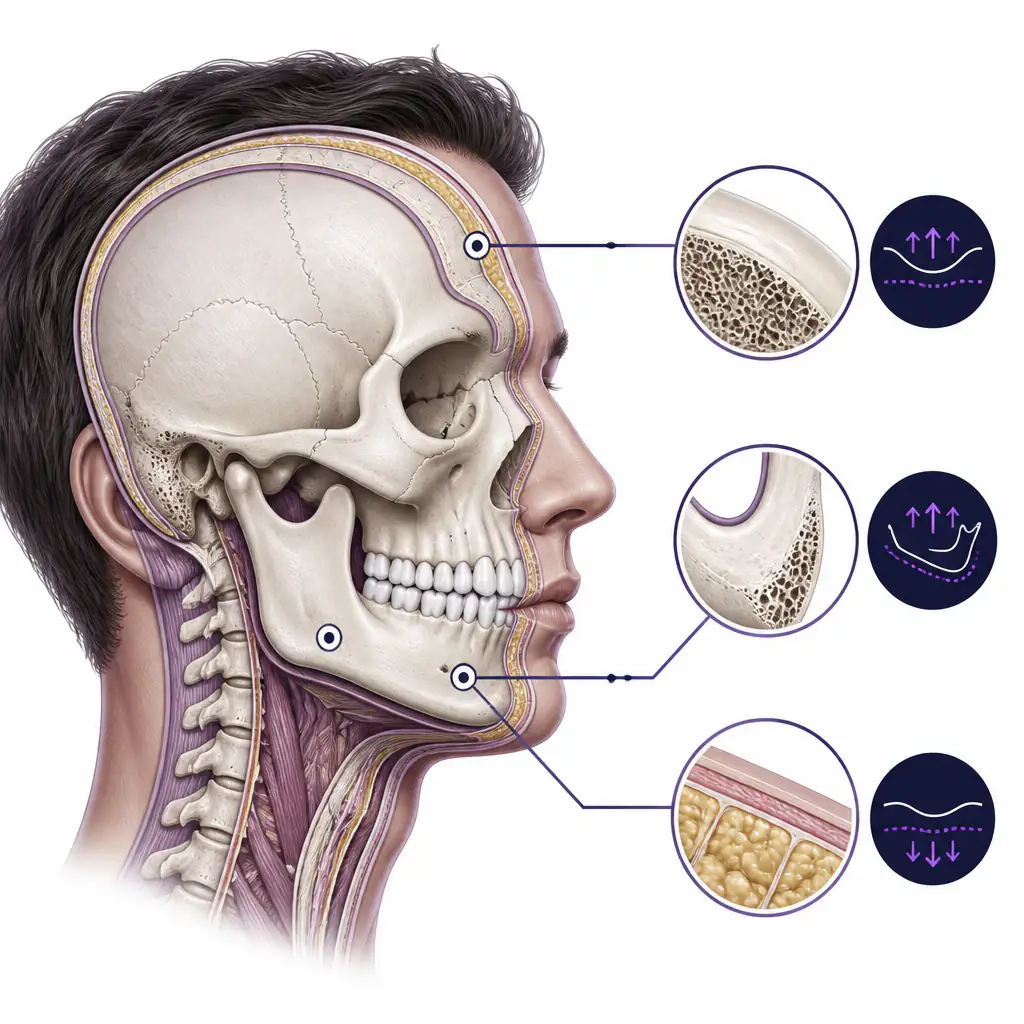
Human growth hormone (HGH) works primarily by stimulating the liver to produce insulin-like growth factor 1 (IGF-1). IGF-1 is the downstream signal that drives most of the tissue-level changes people associate with growth hormone use. On the face, this affects several distinct structures:
- Cortical and cancellous bone: Research suggests IGF-1 can stimulate osteoblast (bone-forming cell) activity. In adults whose growth plates are fused, this does not produce linear growth but can produce periosteal expansion, meaning bones may grow outward and thicken over time.
- Soft tissue and skin: HGH has well-documented effects on collagen synthesis and skin thickness. Users often report improved skin texture, reduced fine lines, and a firmer appearance, effects likely tied to increased collagen type I production.
- Subcutaneous fat: HGH is lipolytic, meaning it promotes fat breakdown. Reduced facial fat can sharpen definition in the cheeks and jawline, making underlying bone structure more visible.
- Muscle and connective tissue: Increased protein synthesis may add density to the muscles of mastication (the masseter and temporalis), subtly widening the lower face.
Understanding which of these mechanisms is driving a given change matters, because not all changes are permanent, and not all of them are desirable depending on your starting facial structure.
Which Facial Features Change Most Visibly
The Jaw and Chin
The mandible (lower jaw) and the chin region are the most commonly cited sites of visible change. The chin may appear to project more forward (increased pogonion projection), and the jaw angles can become more defined. These changes are gradual and tend to be more pronounced with higher doses or longer durations of use.
In clinical literature on acromegaly, a condition caused by chronic excess growth hormone, mandibular prognathism (an overdeveloped lower jaw that protrudes beyond the upper jaw) is a hallmark feature. Recreational or therapeutic use at lower doses produces far more subtle effects, but the same structures are being stimulated.
The Brow Ridge and Orbital Bones
The supraorbital ridge (brow bone) and the orbital rims around the eyes are among the denser bones in the skull and respond slowly. Some users report a more prominent brow over extended periods, which can create a more defined, hunter-eye appearance by slightly lowering the brow relative to the orbit. This is a slow, dose-dependent process.
The Nose
The nasal bones and septal cartilage may thicken slightly. Some users notice the nose appears slightly wider or the tip becomes less refined. This is one of the less desirable changes for many people and worth factoring into the cost-benefit analysis.
Skin Quality
This is arguably the most consistent and noticeable change at moderate doses. Improved skin hydration, reduced sagging, and a firmer texture are frequently reported. The skin appears healthier and more elastic, which reads as a significant rejuvenation effect in before and after comparisons.
The Timeline: When Do Changes Appear
Facial bone changes are slow. Here is a realistic breakdown of what tends to happen at different points:
Weeks 1 to 4: Primarily water retention and improved skin hydration. The face may look slightly fuller or “puffier,” especially around the hands and face. This is not structural change; it is fluid redistribution.
Months 1 to 3: Skin quality improvements become more noticeable. Collagen synthesis is ramping up. Fat loss in the face may begin if the user is in a caloric deficit or running higher doses.
Months 3 to 6: Soft tissue changes (skin tightening, facial fat reduction) are more evident. Early, subtle changes to bony structure may begin but are not yet visible in photos.
6 months and beyond: Bony changes, if they occur, become detectable. Jaw definition, chin projection, and brow development are longer-arc changes that require extended, consistent use.
The practical takeaway is that most dramatic before and after photos online either reflect long-term use, high doses, other compounding factors (such as fat loss, better lighting, or additional substances), or some combination of all three.
Reading Before and After Photos Critically
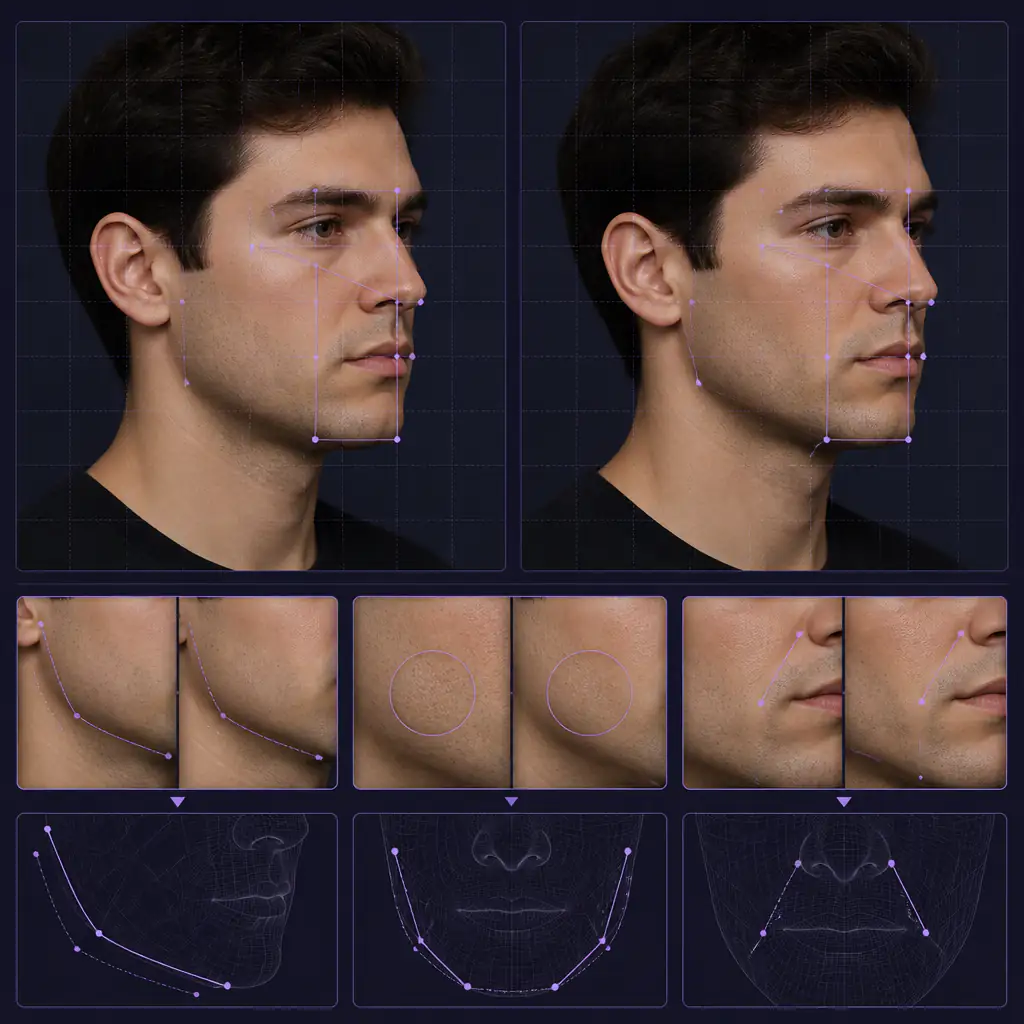
Before and after photos are the primary way people evaluate HGH face changes, and they are notoriously easy to manipulate, even unintentionally. Here is what to account for when looking at comparisons:
- Lighting angle: Harsher, directional lighting creates more shadow and definition. A simple change in light source can make a jawline look dramatically sharper without any physical change.
- Camera distance and focal length: Shooting closer with a wide lens distorts facial proportions. Distance and lens choice affect how prominent the chin and nose appear.
- Body fat percentage: If someone lost significant body fat between photos, that alone would sharpen facial definition considerably.
- Grooming and posture: Neck posture affects how the jawline reads in a photo. Looking slightly downward or forward creates more definition.
- Skin treatment and hydration: Better skincare, improved sleep, and hydration all affect how skin looks in photos.
None of this means that real changes do not occur. It means that isolating the variable of HGH requires controlling for all of these other factors, which almost no casual before and after photo does.
If you want an objective baseline before making any changes to your routine, using a tool like Aura to score and document your current facial structure gives you a measurable starting point. Aura’s AI analysis covers jawline definition, brow prominence, and overall facial harmony, so you are comparing against real metrics rather than subjective impressions.
What Clinical Research Actually Shows
Most research on HGH and facial changes comes from two populations: patients with growth hormone deficiency (GHD) receiving therapeutic HGH replacement, and patients with acromegaly (pathological excess of growth hormone).
In GHD patients: Therapeutic replacement has been shown to improve skin thickness, reduce subcutaneous fat, and improve soft tissue quality. These patients are restoring physiologically normal levels, so results are not directly comparable to supraphysiological use.
In acromegaly: The facial changes are dramatic and well-documented, including coarsening of features, mandibular prognathism, macroglossia (enlarged tongue), and frontal bossing (prominent forehead/brow). These changes result from years of excess hormone and are largely irreversible.
Research on healthy adults using HGH at recreational or “anti-aging” doses is more limited. Studies suggest benefits in body composition and skin quality are real but modest, and the long-term skeletal effects at these doses are not fully characterized.
Risks Specific to Facial Changes
It is worth being direct about the risks that are specific to facial appearance, separate from systemic risks like insulin resistance, fluid retention, or carpal tunnel syndrome.
- Irreversibility of bone changes: Unlike soft tissue changes, bony changes do not reverse when you stop using HGH. A jaw or brow that has grown beyond your preferred aesthetic cannot be walked back without surgery.
- Asymmetric growth: Bone growth stimulated by IGF-1 does not always distribute evenly. Subtle asymmetries may become more pronounced.
- Nose changes: As noted above, nasal thickening is not a change most people are seeking, and it is not reversible.
- Feature coarsening: At higher doses or with long-term use, facial features can take on a coarser, more prominent quality that departs from conventional aesthetic ideals.
These are not reasons to dismiss the topic, but they are reasons to go in with realistic expectations and medical supervision.
Practical Steps for Anyone Considering HGH
If you are seriously researching this, here is how to approach it responsibly:
- Get baseline labs: IGF-1, fasting glucose, HbA1c, and a full hormone panel give you a starting point and let you monitor for adverse metabolic effects.
- Work with an endocrinologist or anti-aging physician: HGH is a prescription compound. Obtaining it legally requires a diagnosis and a prescription. Unsupervised use carries legal and health risks.
- Document your baseline appearance objectively: Photos in controlled lighting, same angle, same distance. Aura can provide a structured facial analysis that tracks specific metrics like jawline score and facial symmetry, which is more useful than eyeballing a selfie.
- Set realistic expectations: Soft tissue improvements (skin quality, some fat reduction) are the most reliably documented. Structural bone changes require long timelines and higher doses, and they come with greater risk of unwanted outcomes.
- Monitor regularly: Repeat labs at 3-month intervals. Document facial changes with consistent photo conditions so you can actually see what is changing versus what is lighting and angle.
Summary: What the Evidence Supports
HGH does appear to cause real facial changes, but the nature of those changes depends heavily on dose, duration, individual genetics, and baseline hormone levels. The most consistent and earliest effects involve skin quality and subcutaneous fat reduction. Structural bone changes require longer timelines, carry irreversibility, and scale with dose in ways that can move past aesthetic ideals into territory most users would not want.
Before and after photos circulating online are useful for understanding the general direction of change, but they are rarely controlled well enough to isolate HGH as the cause. A critical eye, a solid baseline, and medical oversight are the foundations of any responsible approach to this topic.
Always consult a qualified medical professional before starting any hormone therapy. The risks are real, the effects are not fully reversible, and self-administration without medical guidance is both dangerous and, in most jurisdictions, illegal.
Frequently asked questions
How long does it take to see facial changes from HGH? +
Skin quality improvements may appear within the first one to three months of consistent use. Structural bone changes, such as increased jaw definition or brow prominence, are much slower and may require six months to a year or more of use before becoming visible in photographs.
Are HGH facial changes permanent? +
Soft tissue changes, including improved skin thickness and reduced facial fat, will largely reverse if HGH use is discontinued. Bone changes, however, are largely permanent. Any bony growth that occurs during use does not revert when the hormone is stopped.
Can low-dose HGH still cause facial changes? +
Research suggests that even lower, therapeutic-range doses can improve skin collagen and reduce subcutaneous fat over time. Significant structural bone changes are less likely at low doses but cannot be ruled out with extended use. Individual response also varies based on baseline IGF-1 levels and genetics.
How do I tell if facial changes in before and after photos are really from HGH? +
Look for controlled conditions in both photos: same lighting angle, same camera distance, same facial expression, and similar body weight. If those variables are not controlled, changes in lighting or fat loss could account for most of the visible difference. True structural changes require long-term consistent documentation under controlled conditions to verify.