 Aura: Looksmaxxing
Hairstyle for Round Face: What Stylists Recommend
Find the right hairstyle for a round face: stylist-backed cuts, bangs and layers, where experts disagree, and how to brief your stylist with confidence.
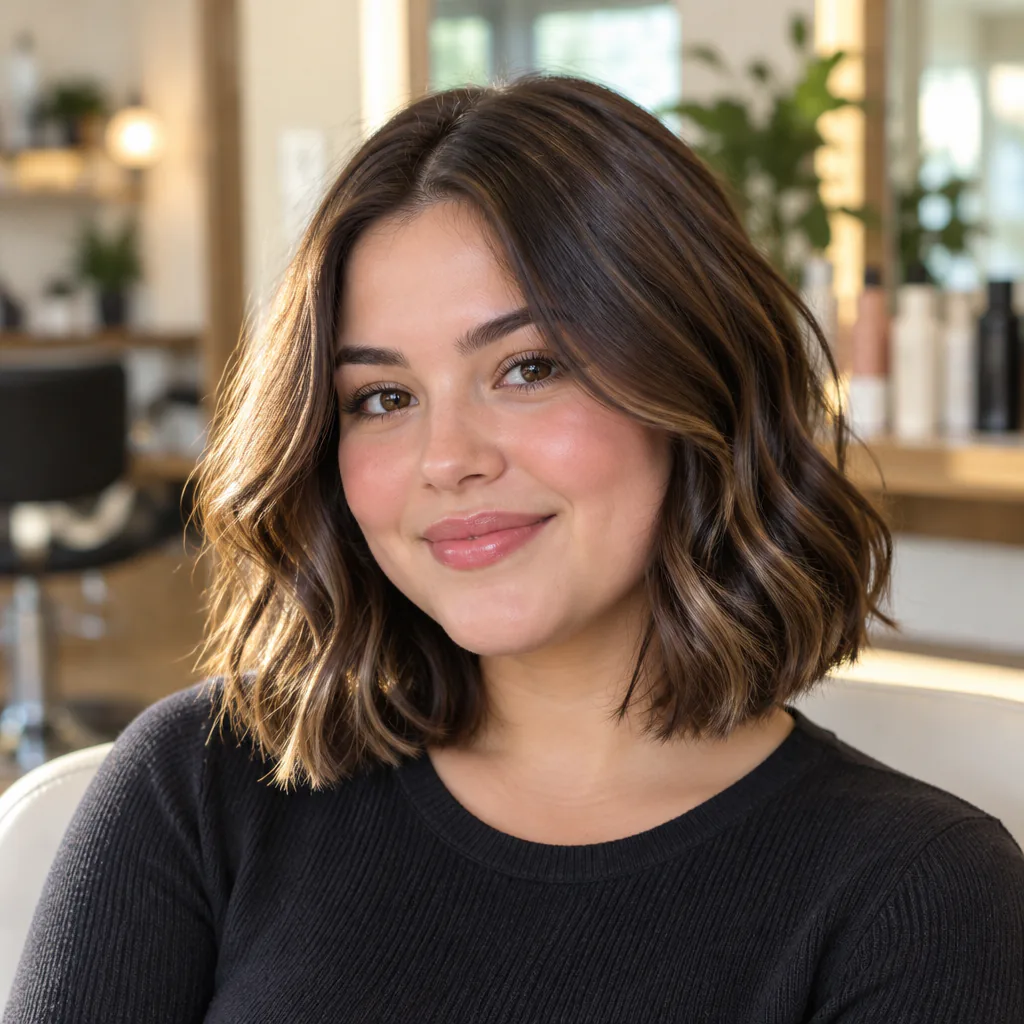
If your face is about as wide as it is long, with fuller cheeks and a soft jawline, you have probably been told what you “can’t” wear. Most of that advice is overstated. A round face is not a problem to fix. Stylists treat it as a starting point for balance, and their techniques are simple. They add some vertical line, place weight carefully and choose where the eye lands.
This guide collects what named stylists and major beauty editors recommend, points out where they disagree, and gives you a plan for your next appointment. One caveat first: no controlled study has tested whether a particular haircut makes a face look longer. Everything below is professional styling judgment, not measured fact.
How to Tell if You Actually Have a Round Face
Before choosing a hairstyle for a round face, confirm that’s the shape you’re working with. Many people sit between two shapes.
Southern Living’s guide describes a round face as roughly as long as it is wide, with the widest point in the middle and a softer jawline. L’Oréal Paris lists the same signs in plainer terms: soft angles, a rounded chin and wider cheekbones.
Celebrity hairstylist Ashley Streicher suggests a low-tech check: trace the outline of your face on the mirror with lipstick or a washable marker. Here’s how to do it well:
- Pull all your hair back, including any fringe, so your hairline and jaw are visible.
- Stand square to the mirror in even, front-facing light.
- Keep your head still and trace from the hairline, down the cheeks and around the chin.
- Step back and look at three things: overall length versus width, where the outline is widest, and whether the jaw curves or angles.
If the outline looks close to a circle, is widest at the cheeks and has a curved jaw, the round-face advice below applies. If your forehead is clearly the widest point, or your jaw is sharply angular, some of it will still help, but you may be closer to a heart or square shape.
The Core Principle: Balance Through Vertical Line
Streicher frames the goal as creating a flattering silhouette that draws attention to your best features. For a round face, that usually means a cut that elongates.
In practice, stylists use three levers. This summary is our editorial reading of their advice, not a formula:
- Length that falls past the chin. The ends of the hair become the lowest visual point, so the eye travels down.
- Height at the crown. The crown is the top-back area of your head. Lift there adds length from above.
- Movement that runs downward rather than outward. Waves, layers and fringe that fall vertically, rather than bulk sitting at cheek level.
You may come across claims that a narrower face is “objectively” more attractive. The one peer-reviewed study in our research used 3D facial scans of 601 young adults and found that women who rated their own faces as more attractive tended to have narrower faces. That is a link with how people judged themselves. It did not test hairstyles, and it doesn’t show how others see you. Treat the guidance here as styling options, not corrections.
The Cuts Stylists Recommend Most
The Long Bob (Lob)
This is the most consistent recommendation across sources. Chicago-based stylist Alex Brown says the best bob for a round face should sit below the chin to elongate it. Celebrity stylist Sarah Potempa calls the lob one of the most flattering lengths for a round face.
Editorial tip: if you’re coming from long hair, a lob is a low-risk first step. Ask for the front to fall slightly past the chin so the shortest pieces never sit at the widest part of your face.
Long Layers That Start Around the Chin
If you want to keep your length, layers do most of the work. L’Oréal Paris suggests long, defined layers that start around chin length and cascade through the lengths, noting that sharper lines help create balance.
Where the layers begin matters. One guide warns against layers that land exactly at cheekbone level, because they add width there. That’s a single source’s view, but it matches the broader logic of keeping volume away from the widest point.
The Textured Pixie With Crown Volume
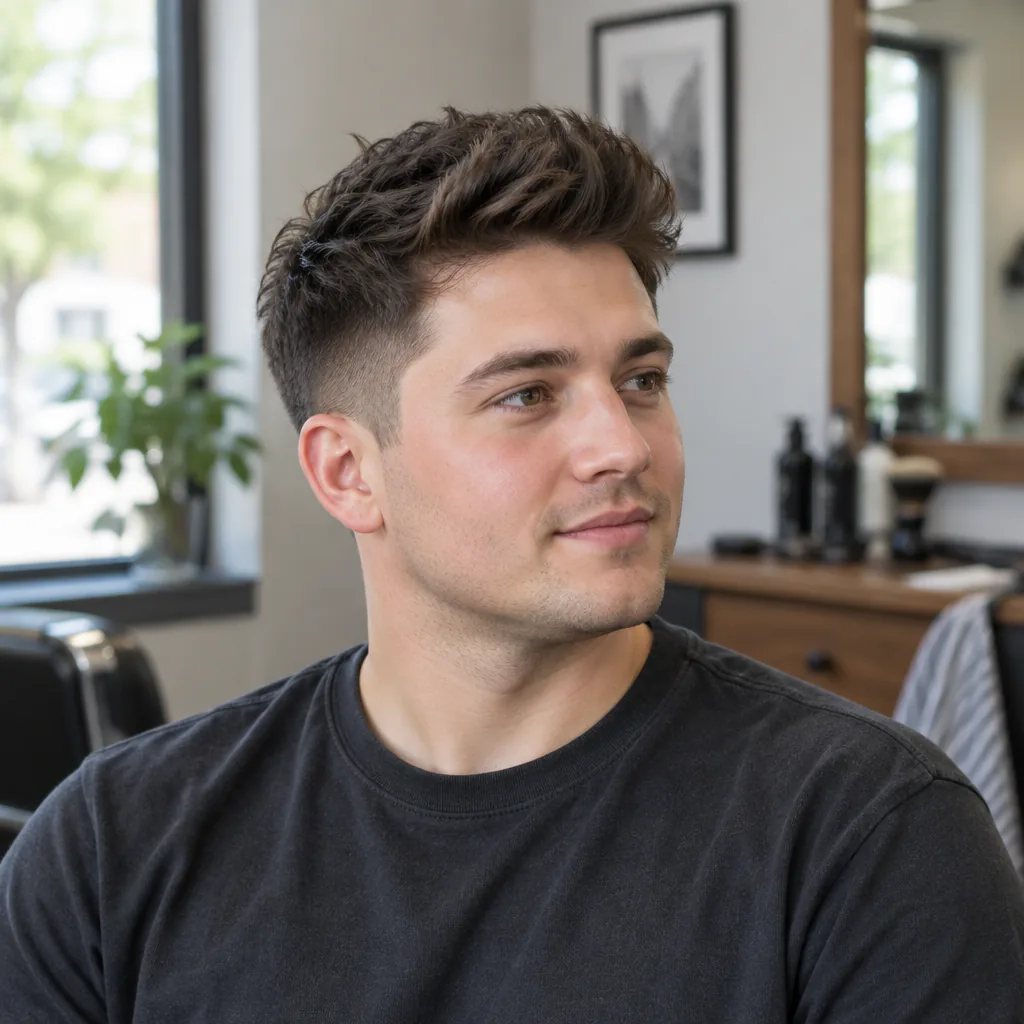
Short hair is not off-limits. Potempa explains that a short cut with volume at the crown adds vertical length to a round face. The key word is volume. A flat, close-cropped pixie works differently from one with lift and texture on top.
Loose Waves
You don’t always need a new cut. Potempa says loose waves add vertical movement and shape, and the soft texture draws the eye downward. This works on a lob, on long layers, or on hair you’re growing out.
Natural Curls and Coils
The same height-over-width logic applies to textured hair. StyleCraze notes that the height of an afro naturally lengthens a round face. Editorial suggestion: ask a stylist experienced with your curl pattern to shape for height on top and controlled fullness at the sides, rather than an even round silhouette.
Shorter Cuts for Men
Most published round-face guides focus on women’s styles. The principle carries over, though. Editorial suggestion: ask for more length and texture on top than at the sides, so the shape gains height rather than width. That is the same idea as the textured pixie. Ask your barber to keep the sides neat without going so tight that the top looks disconnected.
Bangs That Frame Instead of Box In
Bangs are where people get nervous, and the advice here is fairly consistent:
- Go lighter and wispier. L’Oréal Paris recommends skipping thick, blunt bangs in favor of a lighter, wispier fringe.
- Keep side-swept bangs on the long side. The same source suggests asking for longer side-swept bangs, because the extra length frames the face.
- Pair fringe with face-framing layers. Southern Living favors side-swept or center-parted bangs combined with long, face-framing layers.
Editorial note on upkeep: shorter, wispier fringe needs trimming more often than longer curtain-style bangs. If you don’t want regular salon visits, choose a fringe long enough to tuck behind your ears or blend into the side pieces.
Where the Experts Disagree
Most round-face articles present their advice as rules. It isn’t. Here’s where credible sources split.
Blunt Lines
- Southern Living says anything too blunt can overemphasize the soft curve of the jawline.
- Tyme recommends a French bob, cut above the chin with blunt ends, saying it suggests a longer neck and a more defined jawline.
- Hollywood stylist Janine Jarman goes further: round faces need more of a square-shaped cut to create balance.
So one camp says to soften the edges and the other says to add structure. Both aim for balance; they just approach it from opposite directions.
Center Part vs. Side Part
Southern Living lists a center part as one of the touches that add dimension. Many other guides prefer a deep side part. Editorial suggestion: this costs nothing to test. Try each for a few days before your appointment and photograph both in the same light.
How to Decide
When sources conflict, use your own hair and habits to settle it:
- Ask your stylist how a blunt line will sit in your texture and density, since it won’t behave the same in every head of hair.
- Think about styling time. Some looks need daily work to hold their shape, while others grow out gracefully.
- If you like structure, a bob with defined edges may suit you. If you prefer softness, layers and waves will feel more natural.
What to Approach With Care
These are commonly cited cautions, not bans:
- The sleek, pulled-back ponytail. StyleCraze argues that pulling all the hair back can accentuate roundness. Editorial workaround: add lift at the crown and leave a few longer pieces out at the front.
- Thick, heavy, straight-across bangs. Discouraged by L’Oréal Paris, as noted above.
- Very short buzz cuts. One guide flags them for round faces but adds that some people wear them confidently. Confidence and fit with your personal style count for a lot.
If you love a style on this list, you don’t have to rule it out. Ask your stylist to adapt it, for example a ponytail placed higher with some crown volume, or a fringe thinned at the ends.
Practical Tips: How to Get the Cut You Want
A good result depends as much on the conversation as on the scissors. These steps are an editorial routine, not a guarantee:
- Confirm your face shape with the mirror trace, so you’re not following advice meant for someone else.
- Choose a length range and a maintenance budget. Know how many minutes a day you’ll spend styling and how often you’ll book trims.
- Bring two or three reference photos of people whose hair texture and density look like yours. A cut that works on fine, straight hair may sit very differently on thick waves.
- Use specific language. For example: “layers starting at or below the chin,” “a longer, wispier side-swept fringe,” “volume at the crown,” or “front pieces just past the chin.”
- Ask how it will grow out and when the first trim should be.
- Ask for a styling demo. Potempa’s method is blow-drying with a round brush and over-directing the hair to build volume. Over-directing means drying each section in the opposite direction from where it will sit, which lifts it at the root.
If you want a second opinion before booking, Aura’s Haircut Finder reviews a photo and returns three named haircut suggestions. Each comes with notes on why it may suit your visible face, apparent texture and current length, plus a stylist brief covering upkeep, what to ask for and what a photo can’t show. It is a written recommendation report, not a try-on image. The full report requires an account and a one-time purchase.
Flattering Is a Starting Point, Not a Rule
The best hairstyle for a round face is the one that balances your proportions and fits how you actually live. The most reliable starting points:
- A lob that falls below the chin.
- Long layers beginning around the chin.
- A textured pixie with lift at the crown.
- Loose waves for vertical movement.
- A lighter, longer fringe.
Beyond that, stylists disagree on blunt lines and parts. That disagreement gives you room to choose what you like. Treat face-shape guidance as a way to start the conversation with your stylist, not to end it.
Sources & further reading
- Facial shape affects self-perceived facial attractiveness
- The Most Flattering Haircuts For A Round Face Shape
- 30 of the Most Flattering Hairstyle Cuts for Round Faces
- Celebrity Hair Stylists Explain the Best Haircuts for Every Face Shape
- There's a Perfect Bob Hairstyle for Your Face Shape: Here's Where You'll Find It
Frequently asked questions
What is the most flattering hairstyle for a round face? +
There's no single best cut, but stylists most often recommend a long bob that falls below the chin and long layers that start around chin length. Both draw the eye downward and keep bulk away from the cheeks.
Can I wear short hair if I have a round face? +
Yes. Celebrity stylist Sarah Potempa says a short cut with volume at the crown adds vertical length to a round face. The difference comes from lift and texture on top rather than a flat, close-cropped shape.
Are bangs a good idea for a round face? +
They can be. Most guides favor lighter, wispier or side-swept bangs kept on the longer side and paired with face-framing layers. Thick, blunt, straight-across bangs are the style most often discouraged, though opinions vary.
Should I wear a side part or a center part with a round face? +
Sources disagree. Some recommend a center part for dimension, others prefer a deep side part. Try both for a few days and compare photos taken in the same light before you commit to a cut.
Does a haircut actually change the shape of my face? +
No. A haircut changes where the eye is drawn and how proportions read, not your bone structure. The recommendations here are professional styling judgment and have not been tested in controlled studies.