 Aura: Looksmaxxing
Haircuts for Square Faces: Soften or Lean In?
Soften a square jaw or lean into it, both work. Stylist-backed cuts, fringe options, texture advice and a salon brief you can read out loud.

A square face is easy to recognize once you know what to look for. The jaw has clear corners, and the forehead, cheekbones and jaw sit at roughly the same width. It’s also one of the easiest shapes to style well, because the structure is already there.
The question isn’t how to hide it. It’s whether you want to soften it, balance it or show it off.
This guide covers what working stylists recommend for women with square faces, why those cuts work and how to adapt them to your hair texture and schedule. Where something is our own editorial suggestion and not a stylist’s recommendation, we say so.
What Counts as a Square Face (and What Doesn’t)
Before choosing a cut, confirm the shape. TODAY’s face-shape guide puts the core trait simply. With a square face, your forehead, cheekbones and jaw are about the same width, and the jaw has sharp angles. The same guide notes that square faces resemble round faces but have a more pronounced, wide jawline.
The key anatomical marker is the gonial angle, the corner of the lower jaw below the ear where the jawline turns toward the chin. On a square face, that corner is visible and defined, not a smooth curve.
A quick self-check (editorial suggestion)
- Pull all your hair back, including any fringe.
- Take a straight-on photo at eye level in even light, or stand square to a mirror.
- Compare the width across your forehead, your cheekbones and your jaw.
- Look at the jaw corners. Ask yourself whether they form an angle or a curve.
Close matches to rule out
- Rectangle (oblong): Detect-FaceShape’s guide explains that if your face is clearly longer than it is wide but still angular, you’re likely a rectangle, not a square. Most square-face advice still applies, but extra length at the crown matters less.
- Round: Similar widths, but the jaw is softer. TODAY’s distinction above is useful here. A square face has the more pronounced, wide jaw.
Don’t stress if you land between categories. As one barber points out in an article on face-shape haircut rules, there aren’t definitive guidelines, and nobody measures foreheads and chins with calipers. Treat face shape as a starting point, not a label you have to obey.
What Stylists Are Actually Trying to Do
It helps to understand the goal behind the recommendations, so you can judge any cut yourself.
Celebrity hairstylist Ashley Streicher, quoted in a roundup of stylist advice, describes the aim as creating a flattering shape or silhouette that draws attention to your best features. In the same piece, hairstylist Jennifer Nast says a cut that complements your face shape can accentuate your eyes, highlight your cheekbones or create the illusion of a more balanced silhouette.
That article also adds an important caveat. These are suggestions, not rules, and the best hairstyle comes down to personal preference.
For square faces, most stylist advice comes back to three levers. This summary is our editorial framing:
- Line direction: Diagonal lines, like a side part or a swept fringe, break up the straight horizontal lines at the forehead and jaw.
- Movement: Layers, waves and texture add curves next to an angular outline.
- Where the hair ends: The point where length or volume stops pulls the eye to that spot. That’s why the end point of a bob matters so much.
None of this changes bone structure. It changes where the eye lands first.
Haircuts for Square Faces: The Shortlist
These are the cuts that come up most consistently in stylist and editorial advice, with the reasoning behind each.
1. Side-swept bangs
In The Everygirl’s interviews with celebrity hairstylists, stylists Gina Rivera and Fitzsimons agreed that side-swept bangs are the best option for square faces. Their reasoning is that the length and line of the bang shorten the forehead and soften the angles.
How to ask for it (editorial suggestion): request a longer, soft fringe swept to one side that blends into face-framing pieces. A blunt, straight-across bang creates exactly the horizontal line you’re trying to interrupt.
2. Soft layers at mid to long length
Rivera’s explanation in the same article is one of the clearest summaries of square-face styling: “slightly longer hair tends to lengthen the face while texture and layers will lend to softening the features.”
This is a good pick if you want to keep length but feel your current cut looks heavy or boxy around the jaw.
3. Layered bob or long bob (lob)
L’Oréal Paris calls the layered bob flattering on square faces because it draws attention to the cheekbones for a balanced look.
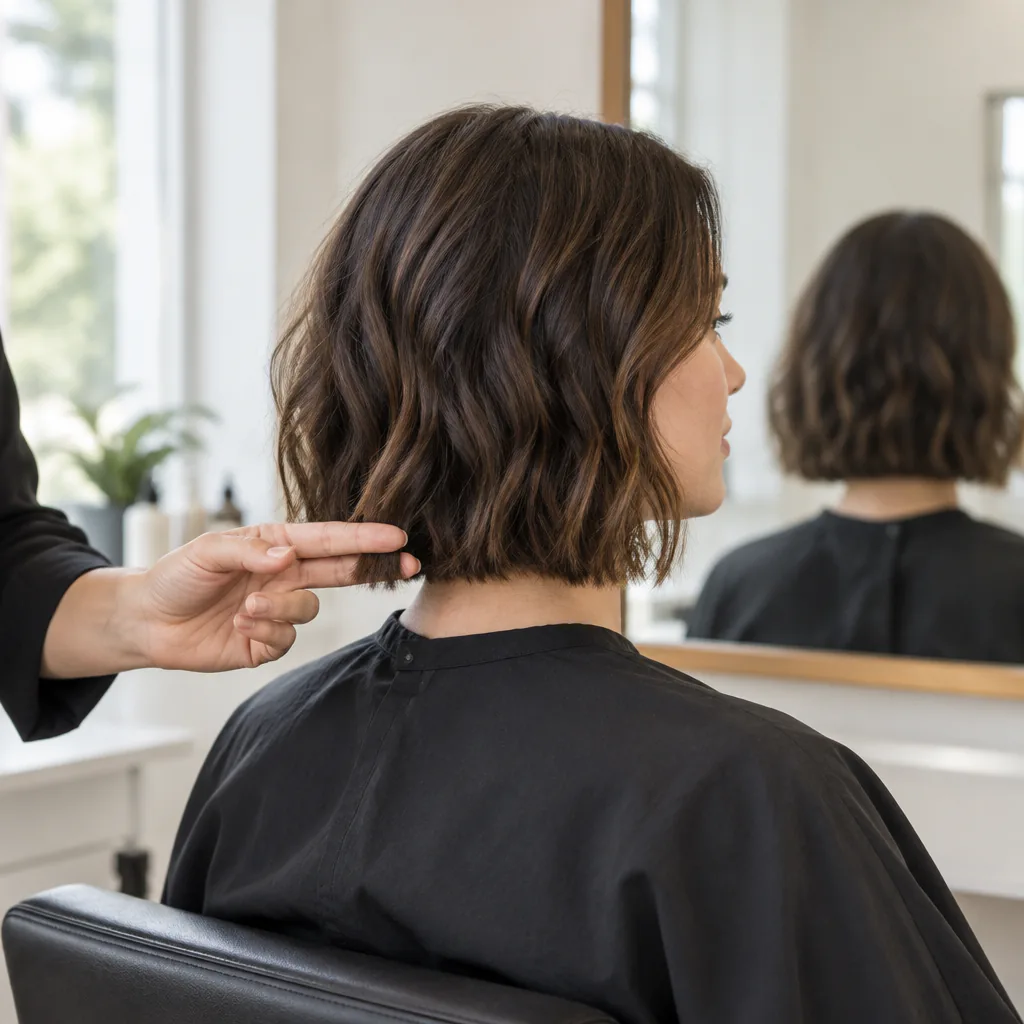
Editorial suggestion: if softening is your goal, ask for the length to fall a little below the jaw corners, not exactly at them. Ask for layers that curve inward or flick out. A one-length bob that ends right at the jaw puts a strong line in that spot, which is great if you want emphasis but works against softening.
4. Long wolf cut or shag
L’Oréal Paris also describes the long wolf cut as a style with lots of layers, texture and movement that frames a sharp jawline. A shag works on the same principle. Both suit people who like a lived-in, undone finish and have some natural wave to work with.
5. Textured or curly pixie
Short hair is absolutely an option. In The Everygirl piece, Rivera recommends a curly pixie as a way to add volume at the crown.
Editorial suggestion: keep some softness at the front and temples, such as a wispy or swept fringe, and avoid a severe blunt edge. The volume on top and the softness at the sides do the balancing work.
6. Face-framing pieces with a side part
In a stylist roundup on shoulder-length cuts, square faces are grouped under tousled, textured styles. Stylist Clyde Elezi recommends a face-framing look and a side part to accentuate the cheekbones.
This is the most low-commitment change on the list. You can often get it with a few face-framing layers added to your existing length.
Match the Cut to Your Hair Texture
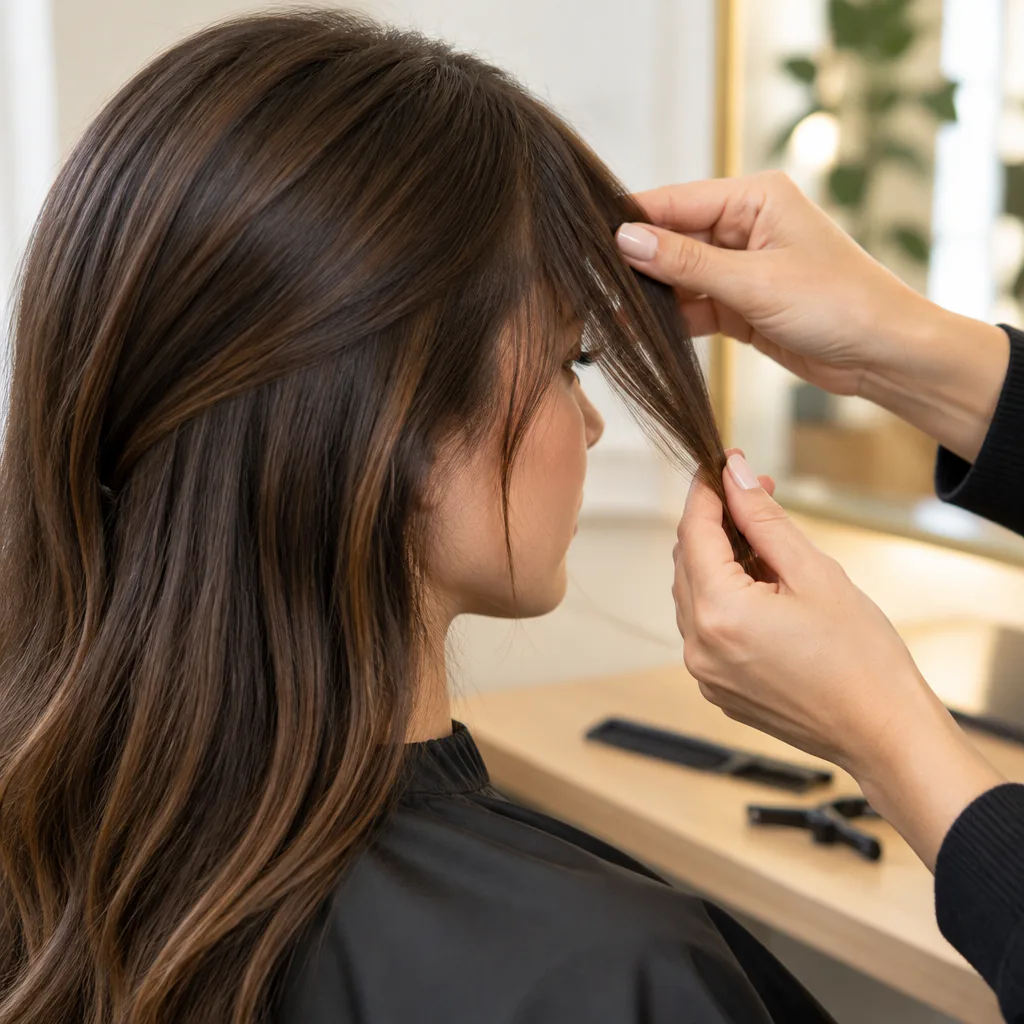
Face shape gets most of the attention, but it’s only part of the picture. A salon guide on hairstyles for face shapes points out that the right haircut also depends on your hair texture, daily lifestyle and maintenance commitment.
The barber article cited earlier goes further. It points to professional stylist Andrewdoeshair’s view that hair type is a bigger factor in choosing a cut than face shape.
Here is how we’d adapt the shortlist by texture. These are editorial suggestions for discussing with your stylist:
- Fine, straight hair: Too many layers can make the ends look thin. A lob with light face-framing and a side part for lift at the root usually holds its shape better than a heavily layered shag.
- Thick, straight hair: Ask about removing bulk from inside the haircut, so the shape doesn’t puff out at jaw level. Long layers and a swept fringe tend to sit well.
- Wavy hair: This is where shags and wolf cuts shine, because your natural texture supplies the movement. Ask for the cut to be shaped around your wave pattern.
- Curly or coily hair: See a stylist experienced with curls. Discuss length based on how your hair sits dry, because shrinkage changes where it ends. A curly pixie or a rounded, layered shape cut to your curl pattern both fit the square-face advice above.
If You’d Rather Lean Into Your Jaw
Softening is a choice, not a requirement. Even L’Oréal Paris, in its square-face guide, says everyone should feel free to embrace any hairstyle. A defined jaw is a feature many people would happily emphasize.
If that’s your preference, these editorial suggestions put the structure front and center:
- A sleek, middle-parted blunt bob that ends at the jawline
- A slicked-back low bun or ponytail
- Long, one-length hair with a center part
- A very short, polished crop
There’s no wrong answer here. The “rules” only matter if your goal is a softer overall look.
How to Brief Your Stylist
The biggest gap between the haircut you picture and the one you get is usually communication. A clear brief helps the stylist adapt general face-shape advice to your hair.
If you’d like a starting point before the appointment, Aura’s Hairstyle Finder for Women gives you three suggestions based on your photo:
- Named options: each is a haircut or a fringe and parting idea.
- What it considers: your visible hair texture and length, your face shape and the preferences you state.
- What you get: upkeep notes and a salon brief.
A few things to know before you use it:
- It doesn’t create a try-on image.
- The free result is a subjective styling-potential estimate.
- The full shortlist and brief are part of Aura Pro ($9.99 a month or $49.99 a year).
Whether you use a tool or not, these steps make the conversation easier (editorial suggestions):
- Bring reference photos. Bring two or three cuts you like and one you don’t. The “don’t” photo is often the most useful.
- Name the end point. Say where you want the length to land, such as above the jaw, below the jaw, at the collarbone or past the shoulders.
- Describe the fringe’s job. For example, “swept to the left and long enough to tuck” is clearer than “some bangs.”
- Be honest about time. Tell the stylist how many minutes you spend styling, and whether you own a blow dryer, round brush or curling iron.
- Mention your texture history. Share whether your hair frizzes, flattens or curls more in humidity, and how it behaves when air-dried.
- Ask about the grow-out. Find out what the cut will look like after it grows out a bit, and when you’ll need a trim.
Upkeep and Styling at Home
A cut that suits your face shape on day one can lose its effect if it’s hard to maintain. These editorial suggestions help each style hold up:
- Fringes need the most touch-ups. Ask whether your salon offers quick fringe trims between full cuts. A side-swept bang that grows past the cheekbone loses its softening angle.
- Blow-dry the fringe first. Dry it in the direction you want it to fall, using a round brush or your fingers, before it air-dries in place.
- Add movement on day two. A texturizing spray or a few loose bends with a curling iron reshape layers that have flattened.
- Watch layered cuts for heaviness. If your layers start to feel heavy or boxy around the jaw, they’ve likely grown out of shape and need a refresh.
- Plan for pixie trims. Pixies need regular trims to keep the crown volume and soft edges that make them work on a square face.
- Switch your part. Moving between a deep side part and a center part is a free way to shift between a softer look and a sharper one.
The best haircut for a square face is the one you’ll actually style and enjoy wearing. Use the stylist recommendations here as a starting point, adjust for your texture and routine, and treat your stylist as a collaborator, not a rule enforcer.
Sources & further reading
- What is my face shape? Learn how to determine your face shape
- 5 Haircuts For Square Face Shapes, According to Celebrity Hairstylists
- The Best Shoulder-Length Haircuts for Your Face Shape, According to Stylists
- Celebrity Hair Stylists Explain the Best Haircuts for Every Face Shape
- The Best Haircuts and Hairstyles for Square Face Shapes - L’Oréal Paris
Frequently asked questions
What is the most flattering haircut for a square face for women? +
There is no single best cut. Side-swept bangs come up most often: stylists interviewed by The Everygirl called them the best option because they shorten the forehead and soften the angles. Soft layers, layered bobs and face-framing pieces with a side part are also common recommendations.
Can women with square faces wear short hair? +
Yes. Celebrity hairstylist Gina Rivera recommends a curly pixie to add volume at the crown. As an editorial suggestion, keep some softness at the front and temples and avoid severe blunt edges if your goal is a softer look.
Should I avoid blunt bobs if I have a square face? +
Not necessarily. A blunt bob that ends at the jawline emphasizes the jaw, which is a great choice if you like your structure. If you want to soften it, ask for a layered bob that ends a little below the jaw corners.
Does face shape matter more than hair texture? +
Not always. Salon and barber sources point out that hair texture, lifestyle and maintenance time matter as much as or more than face shape. Use face-shape advice as a starting point, then adjust it with a stylist who understands your texture.