 Aura: Looksmaxxing
Haircuts for Round Faces: What Stylists Agree On
Lobs, long layers, curtain bangs and pixies on a round face, where stylists openly disagree, and the wording to bring to your next appointment.
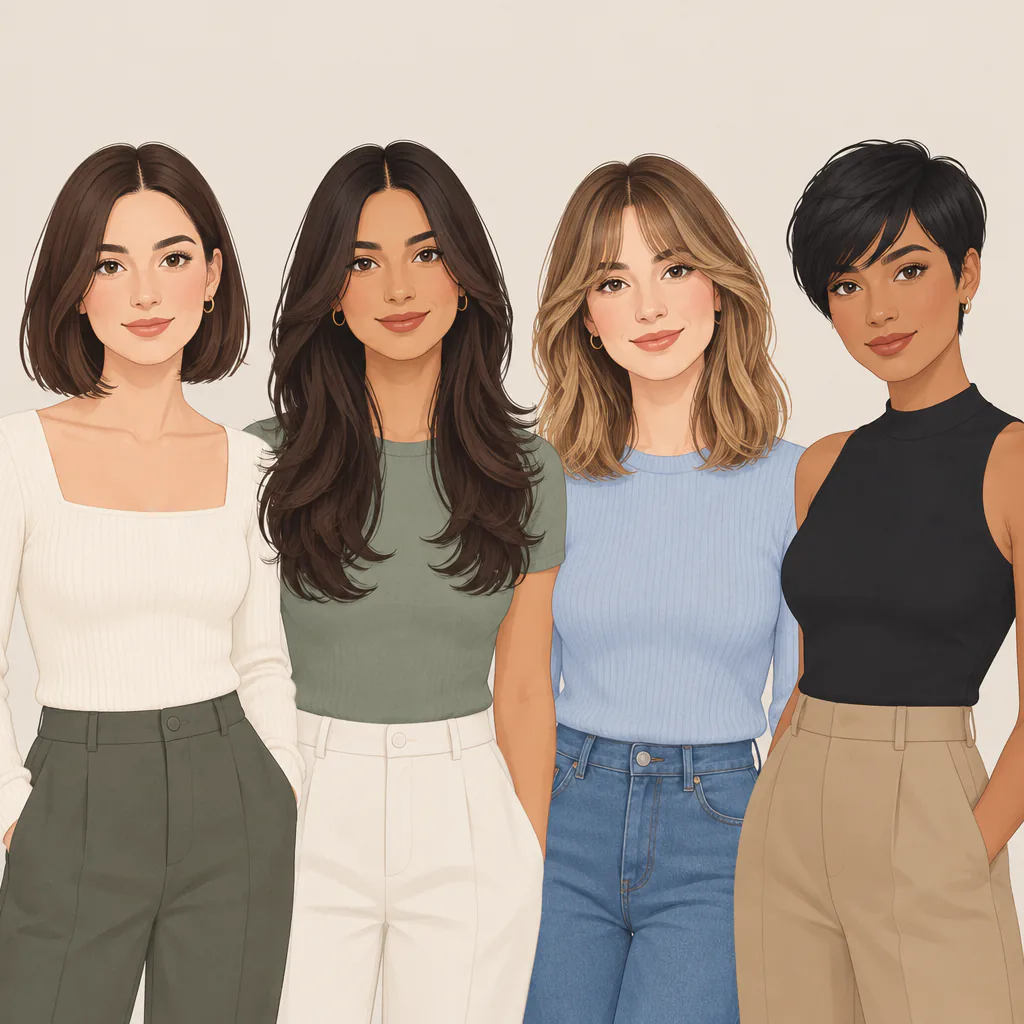
If you have a round face, you have probably read that you should avoid half the haircuts you like. Most of that advice is a simplified version of something more useful. Stylists share a few consistent ideas about round faces, mostly about where the length lands, where the layers start and what shape the fringe takes. They also disagree with each other more than most listicles admit.
This guide covers what stylists consistently recommend, where they contradict each other, and how to turn all of it into a clear request at the salon. Treat it as a menu of options. If you love a cut that breaks every guideline here, that is a perfectly good reason to wear it.
What Stylists Mean by a “Round” Face
In the face shape system most stylists use, a round face is defined by soft curves rather than strong angles. One stylist quoted in a celebrity hairstylist roundup describes round faces as typically having “softer angles, with the sides of the face curving slightly outward instead of going straight.”
That description is loose on purpose. Plenty of faces sit between categories. Your face might have a soft jawline but a longer overall shape, or full cheeks with a defined chin. If you are unsure which label fits, keep that uncertainty in mind as you read. It matters for the next section.
Use Face Shape as a Starting Point
Use “round face” as a conversation starter with your stylist, not a diagnosis. Your hair texture, density and styling routine also matter. A useful consultation should cover where your hair naturally falls, which lengths you enjoy wearing and how much daily upkeep you want. The recommendations below are styling conventions and preferences, not evidence that one face shape needs correcting.
The Cuts Stylists Keep Recommending
Across sources, the stated goal is similar. A stylist quoted in a face shape guide sums it up as creating “the illusion of length” and adding some angles. The cuts below are the ones that come up most often.
The Lob That Falls Below the Jaw
The long bob is the most common recommendation for round faces, with one key detail: length. Concihairge haircutting specialist Jenna Messerschmidt suggests a lob that hits just below the jawline for clients who want something shorter, saying it draws attention down. One roundup gets more specific and suggests asking for ends around three inches below your chin.
If you want a bob, the placement of the ends matters more than the word “bob.”
Long Layers That Start Below the Chin
If you prefer length, stylists repeatedly point to layers, and specifically to where the shortest layer begins.
- Messerschmidt advises keeping it long with layers that start below the chin line, adding movement without adding width.
- Davines suggests asking for mid-length, face-framing layers that start below the chin.
- A stylist quoted in the face shape guide recommends long lengths with layers and face-framing pieces.
Not everyone agrees on the exact starting point. A San Mateo salon suggests soft face-framing layers that start at your cheekbones and blend into the ends. The overlap is clear, though: framing pieces work best when they blend down into the length instead of stopping abruptly at cheek level.
Shoulder Length or a Little Longer
For a middle ground between a lob and long hair, two stylists quoted in a shoulder-length guide agree that shoulder length or slightly longer is the most flattering for round faces. This length is easy to grow out in either direction, which makes it a low-risk choice if you are unsure.
Short Cuts and Pixies
Short hair is not off the table. One hairstyle site suggests a pixie with a deep side part and long bangs for anyone who wants a big chop. That source is a listicle rather than a named stylist, so treat it as an idea to discuss. Editorial suggestion: short cuts with some direction, such as longer top pieces swept to one side, tend to be easier to adapt than a very even, rounded crop.
Bangs and Fringe for Round Faces
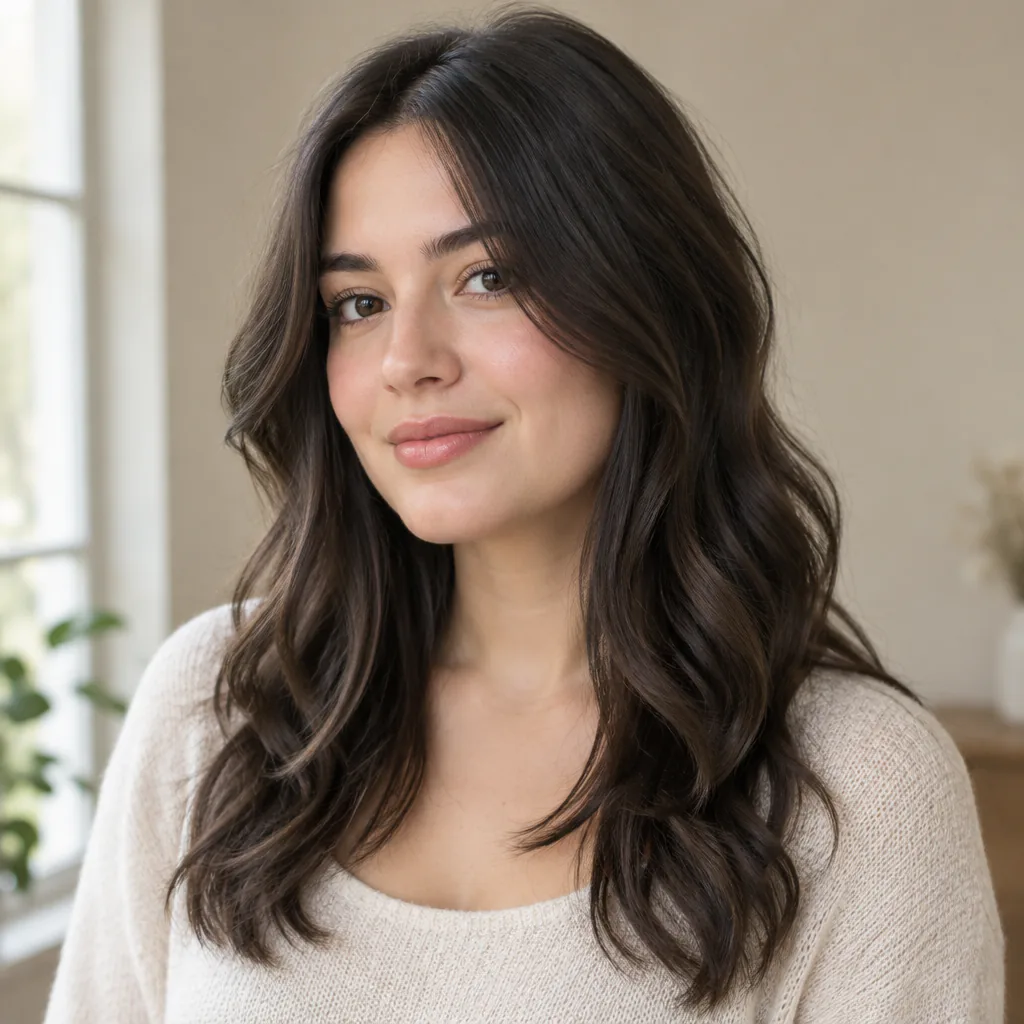
This is where advice is most consistent. Stylists generally steer round faces away from short, blunt, straight-across bangs and toward softer or angled options.
- Revlon Professional warns that short, blunt bangs widen the face and make it appear shorter. It recommends curtain bangs or long, side-swept layers that start at the cheekbone or jaw.
- Stylist Korab, quoted in a round face roundup, advises side-swept or diagonal fringe to create angles.
Curtain bangs part in the middle and fall to either side, framing the face while leaving part of the forehead visible. Side-swept bangs are cut longer on one side and fall at a diagonal. Both work with a range of lengths.
One caution: some sources overstate this. A salon blog calls blunt bangs “never a good choice” for round faces. That is too absolute. If you really want a straight fringe, talk to your stylist about length and texture. A longer, softer, wispier version is a different look from a short, heavy one.
Where Stylists Disagree
Most articles present face shape advice as settled. It is not. Here are the three biggest points of disagreement, and how to read them.
Blunt Ends or Textured Ends?
The same 36-cut roundup tells readers to avoid blunt bobs, then recommends a choppy lob with blunt ends and a sleek, blunt lob. Those positions look contradictory, but there is a pattern. A stylist in the face shape guide specifically warns against a round, layered, jaw-length bob, because it can emphasize the existing round outline.
Editorial read: the problem stylists describe is less about bluntness and more about a rounded silhouette ending right at the jaw. A blunt cut that falls below the jaw is a different shape.
Middle Part or Side Part?
Davines says a middle part helps elongate a round face. A stylist quoted in the face shape guide prefers a side part to introduce shape without an overly sharp effect. Both are reasonable. Test both in a mirror before your appointment and tell your stylist which you wear most often.
How Short Is Too Short?
The San Mateo salon advises asking your stylist not to cut face-framing hair shorter than your chin. Yet pixies and short textured cuts also appear in round face recommendations. The common thread is that framing pieces ending right at the jaw draw the most caution. Going clearly shorter or clearly longer are both options.
Adjust the Advice to Your Hair Texture
A cut that suits a round face in a photo can look completely different on your hair. This is the biggest gap in most face shape guides.
Curly hair. One guide to curly styles suggests bobs or lobs with layers, plus volume at the roots. Curls shrink and spring up when dry, so ask your stylist where the length will sit once your hair is dry, not wet.
Fine hair. Heavily layered cuts in inspiration photos are often shown on thick hair. One hairstyle site notes that a particular long layered cut suits thick, dense hair and that on fine hair it would fall flat. Editorial suggestion: if your hair is fine, ask whether fewer, longer layers would keep more fullness at the ends.
Thick hair. Editorial suggestion: ask your stylist how they plan to remove bulk, especially around the cheeks, so face-framing pieces lie flat instead of puffing outward.
How to Ask Your Stylist for the Right Cut
The most useful thing you can bring to a salon is specific language. Stylists work from what you describe, and “something flattering for a round face” leaves a lot open. These steps are editorial suggestions built from the stylist advice above.
- Bring two or three reference photos of people whose hair texture and density look like yours. A cut on thick, straight hair will not translate directly to fine, wavy hair.
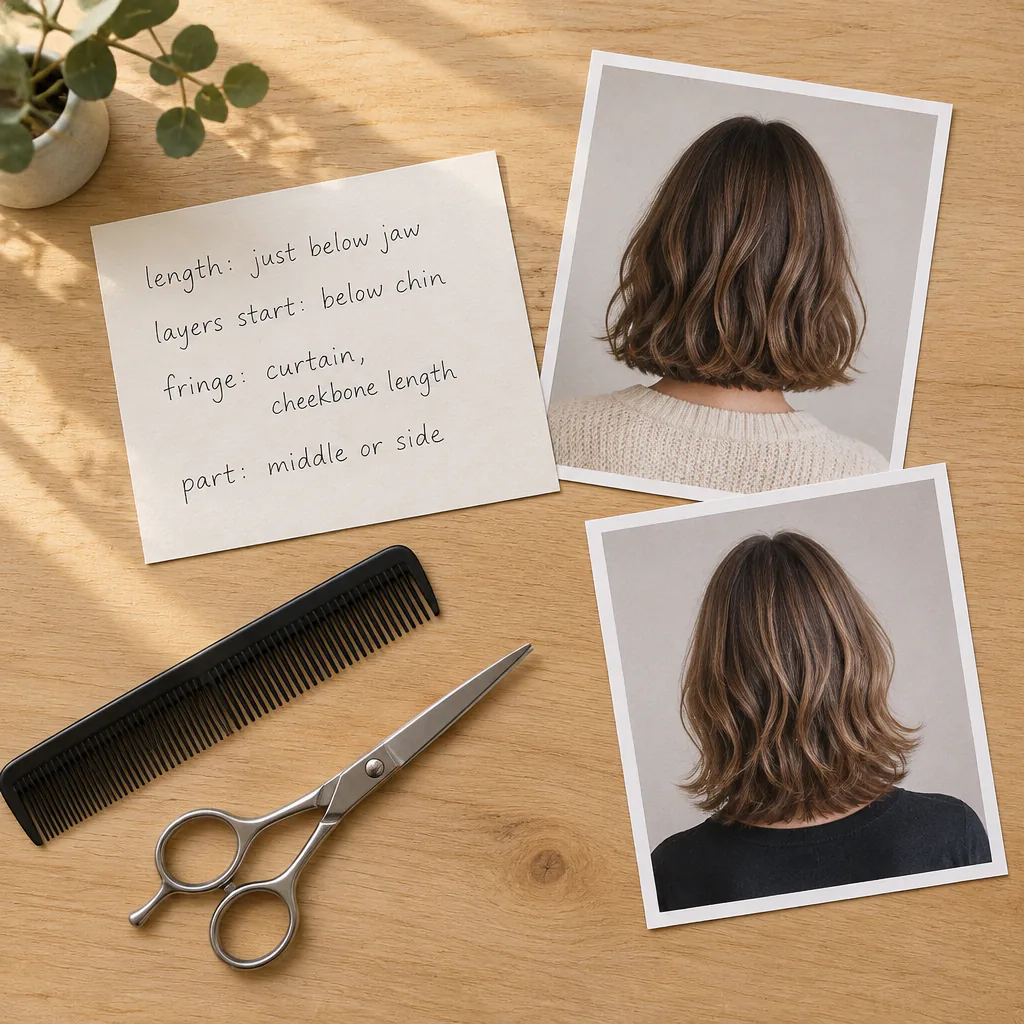
- Name where the length should land. For example: “just below my jaw,” “at my shoulders,” or “a few inches past my collarbone.”
- Say where face-framing should start. For example: “I’d like the shortest layers to start below my chin” or “at my cheekbones, blending into the ends.”
- Describe the fringe shape, if any. Curtain, side-swept or wispy, and roughly how long.
- Tell them how you part your hair. Ask whether the cut will work if you switch parts.
- Ask about upkeep. How often will it need a trim? How long does styling take on a normal morning? Bangs and short cuts usually need more frequent maintenance than long layers.
If you want help building that shortlist before you book, Aura’s Hairstyle Finder for Women considers your visible hair texture and length, your face shape and the preferences you state. The full report gives three named cut, fringe or parting options with upkeep notes and a written salon brief. Extensions, big length changes and colour are listed as optional choices, not requirements. Upload your photo before signing up. Only a subjective styling-potential score is visible free; the recommendations remain blurred. The full shortlist and salon brief are part of Aura Pro ($9.99 a month or $49.99 a year). A subscription is optional. It does not include try-on images, and its suggestions are styling recommendations, not measurements.
Practical Styling Tips for Everyday Wear
A good cut gets you most of the way. Styling does the rest. These are editorial suggestions, not rules.
- Lift at the crown, not the sides. When blow-drying, direct volume upward at the roots on top rather than outward over the ears.
- Let framing pieces fall forward. After styling, sweep face-framing layers slightly toward your face so they sit along your cheeks.
- Use asymmetry casually. Tucking one side behind your ear creates a diagonal line with no extra effort.
- Leave a few pieces out of updos. Pulling every strand back is a valid look. If you prefer some framing, leave curtain bangs or a couple of front sections loose.
- Treat colour as optional. Some hairstyle sites claim specific colour placements draw the eye downward. That is opinion, not tested advice. Choose colour because you like it.
- Rotate parts before committing. Wear a middle part one week and a side part the next, then tell your stylist which you reached for more.
The best haircut for a round face is the one that fits your hair, your routine and your taste. Stylist conventions give you a useful starting vocabulary: length below the jaw, layers that blend down, angled or soft fringe. Use them to have a sharper conversation at the salon, then decide for yourself.
Sources & further reading
- 5 Best Haircuts For Round Faces
- The Best Haircuts and Styles for Every Face Shape: Whether Round, Oval, or Square
- The Best Shoulder-Length Haircuts for Your Face Shape, According to Stylists
- Celebrity Hair Stylists Explain the Best Haircuts for Every Face Shape
- How to Choose the Perfect Hairstyle for a Round Face Shape - Revlon Professional
Frequently asked questions
What is the best haircut for a round face for women? +
No single cut wins, but stylists most often recommend a lob that falls below the jawline, long layers that start below the chin, or shoulder-length hair. The right choice also depends on your hair texture, density and how much styling you want to do.
Can I have bangs if I have a round face? +
Yes. Stylists generally suggest curtain bangs or side-swept fringe rather than short, blunt, straight-across bangs. If you want a straight fringe, discuss a longer, softer version with your stylist.
Are short haircuts bad for round faces? +
No. Pixies and short textured cuts appear in many round face recommendations, often with a side part and longer pieces on top. Stylists are most cautious about rounded cuts that end right at the jaw, not about short hair in general.
Should I wear a middle part or a side part with a round face? +
Stylists disagree. Some say a middle part adds length, while others prefer a side part for added shape. Try both in a mirror and tell your stylist which one you actually wear day to day.
How do I know if I really have a round face? +
Round faces are usually described as having soft angles and an outward curve at the sides. Many faces sit between categories. Use the label as a starting point for a styling discussion, and ask your stylist to consider your hair texture and preferences as well.