 Aura: Looksmaxxing
Glow Up Checklist for Women: 30 Days, No Nonsense
Sunscreen, sleep, hair, grooming and fit, in the order that actually matters, plus a four-week plan built so the first week is easy to finish.
Most glow up content online sells a dramatic before-and-after. The reality is usually quieter. A lasting glow up tends to be a handful of small habits repeated until they stop feeling like effort. That means protecting your skin, sleeping enough, keeping your hair and grooming in a state you like, and wearing clothes that work for your actual life.
This glow up checklist for women covers those basics. Where there is solid published guidance, like the American Academy of Dermatology’s sunscreen recommendations, we cite it. Where a suggestion is good practice or simply personal taste, we label it that way. Adapt everything to your budget, your schedule and your own idea of what looking good means.
What “Glow Up” Actually Means
It helps to know what you are aiming for before you build a checklist.
Merriam-Webster defines a glow-up as an informal term for a perceived dramatic positive change in someone’s physical appearance. Dictionary.com uses a broader definition. It describes a positive personal transformation that typically involves significant changes in appearance and style. It also notes that, like “grow up,” a glow up usually implies a gradual transformation over time.
The term has roots worth crediting. Merriam-Webster says it emerged in the 2010s, with notable examples in African American English hip-hop lyrics. One prominent instance is Chief Keef’s 2013 song “Gotta Glo Up One Day,” where glo up referred to gaining wealth and status, not looks. Merriam-Webster also notes that the exact roots are unclear. By the late 2010s the word had spread online, often in connection with social media trends where people, especially younger people, shared their own glow-ups.
Two things from these definitions shape the rest of this guide:
- It’s gradual. Treat it as a direction you move in, not an overnight reveal.
- It’s not only about your face. Style is part of the definition, and the term’s early use was about status and life changes rather than looks alone.
The Glow Up Checklist at a Glance
Here is the full checklist in one place. The order is an editorial suggestion. Sun protection comes first because it is the item with the clearest, most specific guidance from a professional body.
- Daily sun protection with a sunscreen you will actually wear
- Consistent sleep as a baseline, not a beauty hack
- A haircut you can maintain with the time you really have
- Grooming details that match your own preferences
- Clothes that fit and work together
- A simple tracking system so the habits stick
Each section below explains what to do and why.
Skin: Start With Sun Protection
If you change one thing in your routine, make it this one. The American Academy of Dermatology (AAD) recommends that everyone use sunscreen that offers broad-spectrum protection. In its statement on sun protection, the AAD describes using a sunscreen that is:
- Broad-spectrum
- Water-resistant
- SPF 30 or higher
The AAD says this kind of sunscreen helps minimize both short- and long-term damage from the sun.
How to Apply It Properly
Most people choose a good sunscreen and then use too little of it. The AAD’s practical guidance is specific:
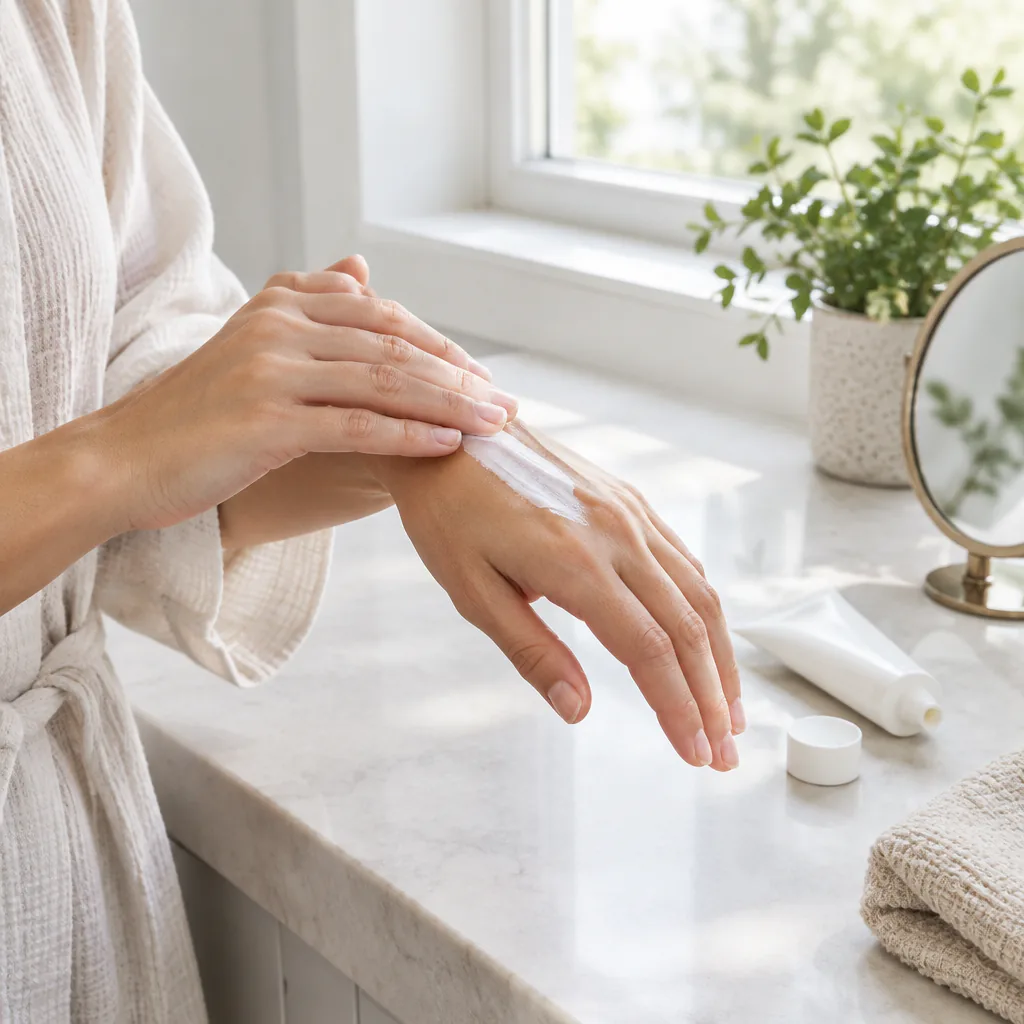
- Amount for your face: at least 1 teaspoon, roughly enough to cover the length of your index and middle fingers.
- Timing: apply to dry skin 15 minutes before going outdoors.
- Reapplying: when outdoors, reapply approximately every two hours, or after swimming or sweating, following the directions on the bottle.
- Lips: use a lip balm or lipstick that contains sunscreen with SPF 30 or higher.
Tinted Sunscreen and Dark Spots
If dark spots are something you care about, look at tinted formulas. According to the AAD’s how-to guide, a tinted sunscreen that contains iron oxide better protects your skin from developing dark spots.
As a convenience point, and not a dermatology claim, many women like that a tinted formula can stand in for a light base on minimal-makeup days.
Pick the One You’ll Actually Wear
The AAD puts it plainly: the best sunscreen is the one you’ll actually use and reapply. If a formula feels greasy, pills under makeup or leaves a cast you dislike, try a different one rather than skipping sunscreen altogether. If you have questions about sun protection or sunscreen ingredients, the AAD suggests talking to a board-certified dermatologist.
Beyond sunscreen, our editorial suggestion is to keep the rest of your skincare simple and comfortable for you. For acne, sensitivity or any concern that sticks around, see a dermatologist instead of stacking more products.
Sleep: The Unglamorous Foundation
“Beauty sleep” sounds like a cliché, but it has actually been tested. In an experimental study, researchers photographed 23 healthy adults aged 18 to 31 twice: once after a normal night’s sleep of eight hours, and once after sleep deprivation (31 hours of wakefulness). Then 65 untrained observers rated the photos. The sleep-deprived faces were rated as less healthy and more tired.
A later study in Royal Society Open Science found that partial sleep deprivation, like total sleep deprivation, had negative effects on how participants’ faces were perceived. Those authors also added an important caveat. They described the effects as arguably quite small, which they called unsurprising given the multitude of things that affect appearance.
The honest takeaway: sleep is not a treatment that will transform your face. It is a baseline. Sleep loss can show up in how your face reads to others, and fixing it costs nothing.
Editorial suggestions for your checklist:
- Keep a consistent wake time, including most weekends.
- Give yourself a short wind-down routine before bed, even 15 minutes.
- Charge your phone away from your pillow.
- Talk to a doctor if poor sleep is ongoing or you feel exhausted during the day despite enough time in bed.
Hair and Grooming
Nothing in this section is a measured fact. It is practical, editorial advice, and the right choices depend entirely on your taste.
Choose a Cut You Can Maintain
The best glow up haircut is usually one that works with your natural texture and fits the time you actually have in the morning. A dramatic cut that needs 30 minutes of styling will not hold up on a schedule that allows five.
Before your next appointment, prepare a few things for your stylist:
- How long you realistically spend on your hair each day
- What you like and dislike about your current hair
- Two or three reference photos of cuts you like on hair similar to yours
- How often you can afford trims, so the cut is designed around that schedule
If you heat-style often, ask your stylist about heat protection and settings that suit your hair type.
Grooming Details
Small details add up, but there is no universal standard here. Choose the ones that matter to you:
- Brows: shaped, softly tidied or left full. Any of these works if it is your choice.
- Nails: clean and filed is a solid baseline. Polish is optional.
- Teeth: keep up regular dental checkups and a consistent brushing and flossing routine.
- Hair removal: entirely personal. No glow up requires it.
- Scent: a fragrance you love can be a small daily ritual that makes you feel put together.
Clothing and Personal Style
Clothes are where many people see the fastest change, because you can address fit and coordination in a weekend. Everything below is editorial advice, and it applies whether your style is romantic, minimal, sporty, classic or something else entirely.
Prioritize fit over trends. A basic piece that fits well usually looks better than a trendy piece that pulls or sags. Tailoring is often cheaper than people expect, especially for hemming trousers or adjusting a waist.
Do a closet audit:
- Pull out everything you have not worn in a long time.
- Set aside anything that does not fit right now.
- Notice which colors you reach for again and again. Those are your real palette.
- Build three to five outfits from what remains that you would happily wear this week.
Don’t overlook the basics underneath. A properly fitted bra can change how tops and dresses sit. Maintained shoes and a clean bag also finish an outfit.
Shop on a budget: buy fewer pieces, focus on items you will wear weekly, check secondhand options and budget for tailoring.

Turn the Checklist Into a Four-Week Plan
The most common way a glow up stalls is trying to change everything in one weekend. A more workable structure, and this is our editorial suggestion, is a few small tasks per week plus a short daily checklist.
Here is one example:
- Week 1: choose a sunscreen you like, set a consistent wake time, do your closet audit.
- Week 2: book a haircut consultation, decide on a trim schedule, sort your grooming basics.
- Week 3: take one or two pieces to a tailor, build outfits from your audited closet, refine your evening wind-down.
- Week 4: review what stuck, drop what didn’t and choose next month’s three priorities.
A daily checklist can be as short as this:
- Sunscreen in the morning, reapplied if you are outside
- Outfit chosen the night before
- Phone away at bedtime
- One small grooming task, such as nails or brows
If you would rather not build this from scratch, Aura’s 30-Day Glow-Up Planner turns your goals, time budget and style preferences into a four-week plan. You get three small tasks per week, a daily checklist, budget-friendly options and a weekly reflection. It sticks to hair, grooming, clothing and everyday self-care, so it won’t give you calorie targets, supplements or medical treatments.
Practical Tips for Sticking With It
These are editorial suggestions drawn from common-sense habit building:
- Track with checkmarks, not daily selfies. A ticked box shows consistency. A daily photo invites nitpicking.
- Put things where you’ll use them. Keep sunscreen next to your toothbrush and a lip balm with SPF in your bag.
- Spend where you use things most. Put your budget toward items you touch every day.
- Be skeptical of dramatic before-and-afters. Lighting, angles and editing do a lot of work. The dictionary definition itself frames a glow up as gradual.
- Reflect weekly. Ask yourself what felt easy, what you skipped and why, and what you want to keep.
When to Bring In a Professional
A checklist covers everyday habits. It does not replace expert input.
- Dermatologist: for persistent skin concerns or questions about sun protection and sunscreen ingredients, as the AAD recommends.
- Doctor: for ongoing sleep problems or daytime exhaustion.
- Stylist or tailor: for a cut or fit you can’t figure out on your own.
If your plans ever extend to cosmetic procedures or treatments, talk to a qualified professional before considering this. A good glow up checklist does not require anything invasive.
Sources & further reading
Frequently asked questions
What should be on a glow up checklist for women? +
Start with daily broad-spectrum, water-resistant sunscreen of SPF 30 or higher, consistent sleep, a haircut you can maintain, grooming details you care about, and clothes that fit. Add a simple tracking system, like a daily checklist and a weekly review, so the habits stick.
How long does a glow up take? +
There is no fixed timeline. Dictionary.com notes that a glow up usually implies gradual transformation over time. A four-week plan is a useful structure for building habits, not a promise of a specific result by a specific date.
Do I need expensive products for a glow up? +
No. The American Academy of Dermatology says the best sunscreen is the one you'll actually use and reapply. Put your budget toward items you use daily, tailoring for clothes you already own, and a haircut that suits your routine.
Does sleep really affect how you look? +
In an experimental study, people photographed after sleep deprivation were rated as less healthy and more tired than after a normal night's sleep. A later study described effects like these as arguably quite small, so treat sleep as a baseline habit rather than a transformation.
Where does the term glow up come from? +
Merriam-Webster says it emerged in the 2010s, with notable examples in African American English hip-hop lyrics, including Chief Keef's 2013 song "Gotta Glo Up One Day." It notes that the exact roots are unclear, and that the term spread online in the late 2010s, often in connection with social media trends.