 Aura: Looksmaxxing
 How to Raise Your Hyoid Bone for Better Jaw Structure
Learn how to raise the hyoid bone through targeted exercises and habits. Practical hyoid training techniques explained with anatomy and actionable steps.
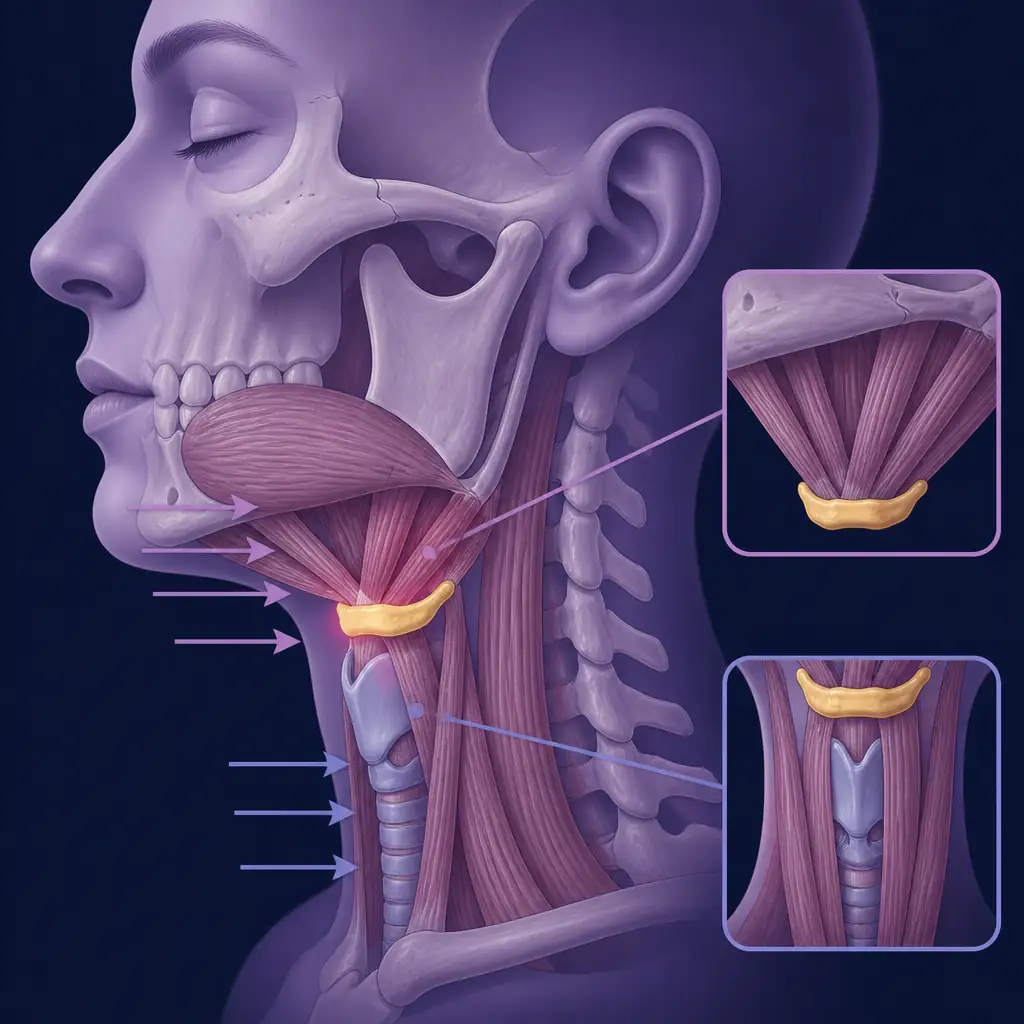
The hyoid bone sits quietly in your neck, unattached to any other bone in the skeleton, and most people have never thought about it once in their lives. But if you’ve been researching forward facial growth, mewing, or jaw development, you’ve probably run into it. The position of the hyoid has a real relationship with posture, airway patency, and the overall silhouette of the neck and jaw. This guide explains what the hyoid actually does, what “raising” it means in practical terms, and which hyoid exercises have the most support behind them.
What Is the Hyoid Bone and Why Does Its Position Matter
The hyoid is a small, U-shaped bone located at the base of the tongue, roughly at the level of the third cervical vertebra (C3). Unlike every other bone in the body, it has no direct bony articulations. It is held in place entirely by muscles and ligaments connecting it upward to the skull, downward to the larynx, and forward to the chin.
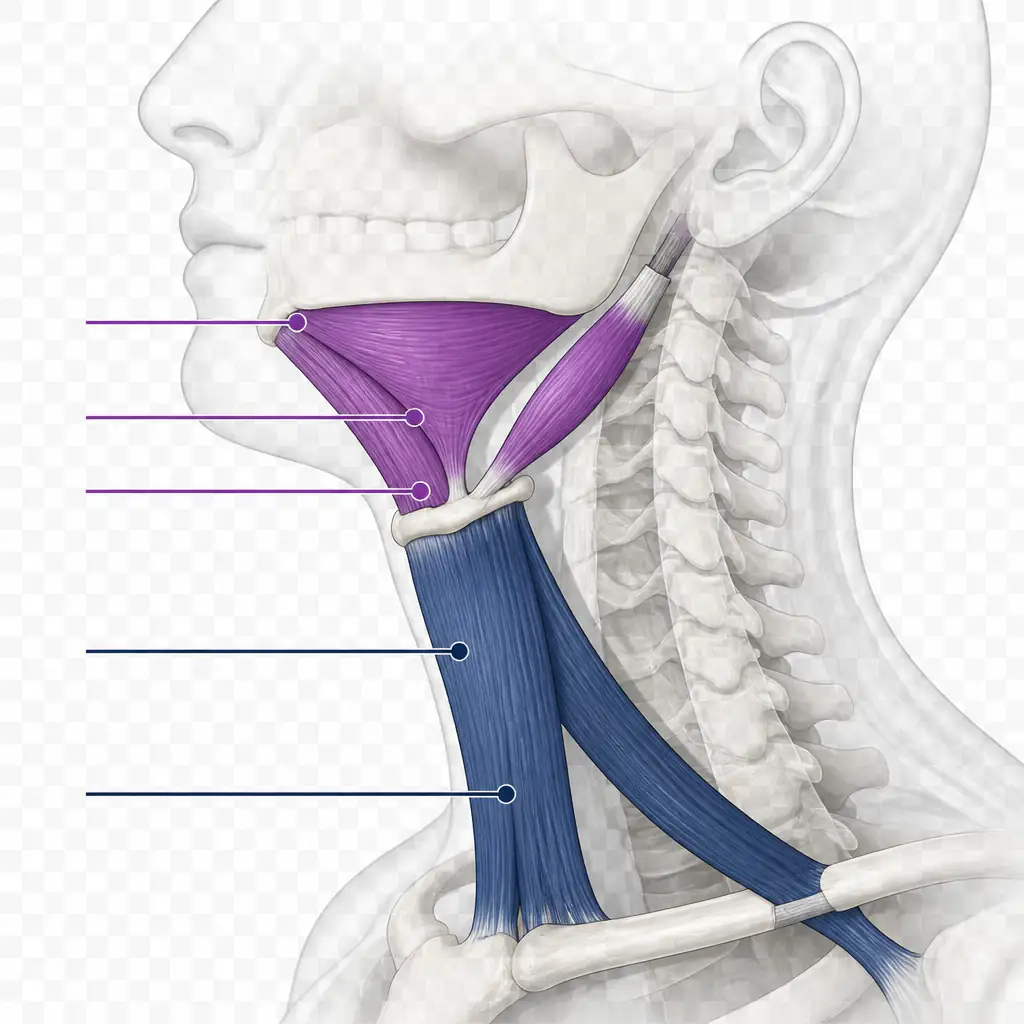
Those muscular connections are the reason hyoid position matters. The muscles attaching above the hyoid are called the suprahyoid muscles: the geniohyoid, mylohyoid, digastric, and stylohyoid. The muscles attaching below it are the infrahyoid muscles: the sternohyoid, thyrohyoid, omohyoid, and sternothyroid.
When the infrahyoid group is chronically tighter or more dominant, the hyoid gets pulled downward. This tends to coincide with:
- A longer, less defined neck profile
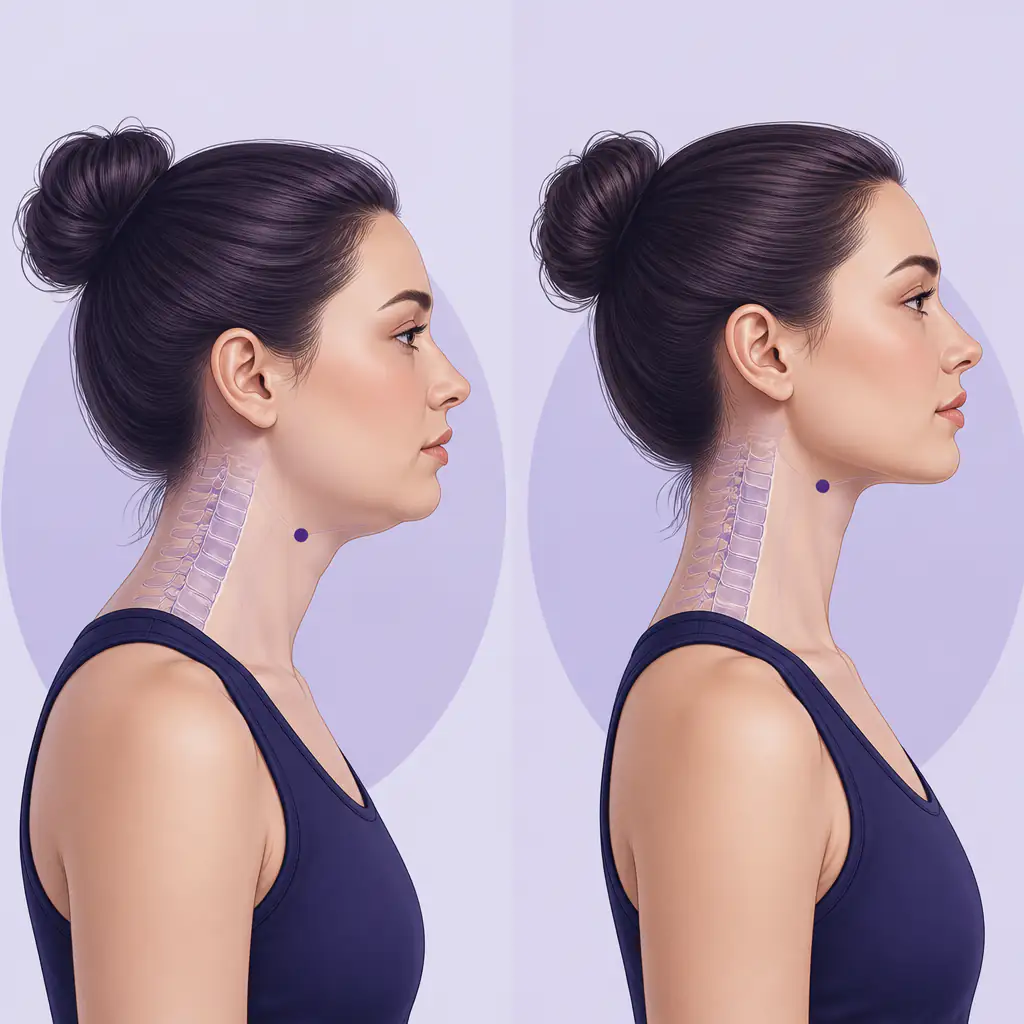
- A less acute cervicomental angle (the angle between the chin and neck)
- Forward head posture
- Mouth breathing patterns
Conversely, a higher, more anteriorly positioned hyoid is associated with a sharper jawline angle, a cleaner neck silhouette, and better tongue posture. This is why hyoid position comes up so often in forward-growth discussions.
What “Raising” the Hyoid Actually Means
To be precise, the goal is not to force the hyoid bone upward in isolation. What people mean when they talk about how to raise the hyoid bone is a combination of:
- Strengthening the suprahyoid muscles so they can elevate and stabilize the hyoid more effectively
- Releasing tightness in the infrahyoid and anterior neck muscles that pull it down
- Correcting tongue posture and head position so the hyoid rests at a naturally higher resting position
Think of it less as a single movement and more as rebalancing a tug-of-war between two muscle groups.
If you want an objective starting point before you begin any protocol, tools like Aura can analyze your jaw and neck profile, giving you a measurable baseline to track changes against over time.
The Anatomy Behind Hyoid Exercises
Understanding which muscles you’re actually targeting will make your training far more deliberate.
Suprahyoid Muscles (Pull the Hyoid Up and Forward)
- Geniohyoid: Runs from the inner chin (genial tubercle) to the hyoid. Contracts during swallowing and forward tongue thrust.
- Mylohyoid: Forms the floor of the mouth. Active when you press your tongue to the palate.
- Digastric: Has two bellies. The anterior belly pulls the hyoid forward; the posterior belly pulls it up and back.
- Stylohyoid: Runs from the styloid process of the skull down to the hyoid, elevating it during swallowing.
Infrahyoid Muscles (Pull the Hyoid Down)
- Sternohyoid and omohyoid: Run from the sternum and shoulder blade up to the hyoid. When tight, these depress the hyoid and contribute to a longer neck appearance.
The practical implication: exercises that engage the tongue against resistance, or that simulate swallowing under load, primarily recruit the suprahyoid group. Stretching and releasing anterior neck tension addresses the infrahyoid group.
How to Train the Hyoid Muscle Group: Step-by-Step Exercises
Below is a structured protocol based on the anatomy above. These exercises are low-risk for most healthy adults, but if you have a history of neck injury, TMJ disorders, or throat issues, consult a qualified professional before starting.
1. Tongue Press (Suprahyoid Activation)
This is foundational. It directly loads the mylohyoid and geniohyoid.
- Sit upright with your head in a neutral position, ears over shoulders.
- Press the entire body of your tongue flat against the roof of your mouth with moderate force.
- Hold for 3 to 5 seconds, then release fully.
- Repeat 15 to 20 times per set, 2 to 3 sets daily.
Progression: Add a slight chin tuck while pressing. This increases the stretch on the suprahyoid muscles and demands more force from them.
2. Chin Tuck with Hyoid Elevation
This exercise pairs cervical alignment with active hyoid engagement.
- Stand with your back against a wall, heels a few inches out, head touching the wall.
- Gently retract your chin straight back (creating a mild “double chin” position). This corrects forward head posture.
- While holding the retraction, initiate a swallow. You should feel the hyoid rise clearly.
- Pause at the top of the swallow for 2 seconds before releasing.
- Perform 10 repetitions, 2 to 3 sets.
3. Shaker Exercise (Suprahyoid Strengthening)
Originally developed in dysphagia rehabilitation, this exercise strongly recruits the suprahyoid group.
- Lie flat on your back, arms at your sides.
- Keep your shoulders on the floor and lift only your head, bringing your chin toward your chest so you can see your toes.
- Hold for 60 seconds, then rest. Alternatively, perform 30 rapid head lifts in succession.
- Do 3 sets.
Note: This is demanding. Start with shorter holds (10 to 15 seconds) and build up over several weeks.
4. Infrahyoid Release (Anterior Neck Stretch)
Strengthening the suprahyoid group will be limited if the opposing infrahyoid muscles are chronically short.
- Sit tall and tilt your head back gently until you feel a stretch along the front of your throat.
- Slightly rotate your head to one side to bias the stretch toward the sternohyoid and omohyoid on that side.
- Hold 20 to 30 seconds per side, twice daily.
5. Mewing as a Hyoid Habit (Resting Tongue Posture)
Mewing, the practice of resting the full tongue against the palate with the mouth closed, maintains a consistently elevated hyoid position throughout the day. This is not a targeted exercise but a postural habit. The cumulative daily load on the suprahyoid muscles from correct tongue posture is likely greater than any isolated exercise session. For a detailed breakdown of proper tongue posture mechanics, see our guide on mewing and forward growth.
How Long Does It Take to See Results
This depends heavily on age, baseline muscle tone, and consistency. Research on suprahyoid strengthening in clinical populations suggests measurable functional changes can occur within 6 to 8 weeks of consistent training. Structural changes to the cervicomental angle visible in photos typically take longer and are influenced by factors beyond muscle training, including body fat distribution and overall posture.
Some users report visible improvement in neck definition and jaw sharpness within 8 to 12 weeks when combining the exercises above with consistent mewing and corrected head posture. That said, individual results vary considerably.
Common Mistakes That Stall Progress
Isolating Exercises Without Fixing Posture
If you spend 10 minutes on hyoid exercises and then sit at a desk for 8 hours with your head pushed forward, the chronic infrahyoid tension will dominate. Forward head posture is one of the primary drivers of a low hyoid position. The exercises only work if your default posture supports them.
Training Too Hard Too Fast
The Shaker exercise in particular places significant demand on the anterior neck. Progressing too aggressively can cause muscle soreness that makes correct tongue posture painful to maintain, ironically undercutting the habit you’re trying to build.
Ignoring Breathing Pattern
Mouth breathing keeps the tongue low, the hyoid depressed, and the infrahyoid muscles in a shortened state for hours each day. Addressing mouth breathing, whether through nasal strips, myofunctional therapy, or treating underlying congestion, is arguably more important than any exercise.
Tracking Your Progress Objectively
One challenge with hyoid training is that the changes are gradual and the area is hard to self-assess. Taking weekly profile photos under consistent lighting gives you a usable record. If you want a more structured analysis of how your jaw and neck profile reads overall, Aura provides AI-based jawline and facial structure scoring that can flag areas of improvement and help you contextualize whether the changes you’re seeing are meaningful.
Realistic Expectations and Professional Guidance
Hyoid exercises and tongue posture can genuinely influence the resting position of the hyoid and the muscle tone of the suprahyoid group. What they cannot do is change bone structure in a skeletally mature adult, address significant soft tissue excess, or compensate for severe structural asymmetry.
If your primary concern is the cervicomental angle and conservative methods have not produced the results you want after consistent effort, options such as neck liposuction, submental procedures, or orthognathic evaluation exist. Talk to a qualified professional, such as a maxillofacial surgeon or orofacial myofunctional therapist, before considering any of those routes.
For the majority of people reading this, the protocol above, done consistently, will produce real and noticeable improvement in neck definition and jaw sharpness over the course of several months.
Frequently asked questions
Can you physically raise the hyoid bone through exercise? +
You cannot reposition the bone permanently through a single movement, but consistently strengthening the suprahyoid muscles and correcting tongue posture may shift the hyoid's natural resting position upward over time. Research on suprahyoid training in clinical settings supports functional improvement, though the degree varies by individual.
How long should I do hyoid exercises each day? +
Most of the exercises in a structured protocol take 10 to 15 minutes total per day. The larger factor is maintaining correct tongue posture throughout the day, which accumulates far more suprahyoid activation than any isolated session. Consistency over months matters more than session length.
Is mewing the same as a hyoid exercise? +
Mewing is not a discrete exercise but a resting posture habit. When you rest your tongue correctly against the palate with the mouth closed, the suprahyoid muscles maintain low-level activation all day, which may gradually influence hyoid position. It works alongside targeted exercises rather than replacing them.
Are there risks to hyoid training? +
For most healthy adults, the exercises described here carry low risk. The Shaker exercise places the most demand on the anterior neck and should be progressed gradually to avoid strain. Anyone with a history of neck injury, TMJ dysfunction, or swallowing difficulties should consult a qualified professional before starting.